Producción por lotes: grabarlo todo de una vez, y por qué ahorra más tiempo del que parece

Por Tiago Costa·Actualizado el 5 de agosto de 2026

Definición
La producción por lotes es crear varias piezas en una misma sesión.
- Elimina el coste de preparación que se repite en cada pieza.
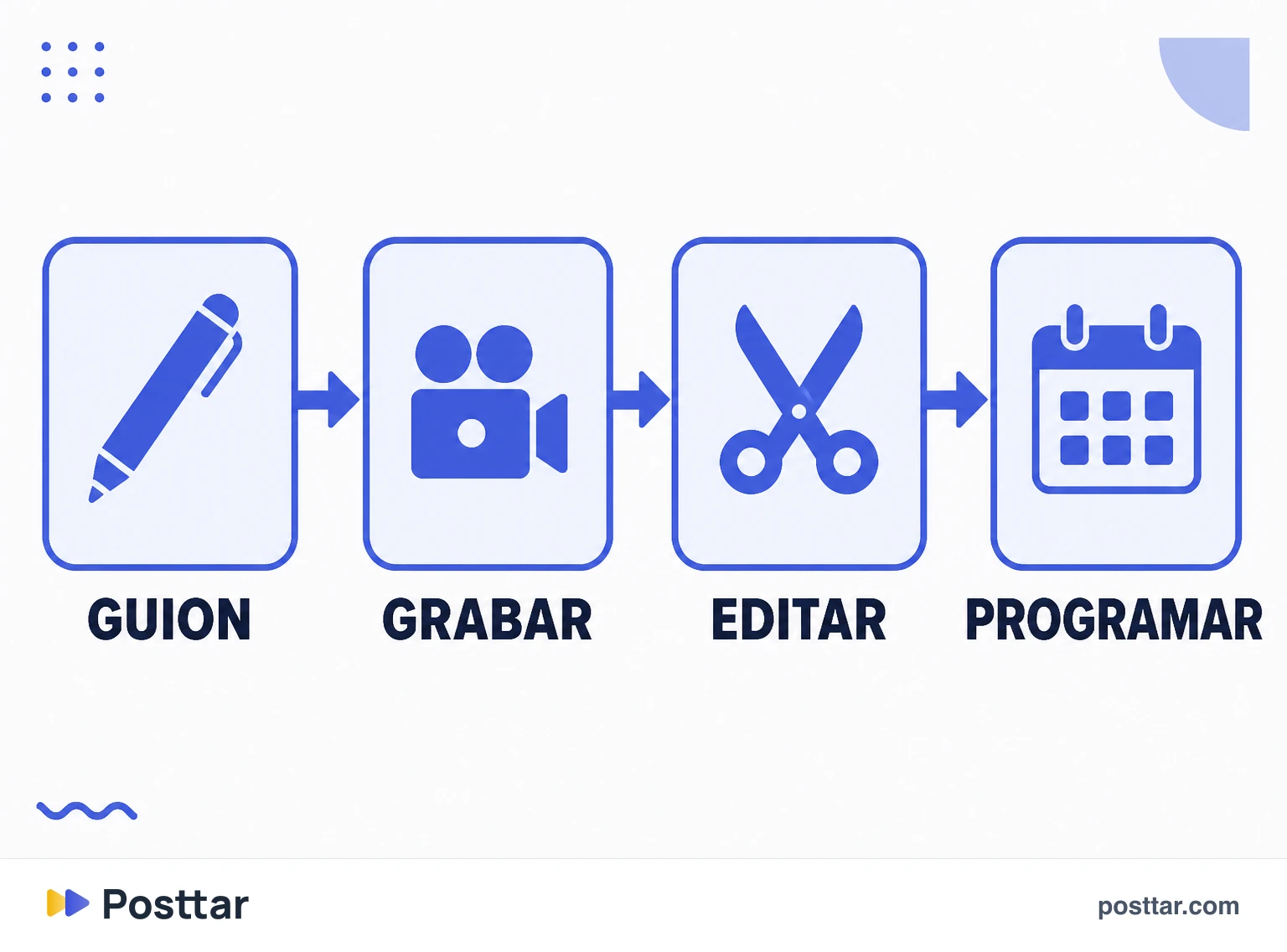
- Agrupa por etapa, no por pieza: guionizar todo, grabar todo, editar todo.
- Alimenta el banco de contenido de forma natural.
- Riesgo real: que todo el lote salga con la misma cara.
De dónde viene el ahorro
La intuición es que la ganancia es de velocidad, y no lo es. La ganancia es de coste fijo.
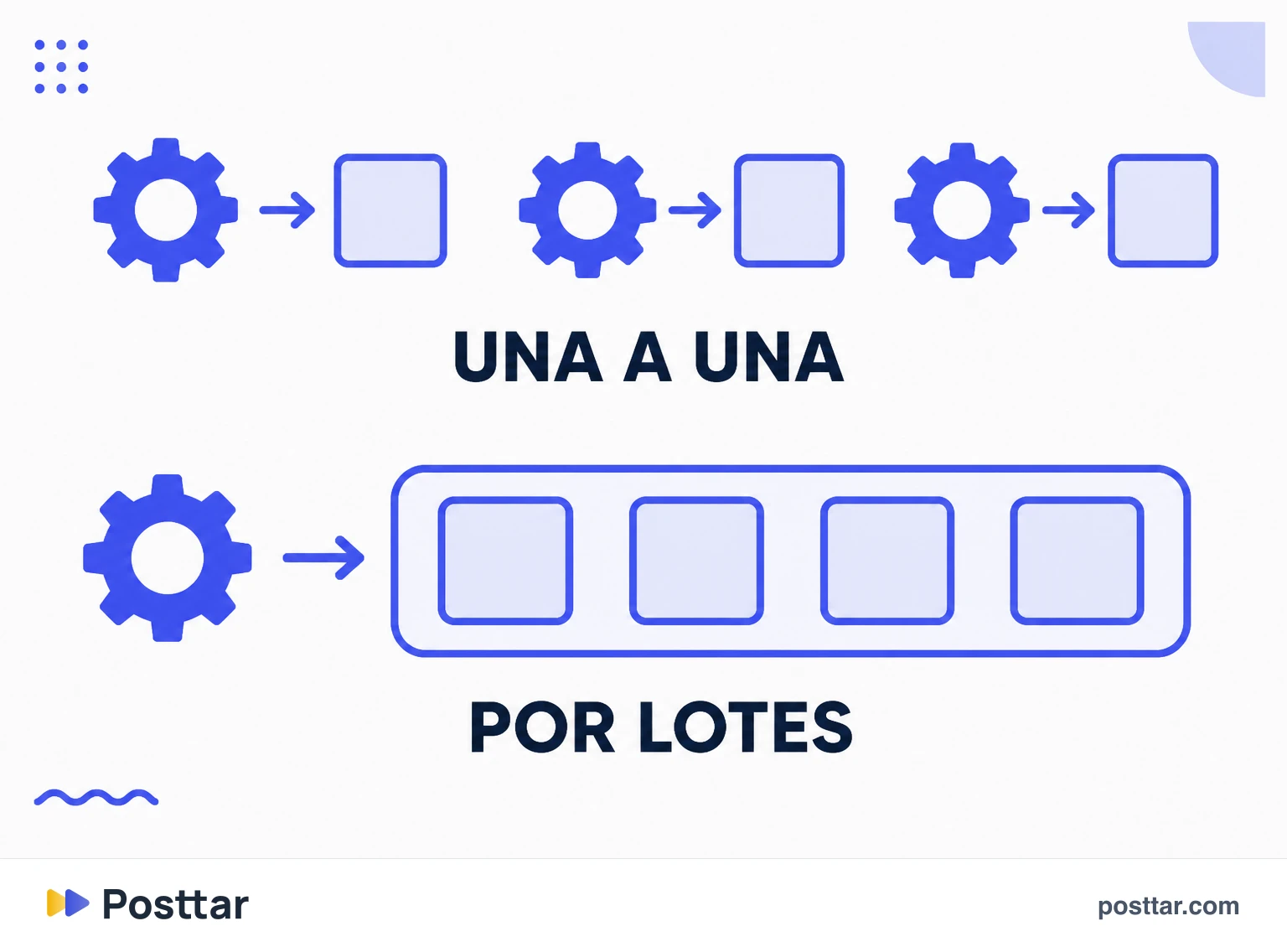
Toda pieza de contenido tiene un coste de preparación independiente de su tamaño: decidir el tema, montar el escenario, ajustar luz y sonido, arreglarse, abrir el proyecto, exportar. En una sola pieza, esa preparación suele costar más que la producción en sí.
Grabar diez piezas en la misma sesión paga ese coste una vez. Por eso la diferencia es tan grande: no es grabar diez veces más rápido, es grabar diez veces sin preparar diez veces.
Existe además una ganancia menos obvia, la de contexto mental. Cambiar de tarea cuesta atención.
Cómo organizar la sesión
El error más común es hacer lotes de piezas, cuando lo correcto es hacer lotes de etapas.
Producir diez piezas completas, una a una, todavía tiene cambio de contexto en cada pieza. El formato que funciona es:
- Guionizar todas. En una sola sesión, con la cabeza en modo escritura.
- Grabar todas. Escenario montado una vez, ropa elegida una vez.
- Editar todas. Editor abierto una vez, ajustes aplicados en serie.
- Programar todas.
Las etapas pueden ocurrir en días distintos, y eso suele ser mejor: escribir cansado produce mal guion, y editar justo después de grabar produce decisiones apresuradas.
El riesgo de que todo salga igual
Este es el coste real del método, y casi ningún material sobre el tema lo menciona.
Grabar diez piezas la misma tarde significa diez piezas con la misma ropa, la misma luz, el mismo humor y la misma energía. Publicadas en secuencia, comunican repetición, y la audiencia lo percibe.
Tres correcciones simples:
- Cámbiate de ropa a mitad. Cuesta dos minutos y rompe la percepción.
- Varía el encuadre y el ángulo entre bloques.
- Intercala al publicar. No publiques el lote entero en secuencia; mézclalo con piezas de otro origen.
Hay también un riesgo de contenido: un lote entero escrito el mismo día tiende a tener el mismo ángulo.
Qué no resuelve
Conviene ser honesto sobre los límites.
No sirve para contenido reactivo. La tendencia, la noticia y la respuesta a lo que pasó hoy no se pueden producir con semanas de antelación. Por eso el lote tiene que convivir con espacio reservado en el calendario.
No arregla contenido malo. Producir diez piezas mediocres de una vez solo produce diez piezas mediocres más rápido.
No elimina la necesidad de constancia al publicar. Grabar por lotes y publicar por lotes son cosas distintas: lo segundo concentra alcance un día y desaparece el resto.
Checklist
- Agrupo por etapa, no por pieza.
- Escribo y grabo en días distintos.
- Cambio de ropa y de encuadre dentro del lote.
- No publico el lote entero en secuencia.
- Produzco una pieza más para el banco de contenido.
Preguntas frecuentes
¿Qué es la producción por lotes de contenido?
Es crear varias piezas en una misma sesión en vez de una por día. El ahorro viene de eliminar el coste de preparación que se repite en cada pieza: montar escenario, ajustar luz, abrir el editor y exportar.
¿Cómo organizar una sesión de producción por lotes?
Agrupando por etapa y no por pieza: guionizar todas, después grabar todas, después editar todas, después programar todas. Las etapas pueden ocurrir en días distintos, y eso suele mejorar el resultado.
¿La producción por lotes vuelve repetitivo el contenido?
Puede hacerlo, y ese es el riesgo real del método. Diez piezas grabadas la misma tarde comparten ropa, luz y energía. Cambiarse de ropa a mitad, variar el encuadre e intercalar al publicar resuelve la mayor parte.
¿Cuántas piezas grabar de una vez?
Las suficientes para cubrir de una a dos semanas de calendario, más una o dos extra para el banco de contenido. Los lotes muy grandes aumentan el riesgo de repetición y de que el contenido envejezca antes de publicarse.
¿Se puede producir todo por lotes?
No. El contenido reactivo, como tendencia, noticia y respuesta a lo que pasó hoy, no se puede producir con antelación. Por eso el lote tiene que convivir con espacio reservado en el calendario.
Conceptos relacionados

Calendario editorial
El calendario editorial es el documento que organiza qué se va a publicar, cuándo y en qué formato. Resuelve el problema más caro de la producción de contenido, que es decidir el tema el día de la publicación, cuando no hay tiempo ni para pensar ni para producir bien. La mayoría de los calendarios se abandona en tres semanas, y el motivo casi siempre es el mismo: se montó como calendario, no como fila de producción.
Leer la entrada
Banco de contenido
El banco de contenido es la reserva de piezas listas o casi listas, guardadas para publicar cuando la producción falle. Existe porque la producción siempre falla en algún momento: cambia la semana, alguien enferma, el cliente se retrasa. Sin reserva, la cuenta simplemente para, y parar sale más caro que publicar algo mediocre, porque el retorno depende de la constancia.
Leer la entrada
Guion de vídeo
El guion es el documento que define qué se va a decir y mostrar en un vídeo antes de que empiece la grabación. En contenido corto casi nunca se lee palabra por palabra, pero escribirlo antes cambia el resultado igualmente: obliga a decidir el gancho, corta la divagación y reduce el número de tomas. La cuenta es simple, un guion cuesta diez minutos y ahorra una hora de edición.
Leer la entrada
Frecuencia de publicación
La frecuencia de publicación es cuántas piezas publica una cuenta por periodo. No existe un número universal, y quien promete uno está vendiendo simplificación: lo correcto depende del formato, del nicho y, sobre todo, de lo que puedes sostener. La constancia pesa más que el volumen, porque una cuenta que publica tres veces por semana durante un año rinde más que una que publica a diario durante un mes y desaparece.
Leer la entrada