Tasa de interacción en Instagram: fórmulas, cuál usar y qué esconde

Por Tiago Costa·Actualizado el 5 de agosto de 2026

Definición
La tasa de interacción es el porcentaje de personas que interactuaron con un contenido en relación con una base de comparación. Hay dos fórmulas en uso y no son intercambiables.
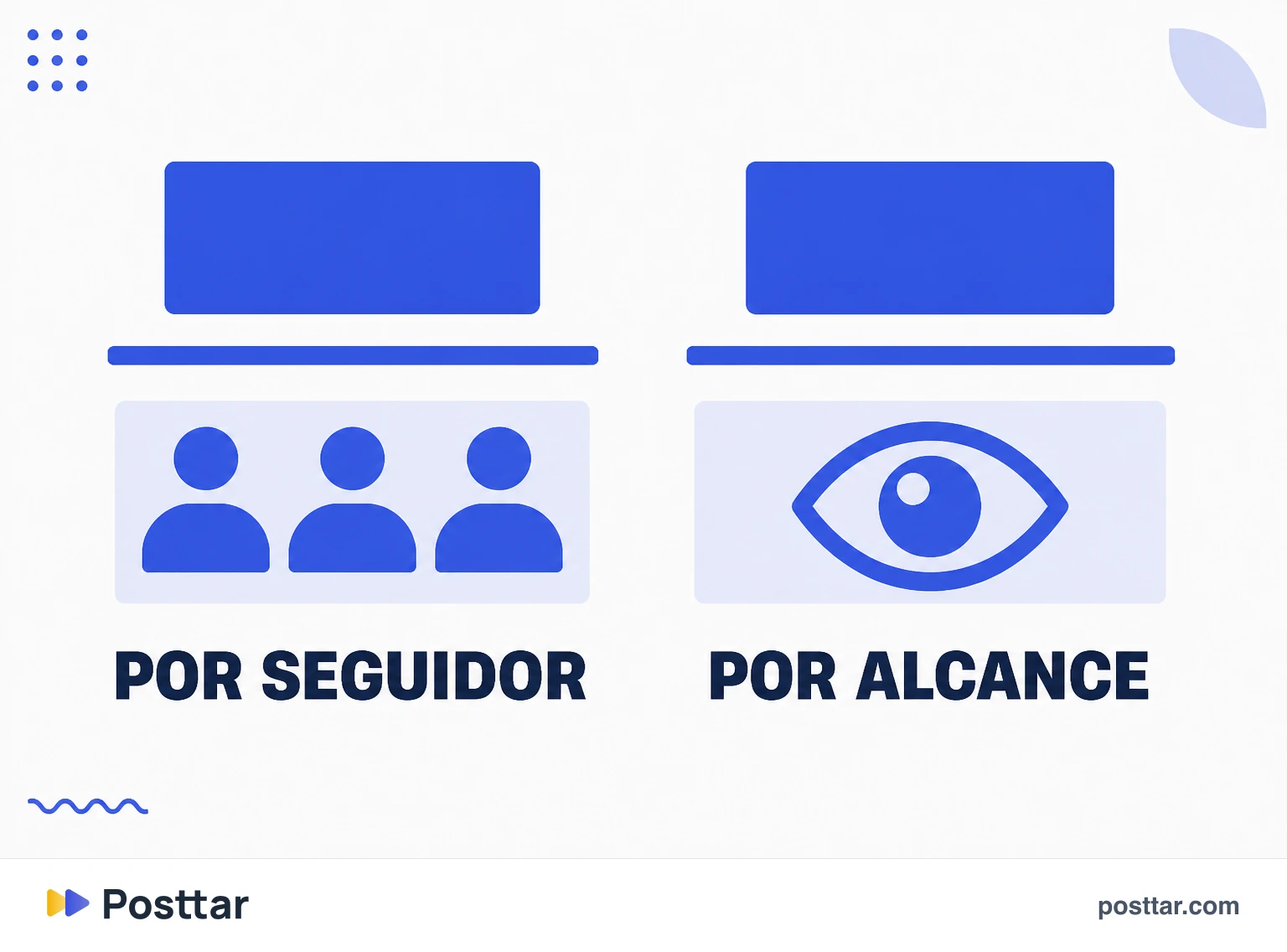
- Por seguidor: interacciones divididas por seguidores. Mide cómo responde la base que construiste.
- Por alcance: interacciones divididas por el alcance. Mide la calidad de la entrega sin castigar a quien creció.
- Interacciones: me gusta, comentarios, guardados y compartidos. No toda herramienta suma las cuatro.
- La comparación solo vale dentro de la misma fórmula. La misma publicación tiene dos tasas y las dos son correctas.
Qué es la tasa de interacción
La tasa de interacción existe para responder una pregunta que el número absoluto no responde: ¿una publicación con 400 me gusta es buena? Depende de cuántas personas la vieron y cuántas te siguen. Dividir la interacción por una base vuelve comparables publicaciones de tamaños distintos.
El problema es que hay más de una base posible y la plataforma no entrega la tasa calculada. Cada herramienta elige una fórmula, y por eso dos paneles muestran tasas distintas para el mismo perfil sin que ninguno esté fallando.
Lo que entra como "interacción" también varía. La lectura más completa suma me gusta, comentarios, guardados y compartidos. Muchas calculadoras públicas suman solo me gusta y comentarios, porque son los dos números visibles desde fuera del perfil.
Las dos fórmulas
| Fórmula | Cálculo | Qué mide |
|---|---|---|
| Por seguidor | Interacciones ÷ seguidores × 100 | Cuánto responde tu base |
| Por alcance | Interacciones ÷ alcance × 100 | Cuánto reaccionó quien lo vio |
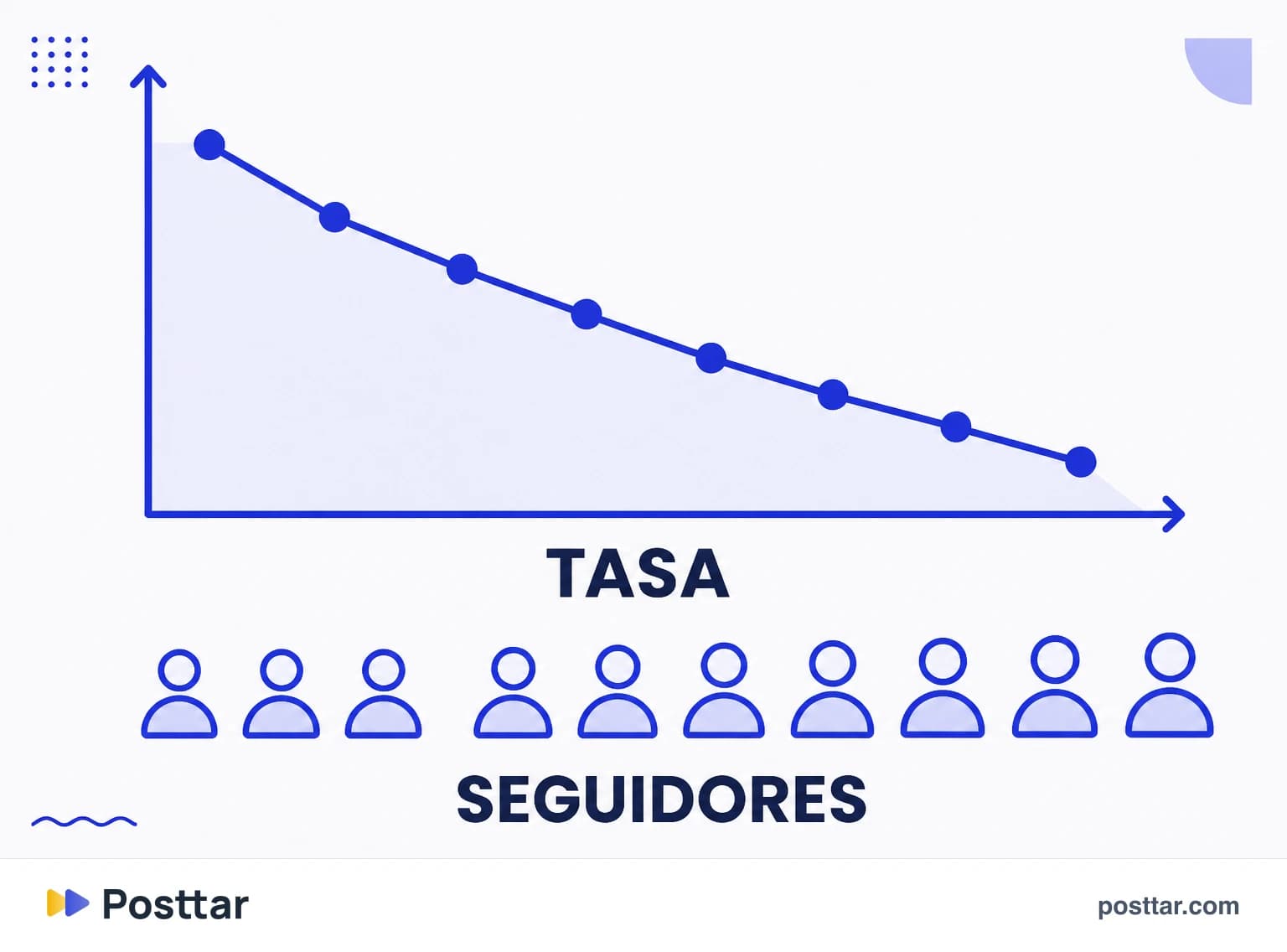
Por seguidor es la fórmula que se puede calcular desde fuera, porque el número de seguidores es público. Es la que usa casi toda calculadora en línea y la que usan las agencias para evaluar creadores. Tiene un sesgo conocido: cuanto más grande la cuenta, menor la tasa, porque una parte creciente de la base está inactiva y nunca ve el contenido.
Por alcance solo se puede calcular desde dentro, con acceso a las estadísticas. Es la más honesta para juzgar contenido, porque saca de la cuenta a quien ni llegó a verlo. Si una publicación alcanzó 2.000 cuentas y tuvo 200 interacciones, el 10% de quienes la vieron reaccionó, y eso es información sobre la pieza, no sobre el tamaño del perfil.
Cuál de las dos usar
Depende de la decisión que vas a tomar.
- Evaluar un contenido específico: usa la de alcance. Es la única que aísla la calidad de la pieza del tamaño de la audiencia.
- Evaluar la salud del perfil en el tiempo: usa la de seguidores. Captura el efecto de una base que creció sin interactuar, que la fórmula de alcance esconde.
- Comparar con otro perfil o negociar una colaboración: usa la de seguidores, porque es la única calculable desde fuera, y dilo de forma explícita.
El error caro es mezclarlas. Comparar tu tasa por alcance con un benchmark de mercado que alguien midió por seguidor produce una conclusión equivocada con apariencia de dato.
Qué es una buena tasa de interacción
No existe un número universal, y cualquier tabla que prometa uno es el promedio de una muestra que probablemente no es la tuya. La tasa varía con el tamaño de la cuenta, el nicho, el formato y el objetivo del contenido.
El parámetro que funciona es el propio. Toma las últimas treinta publicaciones, calcula la tasa de cada una con la misma fórmula y usa la mediana como línea base. Mediana, no promedio, porque un solo viral tira el promedio hacia arriba y hace que todo lo demás parezca un fracaso.
Dos correcciones de lectura que casi nadie aplica: compara formato con formato, porque el carrusel y los Reels tienen patrones de interacción distintos, y dale tiempo al contenido antes de juzgarlo, porque el vídeo acumula interacción durante semanas mientras una publicación estática concentra casi todo en las primeras 48 horas.
Cuándo la tasa engaña
- Base inflada. Los seguidores comprados o venidos de un sorteo quedan en el denominador y nunca interactúan, lo que hunde la tasa por seguidor sin que nada haya empeorado.
- Viral fuera de nicho. Una publicación que llega a mucha gente equivocada tiene alcance alto y tasa por alcance baja. Eso no es mal contenido, es contenido entregado a quien no era el público.
- El me gusta como medida de valor. Es la interacción más barata para quien mira. Guardar y compartir cuestan más y valen más como señal, tanto para el algoritmo como para el negocio.
- Interacción comprada. La interacción de bots sube la tasa y no mueve ingresos. Si la tasa crece y las visitas al perfil no acompañan, sospecha.
Checklist
- Declaré qué fórmula estoy usando antes de comparar cualquier número.
- Sumé las cuatro interacciones, no solo me gusta y comentarios.
- Usé la mediana de las últimas treinta publicaciones como línea base, no el promedio.
- Comparé carrusel con carrusel y Reels con Reels.
- Crucé la tasa con las visitas al perfil, para separar interacción de intención.
- Esperé al menos 72 horas antes de juzgar contenido en vídeo.
Preguntas frecuentes
¿Cuál es una buena tasa de interacción en Instagram?
No hay un número que sirva para todos, porque la tasa varía con el tamaño de la cuenta, el nicho y el formato. El parámetro confiable es tu propio histórico: calcula la tasa de las últimas treinta publicaciones con la misma fórmula y usa la mediana como línea base. Por encima está bien, por debajo merece investigación.
¿Cómo se calcula la tasa de interacción en Instagram?
Suma me gusta, comentarios, guardados y compartidos y divide por una base. Si divides por el número de seguidores, obtienes la tasa por seguidor. Si divides por el alcance de la publicación, obtienes la tasa por alcance. Multiplica por 100 para tener el porcentaje.
¿Cómo puedo ver la tasa de interacción en Instagram?
La aplicación no muestra la tasa ya calculada. Entrega los números crudos (interacciones, alcance y seguidores) en las estadísticas de una cuenta profesional, y el cálculo queda para quien analiza o para una herramienta externa. Por eso las calculadoras de engagement son un resultado tan buscado.
¿Por qué bajó mi tasa de interacción al ganar seguidores?
Es el comportamiento esperado de la fórmula por seguidor. A medida que la base crece, una parte queda inactiva y sigue en el denominador, así que la tasa baja incluso con contenido igual o mejor. Si haces el seguimiento por la tasa de alcance, ese efecto desaparece.
¿Guardar vale más que un me gusta?
Como señal, sí. Guardar y compartir exigen más esfuerzo de quien mira y indican utilidad y valor social, mientras que el me gusta es la interacción más barata. Por eso una lectura de interacción que solo suma me gusta y comentarios deja fuera justo lo que más importa.
Conceptos relacionados

Interacción
La interacción es el conjunto de acciones que la gente realiza sobre un contenido: me gusta, comentarios, guardados y compartidos, más respuestas y menciones en Historias. Es un conteo absoluto, no un porcentaje, y por eso solo tiene sentido comparado con una base, sea el alcance o el número de seguidores. Las cuatro acciones no valen igual: las que exigen más esfuerzo a quien mira son las que más empujan la distribución.
Leer la entrada
Alcance
El alcance es el número de cuentas únicas que vieron un contenido al menos una vez. A diferencia de las impresiones, no cuenta dos veces a la misma persona, así que mide el tamaño de la audiencia alcanzada y no el volumen de exhibición. En Instagram el alcance aparece por publicación y por periodo, y puede separarse entre seguidores y no seguidores, que es la lectura que muestra si el perfil está descubriendo gente nueva o solo circulando entre quienes ya lo siguen.
Leer la entrada
Guardados
Un guardado es cuando alguien archiva tu publicación para volver a ella después. Es una interacción privada: no aparece en la publicación, nadie salvo quien guardó lo sabe, y tú solo ves el total agregado en las estadísticas. Justamente por no tener componente social, es una de las señales más honestas que existen, porque la persona guarda por utilidad propia, no para ser vista guardando.
Leer la entrada
Compartidos
Un compartido es cuando alguien envía tu publicación a otra persona por Direct o la republica en sus propias Historias. Es la interacción más cara para quien actúa, porque exige elegir un destinatario y asumir la recomendación, y por eso es la que más empuja la distribución fuera de tu audiencia. Ninguna otra interacción lleva el contenido a alguien que no te sigue por recomendación humana.
Leer la entrada