Meta Verified: the blue check became a subscription, and what it actually delivers

By Tiago Costa·Updated on August 5, 2026
Definition
Meta Verified is the paid subscription granting the badge by document confirmation.
- Identity by document, not by editorial notability.
- It includes protection against accounts impersonating you.
- It grants human support, the most underrated item.
- The free relevance route still exists in parallel.
What changed
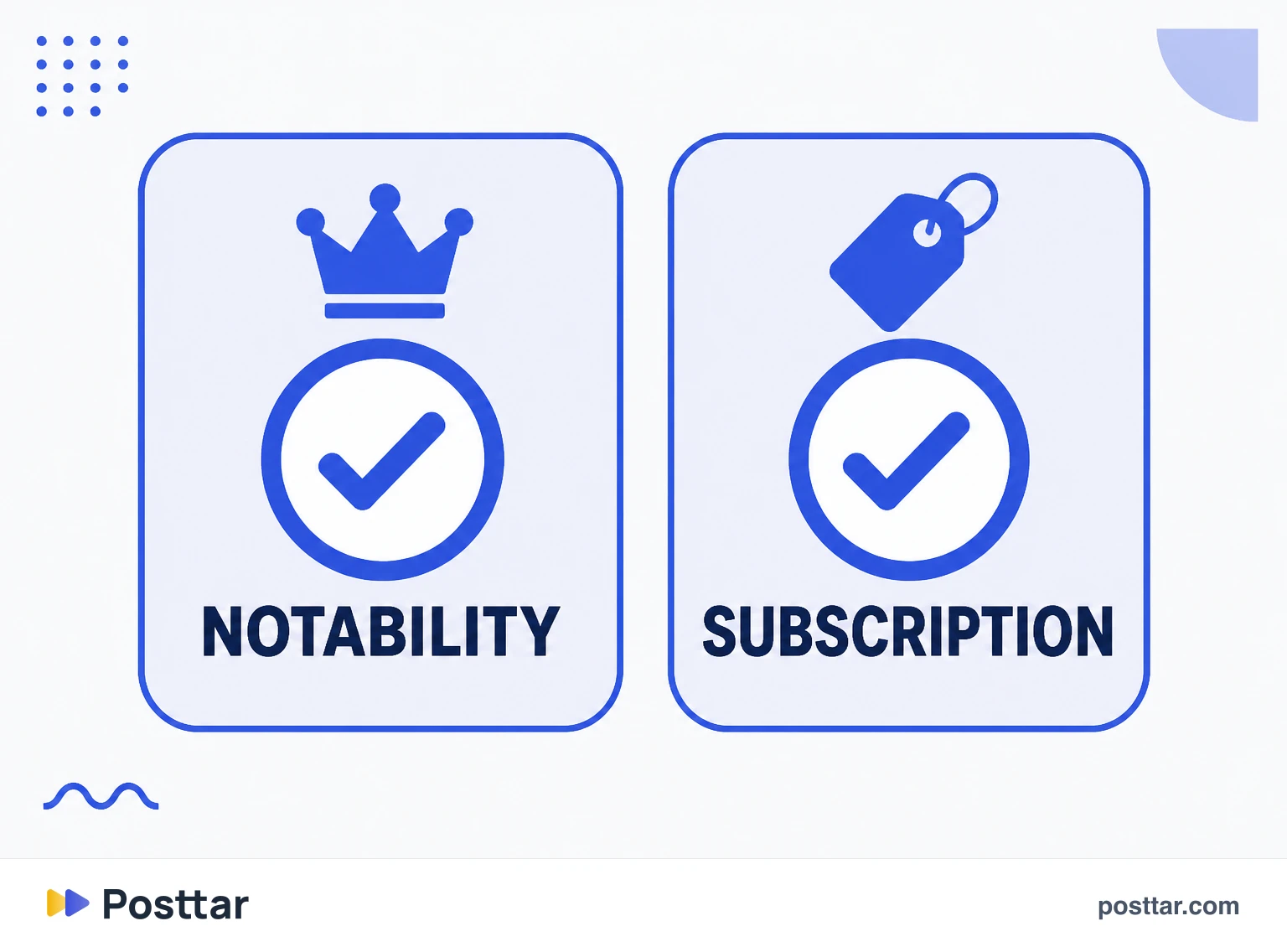
For years the blue check was an editorial judgement: the account had to be notable, and the decision came from inside the platform with no deadline and no clear appeal. That created an entire parallel market of people selling verification, almost always a scam.
Meta Verified inverted the logic. There is now a paid route where the badge depends on confirming you are who you say you are, with a valid official document, rather than on the platform deciding you are important.
The two routes coexist. Notable accounts can still be verified without paying; the subscription is the road open to anyone who would not pass the editorial bar.
What the subscription includes
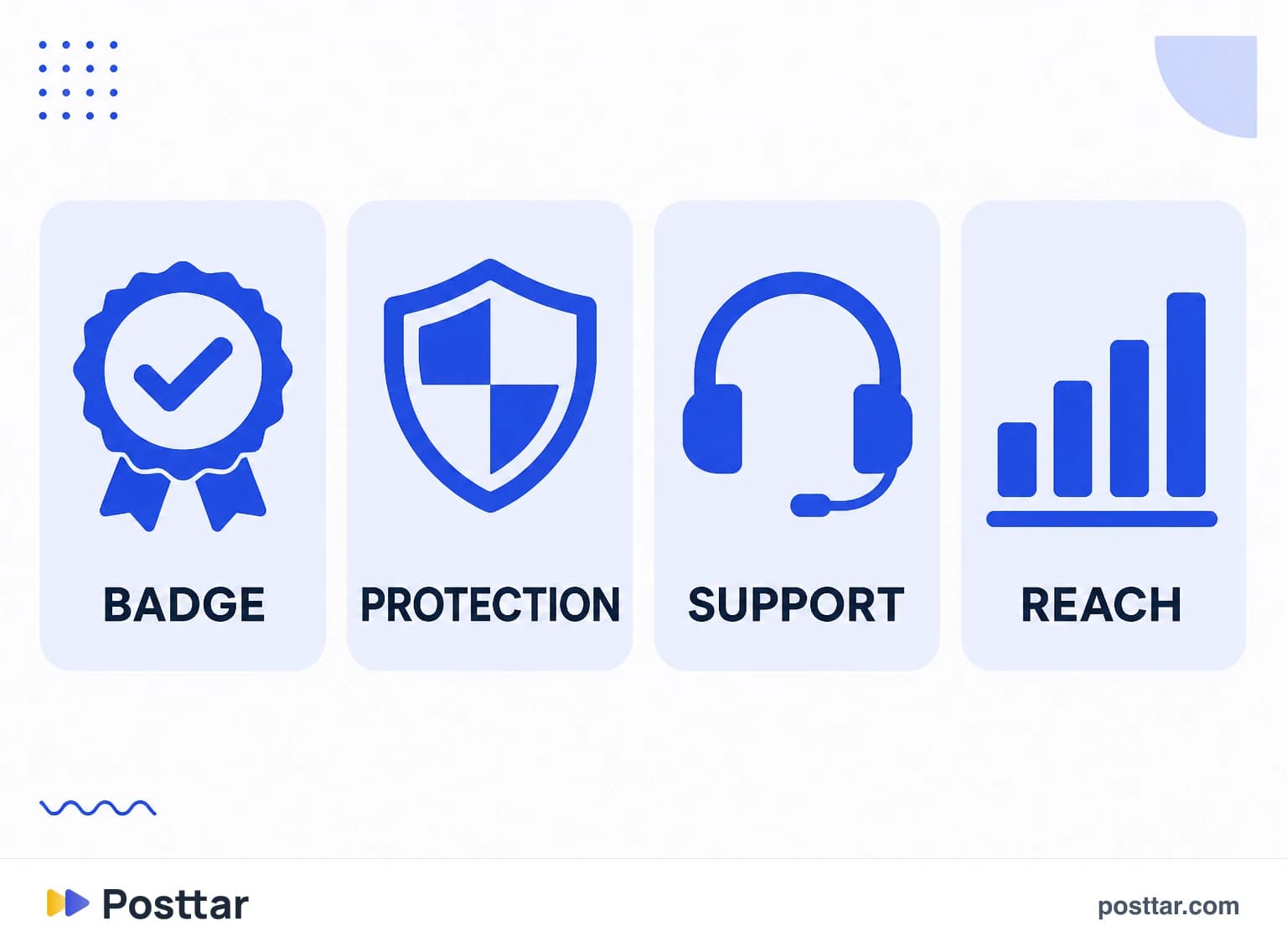
- The verification badge on the profile.
- Impersonation protection. Active monitoring of accounts trying to pass as you, which is the item of highest real value for anyone with an audience.
- Access to human support. Being able to reach a person when the account disappears is the difference between a scare and a loss.
- Exclusive features that vary over time and by region.
Price, included items and availability change by country and by platform, and change often. Check the current value in the subscription itself before deciding, because any number written here would age fast.
What it does not do
Being direct about this matters, because the wrong expectation is the biggest cause of regret:
- It does not buy reach. The badge is not a ranking signal. Bad content with a badge still performs badly.
- It does not bring followers. It raises the perceived legitimacy of whoever already arrived, which is different from attracting anyone.
- It does not protect against enforcement. Breaking the rules takes down a verified account just the same.
- It does not replace reputation. A badge confirms identity, not quality or authority on a subject.
When it pays off
The case stands up in three situations:
- Fake profiles already use your name. Here the protection alone justifies it.
- The account is the main sales channel. Losing access with nobody to turn to is a business risk, and human support is insurance.
- The niche runs on trust. Health, law, finance. The badge reduces friction for someone evaluating whether you are real.
Outside those cases, the money usually returns more in content production or in traffic. And one safety note: nobody sells the badge on the side. Every offer of verification through a middleman is a scam, without exception.
Checklist
- I know the badge does not increase reach or bring followers.
- My reason is protection, support or niche trust, not vanity.
- I checked the price and what is included in my country now.
- I have a valid official document with the name I use on the profile.
- I am not considering any badge offer from a middleman.
Frequently asked questions
What does it mean to get Meta verified?
It means subscribing to the paid plan that grants the verification badge through identity confirmation with an official document. It also includes protection against accounts impersonating you and access to human support.
How much does Meta Verified cost?
The price varies by country and by platform and changes often, so the reliable number is the one shown in the subscription screen in your region. It is billed monthly, and the price usually differs between buying in the app and in a browser.
How to get Meta verified for free?
The old route still exists: notable accounts can be verified by public relevance without paying. The criterion is editorial and carries no guaranteed timeline. What does not exist is a middleman selling badges: every offer of that kind is a scam.
Is paying for Meta Verified worth it?
It pays off when fake profiles already use your name, when the account is your main sales channel, or when the niche runs on trust, such as health, law and finance. Outside those cases the money usually returns more in content or traffic.
Does the badge increase reach?
No. Verification is not a ranking signal, and content that performs badly keeps performing badly with a badge. What it changes is the perceived legitimacy of whoever already reached the profile, not distribution.
Related concepts
Instagram bio
The bio is the block of up to 150 characters at the top of the profile, below the name. It is read at the exact moment someone decides to follow or leave, which makes it the account's most important conversion asset. The most common mistake is spending it on a quote: a visitor needs to understand within seconds what the account does, for whom, and what to do next.
Read the entry
Instagram username
The username is the account's unique identifier, what appears after the at sign and forms the profile URL. It is unique across the whole platform, accepts only letters, numbers, periods and underscores, and is indexed in internal search. Changing it is possible but expensive: every old mention, every saved link and every printed asset starts pointing at the wrong place.
Read the entry
Profile picture
The profile picture is the circular image identifying the account across the platform. It is uploaded square and cropped to a circle, and it appears very small in most of the places where it is actually seen: comments, the Stories bar, search results. That changes the criterion for what works: recognisable at a few pixels beats beautiful at full screen.
Read the entry
Shadowban
Shadowban is the popular name for the idea that an account has been silently restricted, still publishing normally while its content stops appearing for others. The platform does not use the term, but it does recognise a close mechanism: content that does not follow the recommendation guidelines stops being recommended to people who do not follow the account, with no notification. Most reach drops, however, are not this.
Read the entry