Profile audit: the review that finds the real bottleneck, and it is rarely the content

By Tiago Costa·Updated on August 5, 2026

Definition
A profile audit is the structured review that finds the bottleneck.
- It separates layers: reach, profile conversion and sales.
- The bottleneck is rarely what the symptom suggests.
- Compare against yourself, not against accounts of another size.
- Quarterly is enough. Auditing weekly produces noise.
The three layers
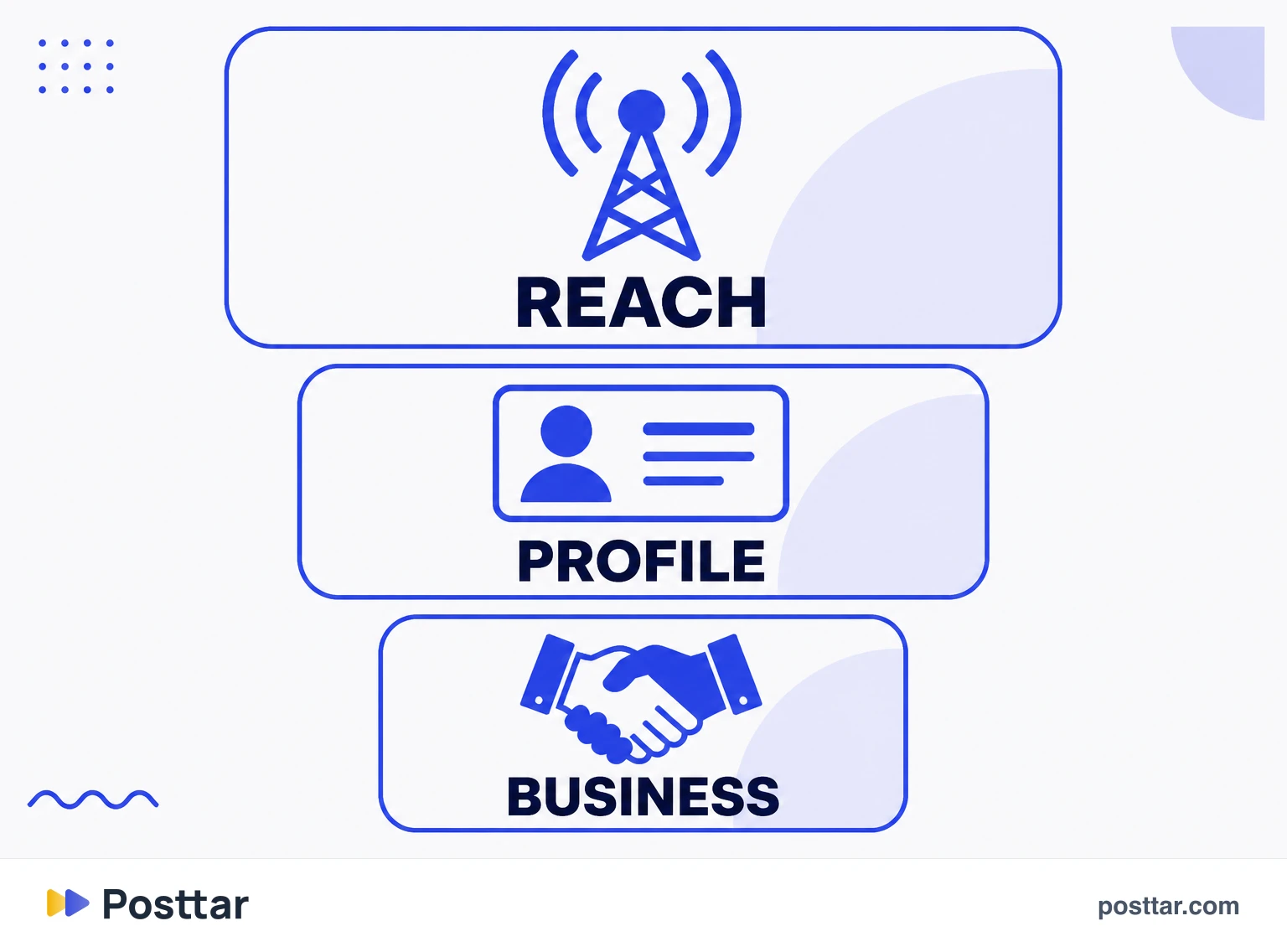
Every account has three nested funnels, and each fails differently. Auditing means measuring all three separately.
- Reach. How many people see the content, and how many of them do not follow you.
- Profile conversion. How many of those visited the profile, and how many of those followed or clicked the link.
- Business conversion. How many of the arrivals became conversations, and how many became clients.
The classic mistake is looking only at the first. An account with high reach and a profile that does not convert looks like a content problem and is a bio problem. An account with a great profile and low reach is the opposite.
What to check at each layer
Reach: what share of reach comes from non followers, which formats deliver more, which pillars perform better, and whether a drop coincided with some change.
Profile: whether the bio says what the account does in five seconds, the picture is recognisable as a thumbnail, the highlights answer what people ask most, the name field carries the term you want to be found by, and profile visits convert into follows at a reasonable rate.
Business: how many conversations arrive weekly, how many become proposals, and whether the content generating sales is the same one generating reach, which it almost never is.
The right order to investigate
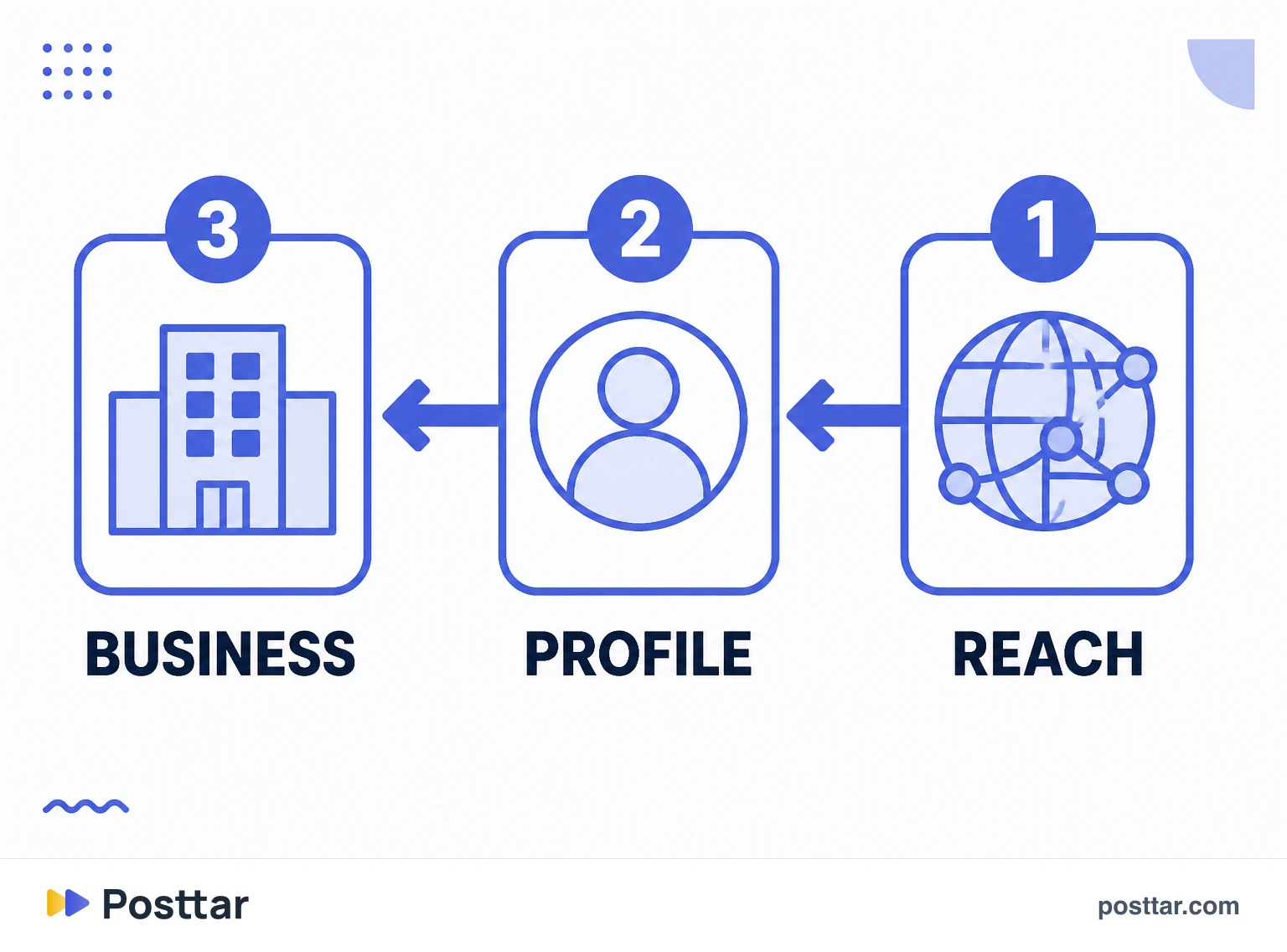
Auditing everything at once produces a list of thirty items and no decision. The order that works runs backwards:
- Start with the business. If conversations arrive and do not become clients, the problem is not Instagram at all.
- Then the profile. If many visit and few follow, fix the bio before producing more content. Posting more with a profile that does not convert means increasing the cost of the same mistake.
- Reach last. Investing in bringing more people only makes sense once what to do with them is resolved.
That order is counterintuitive because the urge is always to change the content, which is the visible part.
How often and what to compare against
Frequency: quarterly works. Auditing weekly produces reaction to noise, because short term variation is normal and means nothing.
Comparison: against yourself. Comparing your account to one ten times larger produces wrong conclusions, because each metric's baseline varies with size and niche. The figure that matters is your own trend across quarters.
On tools promising automated audits: they serve the mechanical part, like format and timing distribution. What they do not do is the deciding part, which is judging whether the bio communicates and whether the highlights answer real objections.
Checklist
- I measure reach, profile conversion and business separately.
- I investigate backwards, starting with the business.
- I compare against my own quarters, not other accounts.
- I audit every three months, not every week.
- I do not produce more content before the profile converts.
Frequently asked questions
What is an Instagram profile audit?
It is the structured review of an account to find where it is losing results. It separates three layers, reach, profile conversion and business conversion, instead of treating everything as one problem.
How do I audit my Instagram profile?
Measure the three layers separately and investigate backwards: first whether conversations become clients, then whether profile visits become follows, and only last whether reach is sufficient.
Why did my engagement drop?
An audit usually reveals the cause is not the content. The most common are accumulated audience that does not interact, a format or topic change with no transition, seasonality, and regression to the mean after a spike.
Is there a free Instagram audit tool?
Your own account insights cover most of what matters and are free. External tools help with the mechanical part, like format and timing distribution, but they do not judge whether the bio communicates or whether highlights answer real objections.
How often should you audit a profile?
Every three months. Auditing weekly produces reaction to noise, because short term variation is normal. What matters is the trend across quarters, compared with yourself rather than with accounts of another size.
Related concepts

Instagram bio
The bio is the block of up to 150 characters at the top of the profile, below the name. It is read at the exact moment someone decides to follow or leave, which makes it the account's most important conversion asset. The most common mistake is spending it on a quote: a visitor needs to understand within seconds what the account does, for whom, and what to do next.
Read the entry
Profile visits
Profile visits is the number of times your profile page was opened during a period. It is the closest thing to an intent metric Instagram provides organically: nobody opens a profile by accident, and whoever does is deciding whether to follow, buy or click the link. The panel shows only the total, never who visited, and there is no legitimate way to find that out.
Read the entry
Engagement rate
Engagement rate is the percentage of people who interacted with a piece of content relative to a comparison base. Two formulas are in common use: interactions divided by followers, which measures how the base responds, and interactions divided by reach, which measures the quality of delivery. They answer different questions and produce different numbers for the same post, so the thing that matters is stating which one you used before comparing anything.
Read the entry
Content pillar
Content pillars are the few recurring subjects an account covers. They exist to solve two problems at once: the blank page for people who do not know what to post, and the dispersion of people who post about everything and are recognised for nothing. Three to five pillars is the range that works, and the most common mistake is confusing a pillar with a format.
Read the entry