Taxa de compartilhamento: o melhor previsor de alcance que você tem

Por Tiago Costa·Atualizado em 5 de agosto de 2026

Definição
Taxa de compartilhamento é o percentual de quem viu o conteúdo e o enviou a outra pessoa.
- Fórmula: compartilhamentos divididos pelo alcance, vezes 100.
- Antecipa crescimento melhor que qualquer outra métrica de interação.
- Mede valor social, não utilidade nem aprovação.
- Números pequenos são normais. Compartilhar é raro por natureza.
Como calcular e o que esperar
Taxa de compartilhamento = compartilhamentos ÷ alcance × 100
A primeira coisa a ajustar é a expectativa. Compartilhar é o gesto mais caro que existe no Instagram, então a taxa é naturalmente muito menor que a de curtida ou a de salvamento. Ver percentuais de um dígito, ou frações de ponto percentual, é o normal, e isso não indica fracasso.
O que importa não é o valor absoluto, é onde ele fica em relação à sua própria mediana. Um conteúdo com taxa três vezes acima da mediana do perfil merece atenção mesmo que o número pareça pequeno no papel.
Por que ela antecipa crescimento
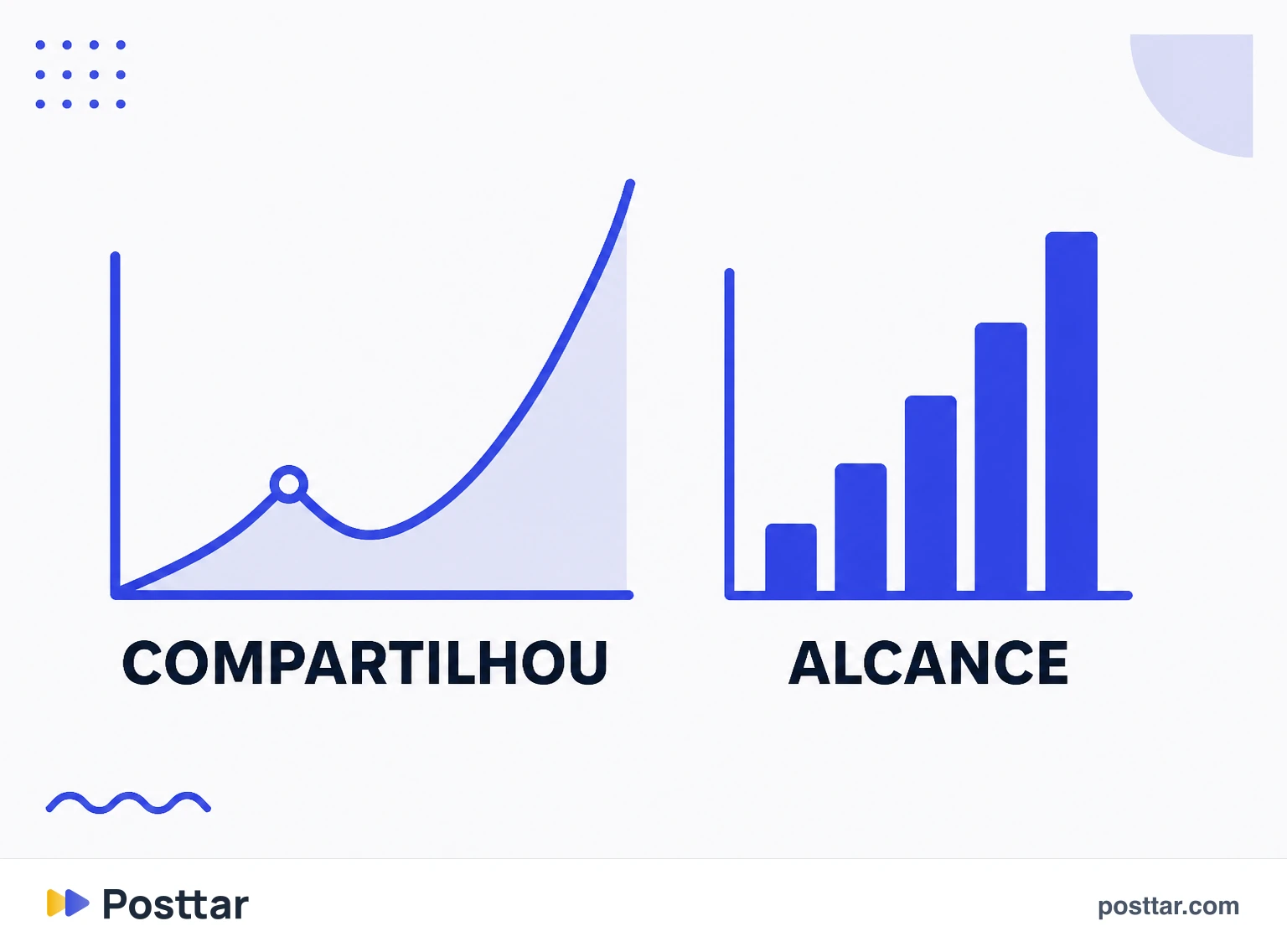
As outras interações acontecem dentro da sua audiência. O compartilhamento é a única que atravessa a fronteira: ele entrega a peça a alguém que não segue você, escolhido por uma pessoa que conhece essa outra pessoa.
Isso tem dois efeitos que se somam. O primeiro é direto: mais gente vê. O segundo é de qualidade: alcance que chega por recomendação converte melhor que alcance de entrega automática, porque vem com confiança embutida.
Na prática, taxa de compartilhamento alta costuma aparecer antes de um pico de alcance, não depois. É por isso que ela funciona como indicador antecedente, enquanto curtida é um indicador que só confirma o que já aconteceu.
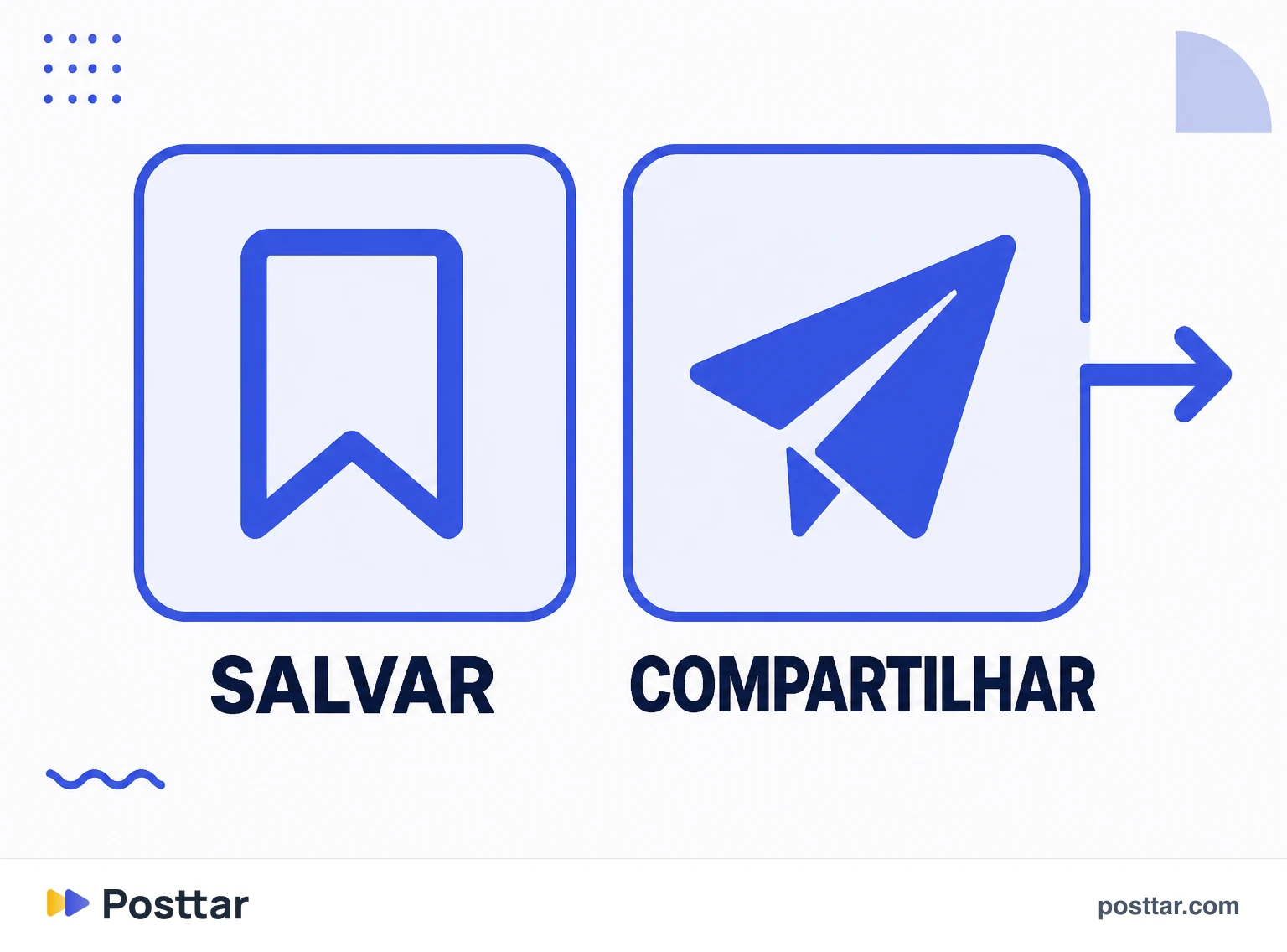
Compartilhamento e salvamento medem coisas diferentes
| Métrica | Sinaliza | Efeito |
|---|---|---|
| Taxa de salvamento | utilidade para si | autoridade, consulta futura |
| Taxa de compartilhamento | valor social | alcance fora da base |
Um conteúdo pode ser muito salvo e pouco compartilhado, e isso é o retrato do material técnico e útil que a pessoa não acha que interessa a mais ninguém. O inverso também existe: conteúdo muito compartilhado e pouco salvo é aquele que diz algo que a pessoa gostaria de ter dito.
Perfil que quer autoridade otimiza salvamento. Perfil que quer crescer otimiza compartilhamento. Quem quer os dois precisa aceitar que são pautas diferentes.
Como aumentar sem pedir
- Escreva pensando no destinatário, não no leitor. A pergunta certa é para quem essa pessoa mandaria isso.
- Nomeie um comportamento reconhecível. Quanto mais preciso o retrato, mais alguém pensa numa pessoa específica.
- Dê palavras a uma opinião difícil de formular. Compartilhar vira uma forma de dizer sem escrever.
- Deixe autossuficiente. Conteúdo que depende de contexto do seu perfil não faz sentido para quem recebe.
- Caiba numa tela. Conteúdo longo é salvo; conteúdo direto é enviado.
Checklist
- Divido pelo alcance, não pelo número de seguidores.
- Comparo contra a minha mediana, não contra um benchmark de mercado.
- Leio junto com o alcance de não seguidores, que é onde o efeito aparece.
- Não confundo com taxa de salvamento: medem coisas diferentes.
- Trato taxa alta como sinal de pauta que merece série.
Perguntas frequentes
Como calcular a taxa de compartilhamento?
Divida o número de compartilhamentos pelo alcance da publicação e multiplique por 100. Use os dois números do mesmo recorte de tempo, e compare sempre com a sua própria mediana em vez de com um número de mercado.
Qual é uma boa taxa de compartilhamento?
Números pequenos são o normal, porque compartilhar é o gesto mais caro do aplicativo. O que importa é a posição em relação à mediana dos seus últimos trinta conteúdos do mesmo formato, não o valor absoluto.
Por que a taxa de compartilhamento prevê crescimento?
Porque é a única interação que leva o conteúdo a quem não segue você, por escolha de uma pessoa. Ela costuma subir antes do pico de alcance, o que a torna um indicador antecedente, enquanto a curtida só confirma o que já aconteceu.
Qual a diferença entre taxa de compartilhamento e de salvamento?
Salvamento sinaliza utilidade para a própria pessoa e constrói autoridade. Compartilhamento sinaliza valor social e gera alcance fora da sua base. Um conteúdo pode ter uma taxa alta e a outra baixa, e as duas situações são informativas.
Dá para ver quem compartilhou?
Não. Os insights mostram apenas o total agregado. A única exceção é quando alguém republica nos Stories marcando o seu perfil, porque aí a menção gera notificação.
Conceitos relacionados

Compartilhamentos
Compartilhamento é quando alguém envia a sua publicação para outra pessoa no Direct ou a republica nos próprios Stories. É a interação mais cara para quem age, porque exige escolher um destinatário e assumir a recomendação, e por isso é a que mais empurra a distribuição para fora da sua audiência. Nenhuma outra interação leva o conteúdo a uma pessoa que não segue você por recomendação humana.
Ler o verbete
Taxa de salvamento
Taxa de salvamento é o percentual de quem viu um conteúdo e o arquivou para voltar depois, calculado dividindo os salvamentos pelo alcance. Ela isola a dimensão de utilidade do engajamento: enquanto curtida mede aprovação e comentário mede disposição a conversar, o salvamento mede se a peça foi considerada digna de consulta futura. É a métrica mais direta para decidir qual pauta merece virar série.
Ler o verbete
Alcance
Alcance é o número de contas únicas que viram um conteúdo pelo menos uma vez. Diferente de impressões, ele não conta a mesma pessoa duas vezes, então mede tamanho de audiência atingida e não volume de exibição. No Instagram o alcance aparece por publicação e por período, e pode ser separado entre seguidores e não seguidores, que é a leitura que mostra se o perfil está descobrindo gente nova ou apenas circulando entre quem já segue.
Ler o verbete
Taxa de engajamento por alcance
Taxa de engajamento por alcance é o percentual das pessoas que viram um conteúdo e reagiram a ele, calculado dividindo o total de interações pelo alcance. Diferente da taxa por seguidor, ela remove do cálculo quem nem chegou a ver a peça, e por isso é a leitura correta para julgar conteúdo. Em compensação, só pode ser calculada por quem tem acesso aos insights, o que a torna inútil para comparar perfis de fora.
Ler o verbete