Instagram reach: what it is, how to read it and why it drops

By Tiago Costa·Updated on August 5, 2026
Definition
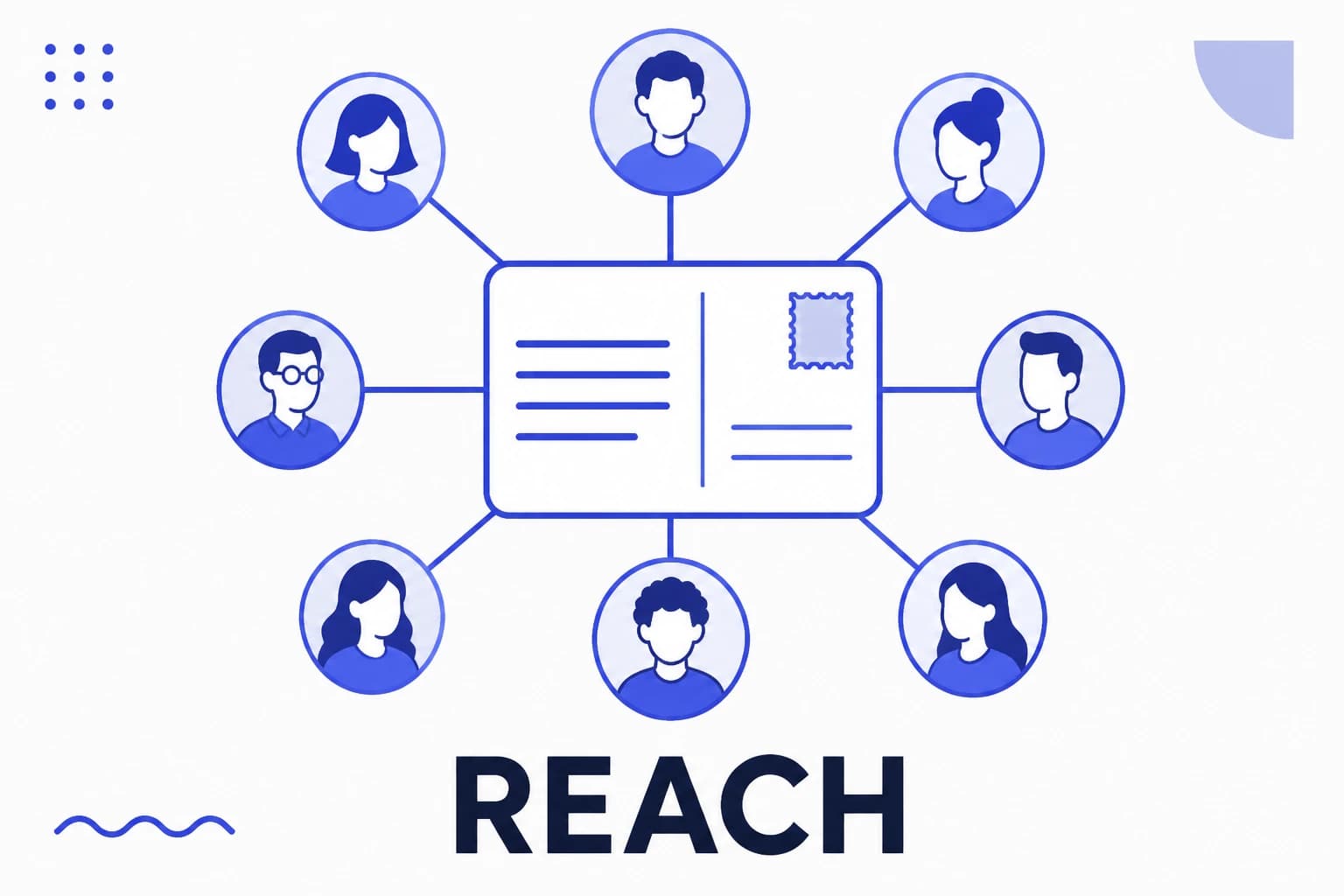
Reach is the number of unique accounts that saw a piece of content at least once. It measures the size of the audience touched, not the volume of exposure.
- It counts people, not views. Someone who saw it five times counts once.
- It exists per post and per period. Monthly profile reach is not the sum of post reach.
- It splits into followers and non followers. That split reveals whether the profile is growing or talking to itself.
- It is not engagement. High reach with low interaction usually means the content went to people who did not want it.
What reach means on Instagram
Reach counts the distinct accounts that saw a piece of content. If the same person opens your carousel three times, that post's reach is still one. That deduplication is what separates reach from every other exposure metric, and it is why reach is the right number to answer the question "how many people did this post touch".
Instagram reports reach at two levels. At the post level, it is how many people saw that specific piece. At the profile level, it is how many people saw anything of yours in the selected period. The two do not add up: someone who saw four of your posts in a week appears once in profile reach and four times in the sum of individual post reach.
Reach is also not a quality metric. It tells you how many people the platform put your content in front of, not how many liked it. That is why it should almost never be read alone, but against engagement and against your follower base.
Reach, impressions and views
The three measure different things and get confused constantly.
| Metric | What it counts | Question it answers |
|---|---|---|
| Reach | Unique accounts | How many people saw it |
| Impressions | Displays, with repetition | How many times it appeared |
| Views | Video and post plays, unified | How much the content was consumed |
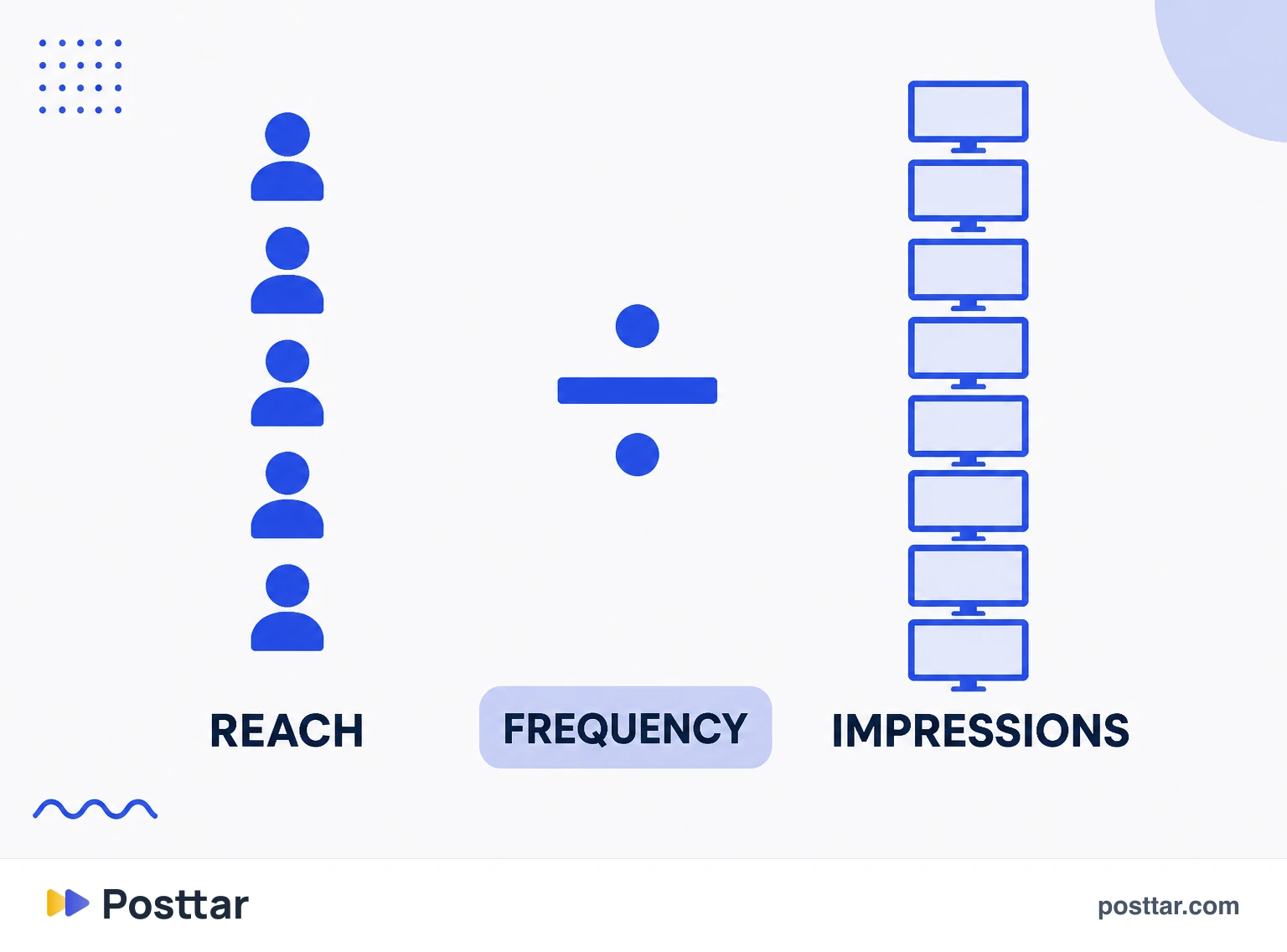
In practice, impressions are always greater than or equal to reach. Dividing one by the other gives frequency, meaning how many times the average person saw the piece. Frequency well above 1 on an organic post usually means it kept circulating inside the same bubble, which is good for recall and bad for discovery.
Over the last few years Instagram has promoted views to headline metric in several panels, which made many people think reach disappeared. It did not disappear, it moved and stopped being the number on top.
Followers and non followers: the split that matters
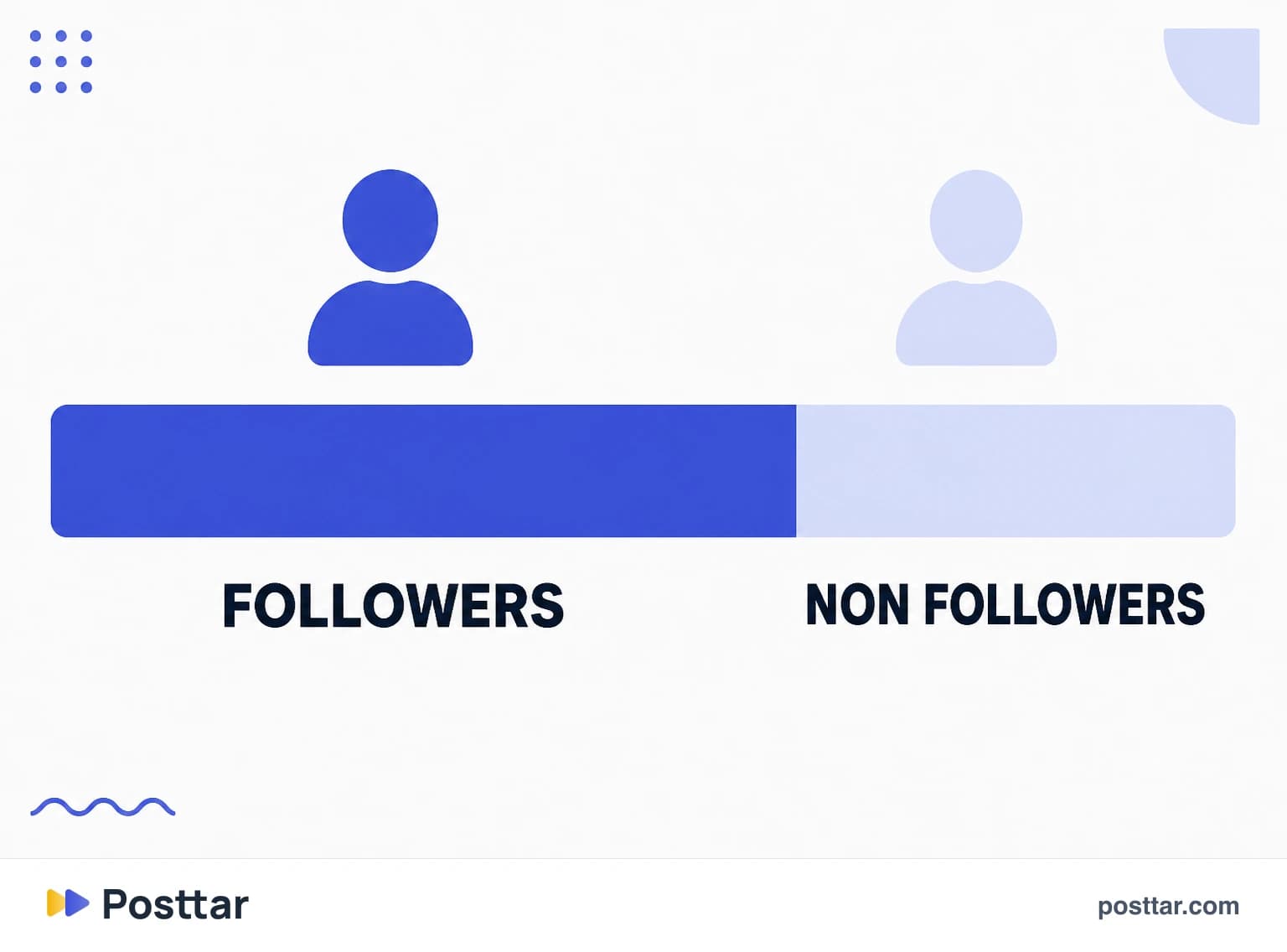
This is the reading that separates a profile that grows from one that only talks to the people already there. Instagram shows, per post, what share of reach came from accounts that follow you and what share came from accounts that do not.
Content distributed mostly to followers is relationship content: it keeps the base warm, drives comments and supports selling. Content with a high share of non followers is discovery content: it brings new people in, and it is what the recommendation system decided to carry outside your bubble.
A healthy account needs both. A profile with 95% of reach coming from followers has a ceiling: the follower count becomes the reach limit. A profile with nearly all reach from non followers usually grows fast with a weak community, which shows up later as low engagement and difficulty selling.
What makes reach drop
A reach drop is almost never a random punishment. The most common causes, roughly by frequency:
- You stopped posting. The strongest signal and the most ignored. Irregular cadence shrinks the pool of people who receive the content in the first moment.
- You changed subject. The system associates an account with an interest cluster. Switching topic delivers content to the wrong audience, which does not interact, which shrinks the next delivery.
- Reposted content without transformation. Third party material, or video carrying another app's watermark, gets reduced distribution by policy.
- Format fatigue. Repeating the same structure for weeks lowers the stop rate and, with it, reach.
- Account restriction. There is an account status screen that reports any active limitation. Check it before blaming the algorithm.
One important note: comparing one post's reach against the previous post is noise. Compare against the median of the last thirty, because a single viral distorts any average.
How to increase reach without tricks
What Instagram states publicly about ranking is quite direct: the most important Feed signals are, in rough order of importance, your activity, information about the post, information about the person who posted and your history of interacting with that account, according to the platform itself in Instagram Ranking Explained. On Reels, the first signal is also the viewer's recent activity.
Translated into routine decisions:
- Prioritise shares and saves. They push content outside the bubble far more than likes do.
- Post on a predictable rhythm. It is not volume, it is cadence.
- Hold attention in the first seconds. In video, the hook decides whether distribution happens at all.
- Write to be found. Name, bio and caption feed the in-app search.
- Use collaboration. A collab post adds both audiences to the same piece.
Reach reading checklist
- I compared against the median of the last thirty posts, not the previous post.
- I looked at the follower versus non follower split.
- I divided reach by followers to get the reach rate.
- I cross-checked saves and shares before concluding anything.
- I checked the account status screen before assuming a penalty.
- I gave the content at least 72 hours before judging it, because Reels accumulate views for weeks.
Frequently asked questions
How do I increase my reach on Instagram?
Post on a predictable rhythm, stay on the subject the system already associates with your account, and design for shares and saves rather than likes. In video, the first seconds decide whether the piece gets distribution at all. Collaboration posts are the fastest legitimate lever, because they add two audiences to the same post.
What happened to Instagram reach?
It did not disappear. Instagram promoted views to the headline metric in several panels, so reach moved down in the interface. It is still reported per post and per period in the insights of professional accounts.
What is an Instagram reach?
It is the number of unique accounts that saw your content at least once. If the same person sees the post five times, that counts as one in reach and five in impressions.
How can I see my reach on Instagram?
In professional accounts, reach appears in the insights of each post and in the profile insights panel, where you can pick the period. The panel keeps a limited history, so anyone who needs a long series has to export the numbers or use a tool that records them over time.
Is reach the same as impressions?
No. Reach counts people, impressions count displays. Impressions are always greater than or equal to reach, and the ratio between the two is frequency, meaning how many times the average person saw the piece.
Related concepts
Impressions
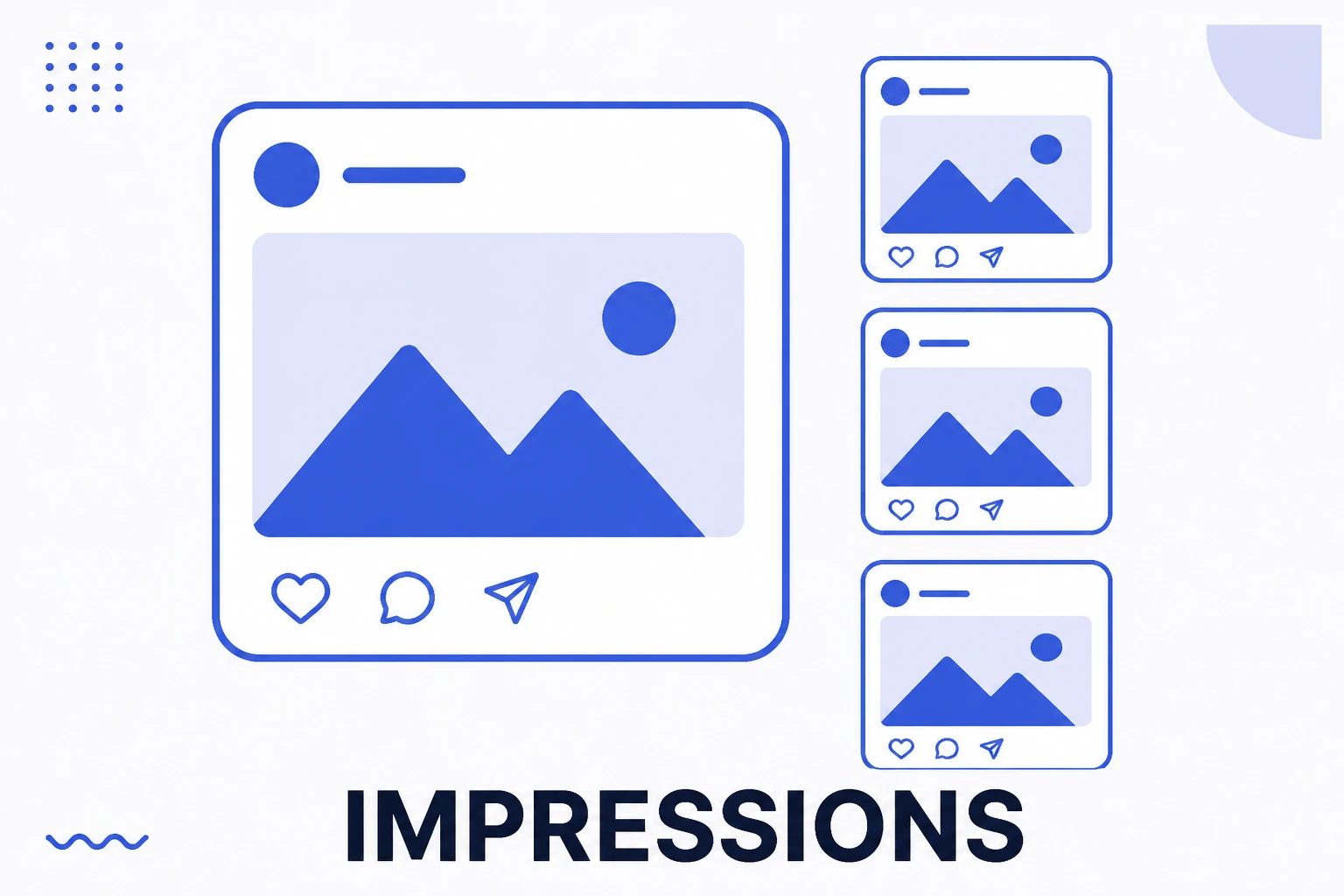
Impressions are the total number of times a piece of content was displayed, including repeat views by the same person. Unlike reach, which counts unique accounts, an impression counts the display: if someone sees the same carousel three times, that is one account of reach and three impressions. The ratio between the two is frequency, and it is what shows whether content is circulating inside the same bubble or finding new people.
Read the entry
Views
Views are the number of times a piece of content was consumed, and since Instagram unified its metrics they apply to every format, not just video. A view includes repeat plays by the same person, which puts it closer to impressions and further from reach. It is now the headline number across most panels in the app, which made many people think reach and impressions had disappeared.
Read the entry
Engagement rate
Engagement rate is the percentage of people who interacted with a piece of content relative to a comparison base. Two formulas are in common use: interactions divided by followers, which measures how the base responds, and interactions divided by reach, which measures the quality of delivery. They answer different questions and produce different numbers for the same post, so the thing that matters is stating which one you used before comparing anything.
Read the entry
Instagram algorithm
The Instagram algorithm is the set of ranking systems that decides what each person sees and in what order. It is not one algorithm: Feed, Stories, Reels and Explore run distinct systems with their own signals and weights, because people arrive at each surface with a different expectation. All of them work by predicting how likely you are to interact with a specific piece and ordering what is available according to that prediction.
Read the entry