Content bank: the reserve that keeps an account running, and what to put in it

By Tiago Costa·Updated on August 5, 2026
Definition
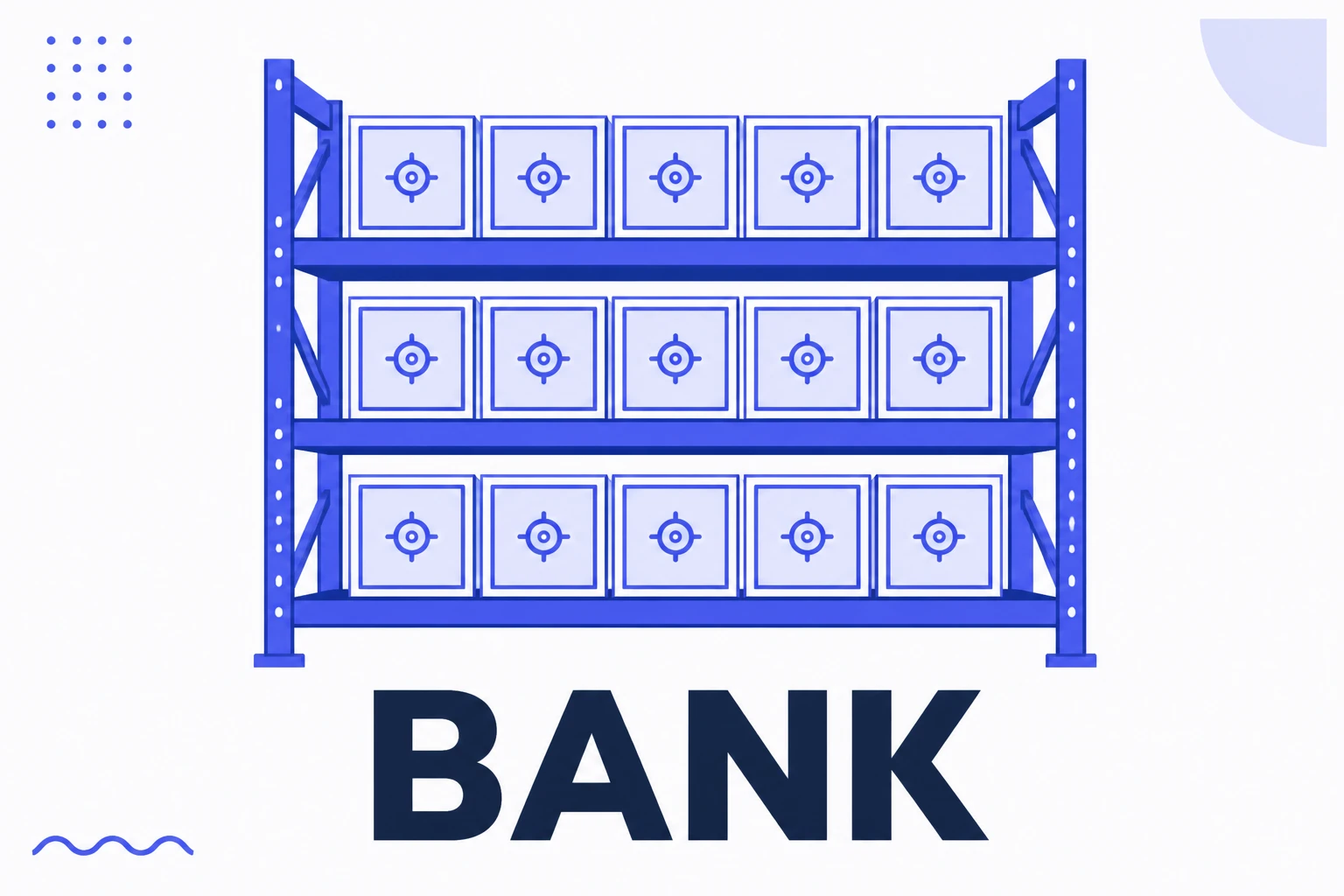
A content bank is a reserve of finished pieces ready to publish.
- It exists because production fails, and it always does eventually.
- Two to four weeks of reserve is the practical target.
- It stores finished pieces, not loose ideas.
- It has to rotate, or content ages on the shelf.
Why it matters more than it seems
The logic is about risk, not tidiness.
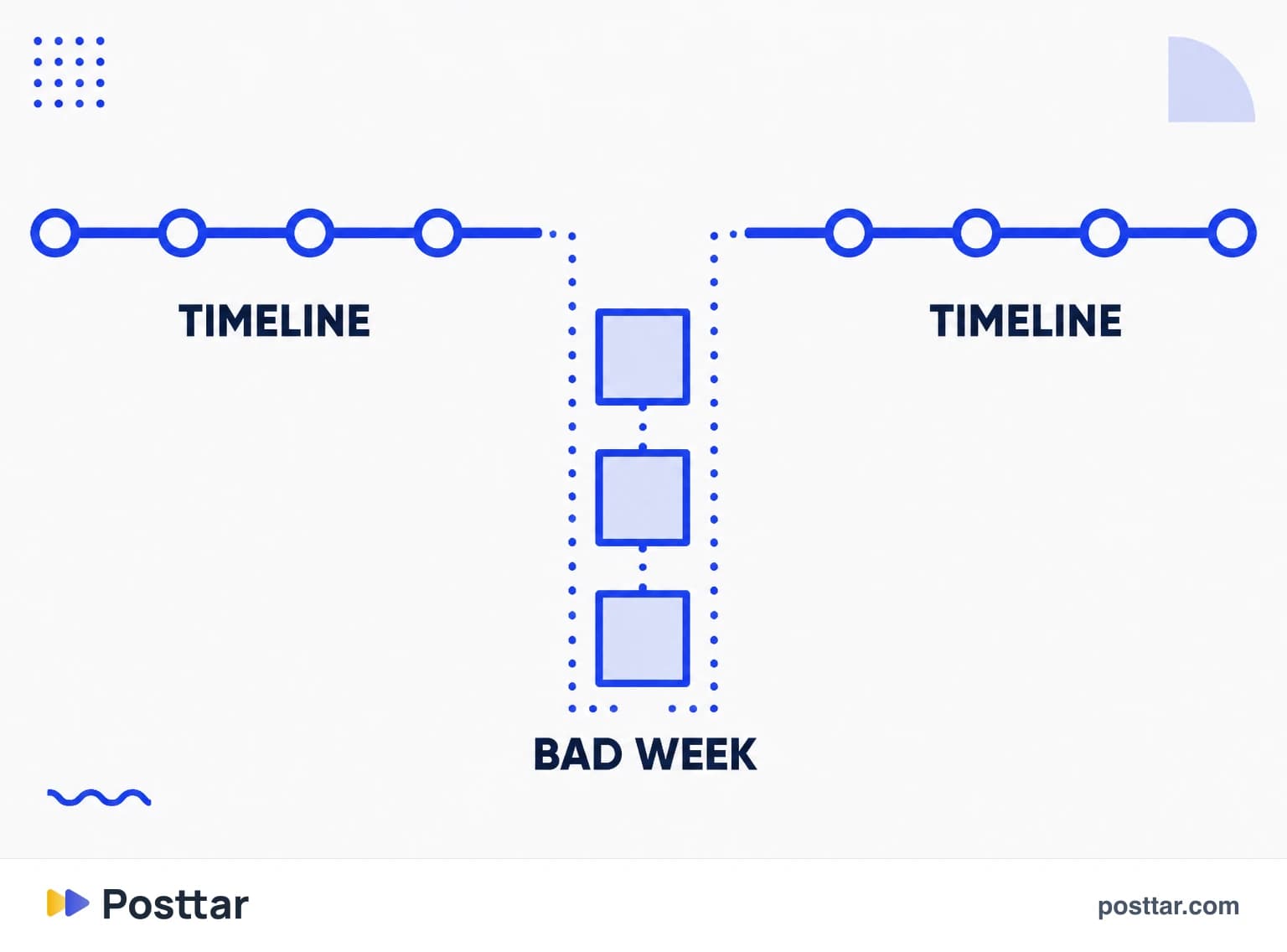
Every content operation has bad weeks: travel, illness, a project swallowing the month, a client emergency. Without a reserve, those weeks become silence.
And silence costs. Not because of the myth that the system punishes accounts that go quiet, but for simpler reasons: the account loses the audience's habit, loses production rhythm and loses the accumulation that makes growth happen. Restarting after a month off is always more expensive than having published something average that month.
The bank is insurance against that. It is the difference between an operation that depends on everything going right and one that survives a bad week.
What to store in it
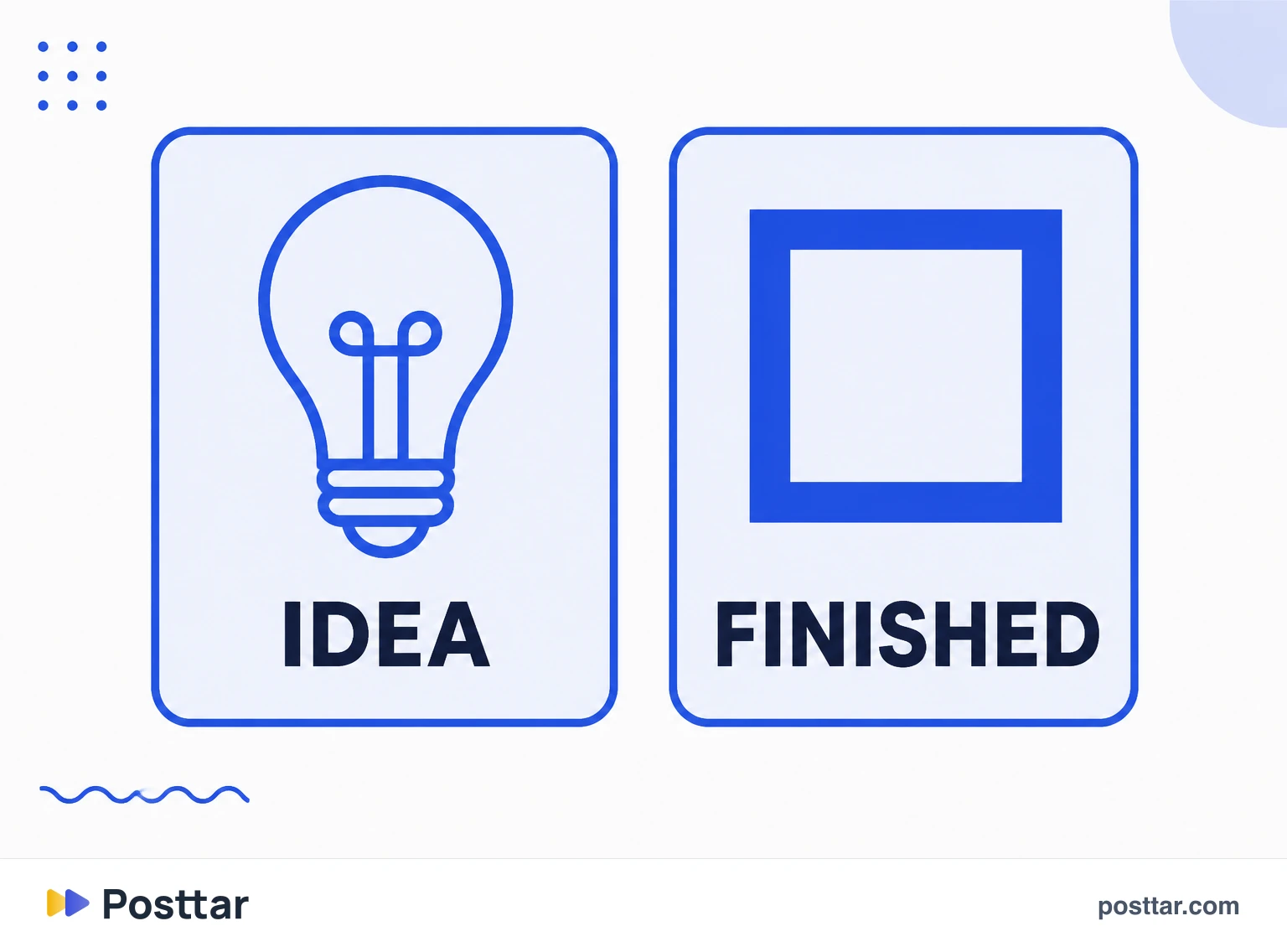
The critical distinction is between a content bank and an ideas list. An idea is useless in an emergency, because it still has to be produced. The bank holds what is finished or minutes away from it.
What works well there:
- Evergreen content. The ideal category, because it does not expire while waiting.
- Leftovers from batch production. The most natural supply source.
- Answers to frequent questions. Always relevant and easy to produce in series.
- Repurposed material. Old pieces that performed, re edited into another format.
What not to store: dated content, news reactions, trend references. Those sour within two weeks.
The right size
Too small a reserve does not protect; too large becomes waste, because content ages and much of it never gets used.
Two to four weeks is the practical target. That covers a trip, an illness or an unusually busy month, which are the real scenarios.
One practice that sustains the bank with no extra effort: whenever you produce in batch, produce one or two pieces more than the calendar asks for. The marginal cost is low because the setup already exists, and the reserve fills itself.
The mistake of becoming a dead archive
The bank fails in two opposite ways.
It never gets used. Someone accumulates pieces and keeps producing in a rush every week, because they forget the reserve exists. The bank only works if it lives in the same place as the calendar, visible at decision time.
It never gets reviewed. Content stored six months ago may have aged: the figure changed, the app interface changed, your position on the subject changed. Publishing without rereading produces public errors.
The fix for both is the same: a fixed review moment, alongside the calendar review, to check what still holds and what should be discarded.
Checklist
- My bank holds finished pieces, not loose ideas.
- The reserve covers two to four weeks.
- I only store content with no expiry.
- I produce one extra piece whenever I film in batch.
- I reread before publishing anything stored.
Frequently asked questions
What is a content bank?
It is the reserve of finished or nearly finished pieces, kept to publish when production fails. It exists because every operation has bad weeks, and without a reserve those weeks become silence.
What is the difference between a content bank and an ideas list?
An ideas list holds topics that still need producing, so it solves nothing in an emergency. The bank holds what is already finished or minutes away from being finished.
How many pieces should a content bank hold?
The equivalent of two to four weeks of publishing. That covers a trip, an illness or an unusually busy month. More than that tends to become waste, because content ages on the shelf.
What kind of content should go in the bank?
Evergreen content, leftovers from batch production, answers to frequent questions and repurposed old pieces that performed. What not to store is dated content, news reactions and trend references.
How do you fill the bank without extra effort?
By producing one or two pieces more than the calendar asks for every time you film in batch. The marginal cost is low because the setup already exists, and the reserve fills itself over the months.
Related concepts

Batch content creation
Batch content creation means producing several pieces in one session rather than one per day. The saving does not come from working faster, it comes from eliminating the setup cost that repeats for every piece: building the set, adjusting light, getting into recording mode, opening the editor. Paid once for ten pieces instead of ten times, that cost stops dominating the operation.
Read the entry
Content calendar
A content calendar is the document organising what will be published, when and in which format. It solves content production's most expensive problem, which is deciding the topic on publishing day, when there is time neither to think nor to produce properly. Most calendars are abandoned within three weeks, and the reason is almost always the same: it was built as a calendar rather than as a production queue.
Read the entry
Evergreen content
Evergreen content is what stays true and useful long after publishing, without depending on a date, on novelty or on the context of the moment. The name comes from trees that never lose their leaves. It returns less at the peak and far more cumulatively: while trend content delivers everything in 48 hours and dies, evergreen keeps being found, recommended and shared for months.
Read the entry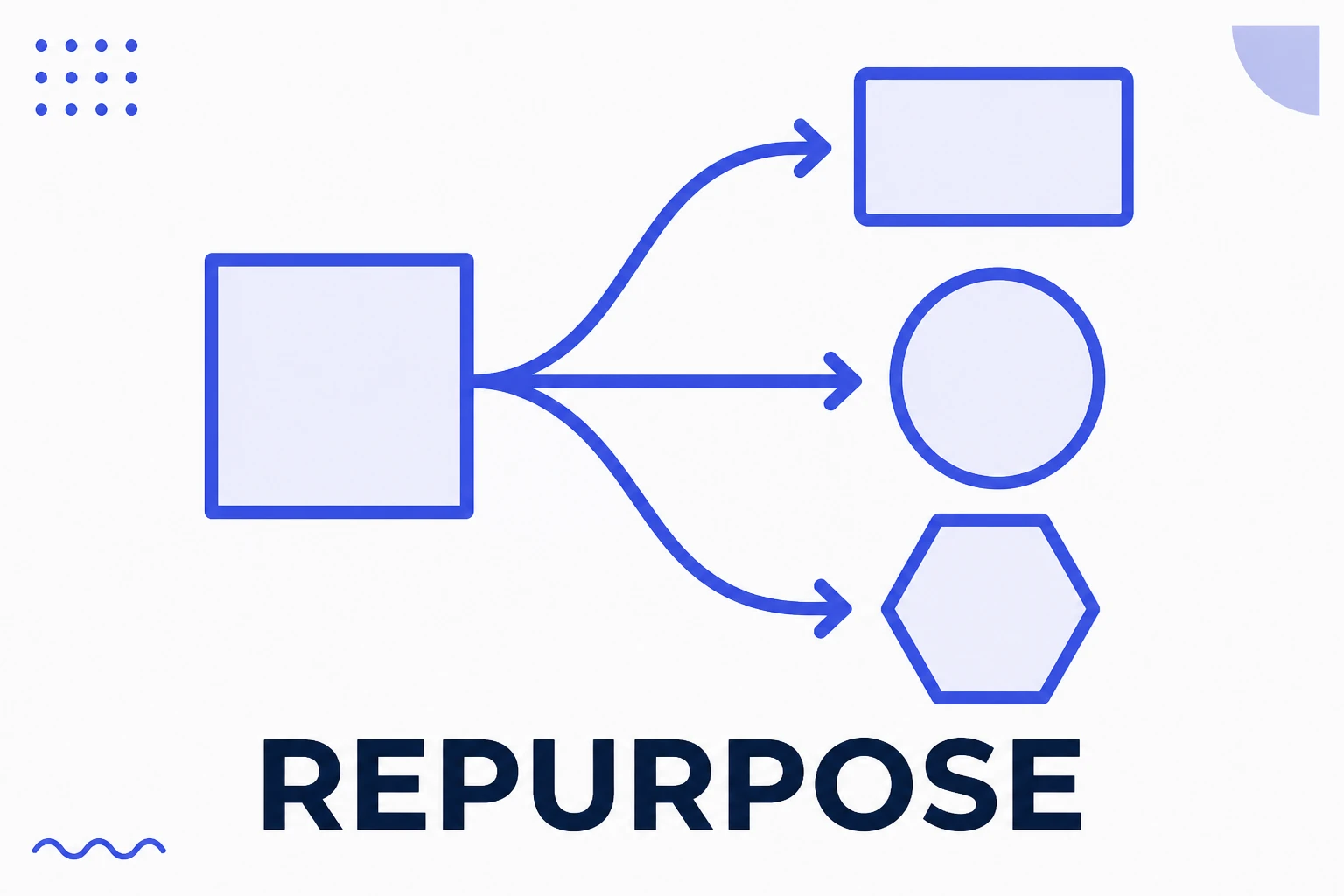
Content repurposing
Repurposing is turning one piece into several, adapting the same idea into other formats, platforms or angles. It is not reposting the same piece in different places: it is rewriting the idea in each format's language. It is the practice that most multiplies output without multiplying effort, and the most underused out of fear of repetition.
Read the entry