Repurposing: reusing the same content in another format, and what separates it from reposting

By Tiago Costa·Updated on August 5, 2026
Definition
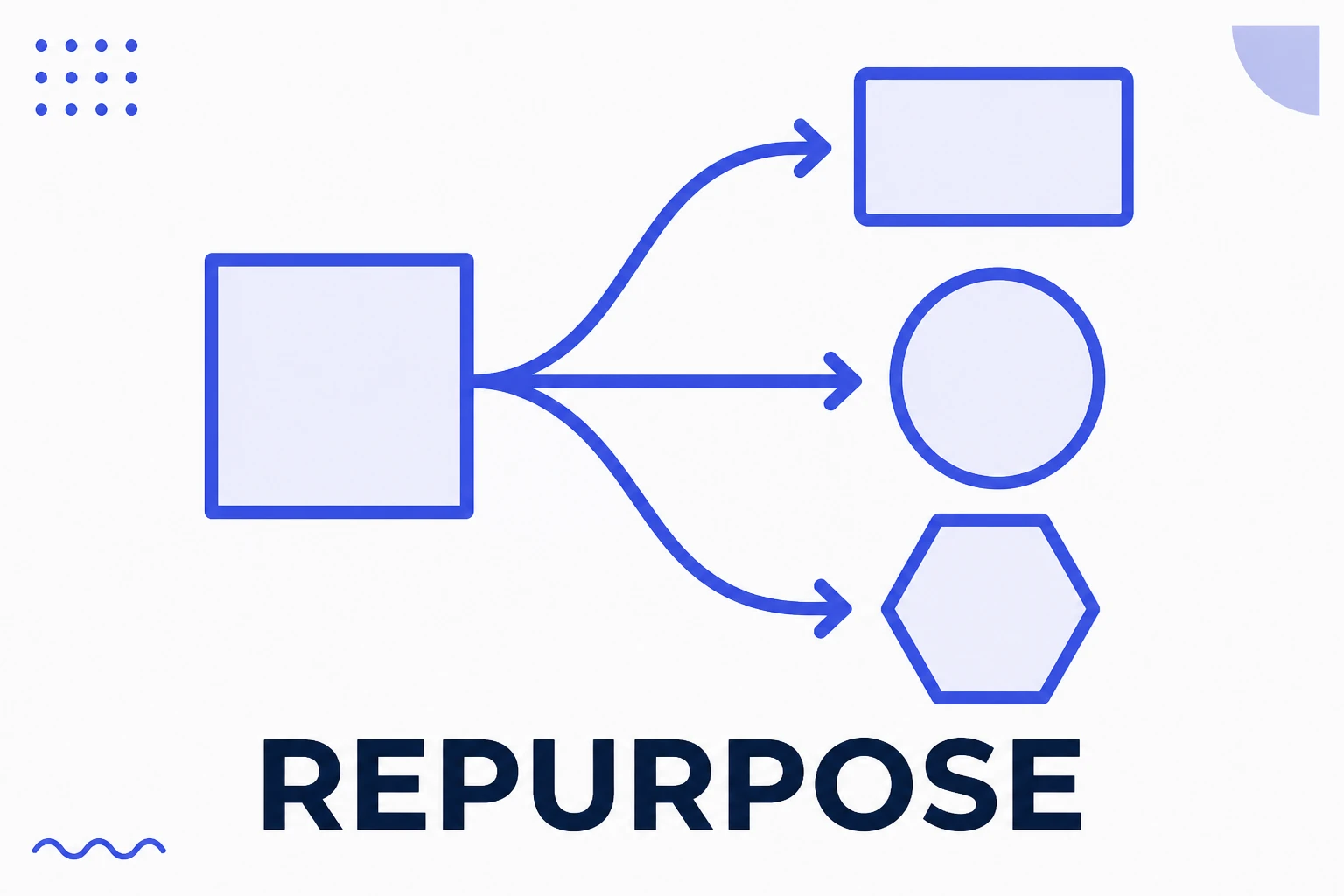
Repurposing turns one piece into several by adapting the format.
- It is not reposting, it is rewriting in each format's language.
- It multiplies output without multiplying effort.
- Repetition fear is unfounded, because almost nobody sees everything.
- Start from what worked, not from leftovers.
How it differs from reposting
This distinction is the most important part of the concept.
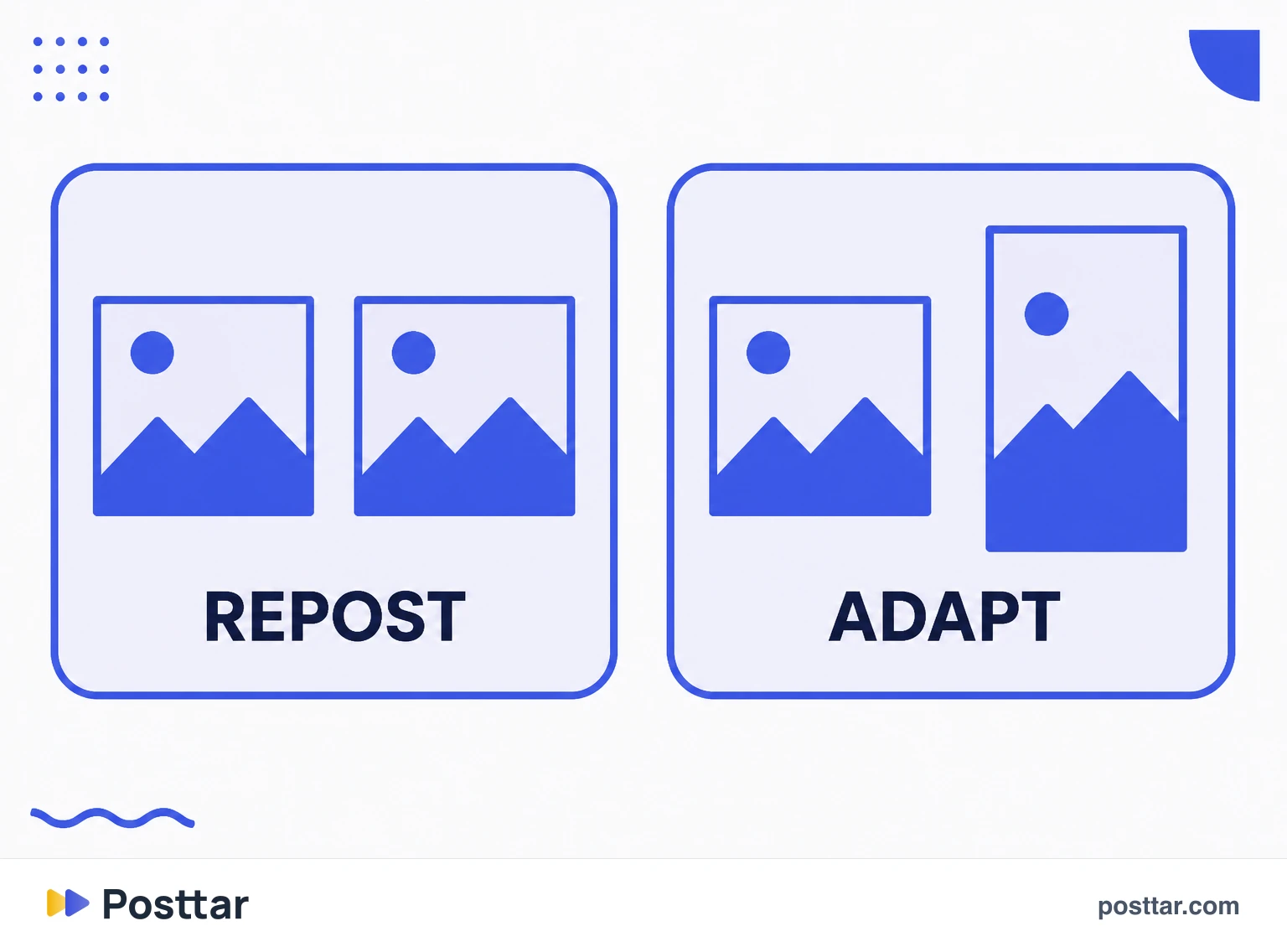
Reposting means taking the same piece and publishing it again elsewhere, unchanged. A vertical video published with another platform's watermark is the classic case, and it performs badly for two reasons: the piece was not made for that context, and the system tends to reduce distribution of unoriginal content.
Repurposing means taking the idea and rebuilding it in the new format's language. The same argument becomes a Reel with a spoken hook, a carousel with slide structure and a Stories sequence with a poll. Three pieces, one idea, three different constructions.
Where to start
The most common mistake is repurposing leftovers. The right move is repurposing what worked.
Priority order:
- Your best performing pieces. Already validated with your audience. If a carousel did well six months ago, its idea works again as video.
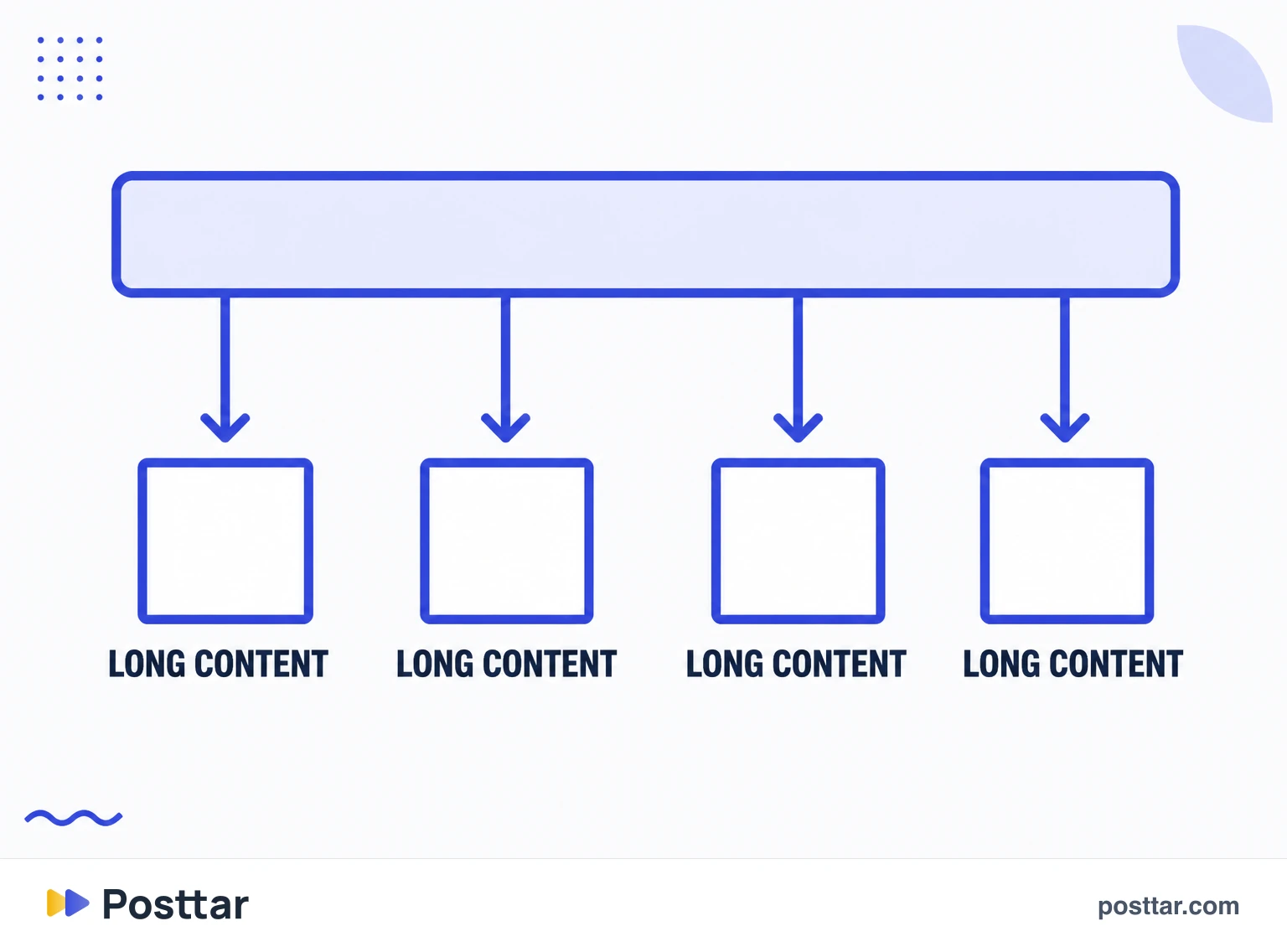
- Long content you already have. A live, a podcast episode, a class or a dense text are raw material for dozens of short pieces.
- Repeating questions. Every answer you have already given in the inbox is a finished piece waiting for a format.
- Evergreen content. Having no expiry, it can return without sounding old.
How to adapt properly
Each format asks for a rebuild, not a literal translation:
- Carousel to Reel. The cover text becomes the spoken hook; each slide becomes a spoken segment with visual support.
- Reel to carousel. The spoken points become slides; what was editing rhythm has to become visual hierarchy.
- Long to short. Each isolated point becomes a whole piece, with its own hook and close. It is not cutting a chunk, it is building a piece around it.
- Short to long. Several short pieces from the same pillar become one in depth resource.
The sign of a bad adaptation is a piece that feels incomplete: starting mid thought, ending without closing, or depending on context that only existed in the original.
The fear of repeating
It is the objection that most prevents the method being used, and it is unfounded for three concrete reasons.
Almost nobody sees everything. The fraction of your audience that saw any specific piece is small. Repeating an idea means most people are seeing it for the first time.
Repetition is what builds position. Nobody is remembered for saying something once. Accounts with clear positioning repeat the same theses for years, changing the form.
Different formats reach different people. Whoever consumes Reels is not exactly whoever reads carousels.
What genuinely tires is repeating the same execution, with the same text and image, in a short interval. That is reposting, not repurposing.
Checklist
- I repurpose what worked, not what was left over.
- I rebuild in the format's language rather than translating literally.
- Each piece works alone, with no context from the original.
- I do not republish the same execution in a short interval.
- I use long content I already have as raw material.
Frequently asked questions
What is content repurposing?
It is turning one piece into several, adapting the same idea into other formats, platforms or angles. It is not publishing the same piece in different places, it is rewriting the idea in each format's language.
What is the difference between repurposing and reposting?
Reposting publishes the same piece unchanged, which performs badly because it was not made for that context and the system reduces distribution of unoriginal content. Repurposing rebuilds the idea in the new format's language.
What is an example of repurposing content?
Turning a carousel into a Reel using the cover text as the spoken hook, cutting a live into several short videos each with its own hook, or combining several short pieces from one pillar into an in depth resource.
Does repurposing tire the audience?
Almost never. The fraction of your audience that saw any specific piece is small, different formats reach different people, and repeating theses is what builds positioning. What tires is repeating the same execution in a short interval.
How do you repurpose your content?
Start with your best performing pieces, which are already validated with your audience. Then use long content you already have, such as lives and classes, and the questions that repeat in your inbox.
Related concepts

Content bank
A content bank is the reserve of finished or nearly finished pieces, kept to publish when production fails. It exists because production always fails at some point: the week turns, someone gets ill, a client runs late. Without a reserve the account simply stops, and stopping costs more than publishing something average, because returns depend on consistency.
Read the entry
Evergreen content
Evergreen content is what stays true and useful long after publishing, without depending on a date, on novelty or on the context of the moment. The name comes from trees that never lose their leaves. It returns less at the peak and far more cumulatively: while trend content delivers everything in 48 hours and dies, evergreen keeps being found, recommended and shared for months.
Read the entry
Batch content creation
Batch content creation means producing several pieces in one session rather than one per day. The saving does not come from working faster, it comes from eliminating the setup cost that repeats for every piece: building the set, adjusting light, getting into recording mode, opening the editor. Paid once for ten pieces instead of ten times, that cost stops dominating the operation.
Read the entry
Content pillar
Content pillars are the few recurring subjects an account covers. They exist to solve two problems at once: the blank page for people who do not know what to post, and the dispersion of people who post about everything and are recognised for nothing. Three to five pillars is the range that works, and the most common mistake is confusing a pillar with a format.
Read the entry