Content calendar: what to publish and when, and why it fails when it is only a calendar

By Tiago Costa·Updated on August 5, 2026

Definition
A content calendar organises what to publish, when and in what format.
- It removes the topic decision from publishing day.
- It needs status, not just dates: idea, filmed, edited, scheduled.
- Two to four weeks is the horizon that holds.
- It fails when too rigid to absorb the unexpected.
The problem it solves
Without a calendar, the sequence is always the same: the day arrives, you do not know what to post, you pick a topic in a hurry, produce in a rush and publish something mediocre. Repeated over months, that produces an entire account of mediocre content.
The calendar breaks that cycle by separating two decisions that should not happen together: what to say and when to publish. Deciding the topic in advance allows better thinking; deciding the date in advance allows batch production.
The gain is not tidiness, it is average quality. It is the same piece made with three days of preparation instead of three hours.
What it needs beyond dates
Here is the reason for abandonment. A calendar holding only dates and topics does not survive the first delay, because it does not show where each thing stands.
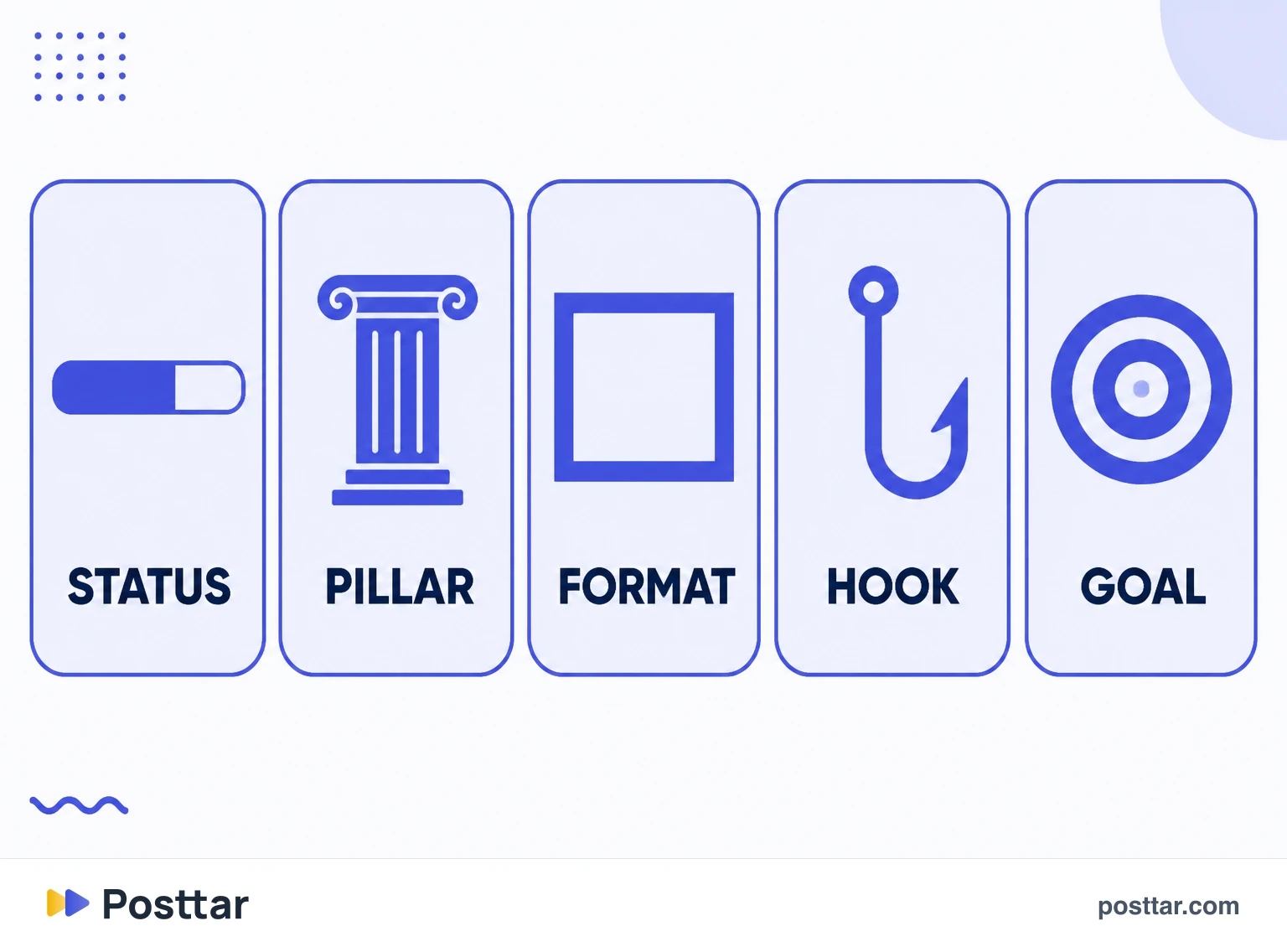
Columns that make a difference:
- Status. Idea, script ready, filmed, edited, scheduled. It is the most important column and the most forgotten.
- Pillar. It makes imbalance visible before it becomes a problem.
- Format. So you do not discover late that the whole week is carousels.
- Hook. One sentence, not just the topic. "Bio" is not content; "the bio mistake that makes visitors leave" is.
- Objective. Attract, educate or convert, which connects to the funnel.
The right horizon
Over planning is as bad as not planning.
Three months is the horizon of calendars nobody follows. The niche shifts, a trend appears, a client brings a new question, and the plan becomes fiction.
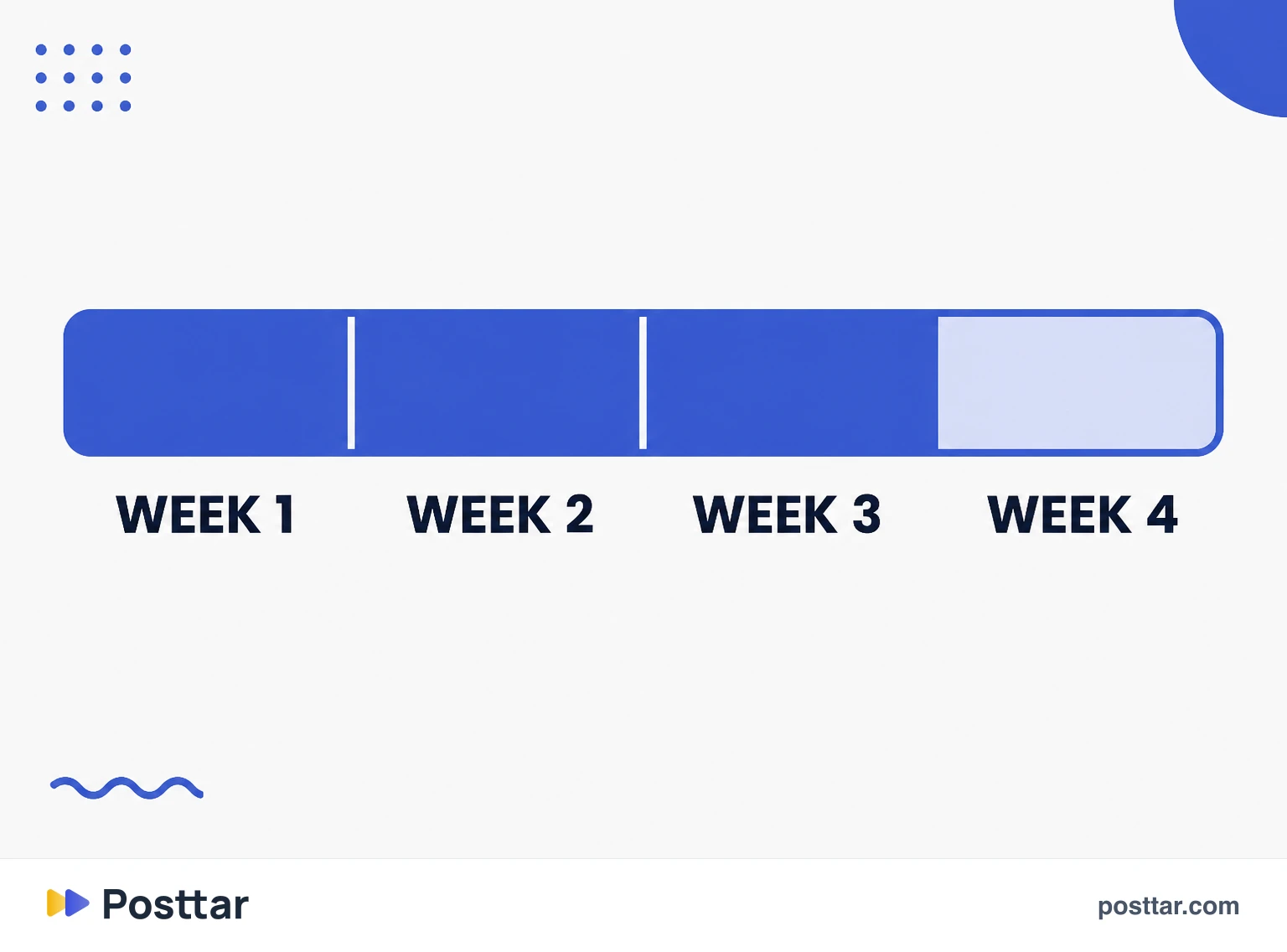
Two to four weeks is the range that holds: long enough to allow batch production, short enough to absorb what happens.
A practice that works: keeping the calendar with deliberately empty space, around a quarter of the slots. That space is where trends, answers to current questions and reactive content go, without dismantling the rest.
Why most get abandoned
- Too rigid. A calendar that cannot absorb the unexpected is abandoned at the first unexpected thing.
- Too detailed. If filling the calendar takes as long as producing, it stops paying off.
- Disconnected from production. A calendar that only states dates and does not track piece status does not help on the day a piece runs late.
- Built once. Without a fixed weekly review moment, it goes stale and becomes decoration.
Checklist
- I have a status column, not just dates.
- Every piece has a written hook, not just a topic.
- I tag each piece with its pillar.
- My horizon is two to four weeks.
- I leave space deliberately empty for the unexpected.
Frequently asked questions
What is a content calendar?
It is the document organising what will be published, when and in which format. It exists to remove the topic decision from publishing day, which is what systematically produces mediocre content.
What should a content calendar include?
Beyond dates and topics, it needs piece status, pillar, format, a written hook and an objective. The status column is the most important and most forgotten, because it shows what is late before the deadline arrives.
How far ahead should you plan content?
Two to four weeks. Three months is the horizon of calendars nobody follows, because the niche shifts and the plan becomes fiction. Two to four weeks allows batch production and still absorbs what happens.
Why does my content calendar not work?
The most common reasons are rigidity that cannot absorb the unexpected, excessive detail that makes filling it cost as much as producing, no tracking of piece status, and no fixed weekly review moment.
Should I fill the whole calendar?
No. Leaving around a quarter of the slots deliberately empty gives room for trends, answers to current questions and reactive content without dismantling the rest of the plan.
Related concepts

Content pillar
Content pillars are the few recurring subjects an account covers. They exist to solve two problems at once: the blank page for people who do not know what to post, and the dispersion of people who post about everything and are recognised for nothing. Three to five pillars is the range that works, and the most common mistake is confusing a pillar with a format.
Read the entry
Batch content creation
Batch content creation means producing several pieces in one session rather than one per day. The saving does not come from working faster, it comes from eliminating the setup cost that repeats for every piece: building the set, adjusting light, getting into recording mode, opening the editor. Paid once for ten pieces instead of ten times, that cost stops dominating the operation.
Read the entry
Content bank
A content bank is the reserve of finished or nearly finished pieces, kept to publish when production fails. It exists because production always fails at some point: the week turns, someone gets ill, a client runs late. Without a reserve the account simply stops, and stopping costs more than publishing something average, because returns depend on consistency.
Read the entry
Posting frequency
Posting frequency is how many pieces an account publishes per period. There is no universal number, and anyone promising one is selling simplification: the right answer depends on the format, the niche and, above all, what you can sustain. Consistency weighs more than volume, because an account posting three times a week for a year returns more than one posting daily for a month then vanishing.
Read the entry