CTR: what click-through rate measures and why there is no universal good number

By Tiago Costa·Updated on August 5, 2026
Definition
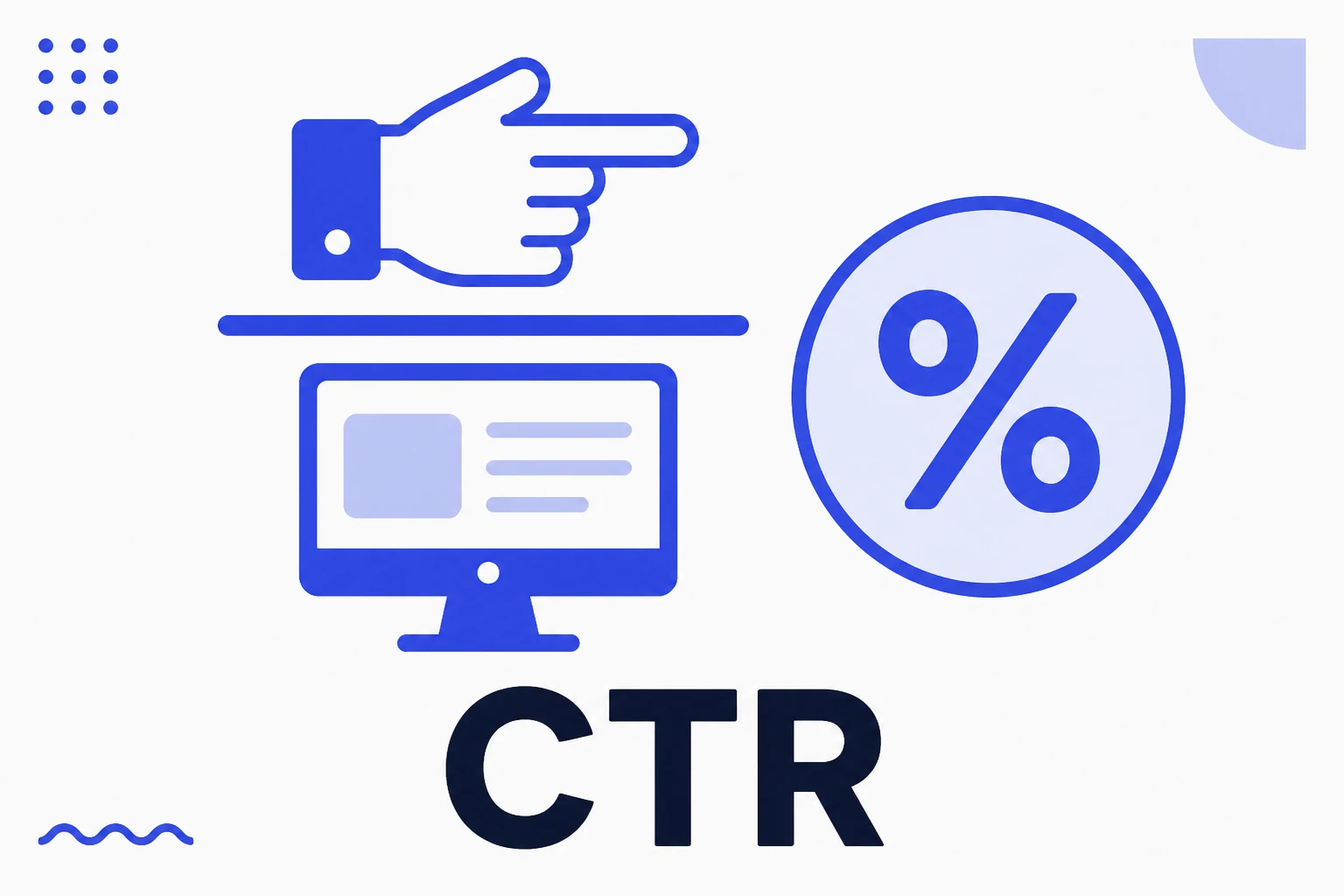
CTR is click-through rate: how many times something clickable was tapped divided by how many times it was shown.
- Formula: clicks ÷ impressions × 100.
- It measures the call, not the product or the destination page.
- There is no universal good number. It depends on context.
- Do not compare across channels. The bases differ.
What the acronym means and what it measures
CTR comes from click-through rate. The maths is simple: clicks ÷ impressions × 100.
What it measures is the efficiency of the call, meaning how much that copy, image or button convinced someone to act at the moment it appeared. It says nothing about what happens afterwards: a poor destination page does not lower CTR, it lowers conversion.
That separation is what makes the metric useful. When CTR is good and conversion is bad, the problem is the destination. When CTR is bad, the problem is the promise.
Why there is no universal good CTR
It is the most searched question on the topic in every language, and the honest answer disappoints: it depends on context, a lot.
The same percentage changes meaning with three variables:
- Viewer intent. A search result appears to someone who already looked for the subject; a feed post appears to someone who asked for nothing.
- Position. A link at the top of the screen has a far higher CTR than the same link in a footer.
- Format. Button, text, image and sticker behave completely differently.
Which is why a market table saying 2% is good does not help: it describes a specific context that is probably not yours. The benchmark that works is your own median, in the same position and the same format.

CTR on Instagram, in practice
In organic, the CTR that matters is the profile link and the Story link sticker. The most useful calculation bases:
| Where | Clicks ÷ | Answers |
|---|---|---|
| Bio link | profile visits | whether the bio convinces arrivals |
| Story sticker | views of that frame | whether that Story's call works |
Dividing clicks by post reach is a common error: whoever saw the post in the feed had no clickable link in front of them, so the denominator is wrong.
In paid media the metric comes ready in Ads Manager, with one detail worth knowing: there is usually CTR for all clicks and CTR for link clicks. The first includes expanding the image and visiting the profile, so it is always higher and less useful.
How to improve it
- Promise something specific. "Learn more" is the worst button copy there is, because it does not say what is on the other side.
- Shorten the distance between the promise and the link. If the call is on frame 3 and the link on frame 7, intent cools.
- One destination per call. A page with ten links converts worse than one with a single link.
- Test one variable at a time. Changing copy and destination together voids the test.
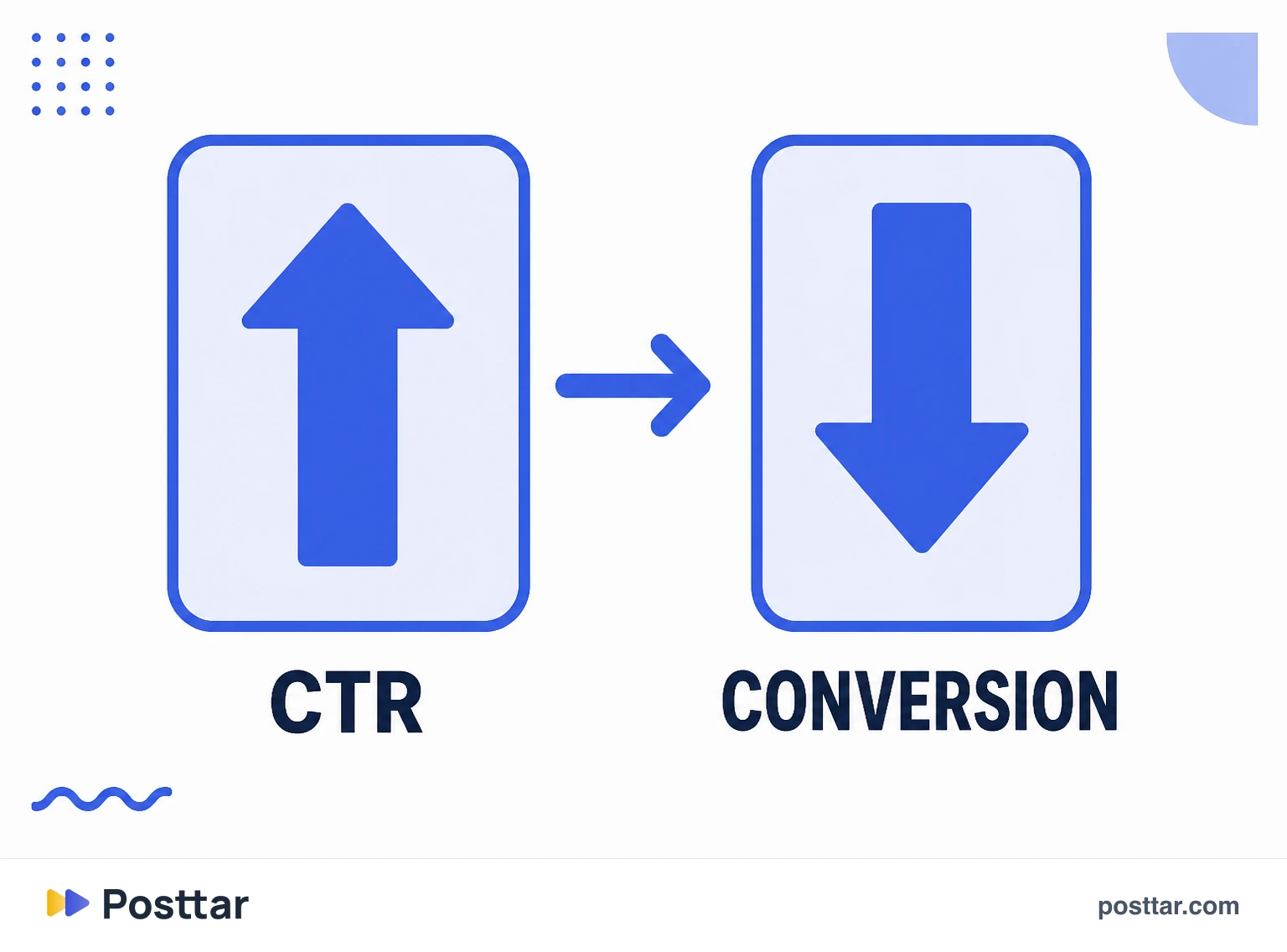
- Read CTR alongside destination conversion. CTR rising while conversion falls indicates an overstated promise.
Checklist
- I use the right denominator for each click type.
- I compare against my own median, not a market table.
- I do not compare CTR across channels or formats.
- In ads, I know whether I am looking at link CTR or all-clicks CTR.
- I read it alongside destination conversion.
Frequently asked questions
What is a good click-through rate?
There is no universal figure. The same percentage can be excellent in one place and weak in another, because intent, position and format change everything. The benchmark that works is your own median in the same format and position.
Is a CTR of 2% good?
It depends entirely on where the click happens. Two percent on a bio link measured over profile visits means something completely different from two percent on a search result, where the person already looked for the subject.
What are click-through rates?
They are the percentage of times a clickable element was tapped relative to how many times it was shown. The formula is clicks divided by impressions times a hundred, and the whole difficulty lies in choosing the right denominator.
Is a high CTR always good?
No. High CTR with low destination conversion usually indicates an overstated promise: the call convinced people to click and the page did not deliver. Read both metrics together, because the first without the second can mask a problem.
What is the difference between CTR and conversion rate?
CTR measures how many clicked over how many saw the call. Conversion rate measures how many completed the desired action over how many arrived. One judges the call, the other the destination, and the problem is almost always in one of them rather than both.
Related concepts

Link clicks
Link clicks is the number of taps on the clickable links of a profile and Stories: the bio link, action buttons and the link sticker. It is the metric that closes the funnel inside Instagram, because it marks the moment someone leaves the app. The insights number almost never matches your website analytics, and the reasons for that are well known and do not indicate an error.
Read the entry
Profile visits
Profile visits is the number of times your profile page was opened during a period. It is the closest thing to an intent metric Instagram provides organically: nobody opens a profile by accident, and whoever does is deciding whether to follow, buy or click the link. The panel shows only the total, never who visited, and there is no legitimate way to find that out.
Read the entry
Engagement rate
Engagement rate is the percentage of people who interacted with a piece of content relative to a comparison base. Two formulas are in common use: interactions divided by followers, which measures how the base responds, and interactions divided by reach, which measures the quality of delivery. They answer different questions and produce different numbers for the same post, so the thing that matters is stating which one you used before comparing anything.
Read the entry
Reach
Reach is the number of unique accounts that saw a piece of content at least once. Unlike impressions, it does not count the same person twice, so it measures the size of the audience touched rather than the volume of exposure. On Instagram, reach is reported per post and per period, and it can be split between followers and non followers, which is the reading that shows whether a profile is discovering new people or simply circulating among those who already follow it.
Read the entry