Fake followers: how to spot them and why they cost so much

By Tiago Costa·Updated on August 5, 2026
Definition
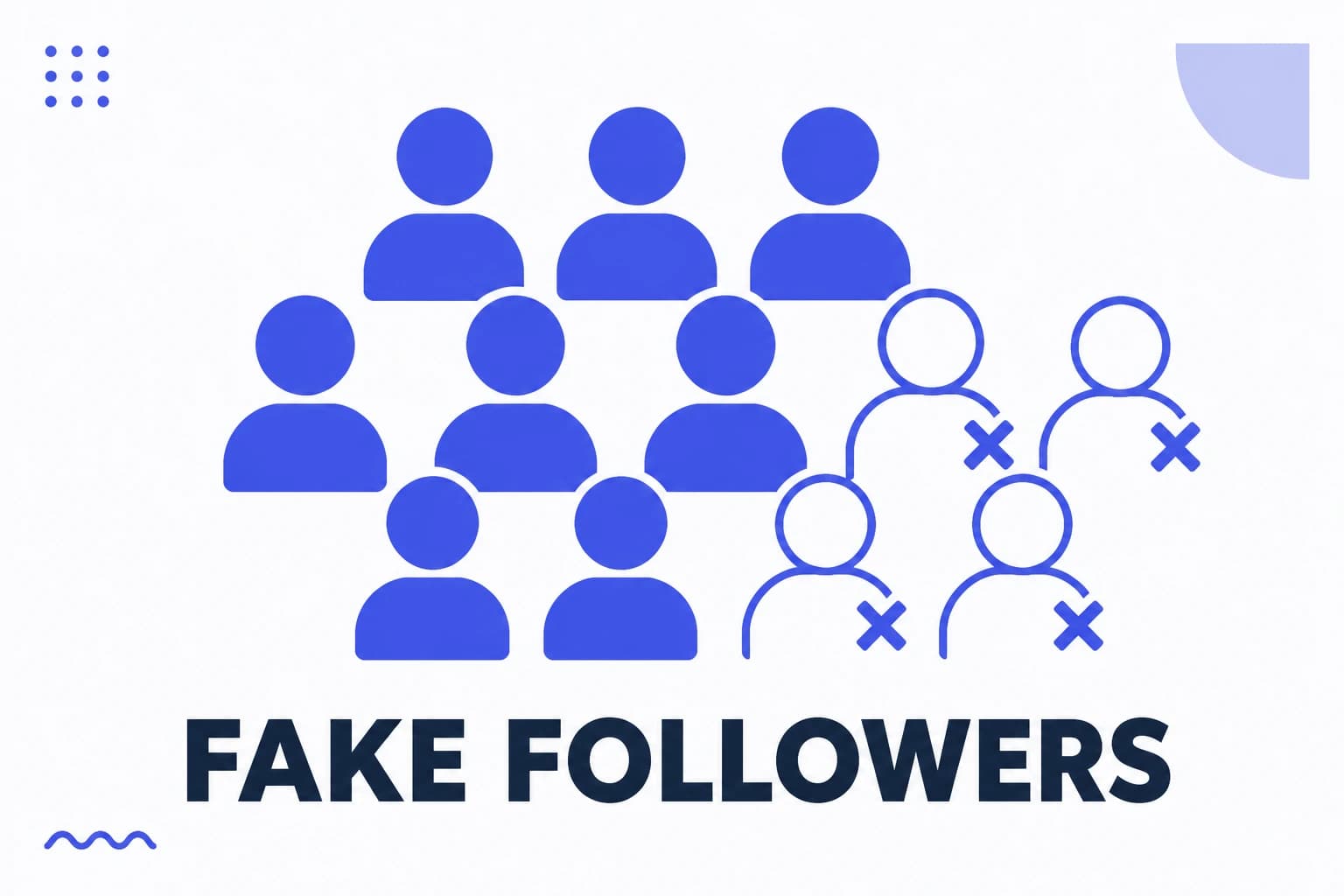
Fake followers are accounts following with no real interested person behind them.
- They enter every denominator and drag reach and engagement rates down.
- They teach the wrong audience to the recommendation system.
- They are visible from outside by the pattern, not by the number.
- There is no native way to remove them in bulk.
Where they come from
Three origins, with different degrees of damage.
- Direct purchase. Batches of automated accounts, the most obvious case and the easiest to detect.
- Giveaways unrelated to the topic. Real people who followed for the prize, not the subject. Not fake accounts, but they behave like them: never interact and often leave later.
- Automated growth services. Bots that mass-follow hoping for reciprocity. They bring real, uninterested accounts and risk an action block.
Worth naming what nobody controls: every profile picks up the occasional bot follower without having done anything. A handful is normal noise; the problem is proportion.
How to spot them without a shady site
Most "fake follower checkers" ask for account access and return a number with no explained method. It is not necessary: the pattern shows up in your own insights.
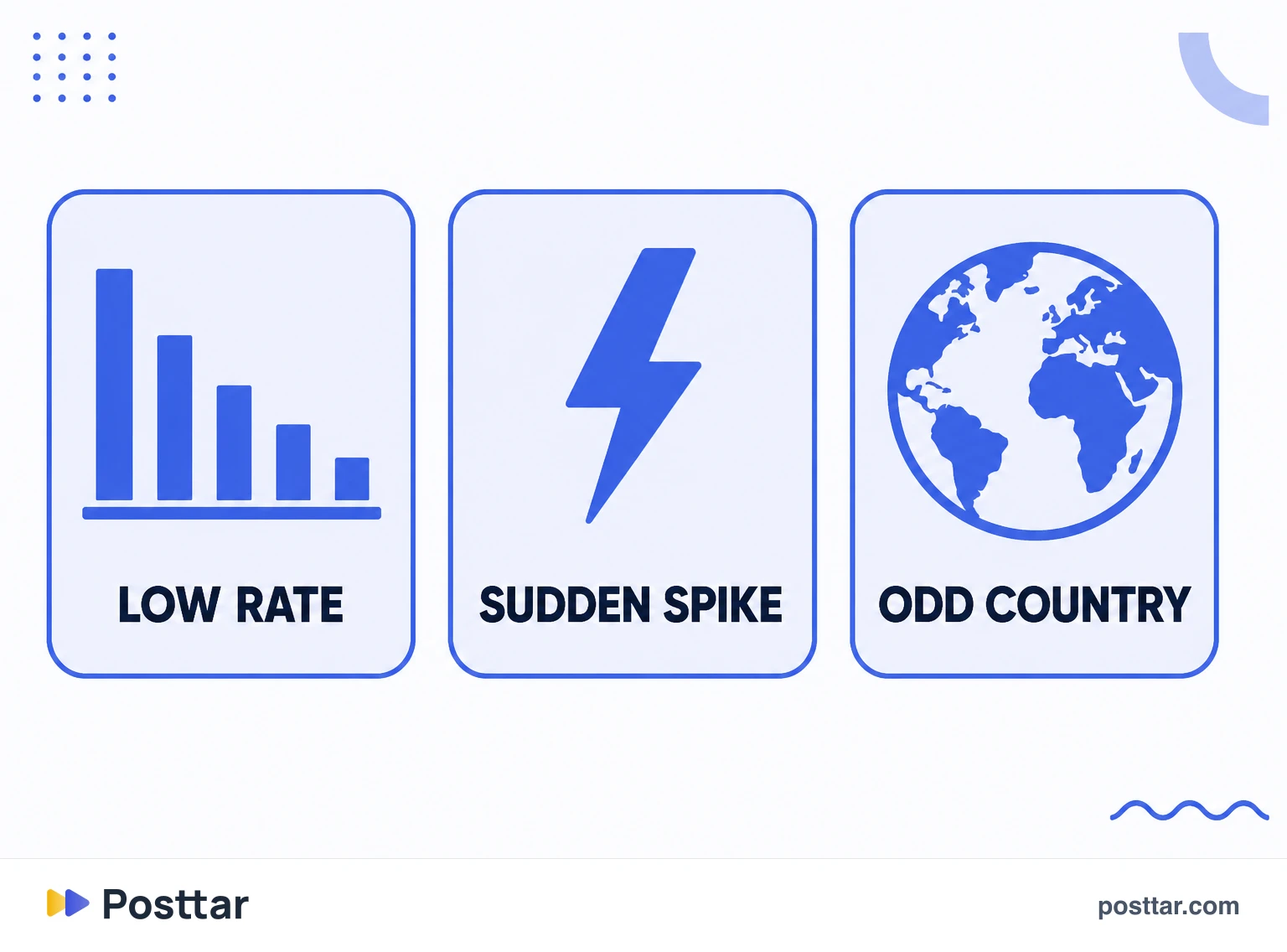
- A large base with a very low engagement rate. The classic signature.
- A reach rate out of proportion with the size. If a large share of the base never receives anything, it is not active people.
- Follower spikes with no content spikes. A sudden gain on a day with no notable post is purchase or bots.
- Incoherent demographics. A base concentrated in countries whose language you never used.
- Generic serial comments. Loose emoji and stock phrases unrelated to the post.
What they break
| Metric | What happens |
|---|---|
| Reach rate | falls, because a fake account is in the denominator and never in the numerator |
| Engagement rate | falls for the same reason, and it is the one brands check |
| Demographics | get distorted and stop being useful for decisions |
| Recommendation | the system learns to offer your content to the wrong audience |
The last one is the most expensive and the least noticed. The algorithm decides who to show your content to based on who interacts with it. A fake base does not interact, so it teaches nothing, and the little signal it does generate points in the wrong direction.
What to do if you already have them
- Stop the source first. Cancel the growth service, end giveaways unrelated to the topic.
- Remove gradually. You can remove followers from the list, one by one. There is no native bulk removal, and tools promising it usually trigger an action block.
- Accept the number dropping. A smaller base with better rates is worth more in any negotiation than a bigger one with poor rates.
- Rebuild with discovery content. It is the only source of real followers.
- Document before and after. If you work with brands, a series showing the cleanup and the rate improvement is a better argument than a raw number.
Checklist
- I do not buy followers or use automated growth services.
- Giveaways, when I run them, relate directly to the profile's subject.
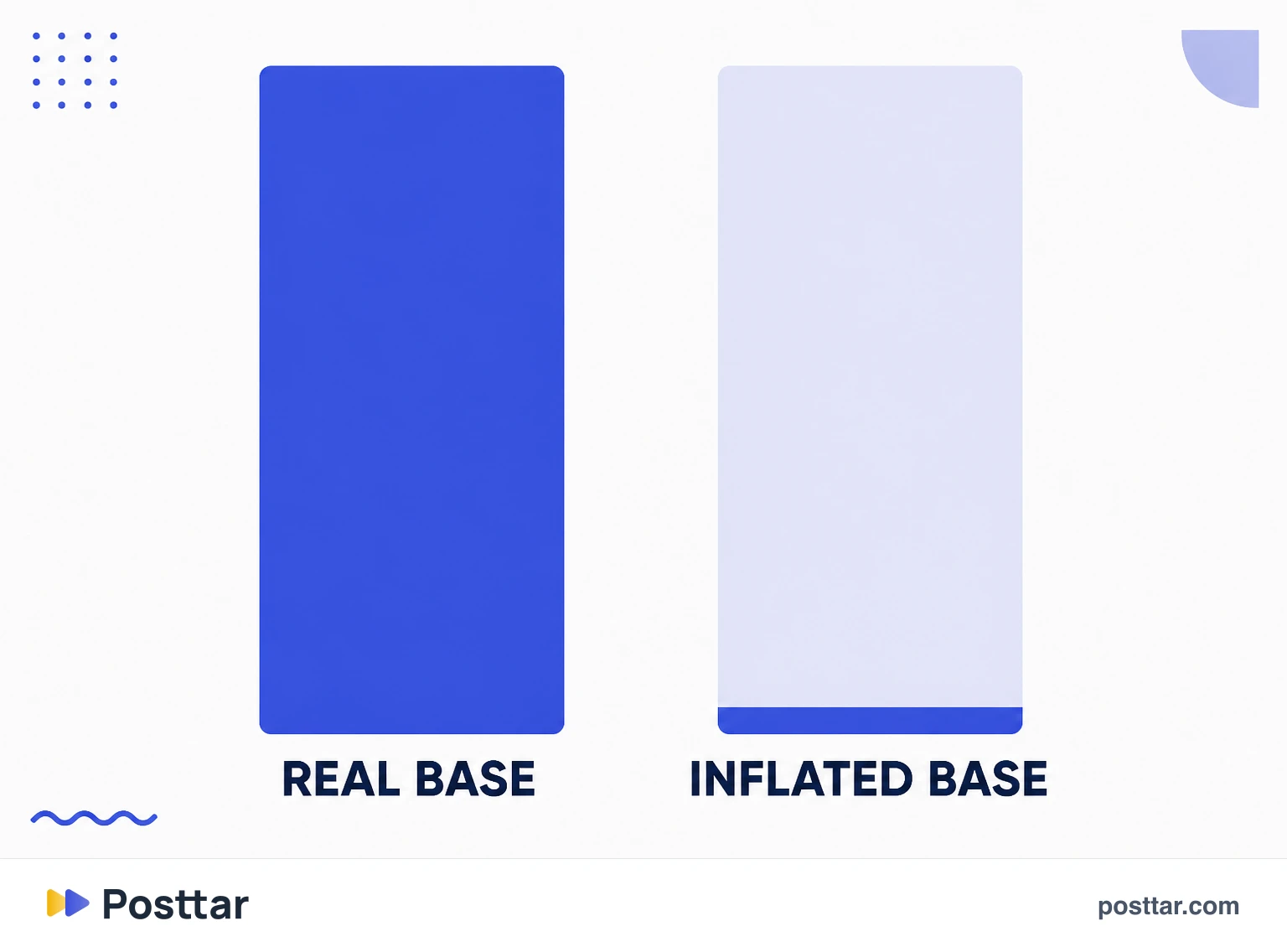
- I identify an inflated base from my own rates, not from an external site.
- I do not give account access to follower checkers.
- I prefer a smaller base with good rates over a big one with poor rates.
Frequently asked questions
How do I check for fake followers on Instagram?
From the pattern in your own metrics, not from an external site. A large base with a very low engagement rate, follower spikes on days with no notable post, and demographics concentrated in countries you never addressed are the most reliable signs.
Are fake follower checker sites safe?
Most ask for account access and return a number with no explained method. That is both unnecessary and risky: the signs appear in your own insights, and giving a third party access is a security risk and usually a terms violation.
What happens if I have fake followers?
They enter every denominator and drag reach and engagement rates down, distort demographics and teach the recommendation system the wrong audience. They are also visible to any brand evaluating your profile before a partnership.
Can I remove fake followers in bulk?
There is no native bulk removal. You can remove them from the follower list one by one. Tools that automate it violate the terms and usually trigger an action block on the account.
Does every profile have fake followers?
Practically every profile picks up the occasional bot follower without doing anything to attract them. A handful is normal noise and does not affect metrics. The problem starts when they become a meaningful share of the base.
Related concepts
Followers
Followers are the accounts subscribed to a profile. For years the number was treated as a synonym for reach, but with delivery now depending on recommendation rather than only on who you follow, the base became something more modest and more important at once: it does not guarantee anyone sees the content, and it remains the only audience you can reach without depending entirely on the algorithm.
Read the entry
Engagement rate
Engagement rate is the percentage of people who interacted with a piece of content relative to a comparison base. Two formulas are in common use: interactions divided by followers, which measures how the base responds, and interactions divided by reach, which measures the quality of delivery. They answer different questions and produce different numbers for the same post, so the thing that matters is stating which one you used before comparing anything.
Read the entry
Unfollow
An unfollow is when someone stops following a profile. Instagram reports how many followers were lost in each period, but never who they were, and it notifies neither side. As a metric, losses only make sense read alongside gains: two months with the same number of new followers can produce opposite results depending on how many left in the same window.
Read the entry
Reach rate
Reach rate is the percentage of your follower base that actually saw a piece of content, calculated by dividing reach by follower count. It exists because absolute reach is not comparable across accounts or across moments: a thousand accounts reached is excellent for a profile with two thousand followers and poor for one with two hundred thousand. It turns reach into an efficiency metric instead of a size metric.
Read the entry