Instagram unfollows: what losing followers says about your content

By Tiago Costa·Updated on August 5, 2026
Definition
An unfollow is when someone stops following a profile.
- It notifies nobody, neither the follower nor the followed.
- The number appears in insights, but with no identification.
- Losing followers is normal. Every base has churn.
- It only makes sense next to gains. What matters is the net.
What Instagram shows and what it does not
The insights of a professional account show, per period, how many followers were gained and how many were lost. It is an aggregate number.
What does not exist, and it is a platform decision rather than a tool limitation, is the identity of whoever left. Instagram does not notify, does not list and does not expose that through the API. Apps promising a list of who unfollowed ask for account access, compare follower lists between visits and usually violate the terms, with a risk of blocks.
Two gestures worth separating: unfollowing is the person leaving on their own; removing a follower is you taking someone out of your base. The second also generates no notification, and the person only notices if they return to the profile.
Losing followers is normal
Every base has churn. People change interests, stop using the app, clean up who they follow, or followed for a one-off reason that ran out.
A healthy profile loses followers every month and still grows. Treating every departure as a sign of error leads to worse decisions: posting less out of fear, avoiding taking a position, and producing lukewarm content that displeases nobody and also holds nobody.
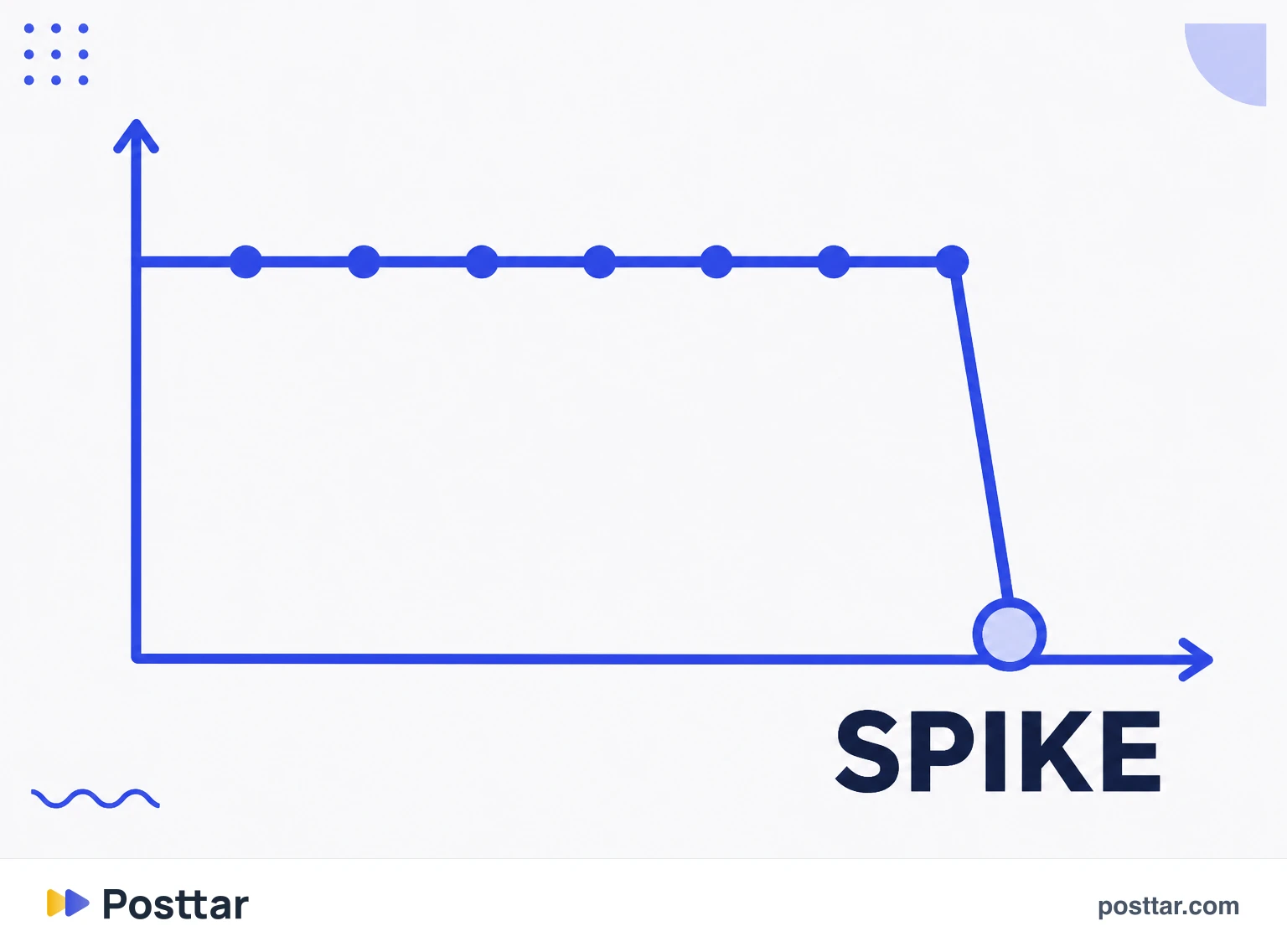
What deserves investigation is not the loss itself, it is the loss out of pattern: a month where it jumps well above your median.
When the loss is telling you something
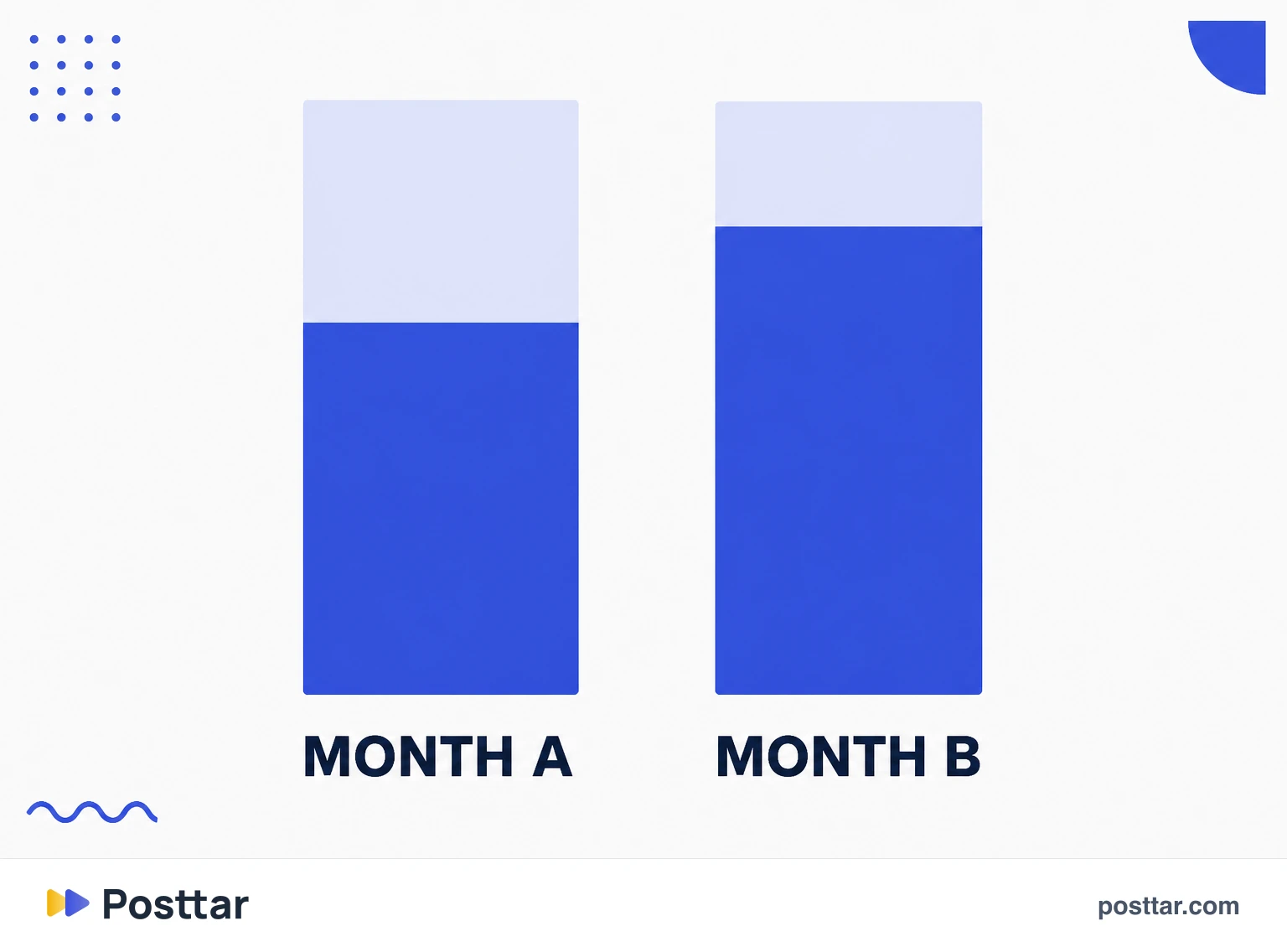
- A spike after a specific post. Usually a subject outside what the base expects, or a tone that jarred.
- A spike after a giveaway. People who came for the prize leave when it ends. It is the predictable cost of the format.
- Steady and rising loss. Posting frequency above what the base tolerates, or a topic change that was never communicated.
- High gain with high loss in the same month. Something is attracting and repelling at once. It is the most important scenario to investigate, and the easiest to hide by reporting gains only.
How to use it in monthly reading
The number that matters is the net, and it feeds the growth rate: gains minus losses, divided by the starting base.
Two additional readings worth having:
- Loss over gain ratio. If it rises month over month, the base is getting more volatile even while the balance stays positive.
- Loss against posting frequency. If cadence went up and loss followed, you probably crossed the line for this audience.
And one thing almost nobody does: cross the loss with non follower reach. Growth from an off-niche viral usually comes with high loss the following month.
Checklist
- I report gains and losses together, never gains alone.
- I compare loss against my own median, not against zero.
- I investigate spikes, not fluctuation.
- I do not use apps promising to list who unfollowed.
- I cross loss with giveaways, topic changes and frequency increases.
Frequently asked questions
Does someone know when I unfollow them on Instagram?
No. Instagram sends no unfollow notification. The person only finds out if they open your profile and notice the button changed, or if they look for you in their own following list.
What happens when I remove a follower?
They stop following you without receiving any alert. They can still see your profile if it is public, and they can follow again. Removing is different from blocking: blocking prevents access and is noticeable.
How do I see who unfollowed me?
You cannot. Instagram reports only how many followers were lost in a period, without identification, and does not expose that through the API. Apps promising the list ask for account access and usually violate the platform terms.
How do I clean up my followers?
You can remove followers one by one from your own follower list. Inactive accounts do hurt your rates by sitting in the denominator, but mass removal is laborious and can trigger an action block for repetitive behaviour.
Do unfollows hurt reach?
Losing an inactive follower does not hurt and can improve your rates, because they were in the denominator without ever appearing in the numerator. What hurts is losing engaged people, and that shows up as falling interaction alongside the falling base.
Related concepts

Followers
Followers are the accounts subscribed to a profile. For years the number was treated as a synonym for reach, but with delivery now depending on recommendation rather than only on who you follow, the base became something more modest and more important at once: it does not guarantee anyone sees the content, and it remains the only audience you can reach without depending entirely on the algorithm.
Read the entry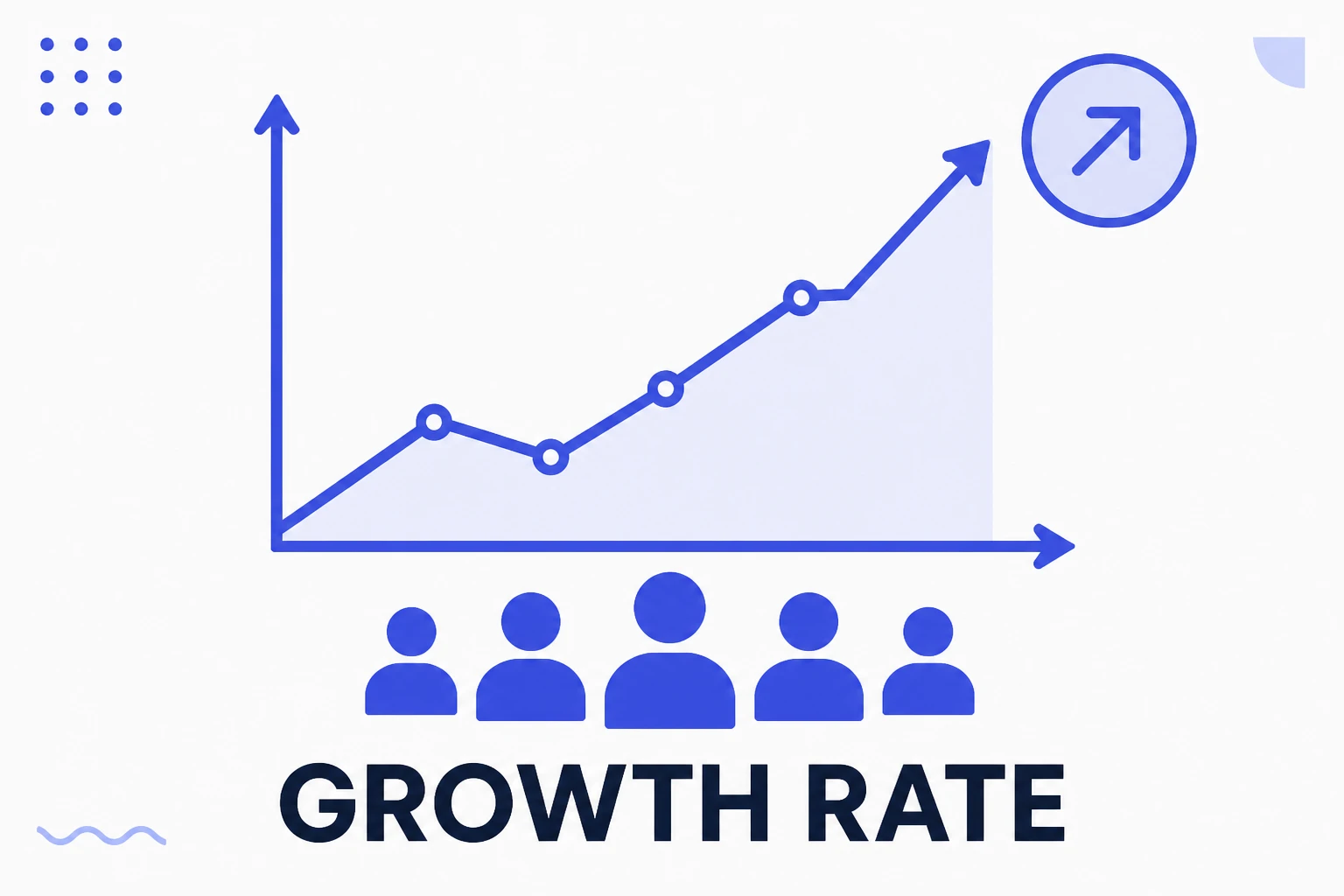
Growth rate
Growth rate is the net follower gain over a period divided by the base at the start of that period. It measures pace rather than size, which makes it the correct way to track an account over time and to compare profiles of different sizes. Net gain means new followers minus people who unfollowed, and ignoring that subtraction is the most common reading error.
Read the entry
Fake followers
Fake followers are accounts that follow a profile with no real person behind them, or with a person who never had any interest in the subject: automated profiles, bulk-bought accounts and giveaway followers unrelated to the topic. The damage is not cosmetic. They enter every denominator, drag your rates down, teach the recommendation system the wrong audience, and are visible to any brand evaluating a profile before signing a sponsorship.
Read the entry
Engagement rate
Engagement rate is the percentage of people who interacted with a piece of content relative to a comparison base. Two formulas are in common use: interactions divided by followers, which measures how the base responds, and interactions divided by reach, which measures the quality of delivery. They answer different questions and produce different numbers for the same post, so the thing that matters is stating which one you used before comparing anything.
Read the entry