Growth rate: measuring the pace of an account instead of its size

By Tiago Costa·Updated on August 5, 2026
Definition
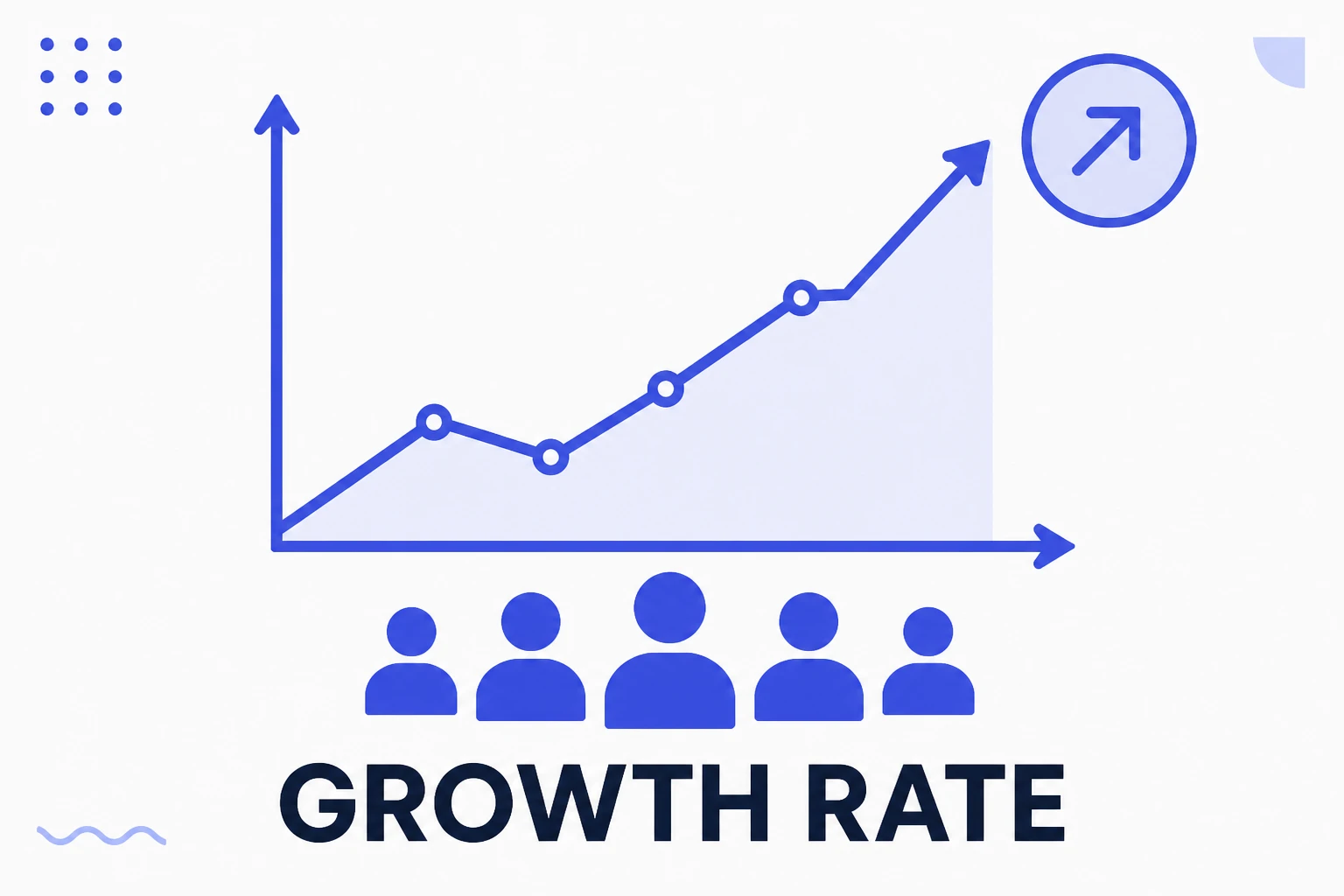
Growth rate is net follower gain divided by the base at the start of the period.
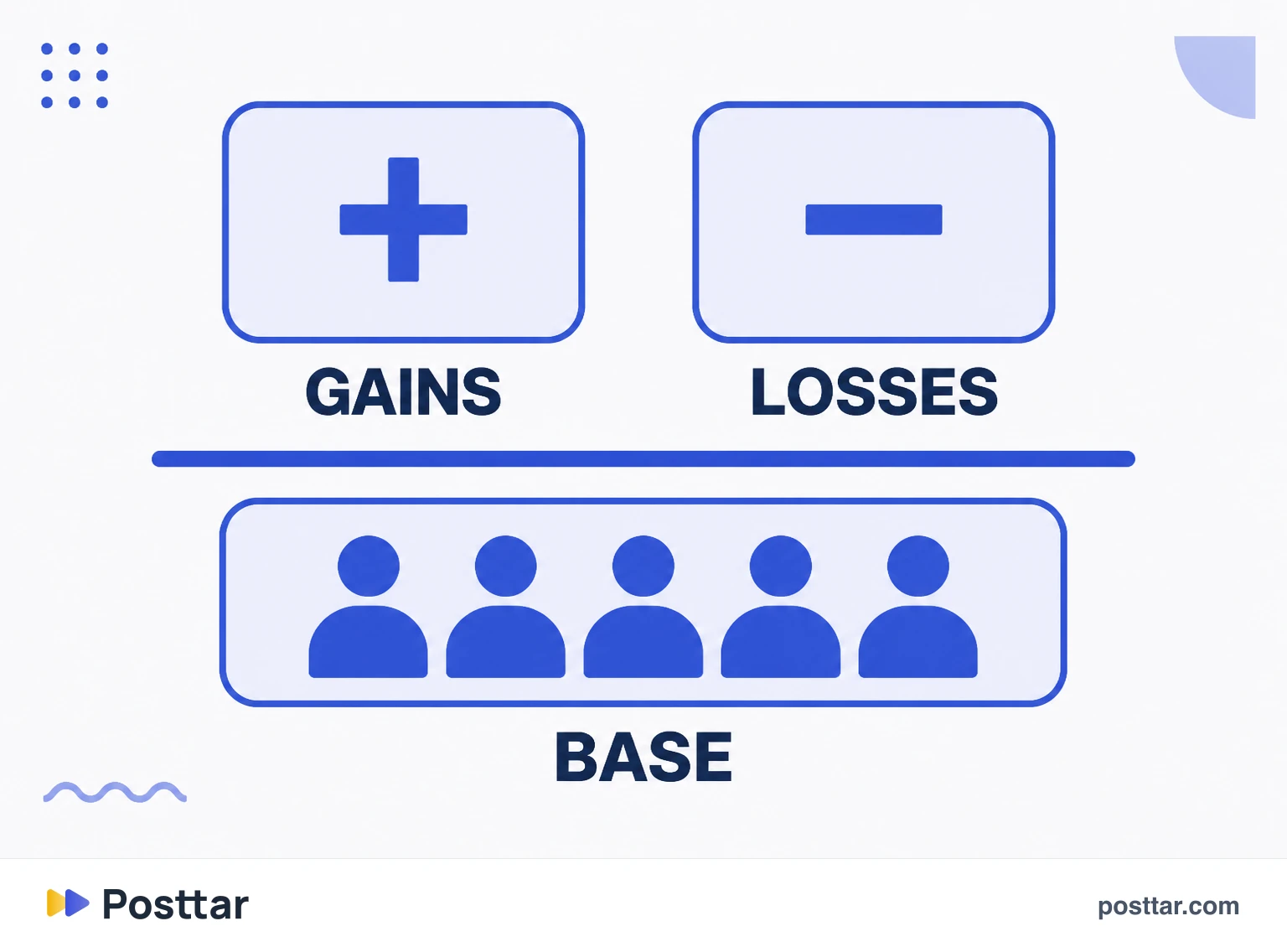
- Formula: (gains minus losses) ÷ starting base × 100.
- It measures pace, not size, so it compares different accounts.
- It slows naturally: the same gain is worth less on a bigger base.
- Gross gain misleads. Without subtracting unfollows the number inflates.
How to calculate it
Growth rate = (followers at the end minus followers at the start) ÷ followers at the start × 100
An account that went from 8,000 to 8,400 in a month grew 5%. Note the calculation uses the net figure: if it gained 700 and lost 300, the result is the same, and that subtraction is exactly what many people skip.
The period has to be fixed and comparable. Monthly rate against monthly rate, always. Comparing a 31-day month with a fortnight says nothing, and comparing months with very different post counts compares two operations, not two performances.
Why it slows down on its own
It is arithmetic, not failure. Gaining 400 followers on 8,000 is 5%; gaining the same 400 on 80,000 is 0.5%. The effort is identical and the rate falls tenfold.
Add the base effect: the bigger the account, the larger the inactive share, and the higher the absolute volume of unfollows from natural churn alone. Gross gain has to grow just to keep the rate flat.
Practical consequence: comparing today's rate with the one from when the account was small always produces a wrongly pessimistic conclusion. The honest comparison is against accounts of similar size, or against your own trend over recent months.
Gross gain versus net gain
Insights show new followers and lost followers separately, and reporting only the first is the most common distortion in social reporting.
| Scenario | Gains | Losses | Net |
|---|---|---|---|
| Month A | 900 | 150 | 750 |
| Month B | 900 | 800 | 100 |
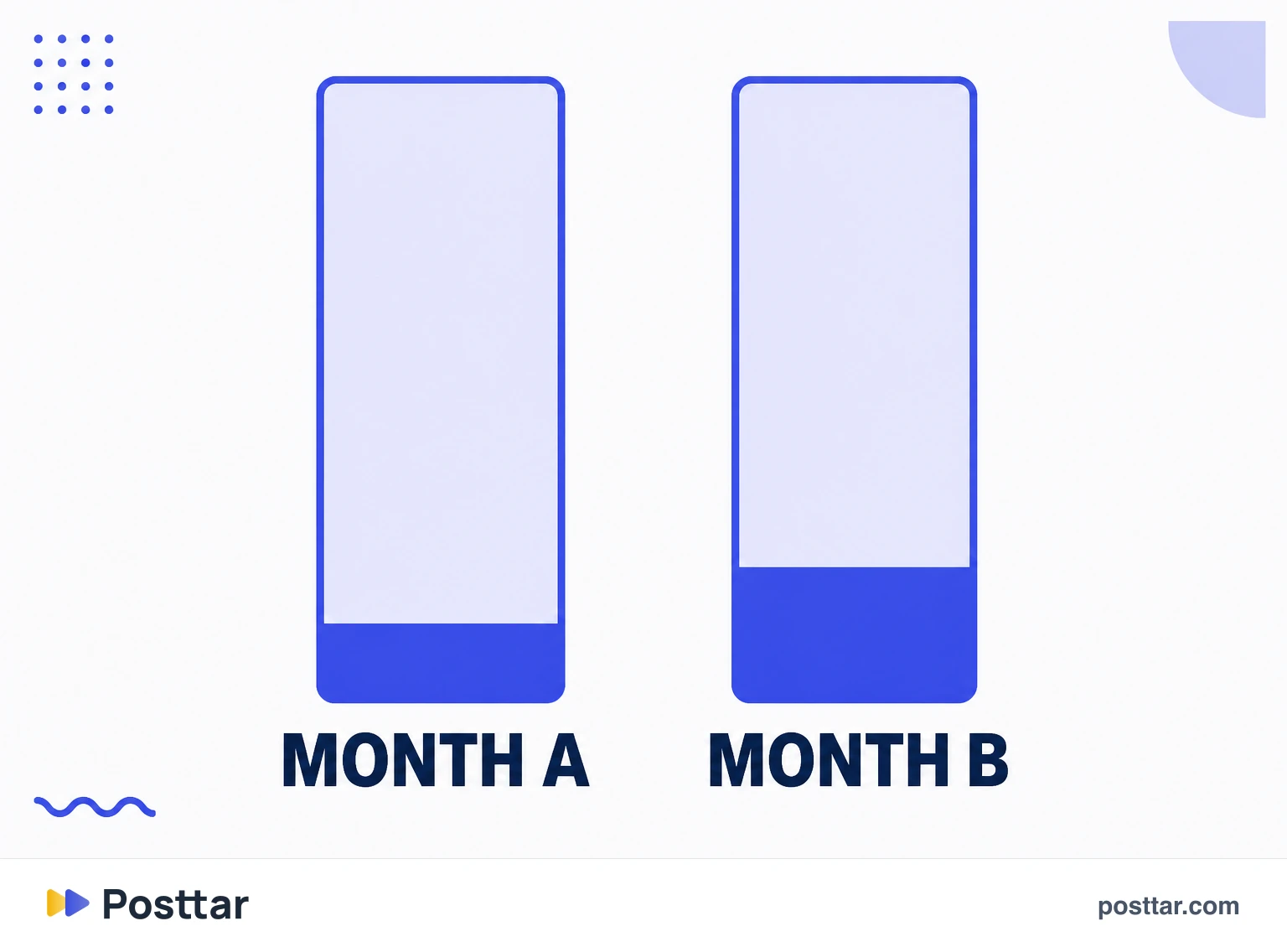
Both months share the same gross gain and produce completely different results. Month B indicates something is attracting and repelling at once, which usually means off-topic content, a giveaway, or a posting frequency well above what the base tolerates.
What actually raises the rate
- Non follower reach. It is the only source of new followers. Without delivery outside the base, the rate is structural and does not move.
- A profile that converts. Profile visits without conversion mean the bio and first posts do not explain what someone gains by staying.
- Consistency. A burst followed by silence brings a spike and a wave of unfollows after.
- One subject. People who follow for one topic and receive another leave.
- Collaboration. The fastest legitimate lever, because it adds audiences.
And what does not: giveaways and bought followers. Both raise gross gain, collapse every rate and turn into losses the following month.
Checklist
- I use net gain, with unfollows subtracted.
- I compare periods of the same length.
- I do not compare today's rate with the one from when the account was much smaller.
- I read it alongside engagement rate, to check whether the new base is real.
- I cross-check with non follower reach, the origin of every new follower.
Frequently asked questions
How do you calculate Instagram growth rate?
Subtract the followers at the start of the period from the followers at the end, divide by the starting number and multiply by 100. The result uses net gain, meaning it already subtracts people who unfollowed.
What is a good growth rate?
There is no universal number, because the rate falls naturally as the base grows. The useful benchmark is your own trend over recent months and a comparison with accounts of similar size, never with a profile ten times bigger or smaller.
Why did my growth rate fall even though I gained followers?
Because the denominator grew. The same 400 followers are worth 5% on a base of 8 thousand and 0.5% on 80 thousand. Larger bases also lose more people to natural churn, so gross gain has to grow just to hold the rate flat.
Should I use gross or net gain?
Net, always. Two months with the same number of new followers can produce opposite results if one of them lost nearly everything it gained. Reporting only gross hides exactly the problem that needs investigating.
Do giveaways help growth?
They help gross gain and hurt everything else. They bring people with no interest in the subject, who do not interact and drag reach and engagement rates down, and a large share of them leave in the following weeks. The balance is usually negative.
Related concepts

Followers
Followers are the accounts subscribed to a profile. For years the number was treated as a synonym for reach, but with delivery now depending on recommendation rather than only on who you follow, the base became something more modest and more important at once: it does not guarantee anyone sees the content, and it remains the only audience you can reach without depending entirely on the algorithm.
Read the entry
Unfollow
An unfollow is when someone stops following a profile. Instagram reports how many followers were lost in each period, but never who they were, and it notifies neither side. As a metric, losses only make sense read alongside gains: two months with the same number of new followers can produce opposite results depending on how many left in the same window.
Read the entry
Engagement rate
Engagement rate is the percentage of people who interacted with a piece of content relative to a comparison base. Two formulas are in common use: interactions divided by followers, which measures how the base responds, and interactions divided by reach, which measures the quality of delivery. They answer different questions and produce different numbers for the same post, so the thing that matters is stating which one you used before comparing anything.
Read the entry
Accounts reached
Accounts reached is the number of distinct accounts that saw any content from your profile in the selected period. It is the same idea as reach, applied to the whole profile instead of a single post: each person counts once, even if they saw ten posts, a Story and a Reel. That is why the number is never the sum of your posts' reach, and is always lower than it.
Read the entry