Hashtag limit: the ceiling is 30, the recommendation is 3 to 5, and both are true

By Tiago Costa·Updated on August 5, 2026

Definition
The hashtag limit is 30 per post.
- A technical ceiling of 30, unchanged.
- A recommendation of 3 to 5, which is guidance, not a limit.
- They count inside the caption's 2,200 characters.
- There is no official "5-3-1" rule, despite how widely it circulates.
The two numbers
These are different questions that turned into a single confusion.
How many fit? Thirty. Past that the post is not accepted, and hashtags count inside the caption's 2,200 character limit.
How many to use? Current guidance from the platform itself says three to five. That is not a cap, it is what started making sense once the hashtag's role shrank.
Why it shrank: distribution today is decided mainly by what the system understands from the content itself, audio, image, on screen text and caption. The hashtag became one context signal among several, and stopped being the primary discovery mechanism it once was.
Why thirty hashtags hurts
Stuffing is not neutral, it has a cost:
- It eats the character budget that the persuasive text would need.
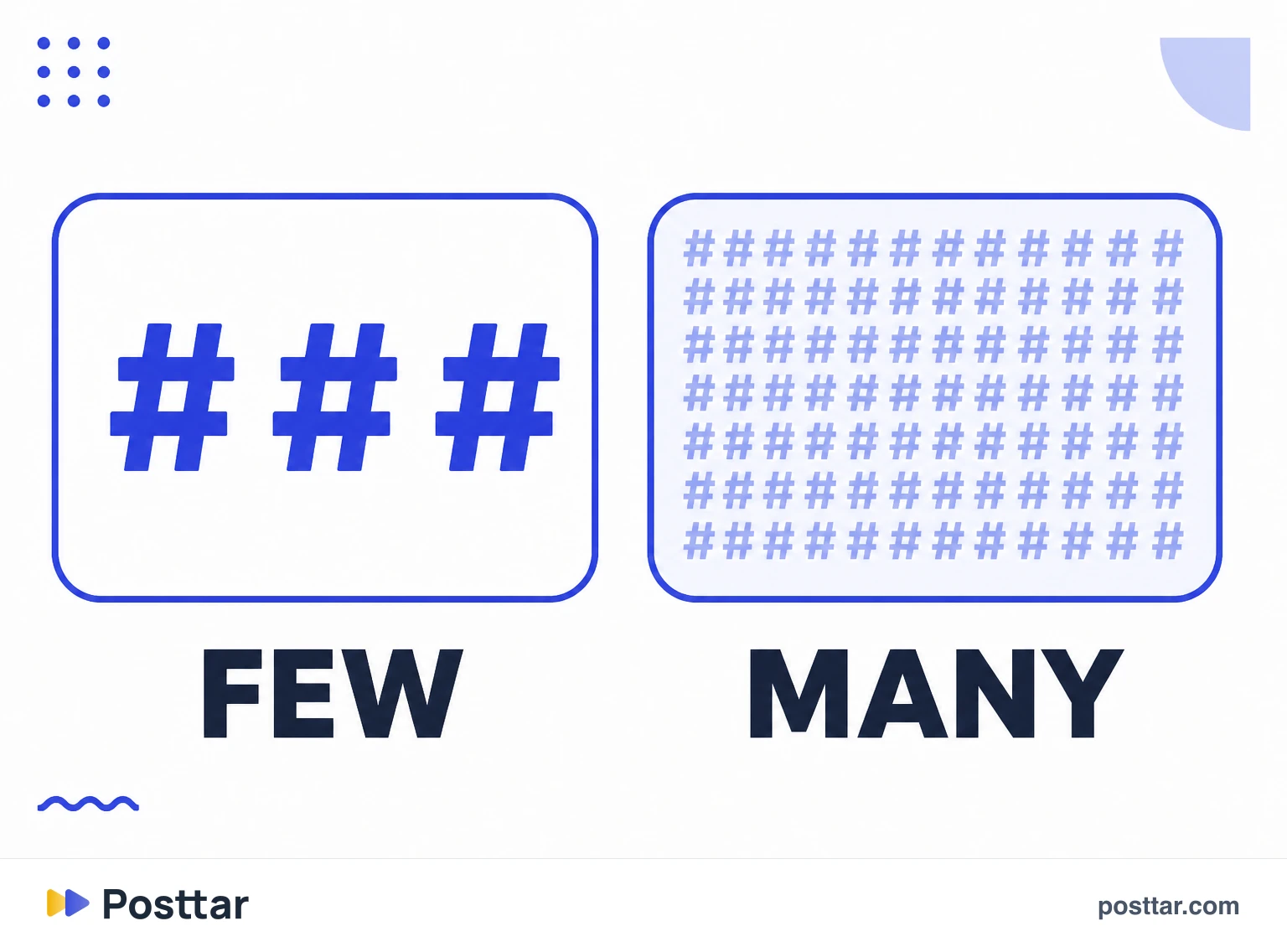
- It dilutes context. Thirty different subjects tell the system the post is about nothing in particular.
- It reads as spam. A block of hashtags at the end of a caption is a visual signal of an account trying to force reach.
- It attracts the wrong audience. A huge generic hashtag brings people who are not your public, and the wrong follower worsens engagement.
The 5-3-1 rule and others in circulation
There is a much repeated "5-3-1 rule", with variations: five niche hashtags, three community, one brand. Versions with other numbers and categories also circulate.
It is not a platform rule. It is a heuristic created by practitioners, and it has never been confirmed as a ranking criterion by anyone who operates the system.
That does not make it useless: as a way of organising the choice it is reasonable, because it forces you to mix levels of specificity instead of stacking the biggest tags. Just do not treat it as law, and especially do not expect following the format to change reach by itself.
How to choose the few you will use
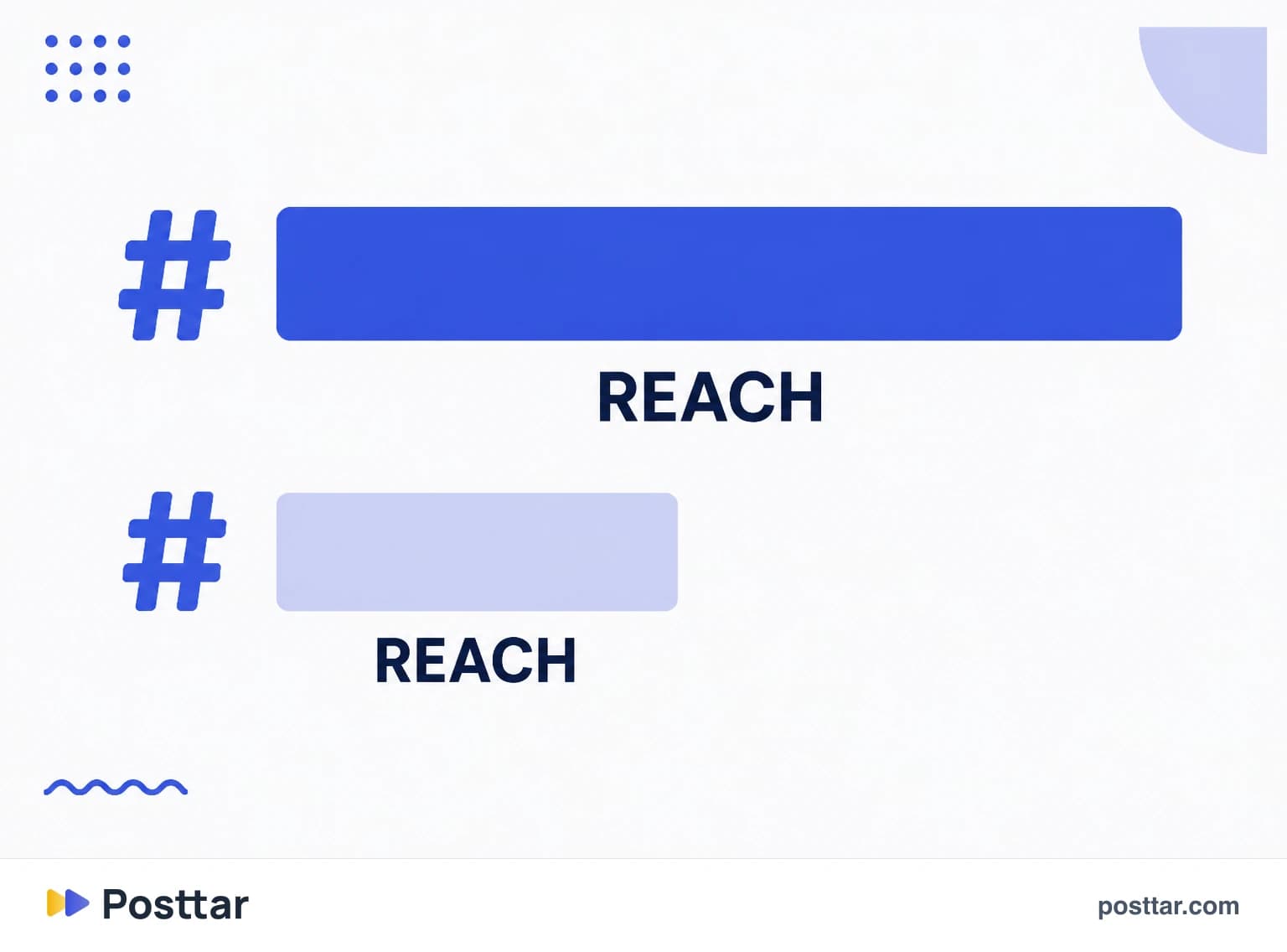
- Specific before big. A hashtag with millions of posts buries you in seconds; a niche one puts you in front of whoever is looking for exactly that.
- Describe the content, not the wish. A hashtag says what the piece is about, it does not summon the reach you wanted.
- Caption or first comment makes no difference. Hiding them in the first comment is aesthetic, not strategic.
- No fixed block pasted everywhere. Repeating the same list on every post erases the context information the hashtag is supposed to give.
Checklist
- I use few hashtags and they all describe the piece.
- I do not paste the same block on every post.
- I prefer niche tags to giant ones.
- I remember they consume the caption's 2,200 characters.
- I do not treat the 5-3-1 rule as a platform criterion.
Frequently asked questions
How many hashtags should I use on Instagram?
Current guidance from the platform itself says three to five. That is not a limit but what tends to work today, because distribution now depends mainly on what the system understands from the content itself rather than on tags.
Is there a 5 hashtag limit on Instagram?
No. The limit is still 30 per post. The confusion comes from the recommendation to use three to five, which is usage guidance rather than a system cap. Both statements are true and answer different questions.
What is the 5-3-1 rule on Instagram?
It is a practitioner heuristic suggesting five niche hashtags, three community and one brand. It is not an official platform rule nor a confirmed ranking criterion. It works as a way to organise the choice, not as law.
What is the 3 hashtag rule?
It is another circulating heuristic, in the same family as 5-3-1, suggesting a small fixed number of tags. The useful part is the underlying idea, that few and specific beats many and generic. The specific number carries no official basis.
Should hashtags go in the first comment?
From a reach standpoint it makes no difference. Putting them in a comment keeps the caption visually cleaner, which is a legitimate aesthetic choice, but there is no indication it changes the post's distribution.
Related concepts

Hashtag
A hashtag is a word or phrase without spaces preceded by the hash symbol, which the platform turns into a clickable label grouping all content marked with it. For years it was Instagram's main discovery mechanism. It is not any more: distribution came to depend on what the system understands from the content itself, and the hashtag became one context signal among several.
Read the entry
Caption character limit
An Instagram post caption allows up to 2,200 characters. That is the technical ceiling, but it is not the limit that decides the outcome: only the first lines appear before the "more" button, and it is in that short stretch that someone decides whether to keep reading. In practice there are two limits, the system's and attention's, and the second is far smaller.
Read the entry
Instagram SEO
Instagram SEO is optimising the profile and posts for the platform's internal search, which now works with words instead of depending only on hashtags. The system today reads the name field, the username, the caption, on screen text and transcribed audio. That turned search into a continuous discovery channel, and it is the least contested channel inside the platform.
Read the entry
Reach
Reach is the number of unique accounts that saw a piece of content at least once. Unlike impressions, it does not count the same person twice, so it measures the size of the audience touched rather than the volume of exposure. On Instagram, reach is reported per post and per period, and it can be split between followers and non followers, which is the reading that shows whether a profile is discovering new people or simply circulating among those who already follow it.
Read the entry