Instagram engagement: what counts, what weighs and what kills it

By Tiago Costa·Updated on August 5, 2026

Definition
Engagement is the set of interactions people have with a piece of content.
- It includes: likes, comments, saves and shares.
- It is a count, not a rate. To compare, divide by reach or by followers.
- They are not equal. Sharing and saving weigh more than liking.
- High is not the same as good. It depends on what the piece was meant to do.
What goes into the count
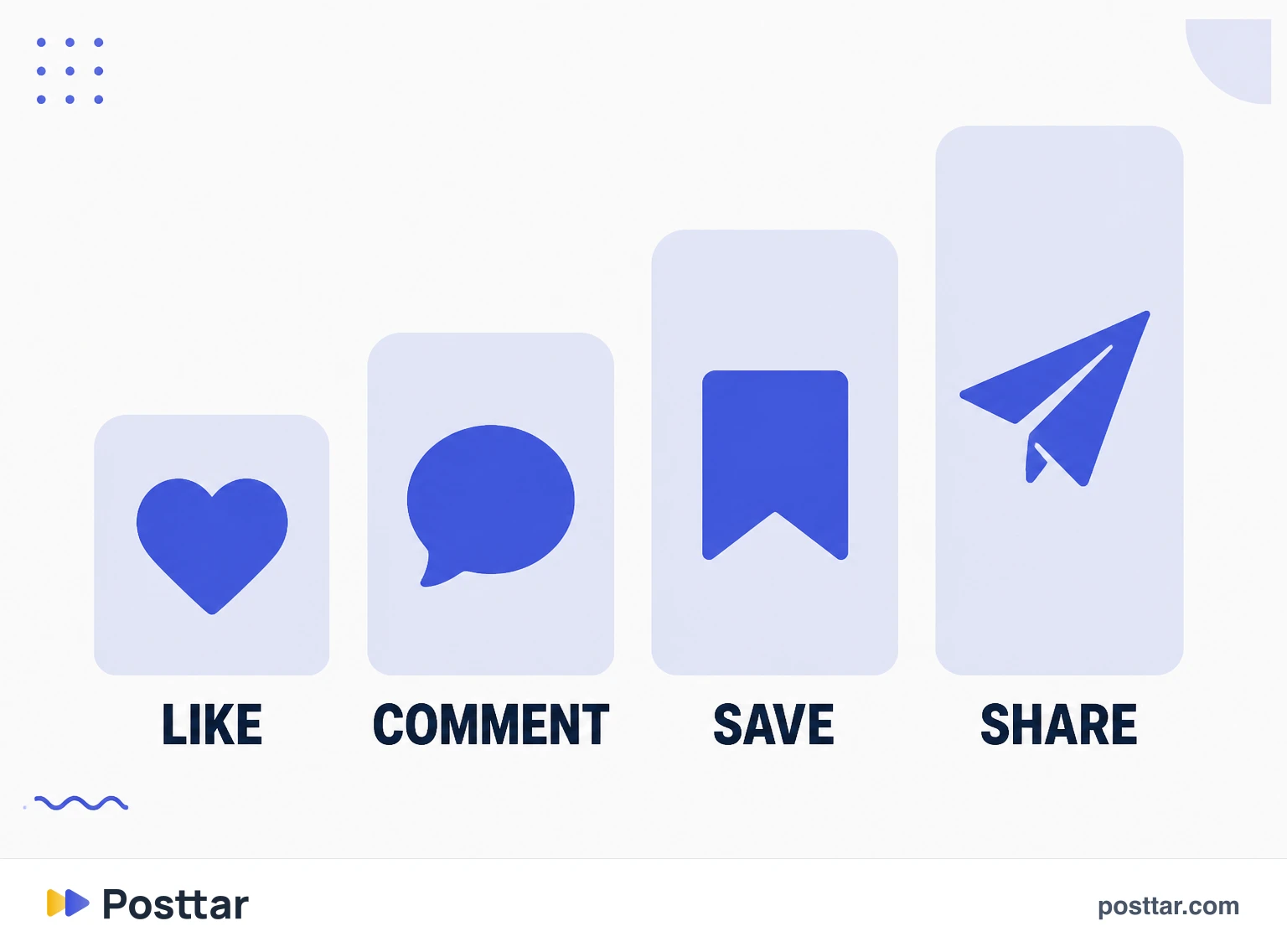
Engagement is an umbrella, which is exactly why two reports on the same profile land on different numbers. The fullest set adds four feed interactions:
- Likes: the cheapest for the viewer, and the weakest as a signal.
- Comments: they cost time and public exposure.
- Saves: they indicate perceived usefulness, an intention to return.
- Shares: the interaction that carries content outside your audience.
In Stories, replies, sticker taps and reactions count too. Many public calculators only add likes and comments, because those are the two numbers visible from outside a profile, which underestimates exactly what matters most.
Why interactions are not equal
The criterion is not market opinion, it is cost to the person acting. A like takes one tap; a share takes choosing a person and owning the recommendation. The more expensive the gesture, the stronger the signal that the content was worth it.
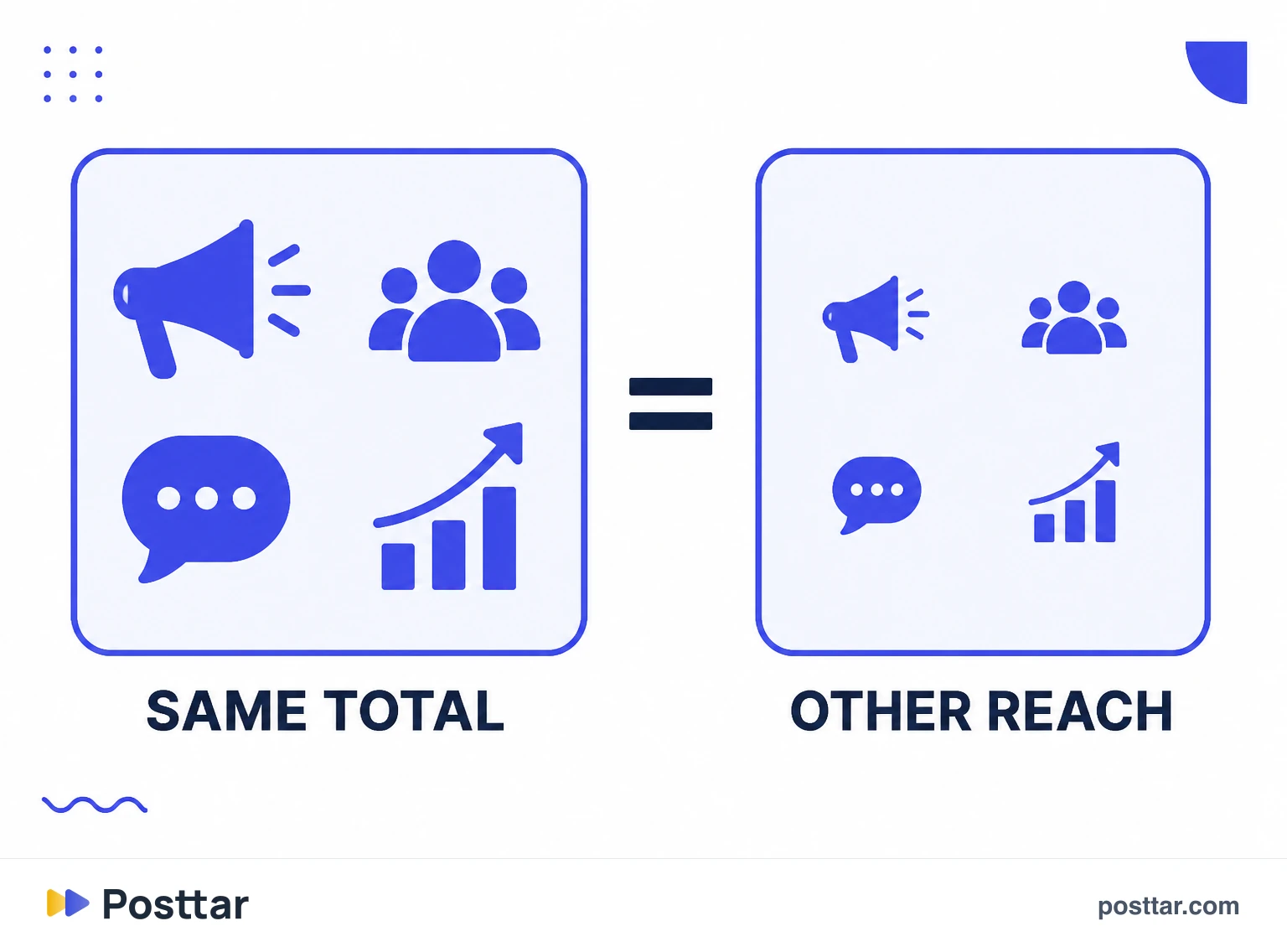
That shows up in distribution. The interactions that move content outside the bubble are shares and saves, not likes. It is why two posts with the same engagement total can have very different reach: the composition of engagement changes the outcome.
| Interaction | Cost to the viewer | What it signals |
|---|---|---|
| Like | low | passive approval |
| Comment | medium | willingness to talk |
| Save | medium | usefulness, intent to return |
| Share | high | social value, recommendation |
Absolute engagement says nothing on its own
Are four hundred interactions good? It depends how many people saw it and how many follow you. Without a denominator the number just grows with the account and informs nothing about the content.
That is why the useful reading is always a ratio:
- Engagement rate by follower: measures how the base you built responds.
- Engagement rate by reach: measures the quality of the piece, because it only counts people who saw it.
Comparing absolute engagement across accounts of different sizes is the most common error in competitor analysis, and it always favours the bigger profile, even when its content is worse.
What drags engagement down
- Reach delivered to the wrong audience. An off-niche viral brings people with no interest, and engagement falls as a percentage even while the total rises.
- An inflated base. Giveaway followers and fake followers never interact and sit in the denominator.
- Asking for interaction instead of earning it. Engagement bait is downranked by the platform and readers recognise it.
- Content with no implicit question. A post that closes the subject completely gives no reason to comment.
- Repeating the same structure for weeks. The audience stops stopping, and without a stop there is no interaction.
Checklist
- I add all four interactions, not just likes and comments.
- I always report with a denominator, never the absolute number alone.
- I look at the composition of engagement, not just the total.
- I compare format with format.
- Before celebrating a spike, I check whether it came with reach to the right audience.
Frequently asked questions
What is engagement on Instagram?
It is the set of interactions people have with content: likes, comments, saves and shares, plus Story replies and sticker taps. It is an absolute count, and it only makes sense compared against reach or follower count.
What drives the most engagement on Instagram?
Content that names the viewer's situation precisely, that is useful enough to be saved and that a person feels comfortable sending to someone else. Format matters less than being clear about who the piece is for.
What kills engagement on Instagram?
Reach delivered to the wrong audience, a base inflated by giveaways or fake followers, engagement bait, and repeating the same structure for weeks. In most cases the percentage drop comes from a change in the denominator, not from worse content.
Do saves count as engagement?
Yes, and they are among the interactions that weigh most. A save signals perceived usefulness and an intention to return, which are stronger signals than a like, both for the algorithm and for the business.
What is a good engagement rate on Instagram?
No single number works for everyone, because it varies with account size, niche and format. The reliable benchmark is the median of your last thirty pieces of the same format, always calculated with the same formula.
Related concepts
Engagement rate
Engagement rate is the percentage of people who interacted with a piece of content relative to a comparison base. Two formulas are in common use: interactions divided by followers, which measures how the base responds, and interactions divided by reach, which measures the quality of delivery. They answer different questions and produce different numbers for the same post, so the thing that matters is stating which one you used before comparing anything.
Read the entry
Saves
A save is when someone files your post away to return to it later. It is a private interaction: it does not appear on the post, nobody but the saver knows, and you only see the aggregate total in insights. Precisely because it has no social component, it is one of the most honest signals available, since people save for their own usefulness rather than to be seen saving.
Read the entry
Shares
A share is when someone sends your post to another person in Direct or reposts it to their own Stories. It is the most expensive interaction for the person acting, because it requires choosing a recipient and owning the recommendation, and that is why it pushes distribution outside your audience harder than anything else. No other interaction delivers content to a non follower through a human recommendation.
Read the entry
Comments
A comment is the interaction where someone writes publicly under a post. It costs time and exposes the writer, which makes it a stronger signal than a like and one of the interactions that most sustain feed distribution. It is also the only one that creates conversation: every reply you write reopens the post for the person who commented and keeps the piece alive for longer.
Read the entry