Instagram impressions: what they are and why they are not reach

By Tiago Costa·Updated on August 5, 2026
Definition
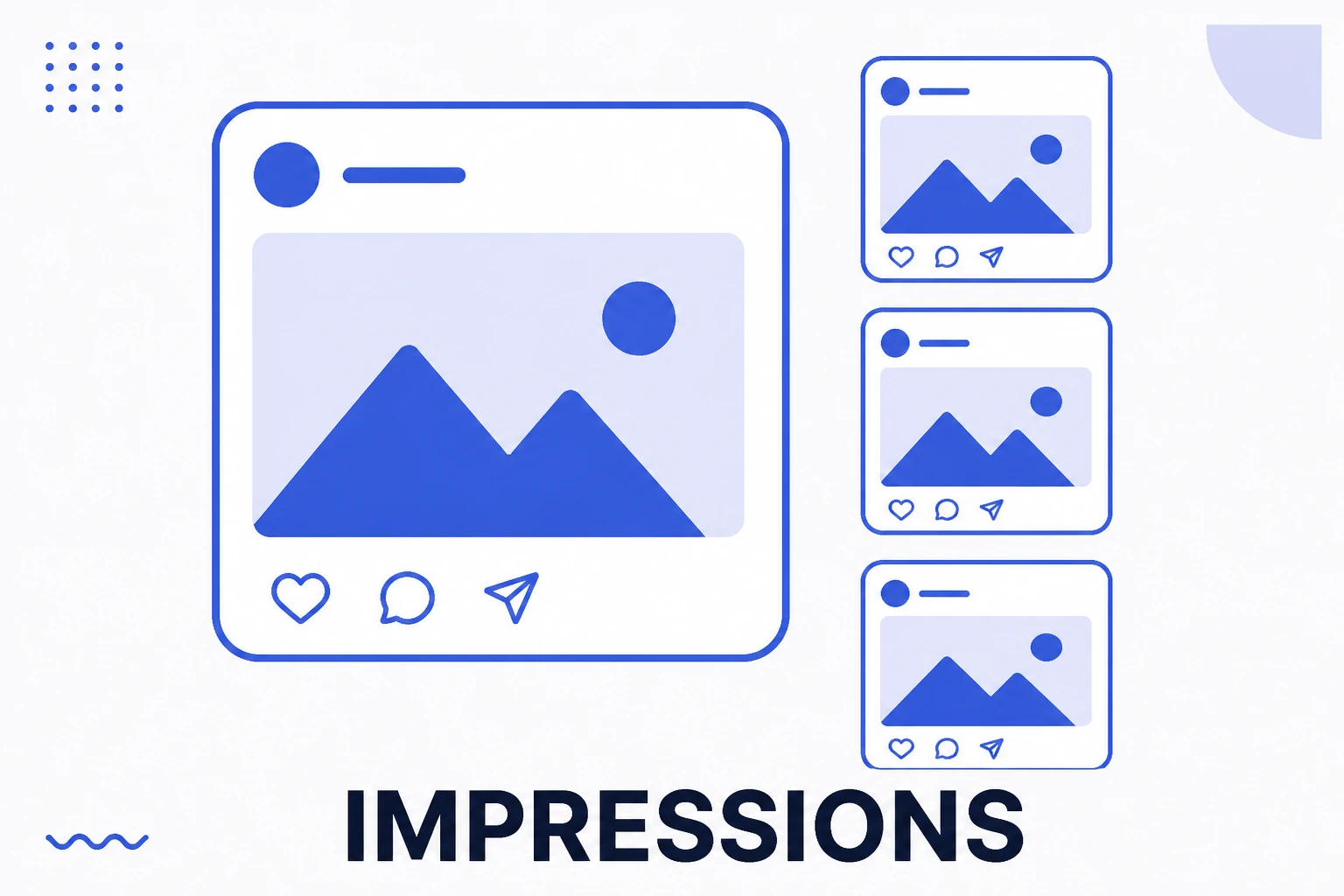
Impressions are the total number of times a piece of content was displayed, including the times the same person saw it again.
- It counts displays, not people. That is the exact difference from reach.
- Always greater than or equal to reach. If they match, nobody saw it twice.
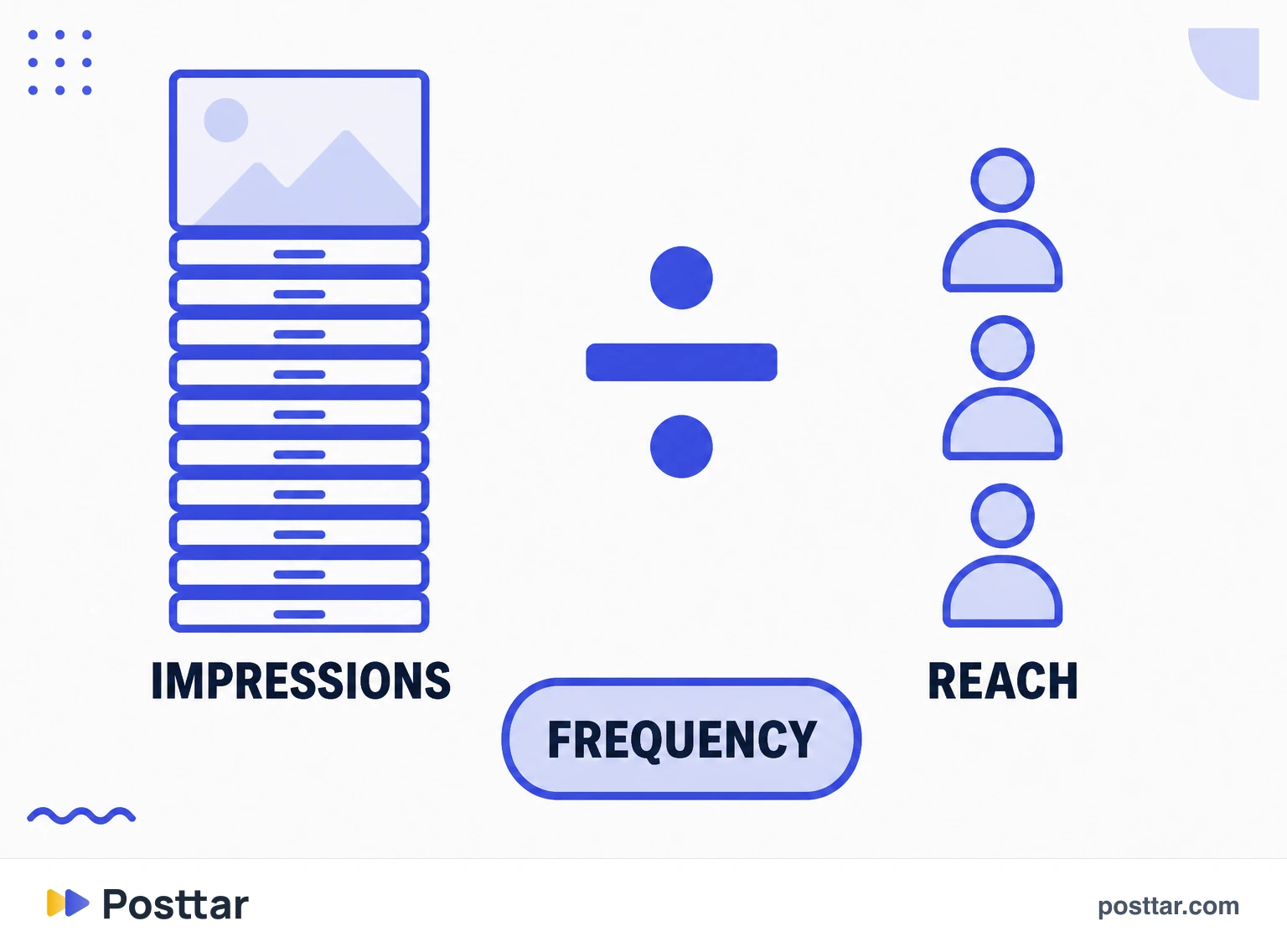
- Divided by reach, it becomes frequency. How many times the average person saw it.
- It says nothing about quality. High repetition can be recall or saturation.
What impressions are
An impression is the record that content appeared on someone's screen. Each appearance counts once, even when it is the same person returning to the same post. That is why the metric answers "how many times did this appear" and not "how many people saw it".
Confusing it with reach is the most common reading error in social reporting, and it changes conclusions: a post with 10,000 impressions and 2,000 reach did not touch 10 thousand people, it touched 2 thousand, each seeing it five times on average.
An impression is not a view either. A view is a consumption metric tied to video and playback; an impression is a delivery metric tied to appearing in the field of vision.
Impressions, reach and frequency
| Metric | Unit | Answers |
|---|---|---|
| Impressions | displays | how many times it appeared |
| Reach | unique accounts | how many people saw it |
| Frequency | ratio | how many times each person saw it |
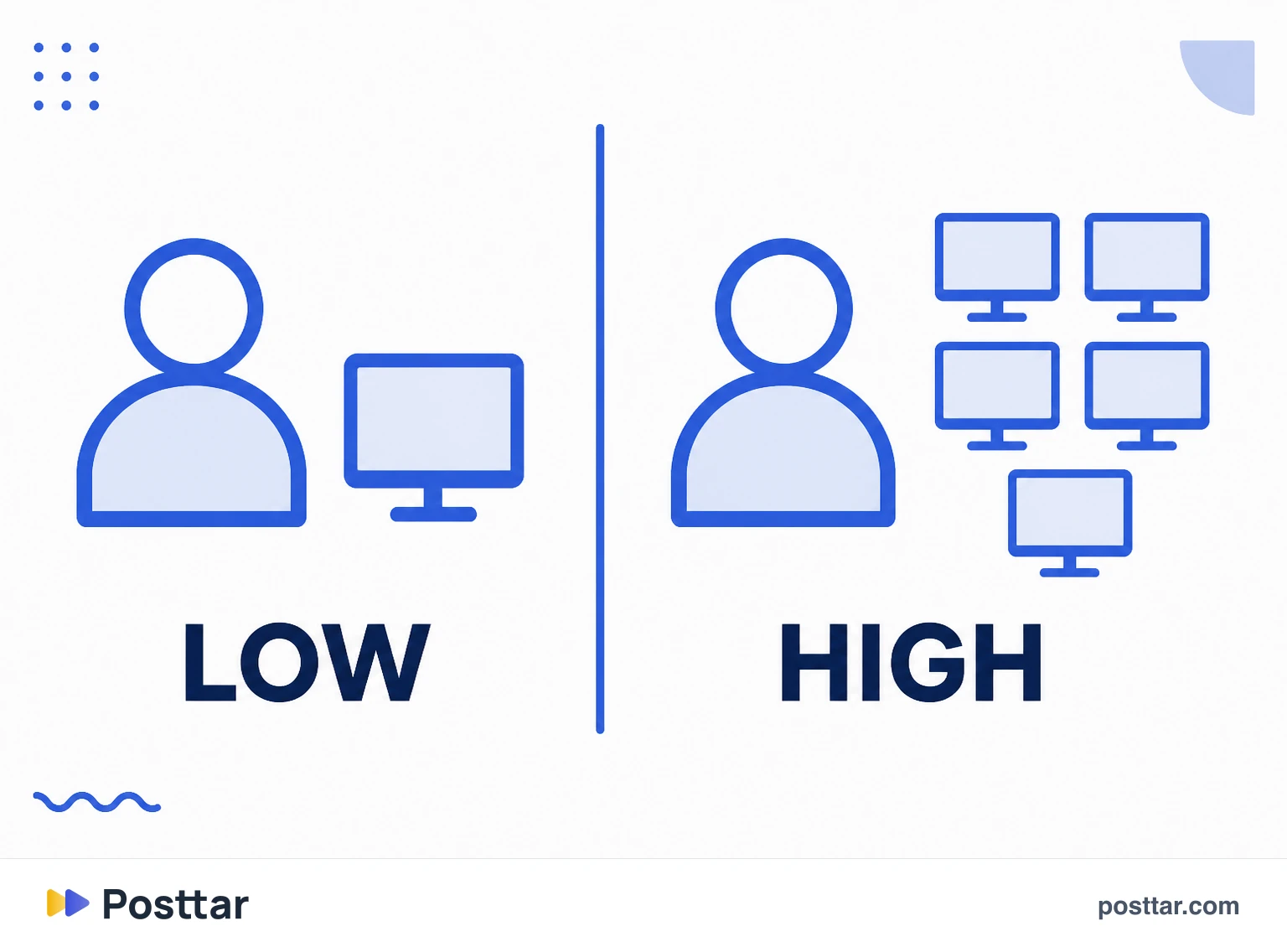
The maths is direct: frequency = impressions ÷ reach. Frequency close to 1 means almost nobody saw it twice, which usually indicates broad, shallow delivery. Frequency above 2 or 3 on an organic post means it kept spinning inside the same audience.
Neither extreme is good or bad in itself. Brand content benefits from repetition, because recall requires repetition. Discovery content does not, because repeating to people who already saw it is wasted reach.
Where to find impressions
The number lives in the insights of a professional account, both at post level and at profile level. The path has moved several times as Instagram reorganised its panels, and on several screens the platform started headlining views instead, which made many people think impressions had been removed.
Two traps when collecting:
- Data window. The panel keeps a limited history. A long series requires regular exporting or a tool that records over time.
- Summing post impressions to get the profile total. It does not work, because the same person appears across several posts. The sum always overstates.
What the metric actually decides
On its own, almost nothing. Impressions are a volume number, and volume without context points to no action. It becomes useful in three readings.
- Against reach, to measure repetition. The main use, and the only one that answers a routine question.
- Comparing formats. Formats that invite revisiting, like carousels and Reels, accumulate impressions for longer than a photo.
- Spotting saturation in paid campaigns. Frequency rising while results fall is creative fatigue.
What it does not do: judge content quality. For that the right denominator is reach, and the metric is engagement rate.
Checklist
- I never report impressions as if they were people reached.
- I calculate frequency before concluding anything about repetition.
- I do not sum post impressions to estimate the profile total.
- I compare format with format, because the accumulation curve differs.
- I use reach, not impressions, as the denominator for engagement rate.
Frequently asked questions
What is an impression on Instagram?
It is the record that your content appeared on someone's screen. Each appearance counts once, including repeat appearances to the same person, which is exactly what separates it from reach.
Are Instagram impressions the same as views?
No. An impression records that the content appeared. A view records consumption, and for video it depends on playback. A Reel can show fewer views than impressions because not every appearance turns into a counted play.
What is the difference between reach and impressions?
Reach counts unique accounts, impressions count displays. If the same person sees a post five times, that is one of reach and five of impressions, which is why impressions are always greater than or equal to reach.
Are high impressions a good sign?
Not by themselves. High impressions with low reach mean repetition, so the content circulated inside the same audience. That helps recall and hurts discovery. What answers whether it went well is cross-checking reach and interaction.
Why does the sum of post impressions not match the profile total?
Because the same person sees several of your posts in the period. At profile level they are counted inside the total displays for that set, and adding post by post duplicates situations the platform consolidates. The sum always overstates.
Related concepts

Reach
Reach is the number of unique accounts that saw a piece of content at least once. Unlike impressions, it does not count the same person twice, so it measures the size of the audience touched rather than the volume of exposure. On Instagram, reach is reported per post and per period, and it can be split between followers and non followers, which is the reading that shows whether a profile is discovering new people or simply circulating among those who already follow it.
Read the entry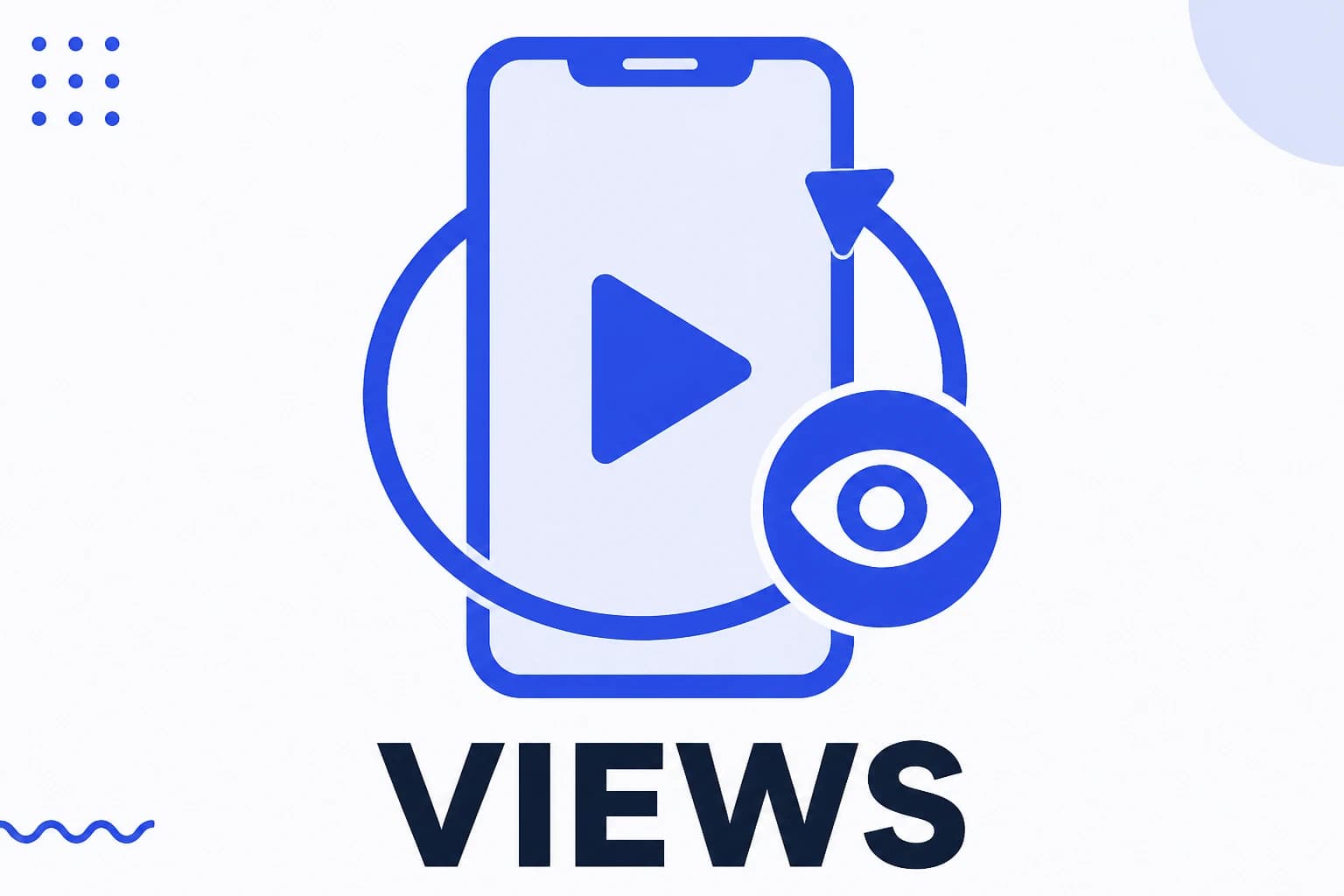
Views
Views are the number of times a piece of content was consumed, and since Instagram unified its metrics they apply to every format, not just video. A view includes repeat plays by the same person, which puts it closer to impressions and further from reach. It is now the headline number across most panels in the app, which made many people think reach and impressions had disappeared.
Read the entry
Frequency
Frequency is the average number of times each person reached saw the content, and it is calculated by dividing impressions by reach. It exists because reach alone does not say whether delivery was broad or repeated: a thousand impressions can be a thousand people seeing it once or a hundred people seeing it ten times. Do not confuse it with posting frequency, which is how often a profile publishes.
Read the entry
Reach rate
Reach rate is the percentage of your follower base that actually saw a piece of content, calculated by dividing reach by follower count. It exists because absolute reach is not comparable across accounts or across moments: a thousand accounts reached is excellent for a profile with two thousand followers and poor for one with two hundred thousand. It turns reach into an efficiency metric instead of a size metric.
Read the entry