Jump cut: the cut that was a mistake in cinema and became the internet standard

By Tiago Costa·Updated on August 5, 2026
Definition
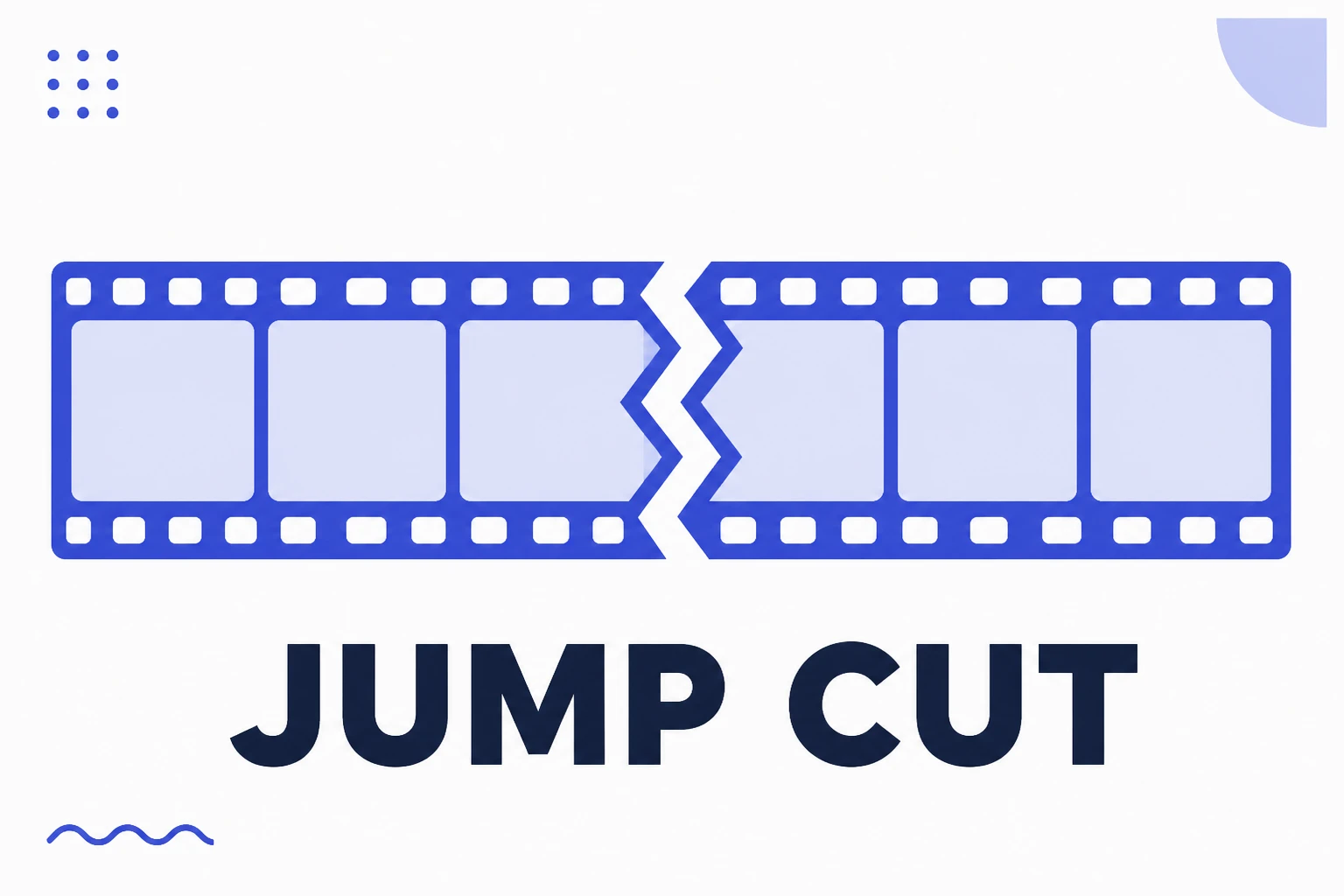
A jump cut is a cut within the same shot producing a visible jump.
- A mistake in cinema, a standard on the internet.
- It removes pauses and rambling, keeping pace high.
- B-roll smooths it when the jump is distracting.
- In excess it tires and blocks comprehension.
What it is, and why it was an error
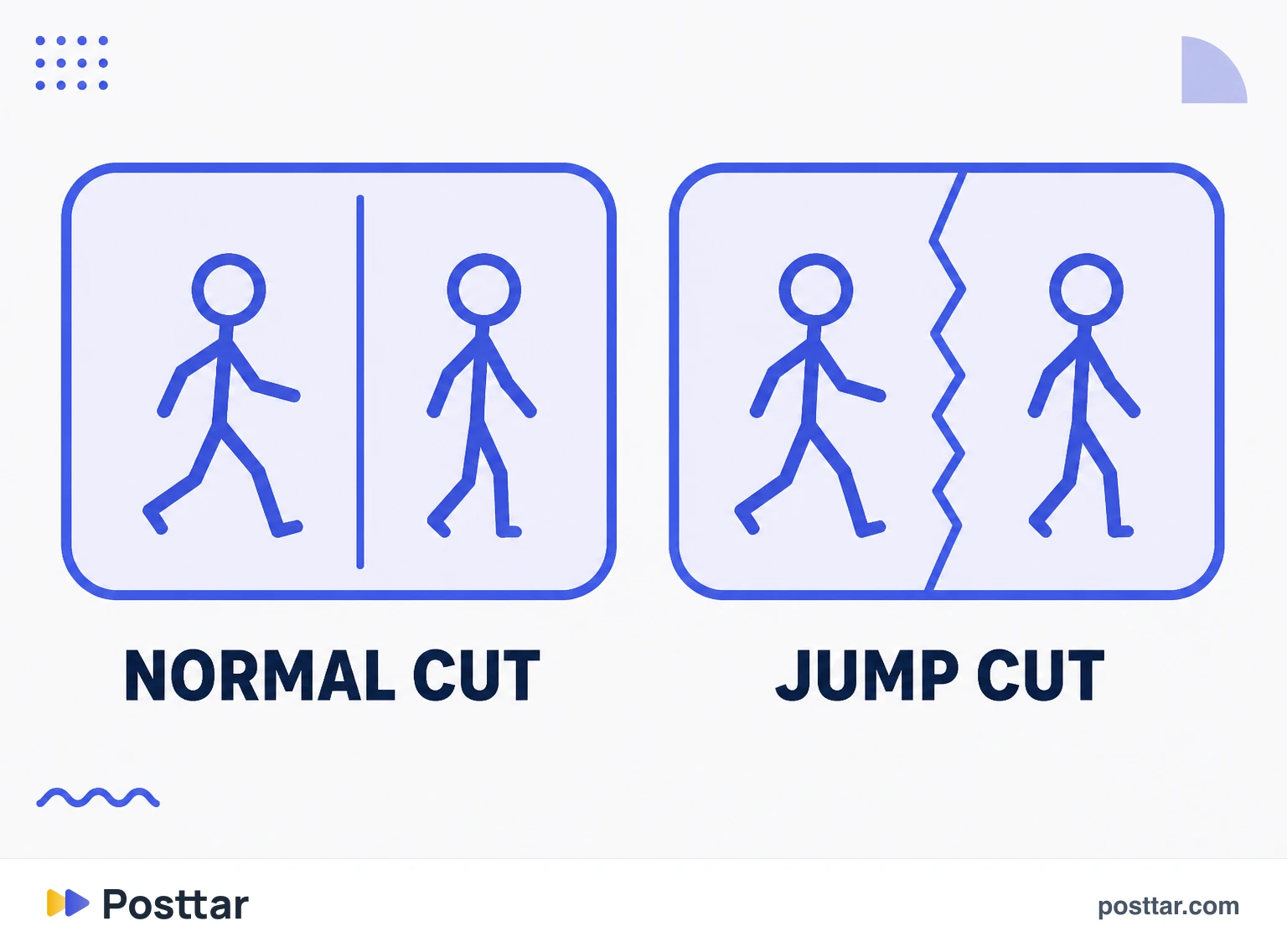
A normal cut changes shot: another angle, another framing. A jump cut cuts inside the same shot, removing a chunk from the middle. Since camera and setting are identical and only the subject moved, the image appears to jump.
Classical film grammar treated this as a continuity failure, because it breaks the illusion of continuous time and reminds the viewer that an edit exists.
The internet inverted that judgement. When attention is the scarce resource, reminding people there is editing costs less than keeping three seconds of silence on screen.
Why it became the standard
It is not an aesthetic fashion, it is a direct consequence of the metric governing the format.
In short video, retention decides distribution. Every second without new information is a chance for someone to scroll. The jump cut allows:
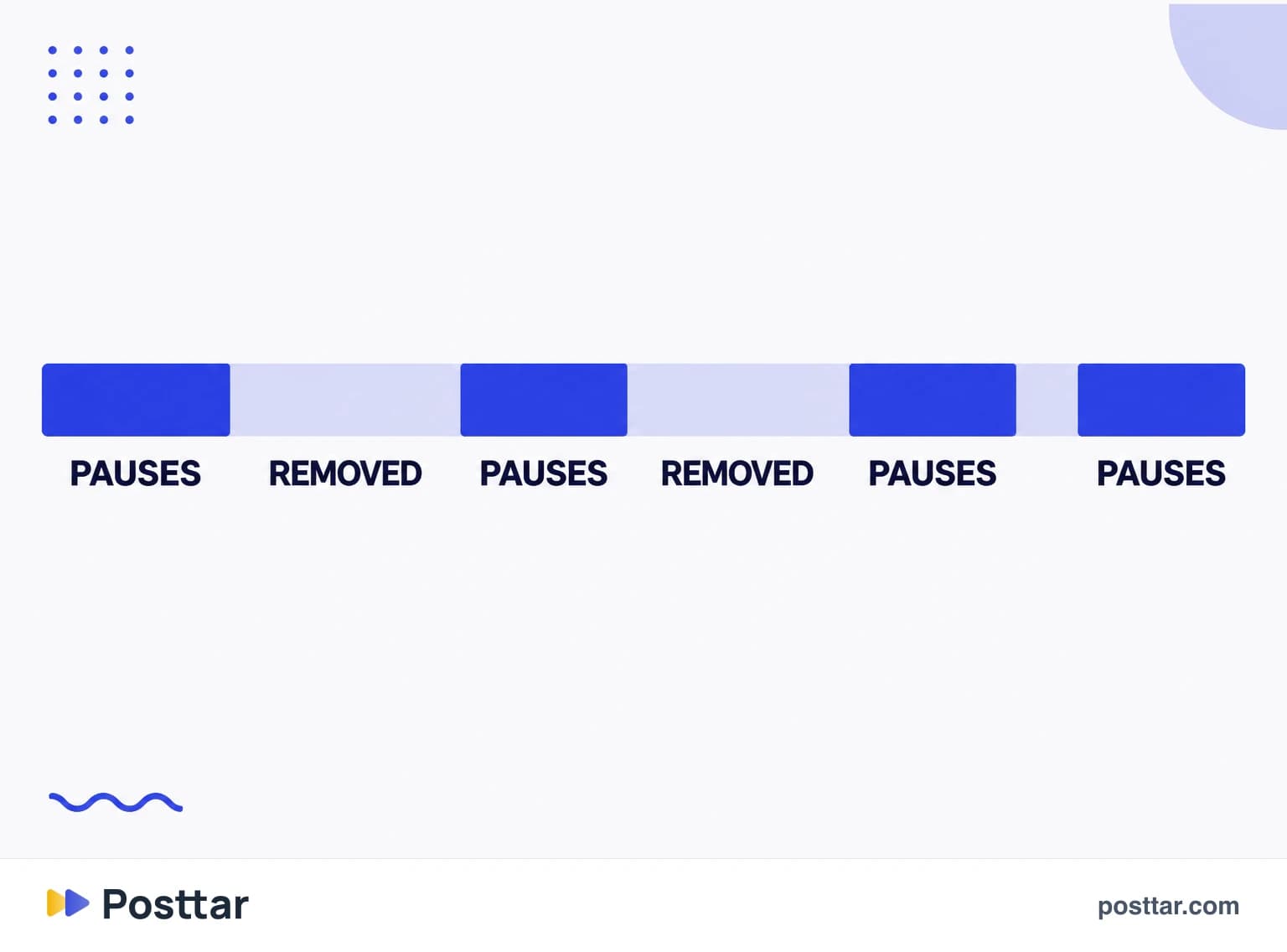
- Removing every pause. Breaths, hesitation, filler words.
- Cutting the rambling. Recording loosely and keeping only what lands.
- Densifying information. Saying in twenty seconds what would take forty.
The side effect became a language of its own: choppy pacing now communicates "straight to the point" before the first sentence even ends.
How to smooth it
When the jump distracts, there are four fixes, from simplest to most laborious:
- Cover it with b-roll. The most used and the best: the cut is still there, but nobody sees it.
- Shift the framing slightly. Pushing in or pulling out a little at the cut turns a jump cut into something close to a shot change.
- Keep the audio continuous. If the speech does not jump along with the image, the cut becomes far less noticeable.
- Cut on a word, not on silence. Splicing mid sentence disguises more than splicing at the pause.
When it goes too far
There is a limit, and crossing it is expensive:
- A cut every half second. It produces anxiety and blocks comprehension. People leave from fatigue rather than boredom.
- No air in content that needs pauses. Delicate subjects, emotional stories and complex explanations need room to breathe. Cutting everything flattens the tone.
- Cutting mid reasoning. Removing the "because" to gain half a second destroys the argument.
The useful ruler is content, not pace: cut everything that adds nothing, and keep everything that adds something, even when it is a pause.
Checklist
- I cut pauses and hesitation, not content.
- I cover distracting jumps with b-roll.
- The audio runs continuously underneath the cuts.
- I kept breathing room where the subject needs it.
- The pace is fast, not frantic.
Frequently asked questions
What is an example of a jump cut?
Someone talking to camera where the pauses were removed: the speech continues but the person appears to shift slightly between words. That shift is the jump, caused by cutting within the same shot.
What is the difference between a jump cut and a regular cut?
A regular cut changes shot, with a different angle or framing, and reads as natural. A jump cut cuts within the same shot, so the image jumps and the edit becomes visible.
What is the point of a jump cut?
Removing pauses, hesitation and rambling to keep information density high throughout. In short video that is decisive, because every second without new information is a chance for someone to scroll away.
How do you make jump cuts look less jarring?
Cover the cut with b-roll, shift the framing slightly between takes, keep the audio continuous underneath, and prefer splicing mid sentence rather than at a silence.
Can you use too many jump cuts?
Yes. A cut every half second produces fatigue and blocks comprehension, and delicate or complex content needs breathing room. The ruler is content: cut what adds nothing and keep what adds something, even a pause.
Related concepts
B-roll
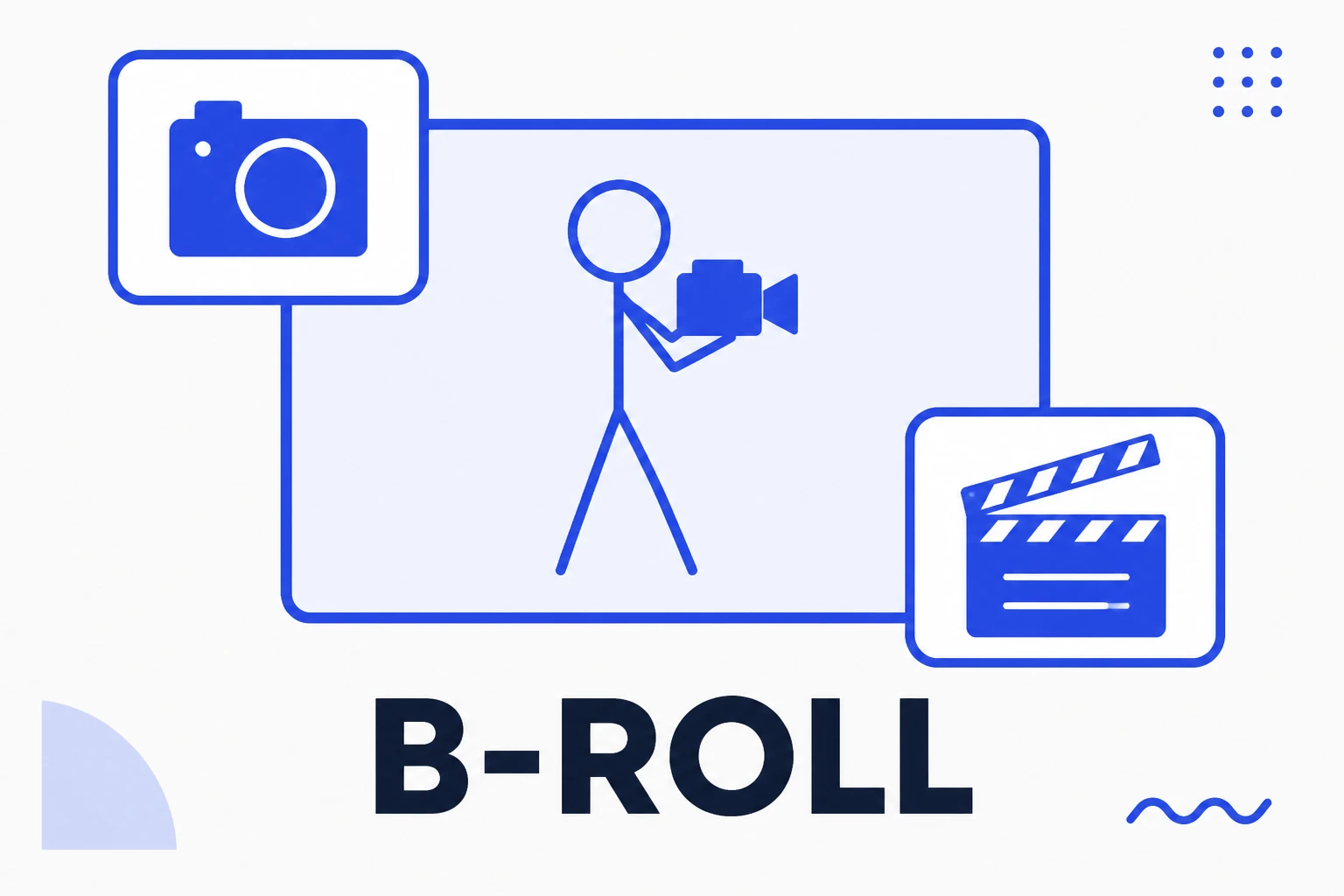
B-roll is any footage that is not the main speech: the supporting shots layered over narration to illustrate, give context or simply break visual monotony. The name comes from the film era, when the A roll carried the main scene and the B roll carried complementary material. It is the cheapest retention tool that exists.
Read the entry
Talking head
A talking head is the video format where someone speaks directly to camera, framed from the chest up. It is the oldest and simplest format there is, and it still converts best for professional accounts, because it is the only one where the audience sees a face, hears a voice and bonds with a person rather than with a profile.
Read the entry
Video script
A video script is the document defining what will be said and shown in a video before recording begins. In short content it is almost never read word for word, but writing beforehand changes the result anyway: it forces the hook to be decided, cuts rambling and reduces the number of takes. The arithmetic is simple, a script costs ten minutes and saves an hour of editing.
Read the entry
Average retention
Average retention is the percentage of a video people watched, on average, before leaving. It is the percentage version of watch time, and it exists to make videos of different lengths comparable. It falls naturally as a video gets longer, which means comparing a ten-second Reel with a one-minute one using the same number is a misreading.
Read the entry