Average retention on Reels: what it is and why 100% is not the target

By Tiago Costa·Updated on August 5, 2026
Definition
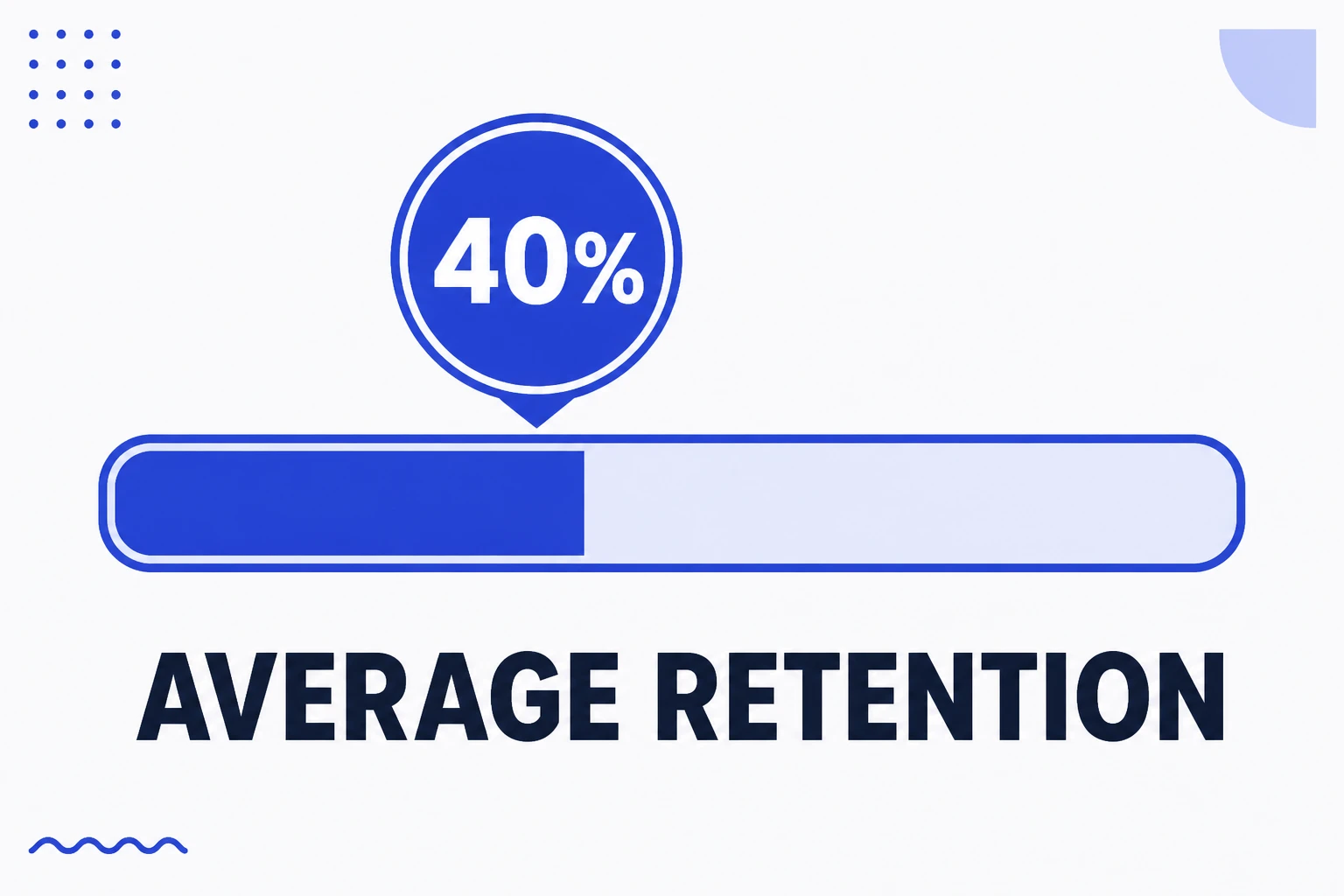
Average retention is the percentage of a video people watched, on average, before leaving.
- It is a percentage, unlike watch time, which is volume.
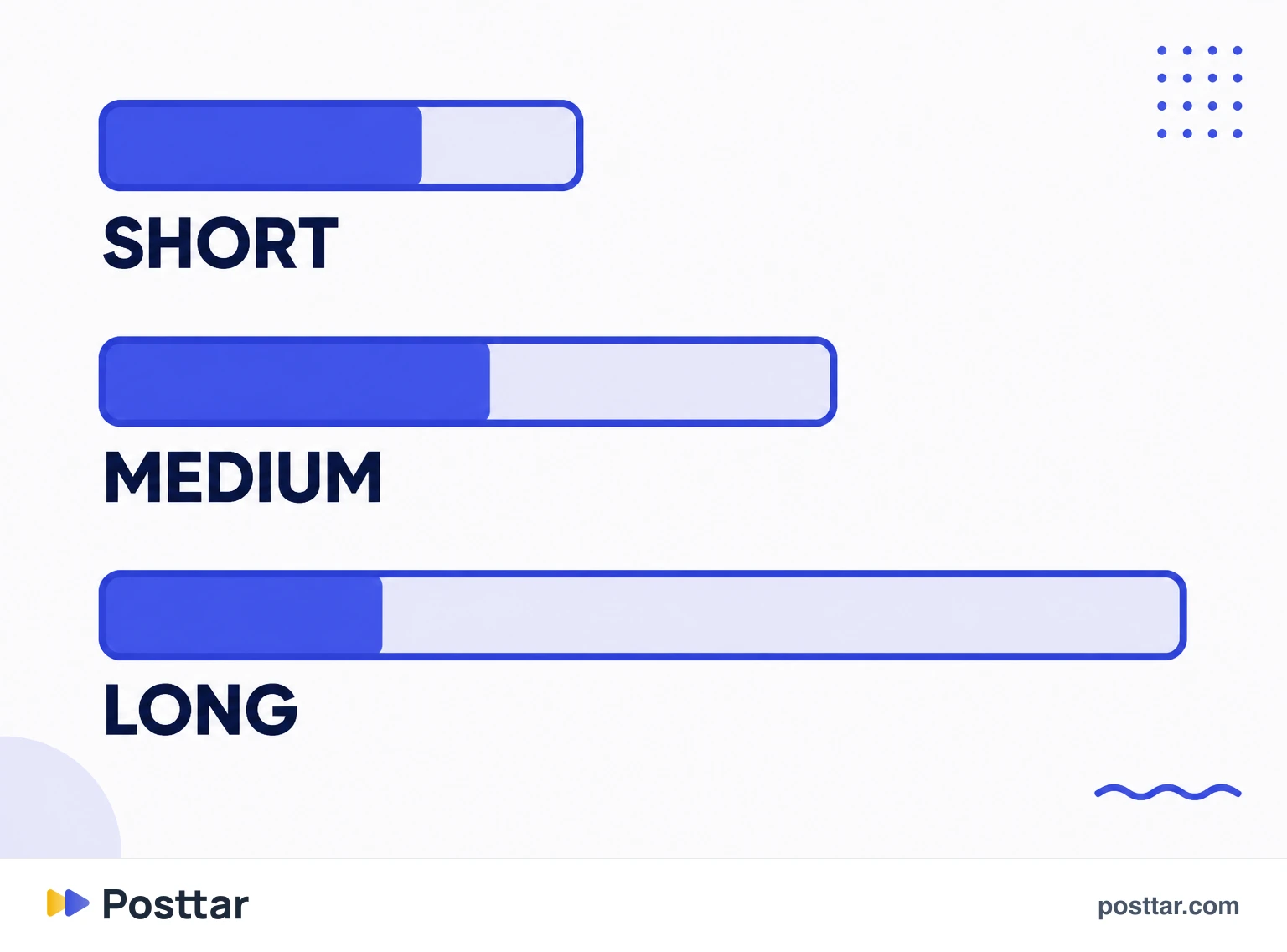
- It falls with length. Longer video has lower retention by nature.
- Above 100% is possible, when there are many replays.
- It does not say where people left. That is what the curve is for.
How retention is calculated
In practice, the calculation is average watch time per play divided by video length. A 30-second Reel watched for an average of 12 seconds has 40% average retention.
Being a percentage, it solves the problem total time does not: it lets you compare pieces of different sizes. But it only solves it partly, because retention itself carries a length bias, and that is where most reports go wrong.
One quirk that confuses people: on very short videos retention can exceed 100%. That happens when the loop runs more than once for the same person and watch time exceeds the length of the piece. It is not an error, it is replays.
Why it falls with length
The longer the video, the more chances to leave. That is attention arithmetic, not a quality judgement.
The practical consequence is that retention is only comparable within a duration band. An 8-second Reel at 85% and a 90-second one at 35% can both be excellent at what they set out to do: the second delivered 31 seconds per person, the first delivered 6.8.
That is why the correct reading is always double: percentage retention to know whether it held, and watch time to know how much attention was actually delivered. Optimising only the percentage pushes everyone towards ever shorter videos, which is not always what the content needs.
High retention is not automatically good
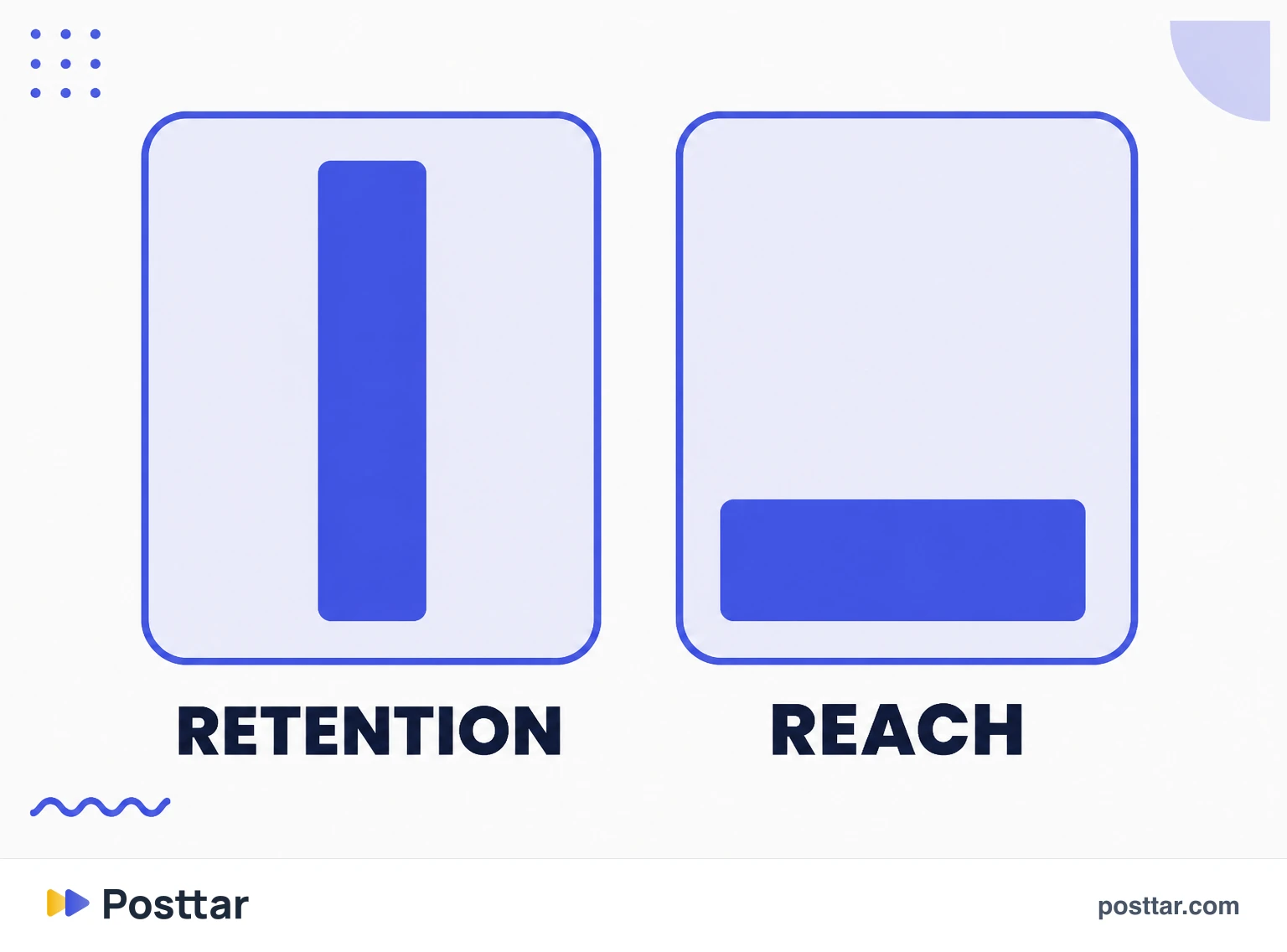
There is a case that shows up constantly and almost nobody interprets: extremely high retention with low reach.
It usually means the video was watched in full by people who already follow and already like you, and was not delivered beyond that. It is strong relationship content and weak discovery content. Retention does not expose the problem because it only looks at whoever arrived.
The inverse holds too: mediocre retention with very high reach can be a viral that attracted the wrong audience. In that case the percentage looks bad and the result, in new audience, may have been excellent.
Retention is a content metric. Reach is a distribution metric. Together they tell the story.
How to improve it
- Cut the beginning. The most expensive loss happens in the first seconds, and most of it is intro, greeting and unnecessary context.
- Cut the middle. Retention drops where pacing drops. If you do not know where, the retention curve shows you.
- Match length to the idea. A stretched video loses retention; a video cut to the bone preserves it.
- Work the loop. On short pieces, an ending that flows into the opening adds replays and lifts the percentage.
- Test the hook alone. Changing two things at once turns the test into an opinion.
Checklist
- I compare retention only between videos of similar length.
- I read it alongside watch time and reach.
- I do not treat 100% as a goal: it can mean the video was too short.
- I use the curve when the average is bad, to find where I lost people.
- I give it a few days before judging, because Reels accumulate.
Frequently asked questions
What is average retention on Reels?
It is the percentage of a video people watched, on average, before leaving. It is calculated by dividing average watch time by video length, and it exists to compare pieces of different sizes.
What is a good average retention?
It depends entirely on length. Short videos hit high percentages easily and long ones do not. The useful benchmark is the median of your own videos in the same duration band, not a market number.
Can retention go above 100%?
It can, and it is normal on short videos. When the loop runs more than once for the same person, watch time exceeds the length of the piece and the percentage goes past a hundred. That is replays, not a measurement error.
Does high retention mean the video did well?
Not always. Very high retention with low reach usually means only existing followers watched, so the content held attention but was not distributed. Retention has to be read alongside reach to tell the whole story.
How do I increase retention on a Reel?
By cutting the beginning, which is where the biggest loss lives, matching the length to what the idea actually needs and removing pacing drops in the middle. The retention curve shows exactly which second people leave at.
Related concepts
Retention curve
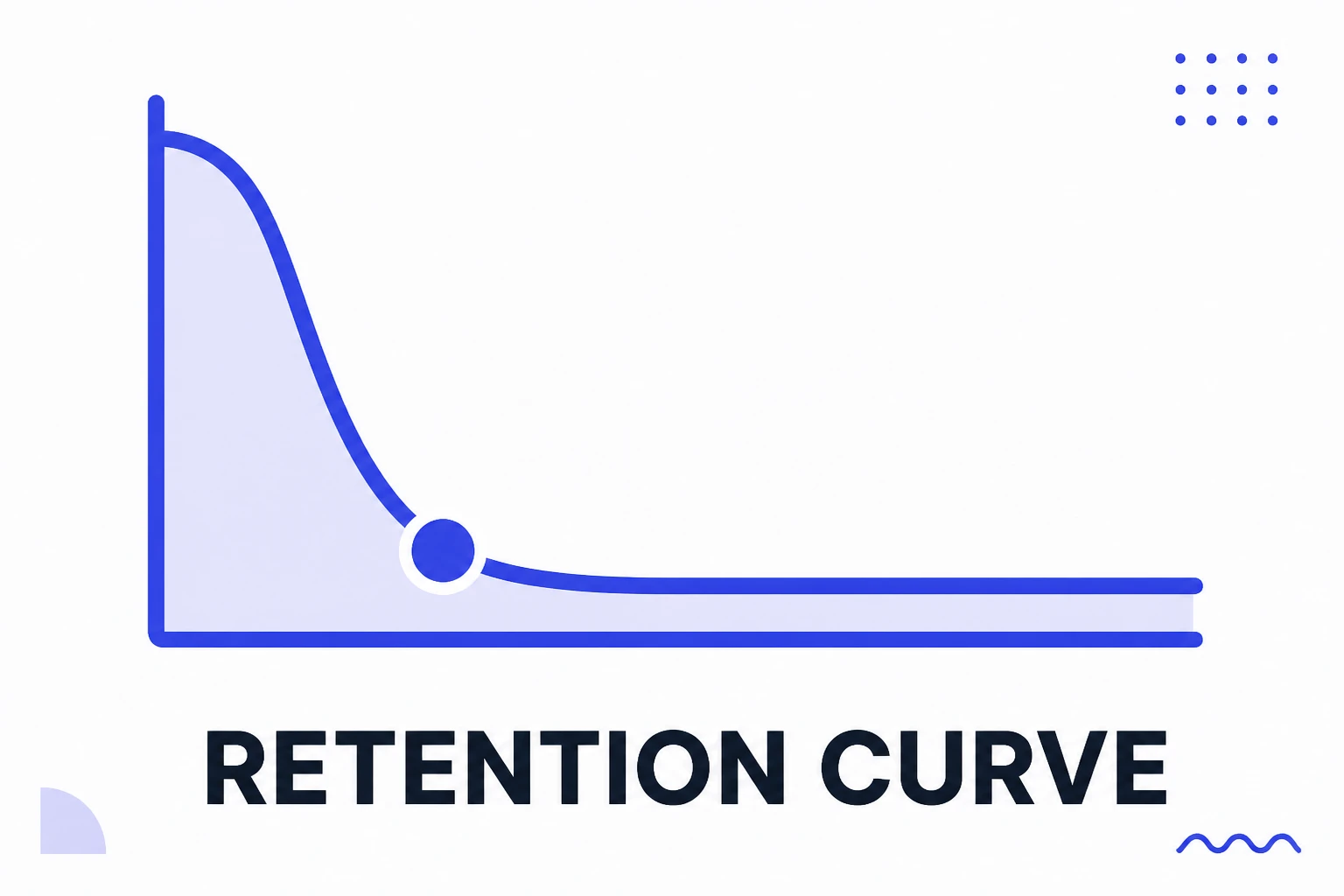
The retention curve is the chart showing what percentage of the audience was still watching at each second of a video. Unlike average retention, which compresses everything into one number, the curve shows the exact location of the loss, and it is the only video metric that points at what to fix rather than merely reporting that something is wrong.
Read the entry
Watch time
Watch time is the total amount of time people spent watching a video, summing every play. It is a volume metric, measured in minutes or hours, and it differs from retention, which is a percentage. The distinction matters because the two can move in opposite directions: a long video with low retention can accumulate more total time than a short one watched in full.
Read the entry
Hook rate
Hook rate is the percentage of people who got past the first seconds of a video instead of scrolling on. It is the metric that isolates hook performance, because it measures the one decision that happens before anything else in the content has a chance to matter. A video can have excellent content and a low hook rate, and in that case the problem is not the content.
Read the entry
Hold rate
Hold rate is the percentage of people who kept watching after getting past the first seconds, meaning how many of those the hook caught made it to the end. It is the natural pair of hook rate: while the hook measures whether the opening grabbed, the hold measures whether the content sustained. Separating the two is what tells you whether to rewrite the opening or re-edit the middle.
Read the entry