Video script: the text defining the video before recording, and why improvising costs more

By Tiago Costa·Updated on August 5, 2026
Definition
A video script defines what will be said and shown in a video.
- Written before recording, even for short content.
- It forces the hook to be decided rather than discovered while filming.
- Around 140 words per minute is normal speaking pace.
- It cuts takes and shortens editing.
What it solves
The most common objection is that a script kills naturalness. It is well founded when the script is read out, and groundless when it is used as structure.
What it solves in practice:
- It decides the hook up front. Improvising, the hook shows up at minute two, when nobody is still watching.
- It cuts rambling. Talking without a plan produces repetition, and repetition becomes cuts in the edit.
- It shortens filming. Fewer takes, fewer attempts at finding the right sentence on the spot.
- It guarantees the piece ends. An improvised video usually has no closing, it just stops.
A structure that works
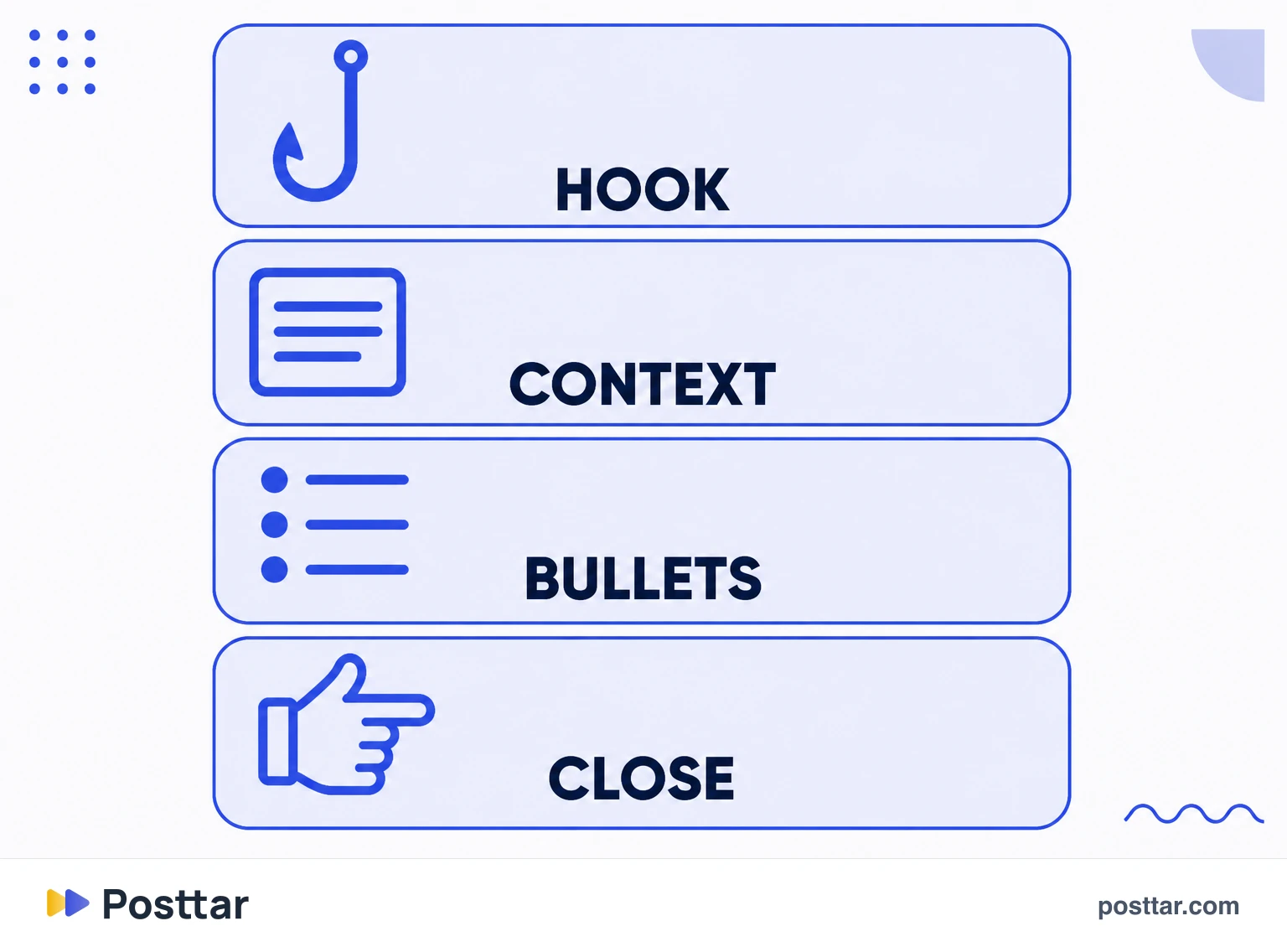
For short content, four blocks are enough:
- Hook. One sentence, written word for word. It is the only stretch worth memorising.
- Context. One or two sentences saying who it is for and why it matters.
- Development. In bullet points, not running text. The delivery can be free here.
- Close. The conclusion and the CTA, also written, because improvising fails most at the end.
Notice the pattern: beginning and end written verbatim, middle in bullets. That preserves naturalness where it matters and guarantees precision where it is decisive.
The time arithmetic
One practical number that prevents overshooting: normal speech runs around 140 words per minute. The hurried social media delivery gets close to 160.
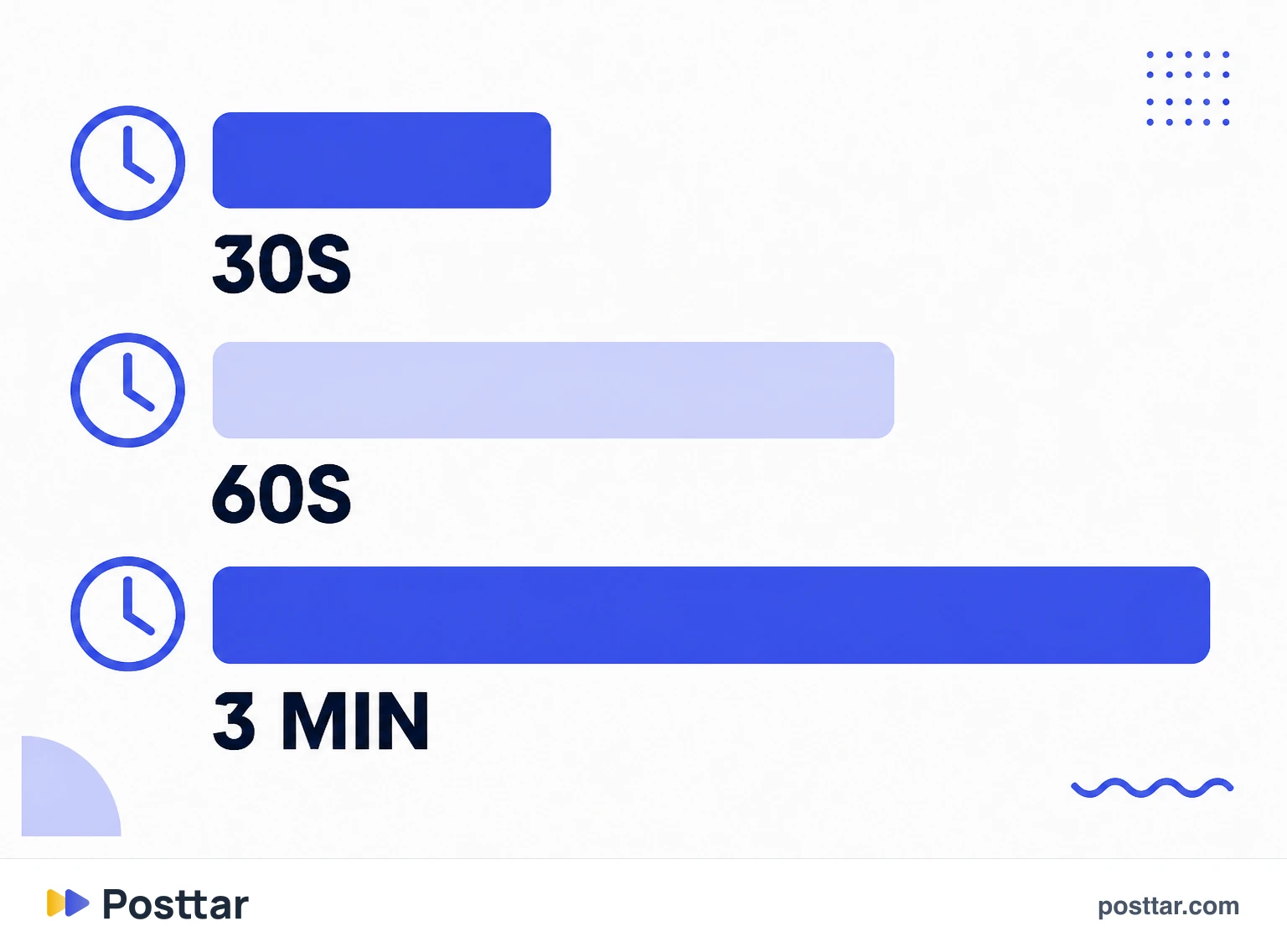
That gives a direct ruler:
- 30 seconds: roughly 70 to 80 words.
- 60 seconds: roughly 140 to 160.
- 3 minutes: roughly 420 to 480.
Counting words before recording solves the most common short video problem, which is writing two minutes of content for a thirty second format and only discovering it in the edit.
Mistakes that always show up
- Opening with an introduction. "Hi, I am so and so and today I will talk about" burns the seconds that decide retention.
- Writing to be read rather than spoken. A sentence that works on paper sounds artificial out loud. Read it aloud before recording; rewrite whatever trips you.
- A script with no visual notes. Text is half of it; the other half is what appears on screen. Note both.
- No close. A video that ends mid sentence loses the share.
Checklist
- The hook is written word for word.
- I counted words to fit the intended duration.
- I read it aloud and rewrote whatever tripped me.
- I noted what appears on screen, not just what is spoken.
- There is a close, not just an ending.
Frequently asked questions
What is a video script?
It is the document defining what will be said and shown in a video before recording begins. In short content it works more as structure than as text to be read word for word.
How do you make a script for a video?
Write the hook word for word, add one or two sentences of context, list the development in bullet points and write the close with the call to action. Then read it aloud and rewrite whatever trips you.
How long is a 3 minute video script?
Roughly 420 to 480 words, assuming a speaking pace between 140 and 160 words per minute. For 30 seconds it is about 70 to 80 words, and for one minute between 140 and 160.
Does a script make a video sound artificial?
It does when read out, and it does not when used as structure. The pattern that preserves naturalness is writing the beginning and end verbatim, where precision matters, and leaving the middle in bullet points.
Is it worth using AI to write scripts?
It works well for drafts and for generating hook variations, where volume helps. What does not work is publishing the text without passing it through your own voice: a generic script sounds generic, and reading it aloud exposes that instantly.
Related concepts
Storyboard
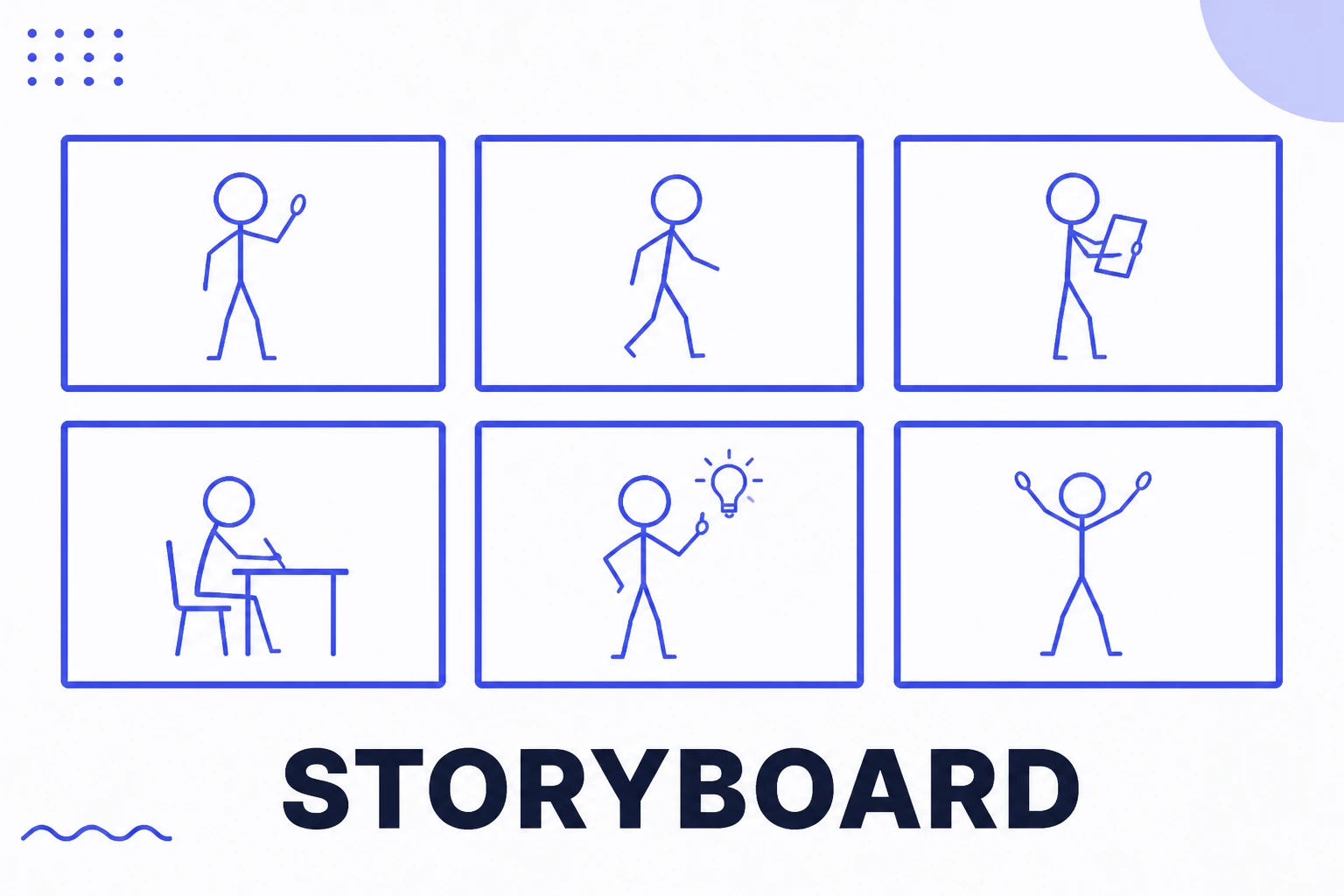
A storyboard is the sequence of drawn frames showing how a video will look before filming begins. Each frame represents a shot, with the image, the line and any movement noted. It is the visual counterpart of the script: while the script decides what will be said, the storyboard decides what will be seen, and those are different things that often get confused.
Read the entry
Hook
A hook is the opening of a piece of content, responsible for buying the first seconds of attention and making someone decide to keep going. In short video it occupies the first three seconds and is simultaneously verbal, visual and sonic; in a carousel it is the cover; in text it is the first line. A hook is not decoration: because the distribution system watches retention and dwell time, it determines whether the content ever gets delivered beyond the people who already follow you.
Read the entry
Talking head
A talking head is the video format where someone speaks directly to camera, framed from the chest up. It is the oldest and simplest format there is, and it still converts best for professional accounts, because it is the only one where the audience sees a face, hears a voice and bonds with a person rather than with a profile.
Read the entry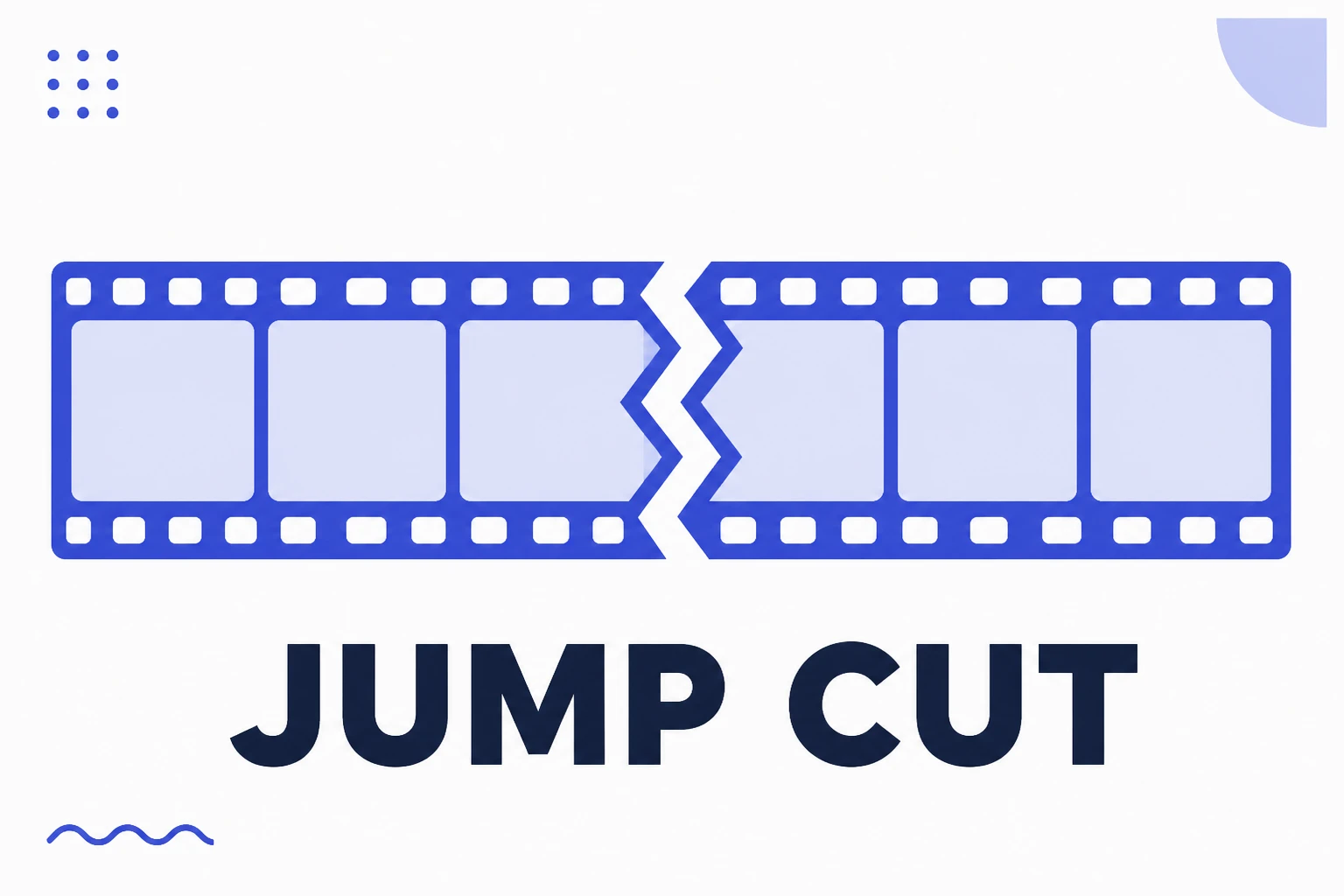
Jump cut
A jump cut is a cut made within the same shot, removing a section and splicing what remains, which produces a visible jump in the image. In classical cinema it was considered a continuity error. In internet video it became the standard, because it solves the format's central problem: cutting every pause, breath and ramble to keep the pace high from start to finish.
Read the entry