Social listening: hearing what is said outside your account, and why it is not monitoring

By Tiago Costa·Updated on August 5, 2026
Definition
Social listening means hearing what is said about a subject online.
- Different from monitoring, which only tracks direct mentions.
- It serves decisions, not just replies.
- The best source is the audience's literal language.
- It works without paid tools, where most people should start.
How it differs from monitoring
The terms are used as synonyms and they are not.
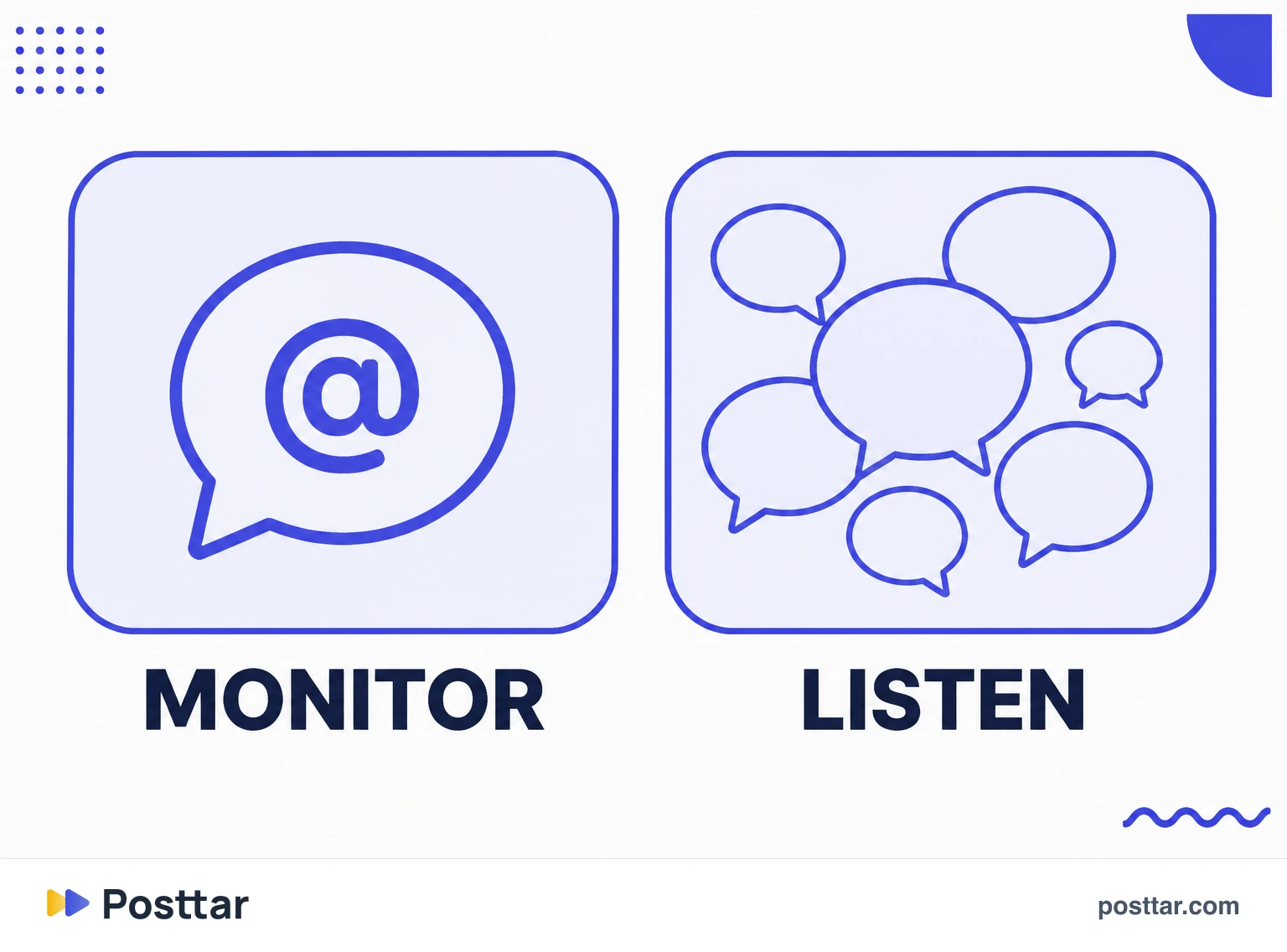
Monitoring tracks direct mentions of your brand: who cited you, who tagged you, who complained. It is reactive by nature, and its product is a reply.
Social listening tracks the subject, whether you are mentioned or not. It captures the conversation happening without anyone tagging you, which is where almost all the useful information lives. Its product is a decision: what to produce, which objection to handle, which product to build.
A simple way to separate them: monitoring answers "what are they saying about me"; listening answers "what are they saying about the problem I solve".
How to do it without paid tools
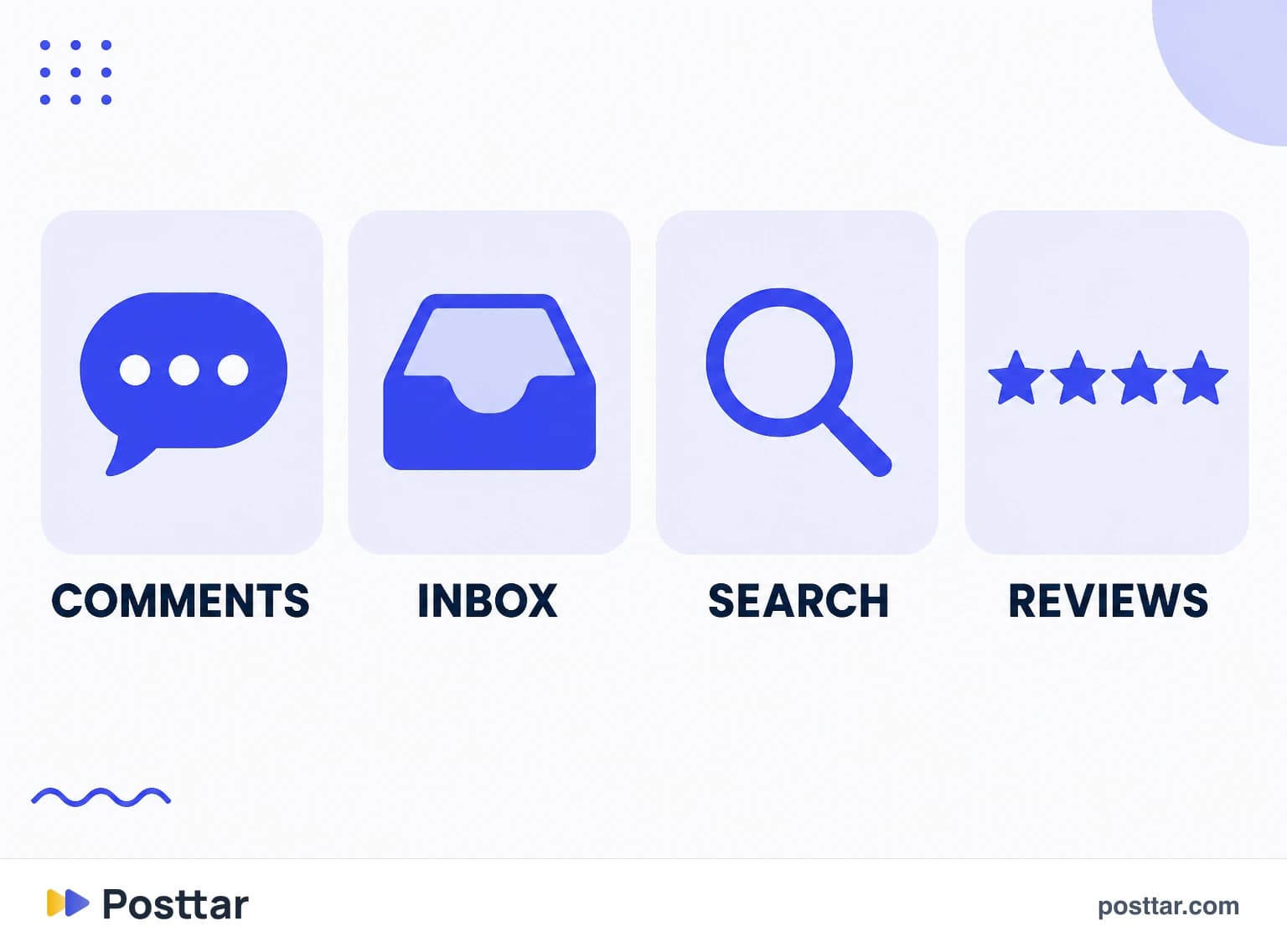
Professional tools exist and are expensive. For a small operation, four free sources cover most of the value:
- Comments on the big accounts in your niche. The richest source there is: dozens of people describing the problem in their own words, for free.
- Your own inboxes. Direct messages, email and comments accumulate your audience's exact language.
- Platform search. Searching your niche term and reading what appears already counts as listening.
- Reviews of competing products. The mid rating ones are the most useful: they explain what was missing, in detail.
What turns this into a method is recording it. Reading and forgetting is not listening; noting the literal phrases that repeat is.
What to look for
Listening to everything produces noise. Four things pay off:
- Literal language. The exact words people use to describe the pain. They become ready made copy, and copy using the customer's own phrase beats invented copy.
- Objections. What blocks the purchase, said spontaneously, without the filter of talking to a salesperson.
- Repeated questions. Each one is an evergreen piece validated before being produced.
- Gaps. What people look for and do not find in your niche.
The limits
Worth being honest about what it does not deliver.
It shows who talks, not who buys. Commenters are a biased sample: more engaged, more opinionated and frequently not the customer. Deciding a product from comments alone is risky.
It exaggerates the negative. Dissatisfaction motivates writing more than satisfaction does, so complaint volume is not proportional to the real problem.
It does not replace conversation. Twenty minutes talking to a customer returns more than hours reading comments, because you can ask why.
Checklist
- I listen to the subject, not only to mentions of me.
- I record the literal phrases that repeat.
- I read comments on the big accounts in my niche.
- I use mid rating reviews of competing products.
- I remember that commenters are not necessarily buyers.
Frequently asked questions
What is social listening?
It is the practice of hearing what people say about a subject, a market or a brand on social media, including what is said without a direct mention. It exists to inform decisions about what to produce and what to offer.
What is the difference between social listening and monitoring?
Monitoring tracks direct mentions of your brand and serves reaction. Social listening tracks the whole subject, mentioned or not, and serves decisions. One answers what they say about me, the other what they say about the problem I solve.
What is an example of social listening?
Reading the comments under a large account in your niche and noting the exact phrases people use to describe their problem. That single habit produces validated content ideas and copy language without any tool.
Do you need a paid social listening tool?
Not to start. Professional tools help at scale, but four free sources cover most of the value for a small operation. What turns reading into a method is the recording, not the tool.
What are the limits of social listening?
It shows who talks rather than who buys, since commenters are a biased sample. It exaggerates the negative, because dissatisfaction motivates writing more than satisfaction. And it does not replace talking to a customer, where you can ask why.
Related concepts
Copywriting
Copywriting is writing built to provoke a specific action: buy, sign up, reply, click. What separates it from other kinds of writing is not style, it is the success criterion. A literary text is judged by the experience it creates; copy is judged by how many people did what it asked. That changes everything, including the order in which it gets written.
Read the entry
Content pillar
Content pillars are the few recurring subjects an account covers. They exist to solve two problems at once: the blank page for people who do not know what to post, and the dispersion of people who post about everything and are recognised for nothing. Three to five pillars is the range that works, and the most common mistake is confusing a pillar with a format.
Read the entry
Profile audit
A profile audit is the structured review of an account to find where it is losing results. It exists because symptoms almost always mislead: someone with poor results concludes the problem is the content, when in most cases the content works and the profile does not convert, or the reverse. The audit separates those layers instead of treating everything as one problem.
Read the entry
Evergreen content
Evergreen content is what stays true and useful long after publishing, without depending on a date, on novelty or on the context of the moment. The name comes from trees that never lose their leaves. It returns less at the peak and far more cumulatively: while trend content delivers everything in 48 hours and dies, evergreen keeps being found, recommended and shared for months.
Read the entry