Motion graphics: design em movimento, e onde ele ajuda mais do que enfeita

Por Tiago Costa·Atualizado em 5 de agosto de 2026
Definição
Motion graphics é design gráfico em movimento.
- Texto, formas e gráficos animados, sem personagem.
- Diferente de animação, que conta história com personagem.
- Resolve a tela parada em conteúdo sem imagem gravada.
- Vira enfeite quando o movimento não tem função.
A diferença para animação
Os termos se misturam, mas a distinção prática é útil.
Animação, no sentido tradicional, conta uma história com personagens que atuam. Tem roteiro, arco e interpretação.
Motion graphics anima elementos gráficos: um número que sobe, uma barra que cresce, um texto que entra, um ícone que se transforma em outro. Não há personagem nem narrativa própria; ele serve a uma informação.
Em conteúdo de rede social, quase tudo que as pessoas chamam de animação é motion graphics. E isso é uma boa notícia, porque motion graphics é ordens de grandeza mais barato e mais rápido de produzir.
Onde ele realmente ajuda
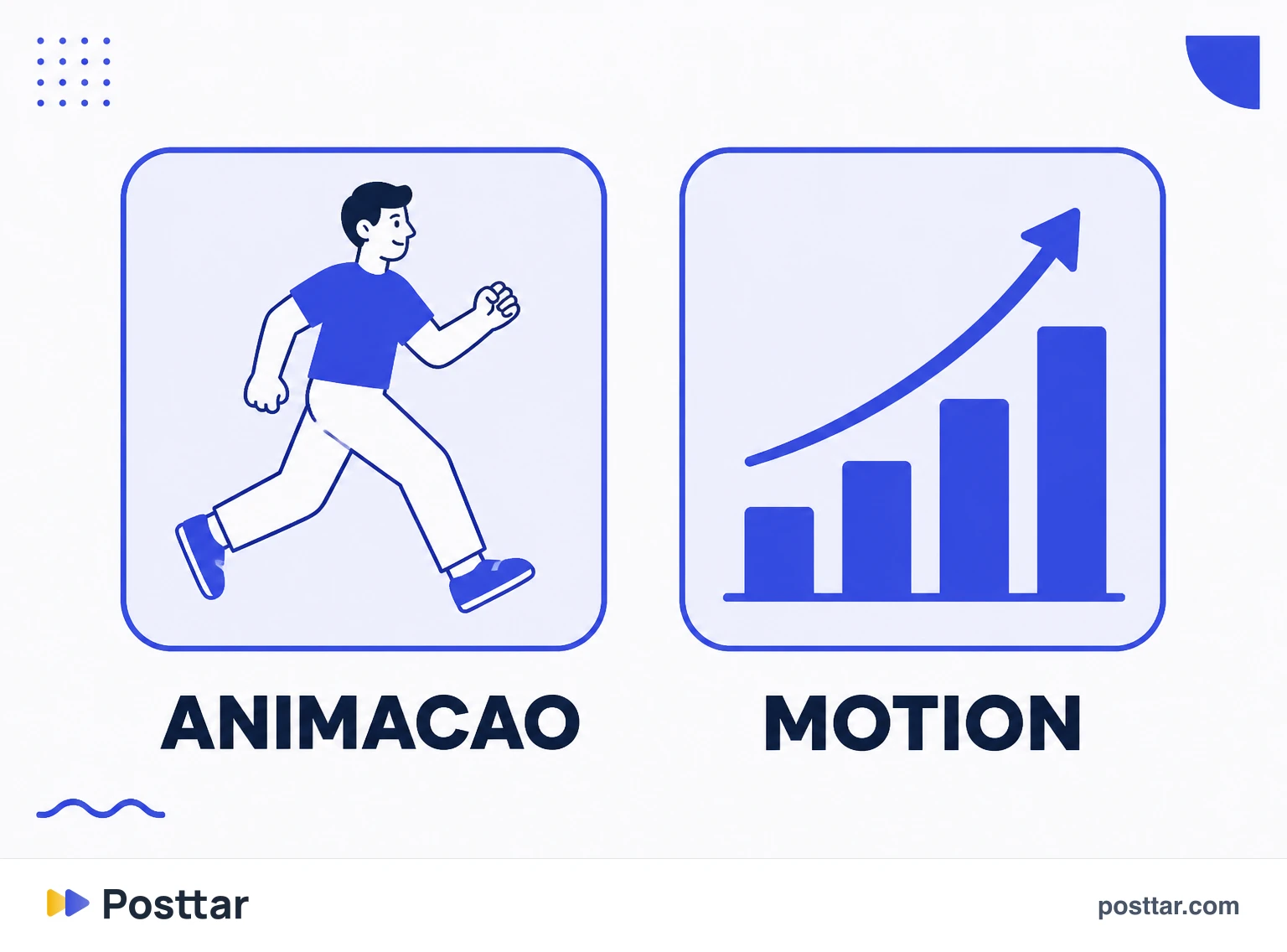
Existem quatro usos com função clara, e vale ficar neles:
- Dar movimento onde não há. Em conteúdo sem rosto e em explicação sobre imagem estática, é o que impede a retenção de despencar.
- Destacar a informação certa. Uma palavra que aparece no momento em que é dita fixa muito mais do que a mesma palavra sempre visível.
- Mostrar o invisível. Processo, fluxo, comparação e evolução de número são coisas que não existem em imagem gravada e existem em gráfico animado.
- Marcar identidade. Uma transição própria repetida em todas as peças faz reconhecimento no feed.
Quando vira enfeite
O erro clássico é confundir movimento com qualidade. Sintomas:
- Tudo se move o tempo todo. Quando cada elemento tem animação, nada se destaca, e o olho não sabe onde olhar.
- Transição mais longa que a informação. Dois segundos de efeito para exibir uma palavra é tempo tirado do conteúdo.
- Movimento que não significa nada. Se a animação não indica ordem, ênfase ou relação, ela só custa atenção.
- Abertura animada. A vinheta de marca no começo é o formato mais eficiente de perder os três segundos que decidem tudo.
A régua é simples: cada movimento precisa responder por que ele existe. Se a resposta for "fica bonito", corte.
Como produzir sem virar projeto
Para quem publica com frequência, o custo de produção é o fator decisivo. Três decisões resolvem:
- Um conjunto pequeno de animações reutilizáveis. Três ou quatro entradas de texto padrão, usadas sempre. Repetição é identidade, não preguiça.
- Legenda automática antes de tudo. É o motion graphics de maior retorno que existe, e hoje é gerado sozinho pelos editores.
- Modelo pronto em vez de peça nova. Montar um projeto do zero por vídeo é o caminho mais rápido para parar de publicar.
Checklist
- Cada animação responde por que existe.
- Não coloco vinheta animada no começo.
- Uso legenda em tela em todo vídeo falado.
- Tenho um conjunto pequeno de animações reutilizáveis.
- O movimento destaca a informação em vez de competir com ela.
Perguntas frequentes
O que é motion graphics?
É design gráfico em movimento: texto, formas, ícones e gráficos animados, sem personagem nem narrativa própria. Serve para dar movimento, destacar informação e tornar visível o que é abstrato.
Qual a diferença entre motion graphics e animação?
Animação conta história com personagens que atuam, com roteiro e interpretação. Motion graphics anima elementos gráficos a serviço de uma informação. Quase tudo que se chama de animação em rede social é, tecnicamente, motion graphics.
Para que serve motion graphics em conteúdo?
Para dar movimento onde não há imagem gravada, destacar a palavra certa no momento em que é dita, mostrar processos e comparações que não existem em vídeo, e marcar identidade com transições próprias repetidas.
Quando motion graphics atrapalha?
Quando tudo se move ao mesmo tempo e nada se destaca, quando a transição dura mais que a informação que ela entrega, e quando há vinheta animada no começo, que queima os segundos que decidem a retenção.
Preciso de software profissional para fazer?
Não para o uso mais comum. Legenda automática e animações simples de texto já existem nos editores de celular, e são justamente os recursos de maior retorno. Software profissional só compensa quando a identidade visual é o diferencial do canal.
Conceitos relacionados
Conteúdo sem rosto
Conteúdo sem rosto, ou faceless content, é toda produção que não mostra o rosto de quem publica: mãos, telas, objetos, animação, narração sobre imagem. Funciona, e cresceu muito porque resolve dois problemas reais, o desconforto de aparecer e a dificuldade de escalar produção que depende de uma pessoa. A troca é que o vínculo precisa vir de outro lugar.
Ler o verbete
B-roll
B-roll é todo material de imagem que não é a fala principal: as tomadas de apoio que aparecem por cima da narração para ilustrar, dar contexto ou simplesmente quebrar a monotonia visual. O nome vem da era do cinema em película, quando o rolo A trazia a cena principal e o rolo B trazia o material complementar. É o recurso mais barato de retenção que existe.
Ler o verbete
Carrossel
Carrossel é a publicação do Instagram que reúne até 20 imagens ou vídeos em um único post, navegáveis deslizando para o lado. Ele ocupa o mesmo espaço de um post comum no feed, mas pede uma ação a mais de quem vê, e essa ação é o que o torna valioso: cada avanço de quadro aumenta o tempo de permanência, e o formato tem uma segunda chance de entrega, porque o Instagram pode reexibir o post começando por outro quadro para quem não interagiu na primeira vez.
Ler o verbete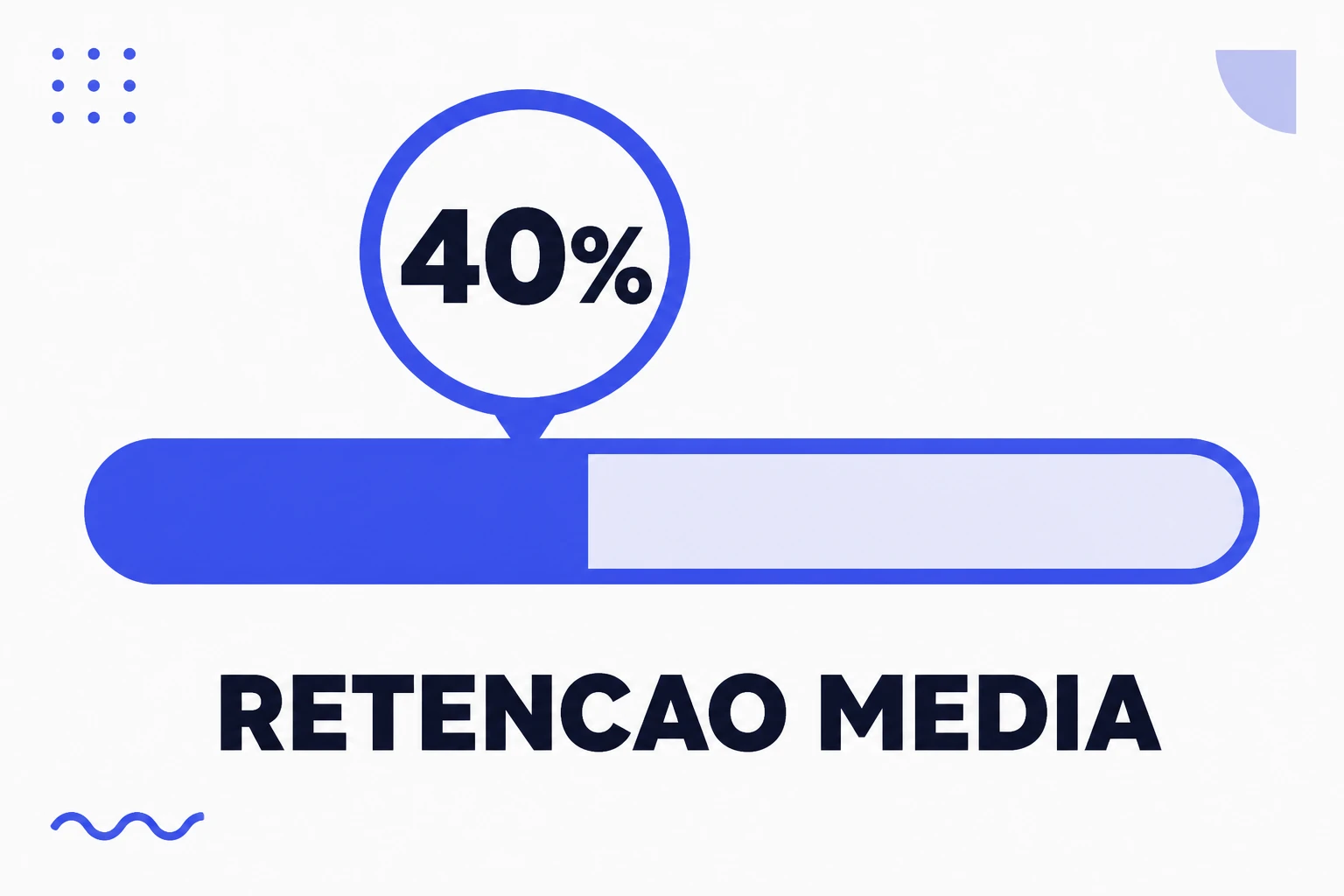
Retenção média
Retenção média é o percentual do vídeo que as pessoas assistiram, em média, antes de sair. É a versão percentual do tempo de visualização, e existe para tornar vídeos de durações diferentes comparáveis. Ela cai naturalmente conforme o vídeo fica mais longo, o que significa que comparar um Reel de dez segundos com um de um minuto pelo mesmo número é uma leitura errada.
Ler o verbete