Storyboard: drawing the video before filming, and why ugly sketches work

By Tiago Costa·Updated on August 5, 2026
Definition
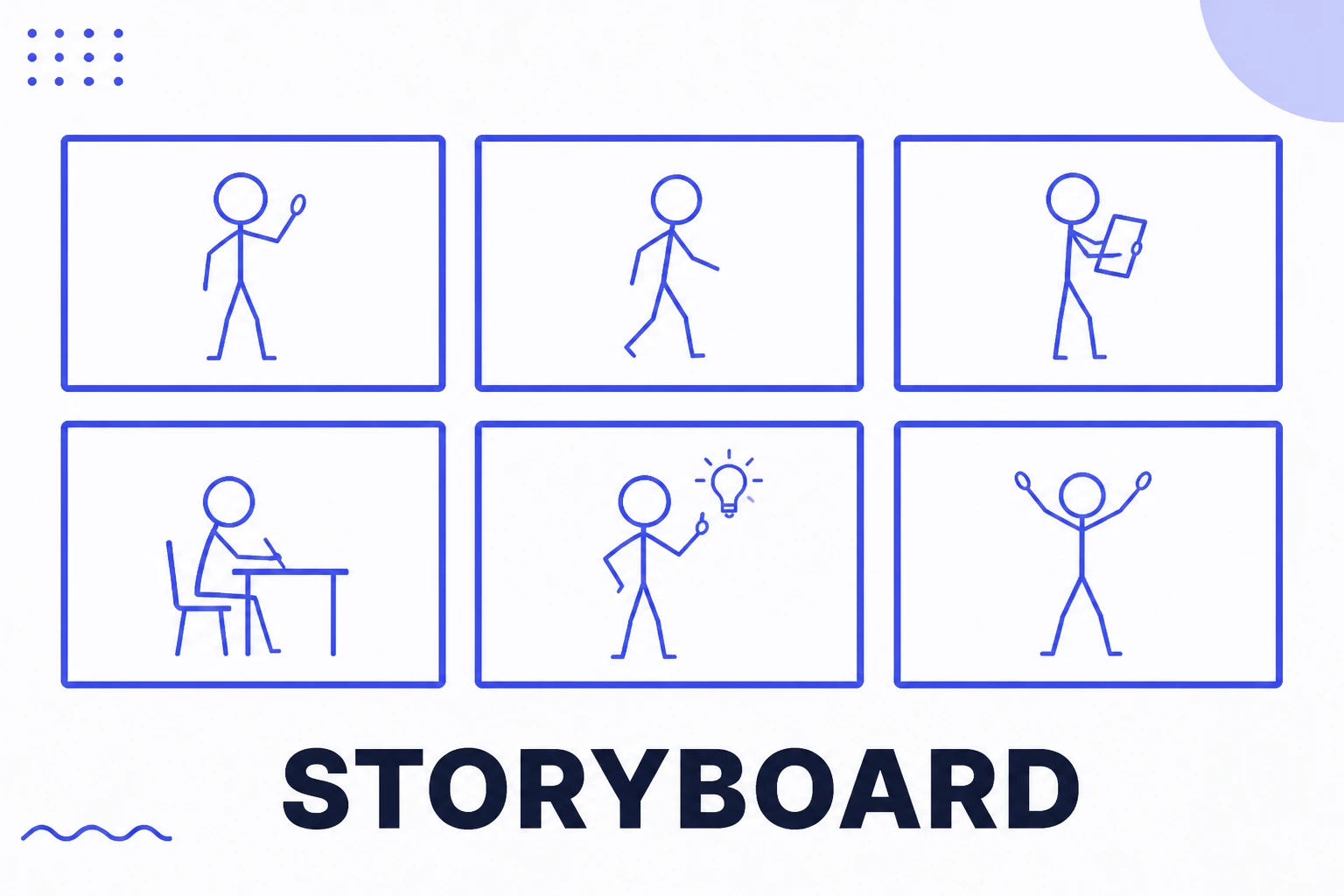
A storyboard is the sequence of frames showing a video before filming.
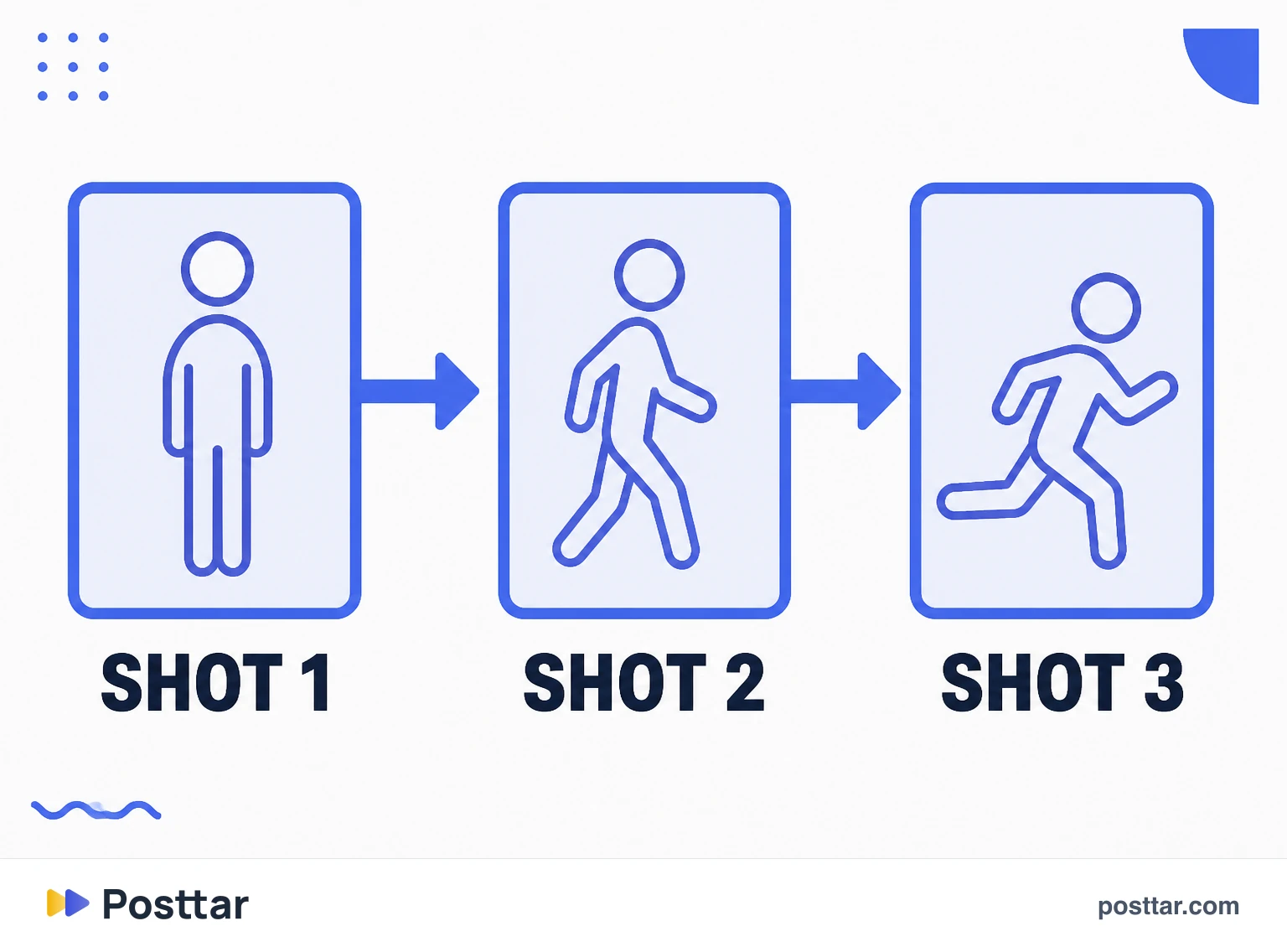
- One frame per shot, with image, line and movement.
- It complements the script, which decides text rather than image.
- Sketches are enough. No drawing skill required.
- It catches problems that would only surface in the edit.
What it is and what it is for
Storyboards were born in animation and film, where reshooting a scene is expensive. The logic is the same for social content, except the cost is your time: finding out in the edit that an image is missing means filming again.
It solves three things the script alone does not:
- Framing. Where the person sits, what appears behind, whether on screen text fits.
- The image list. Which b-roll shots need to exist, and therefore need to be filmed.
- Visual rhythm. How many cuts, and where they land relative to the speech.
What each frame needs
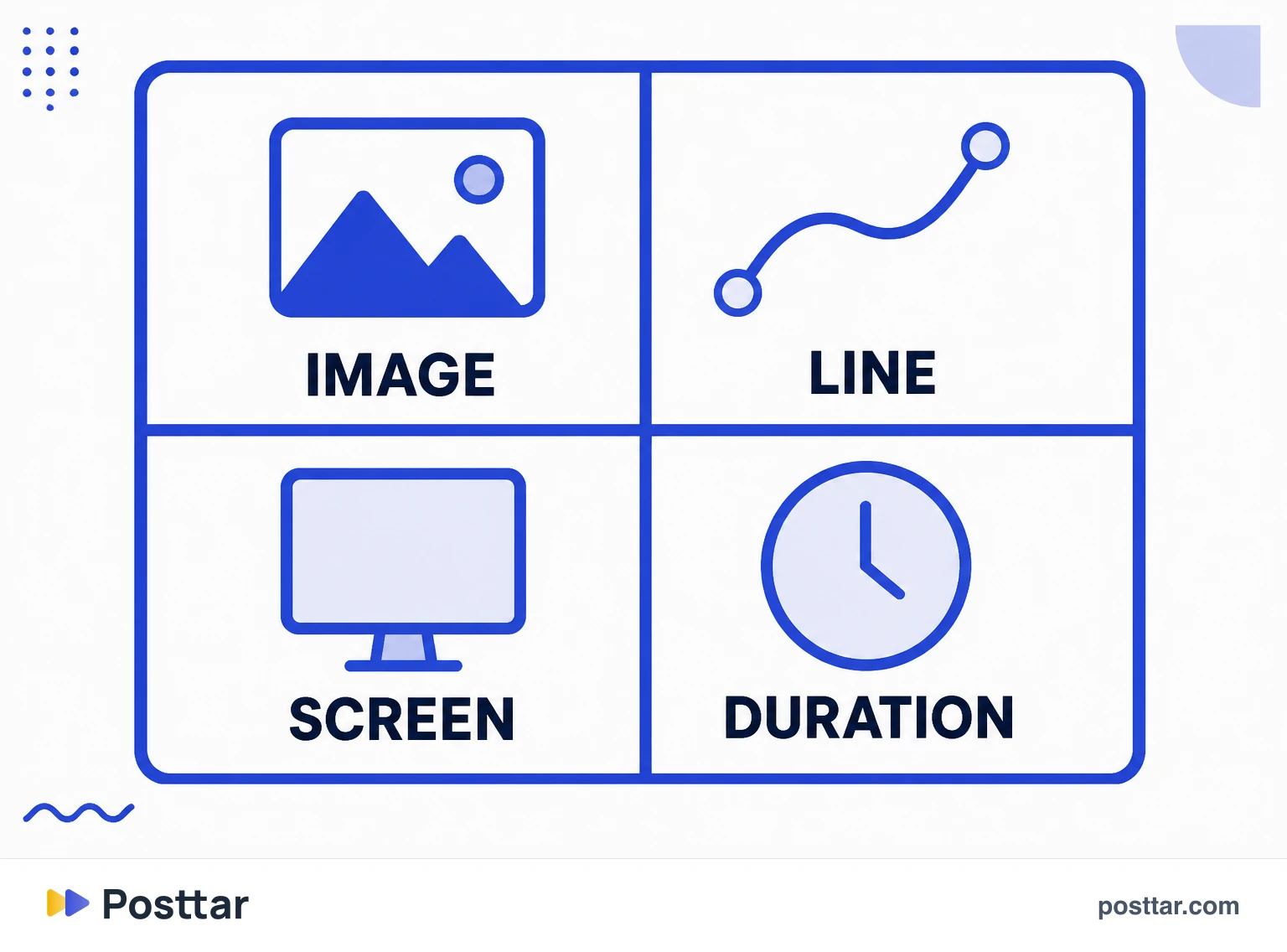
A useful frame carries four pieces of information, and needs no more:
- The image. A rectangle with stick figures is enough. The point is remembering the framing, not impressing anyone.
- The line. The sentence from the script matching that shot.
- The on screen text. What appears written, which is a content decision rather than an editing one.
- Estimated duration. It lets you add up and check the fit.
On the most common worry: you do not need to know how to draw. A content storyboard is a functional scribble, made by whoever will film. Beautiful drawing is a film production requirement, not a Reel one.
How to make one in fifteen minutes
- Split the script into shots. Every image change is a frame. Short videos usually have five to twelve.
- Sketch each framing. Vertical rectangle, stick figure, movement arrow if any.
- Write the line underneath. Only the sentence for that shot.
- Mark what is new footage and what already exists. That becomes your shot list.
- Add up the durations. If it exceeds the format limit, cut now, while cutting is cheap.
Paper works. A photo of the paper on your phone works. The tool matters far less than the habit.
When to skip it
Worth being honest: not all content needs a storyboard.
Skip it for single shot video, the talking head straight to camera with no cutaways. The script is enough there.
Do it when there are many cuts, when the video depends on images that must be filmed separately, when someone other than you will film or edit, and whenever the piece is expensive to redo.
For carousels, the equivalent is even simpler and always worth it: a sketch of each slide before opening the editor, because deciding how to split content inside a design tool is the slowest route there is.
Checklist
- Every image change became a frame.
- Each frame has image, line, on screen text and duration.
- I marked what has to be filmed from scratch.
- I added the durations and it fits the format.
- I did not spend time making the drawing pretty.
Frequently asked questions
What is a storyboard?
It is the sequence of drawn frames showing how a video will look before filming. It exists to decide framing, the image list and visual rhythm, which the script alone does not resolve.
How do you create a storyboard?
Split the script into shots, sketch the framing of each, write the matching line underneath, mark what needs filming from scratch and add up the durations to check it fits the format.
Do you need to draw well to make a storyboard?
No. A content storyboard is a functional scribble: a rectangle, a stick figure and a movement arrow are enough. The point is remembering the framing while filming, not impressing anyone.
What should a storyboard include?
Four pieces of information per frame: the sketched image, the line for that shot, the text appearing on screen and the estimated duration. More than that becomes production work and stops paying off in short content.
What is the difference between a script and a storyboard?
The script decides what will be said; the storyboard decides what will be seen. They are complementary documents, and confusing them usually results in filming without the supporting footage the edit needs.
Related concepts
Video script
A video script is the document defining what will be said and shown in a video before recording begins. In short content it is almost never read word for word, but writing beforehand changes the result anyway: it forces the hook to be decided, cuts rambling and reduces the number of takes. The arithmetic is simple, a script costs ten minutes and saves an hour of editing.
Read the entry
B-roll
B-roll is any footage that is not the main speech: the supporting shots layered over narration to illustrate, give context or simply break visual monotony. The name comes from the film era, when the A roll carried the main scene and the B roll carried complementary material. It is the cheapest retention tool that exists.
Read the entry
Carousel
A carousel is the Instagram post that holds up to 20 images or videos in a single publication, navigated by swiping sideways. It occupies the same feed space as a regular post but asks the viewer for one extra action, and that action is what makes it valuable: every frame advance adds dwell time, and the format gets a second delivery chance, because Instagram can re-show the post starting from a different frame to people who did not interact the first time.
Read the entry
Talking head
A talking head is the video format where someone speaks directly to camera, framed from the chest up. It is the oldest and simplest format there is, and it still converts best for professional accounts, because it is the only one where the audience sees a face, hears a voice and bonds with a person rather than with a profile.
Read the entry