Content funnel: the three stages, and why nobody walks them in order

By Tiago Costa·Updated on August 5, 2026
Definition
A content funnel organises pieces by decision stage.
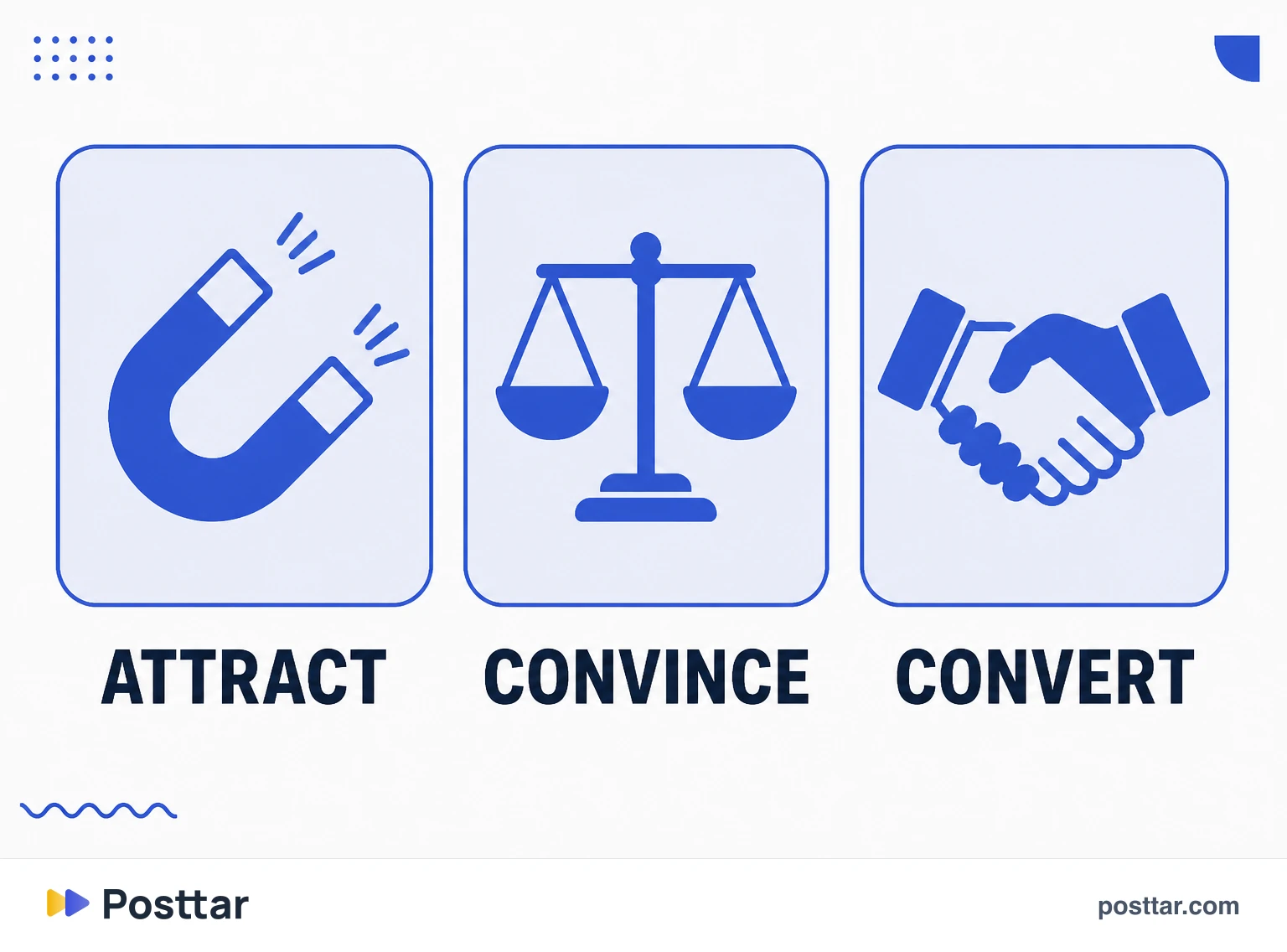
- Top attracts, middle convinces, bottom converts.
- Top only grows without selling; bottom only sells without growing.
- The real path is not linear, which changes how to use the model.
- Each piece has one stage, and attempting all three fails.
The three stages
- Top. For people who do not yet know they have the problem, or do not know it has a solution. It is the content that brings new people in, and therefore the broadest.
- Middle. For people who recognise the problem and are evaluating how to solve it. This is where method, comparison and objections belong.
- Bottom. For people who decided to solve it and are choosing with whom. Proof, cases, pricing, offers.
The model's usefulness is diagnostic before it is productive: looking at the last thirty days and classifying each piece usually reveals immediately which stage is missing from the account.
The typical imbalance
Two failures cover almost every case, and each produces a characteristic symptom.
Top only. The account grows, reach is good, and no conversations arrive. This is the common case for accounts producing broad educational content that never mention their own work. Whoever arrived never learned what you sell.
Bottom only. Testimonials, offers and results constantly. The account does not grow because a newcomer has no reason to follow, and the existing base tires. This is the common case for commercial accounts.
A proportion that tends to work concentrates on top and middle, with a smaller constant slice of bottom. It is not a rule, it is a starting point.
Why the path is not linear
The model draws an orderly journey, and real behaviour is not like that. Worth knowing so the funnel is not used rigidly.
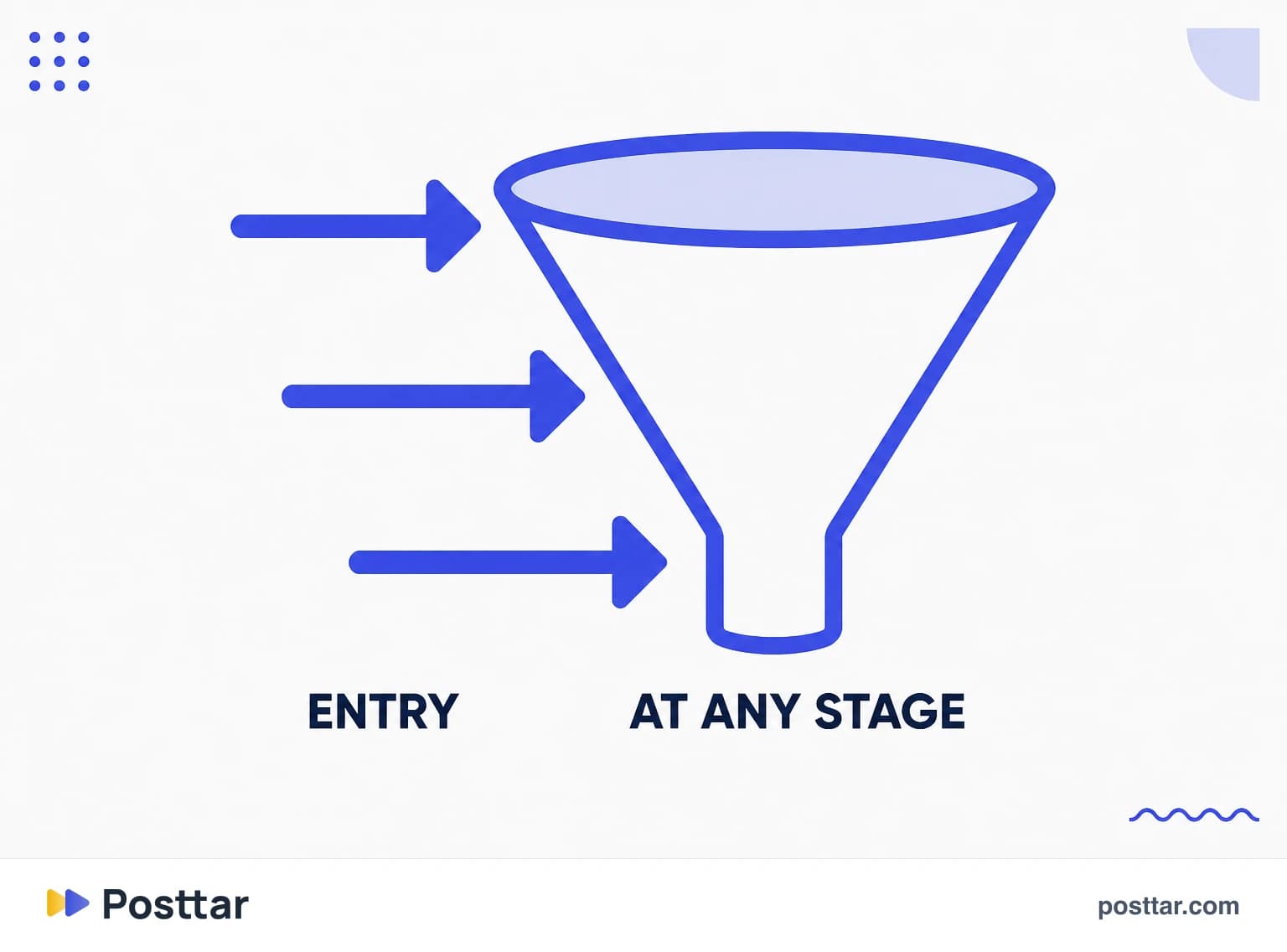
People enter at any stage. Someone might see bottom content first, with a client case, and only then look for the educational material. Someone might follow because of top content and buy two years later. And plenty never walk anything: they consume, disappear and come back.
The practical consequence is that a funnel should not be treated as a sequence to push people through. It works as coverage: instead of guiding each person along a path, you ensure content exists for whatever stage they are in when they arrive.
How to use it without bureaucracy
- Tag the stage in the calendar. One column is enough, and imbalance becomes visible before it becomes a problem.
- One stage per piece. Content trying to attract, convince and sell at once does none of the three well.
- Measure what each stage should deliver. Top by non follower reach, middle by saves and comments, bottom by conversations started. Judging bottom by reach is the most common mistake, because bottom content always reaches less.
- Do not force all three weekly. The proportion matters across the month, not within each seven day cycle.
Checklist
- I classified the last thirty days by stage.
- Content from all three stages exists, not just one.
- Each piece carries a single stage.
- I measure each stage by its own metric.
- I do not treat the funnel as a sequence to push.
Frequently asked questions
What is a content funnel?
It is the organisation of pieces according to the consumer's decision stage: top for people who do not yet know the problem, middle for people looking for a solution and bottom for people deciding who to solve it with.
What are the stages of a content funnel?
Three: top, which attracts new people; middle, which convinces through method, comparison and objection handling; and bottom, which converts through proof, cases and offers. Each has its own evaluation metric.
How do you create a content funnel?
Classify the last thirty days by stage to see what is missing, tag each piece's stage in the calendar, and make sure all three exist. The proportion that tends to work concentrates on top and middle with a smaller constant slice of bottom.
Why does my account grow but not sell?
Almost always because only top content exists. The account attracts new people who never learned what you sell. The fix is not producing more, it is including middle and bottom content in the mix.
Do people move through the funnel in order?
No. They enter at any stage, may see bottom content first and buy months later. That is why a funnel works better as coverage, ensuring content exists for each stage, than as a sequence to push people through.
Related concepts
Top of funnel
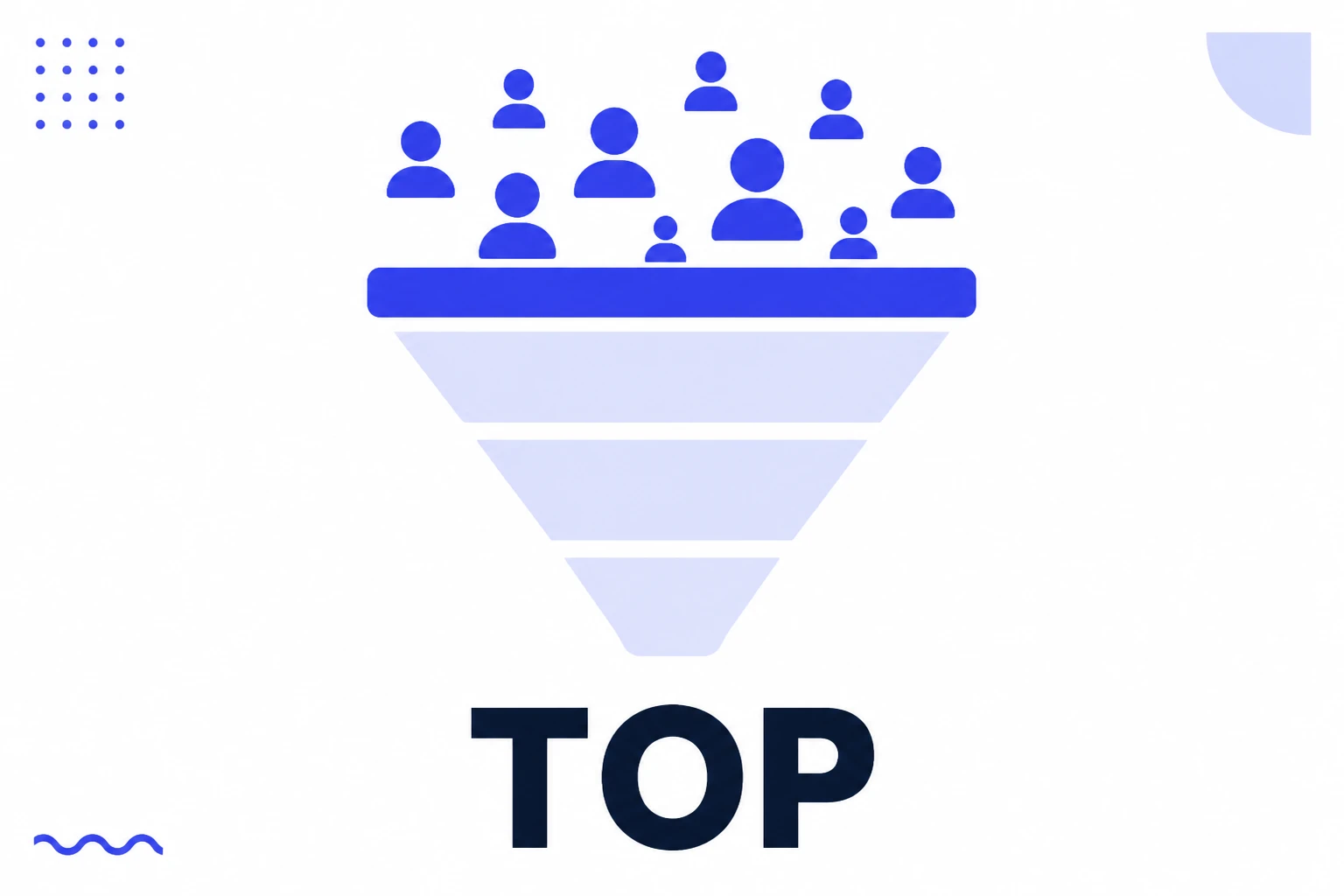
Top of funnel is content made for people who do not know you yet, and frequently do not know they have the problem you solve. It is the broadest stage and the only one bringing new people in, which makes it the growth source of an account. In exchange, it is the one that sells least directly, and trying to sell there is the mistake that most destroys this stage reach.
Read the entry
Middle of funnel
Middle of funnel is content for people who already recognise the problem and are evaluating how to solve it. It is the most forgotten of the three stages, because it has neither the reach of the top nor the direct selling of the bottom, and so appears to return nothing. In practice it is the deciding one: it is where people form their opinion about which path to take, and therefore about whom to take it with.
Read the entry
Bottom of funnel
Bottom of funnel is content for people who already decided to solve the problem and are choosing whom to solve it with. It deals with proof, pricing, guarantees and offer detail. It is the stage that reaches least and converts most, and understanding that trade is what prevents the wrong conclusion that it does not work simply because it gets fewer views.
Read the entry
Content pillar
Content pillars are the few recurring subjects an account covers. They exist to solve two problems at once: the blank page for people who do not know what to post, and the dispersion of people who post about everything and are recognised for nothing. Three to five pillars is the range that works, and the most common mistake is confusing a pillar with a format.
Read the entry