Instagram Stories: the relationship format and the only one with a viewer list

By Tiago Costa·Updated on August 5, 2026

Definition
Stories are vertical posts that disappear after 24 hours.
- A relationship format, delivered almost entirely to existing followers.
- Ordered by closeness and viewing history.
- The only format with a named list of who watched.
- It becomes permanent if you save it to highlights.
What it is and how it appears
Stories are full-screen vertical posts, photo or short video, available for 24 hours and then gone. They appear in the bar at the top of the app, separate from the feed, and are consumed in sequence, each frame pulling the next.
They are the only format designed around ephemerality, which changes what belongs in them: things that would be too small for a permanent post, or too time-bound to sit in the grid forever.
If you want a Story to stay, save it to highlights and it lives permanently at the top of the profile.
How the bar order is decided
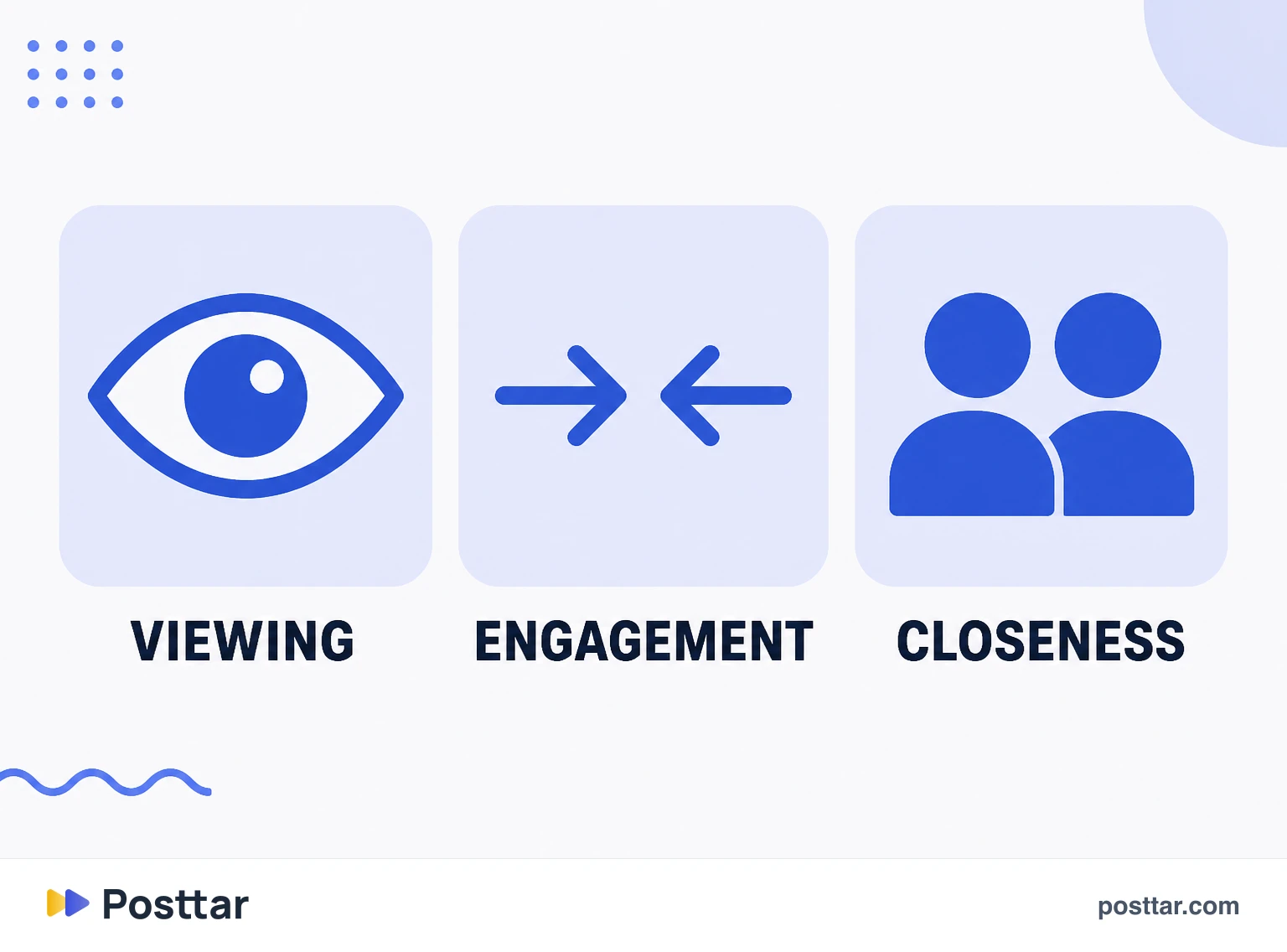
It is not chronological, and that is the source of much misunderstanding. According to what the platform states, Stories ranking uses three signals: viewing history for that account, engagement history between you, and closeness, meaning the likelihood you are connected in real life.
Notice what that means: appearing first in someone's bar is a consequence of that person already watching and interacting with you. It is a format that rewards existing relationship, not discovery.
Which is why Stories bring almost no new followers. They serve something else: keeping the people already there, selling to people who already trust you, and collecting quick responses.
What insights show
A Story panel carries metrics specific to the sequence, and they say different things from the feed ones.
- Taps forward. The person moved on. It is the default behaviour, not a bad sign.
- Taps back. They went back to reread. It is the strongest interest signal in a sequence.
- Exits. They abandoned the whole sequence. That is where interest broke.
- Replies. A Direct message sent from that frame.
- Sticker taps. Poll, question box, link.
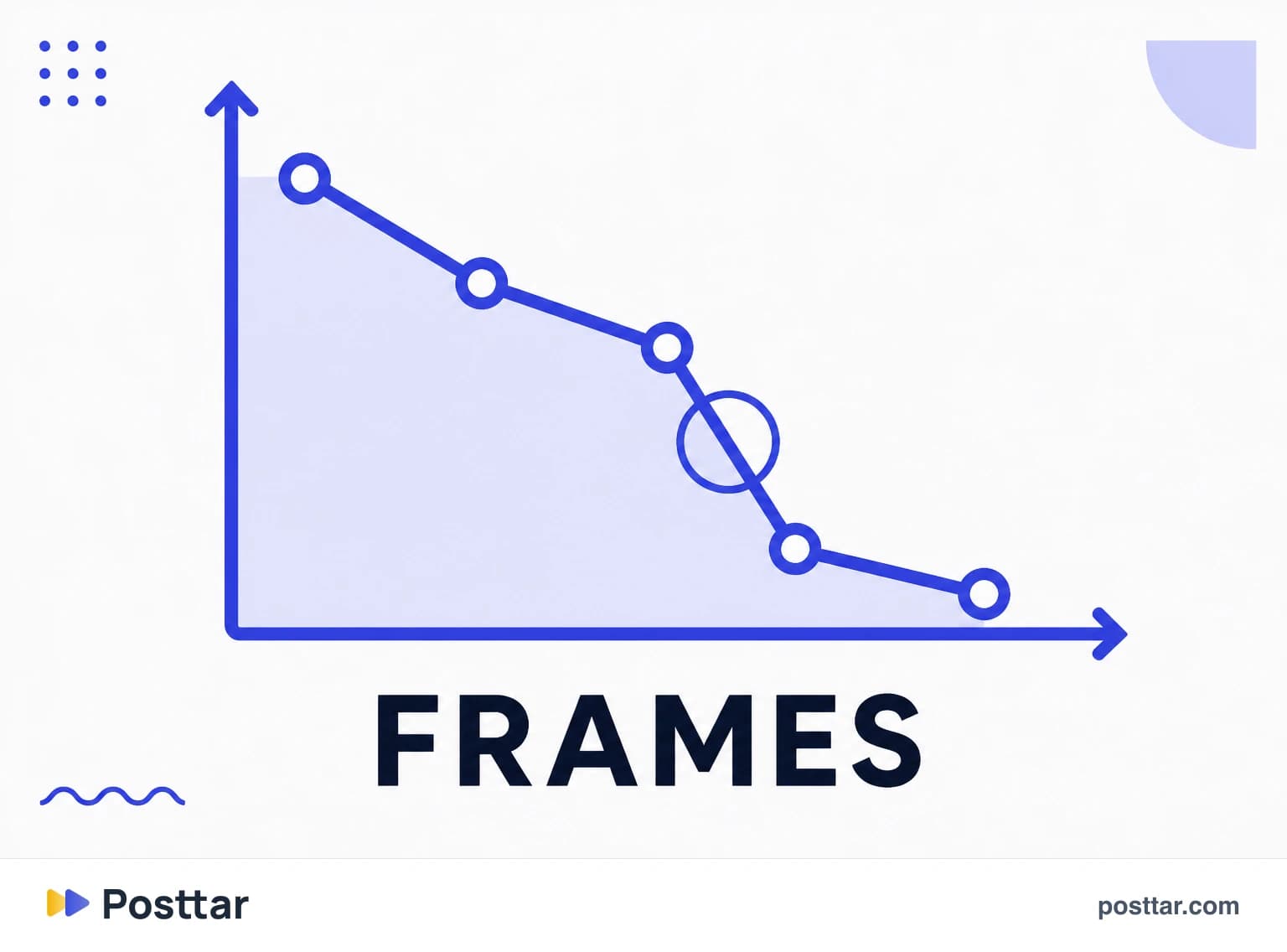
The useful reading is the sequence retention curve: how many reached the last frame relative to the first. Sharp drops point at the exact frame where you lost the audience.
The viewer list, and what it does not prove
Stories are the only format where the publisher sees who watched by name. That fuelled years of theory about the order of that list, usually summarised as "whoever appears first looks at me most".
There is no platform confirmation about the ordering criterion of that list, and its behaviour changes over time and with view count. Treating the order as a measure of someone's interest is reading tea leaves, not data.
What the list actually serves, concretely: identifying potential customers who follow without interacting, and checking whether the right accounts are seeing your sales content.
Checklist
- I use Stories for relationship and selling, not expecting discovery.
- I look at taps back and exits, not just views.
- I save to highlights whatever needs to outlive 24 hours.
- I do not read the viewer list order as a measure of interest.
- I use interaction stickers, which is what generates replies.
Frequently asked questions
How do Stories work on Instagram?
They are full-screen vertical posts available for 24 hours and then gone. They appear in the bar at the top of the app, are consumed in sequence and can become permanent if you save them to highlights.
How do you know if someone keeps looking at your Instagram Story?
You cannot. The viewer list shows who watched each frame, not how many times they watched. The theory that the order of that list reveals who looks at you most has no platform confirmation, and the ordering behaviour changes over time.
Why is the Stories bar not in chronological order?
Because it is ranked by viewing history, engagement history and closeness. Appearing first in someone's bar is a consequence of that person already watching and interacting with you, not of you having posted more recently.
What are the different types of Stories?
Beyond photo and video, Stories support interaction stickers such as polls, question boxes, quizzes, countdowns and link stickers, plus music, location and mention stickers. There is also Close Friends, which restricts a Story to a chosen list.
Do Stories bring new followers?
Very few. Distribution goes almost entirely to existing followers, because the format is ranked by relationship. For discovery the format is Reels; Stories serve to keep the people already there, sell and collect quick responses.
Related concepts
Feed
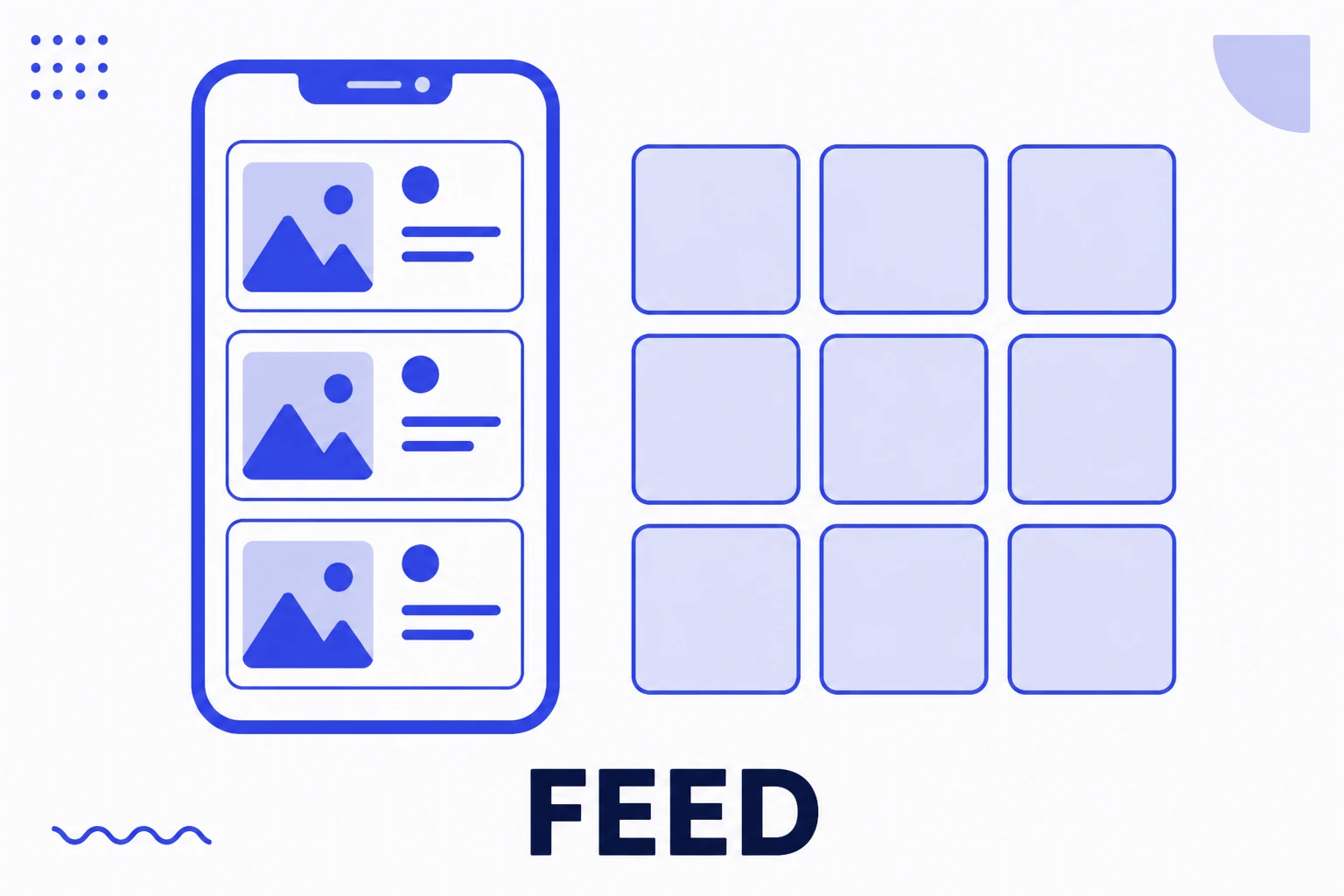
Feed is the word Instagram uses for two different things: the timeline you scroll through, and the permanent grid of your own profile. Posting to feed means creating a piece that stays on the profile forever, unlike Stories, which vanish in 24 hours. It is the platform's permanence format, and it remains where an account builds the impression someone forms on arrival.
Read the entry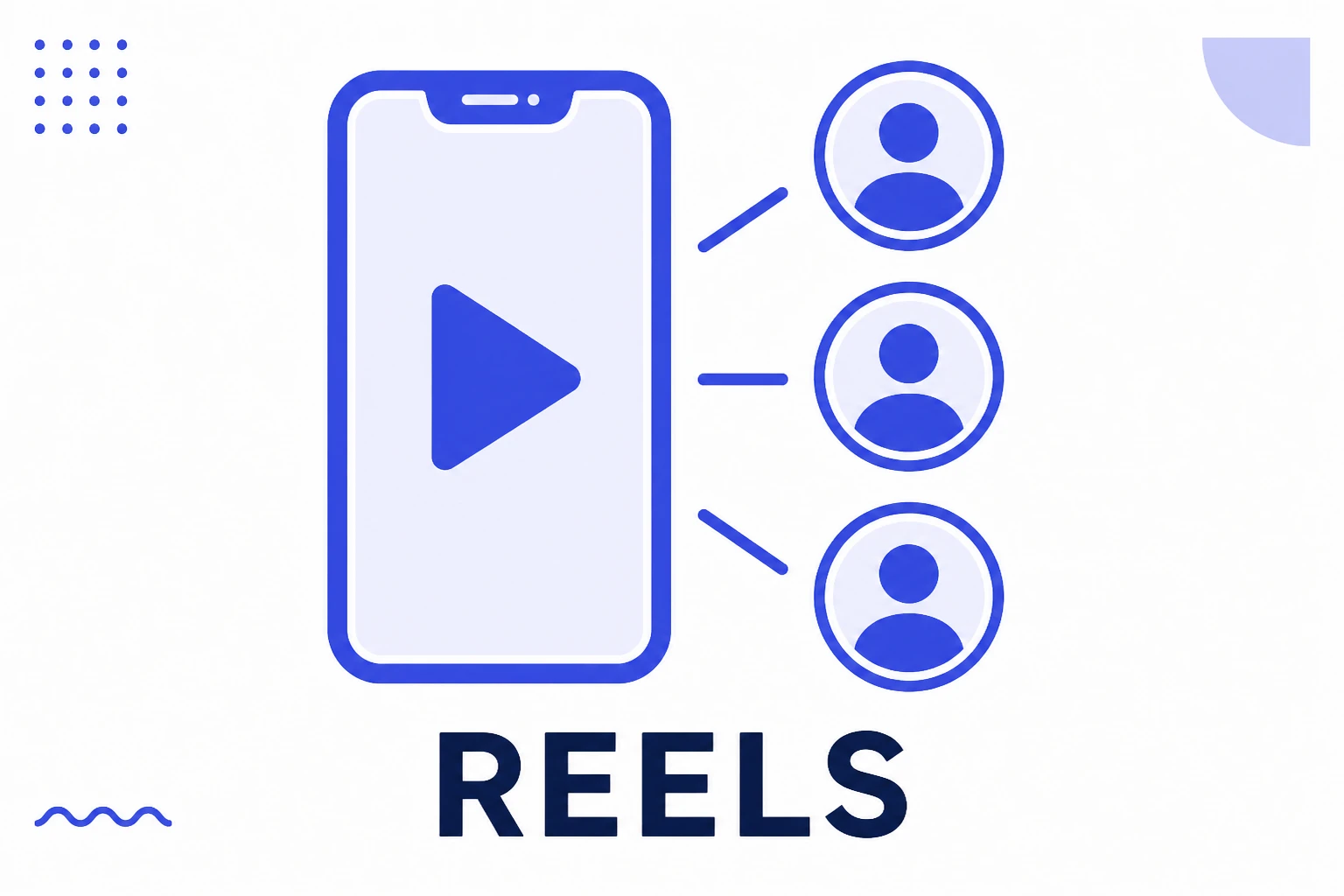
Reels
Reels is Instagram's short vertical video format, and the main distribution route to people who do not follow an account. Unlike a feed post, whose delivery depends heavily on the history between two accounts, a Reel is offered to whoever the system predicts is interested in the subject, which makes it the platform's most direct growth tool and also the most demanding on retention.
Read the entry
Instagram highlights
Highlights are collections of Stories saved permanently at the top of the profile, right below the bio. They solve the format's central problem, which is vanishing in 24 hours, and in practice they work as the account's menu: where a newcomer finds pricing, proof, frequent questions and whatever else drives the purchase without having to send a message.
Read the entry
Close friends
Close friends is a private list that restricts who a Story is delivered to. People on it see the content marked with a green ring; people who are not simply never see it exists. The list is entirely one sided and invisible: you choose alone, nobody is notified when they are added or removed, and no one else can see who yours are.
Read the entry