Editorial line: what the account stands for, and why it differs from pillars

By Tiago Costa·Updated on August 5, 2026

Definition
An editorial line is the point of view running through all content.
- Pillars are about what; the editorial line is which side.
- It includes what the account fights, not only what it defends.
- It differentiates accounts covering the same subjects.
- Without it, an account becomes a generic information aggregator.
How it differs from content pillars
The two concepts get confused constantly, and the distinction is simple.
A pillar is a subject. Supplementation, nutrition, training.
An editorial line is a position. Inside supplementation, what does your account defend? That most supplements are unnecessary? That the industry exaggerates? That food is the foundation?
Two accounts can have exactly the same pillars and be unrecognisable in each other, and the difference lives here. Which is why an account with no editorial line becomes an aggregator: it repeats the niche consensus, and consensus generates neither recall nor preference.
What it has to contain
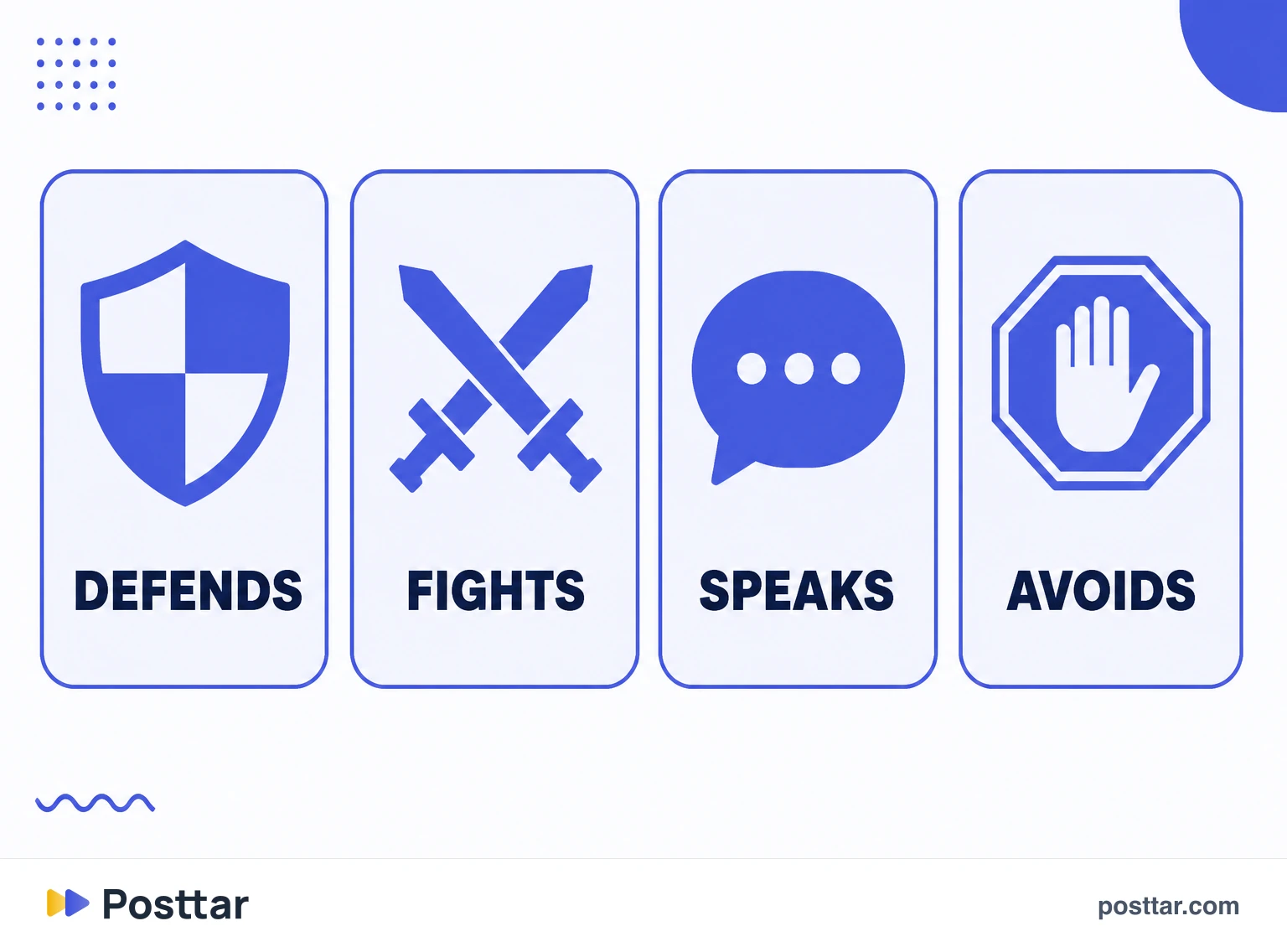
A useful editorial line answers four questions:
- What we defend. The two or three theses running through all the content.
- What we fight. This is the most neglected and the most powerful. A line with no enemy is lukewarm, and lukewarm does not get shared.
- How we speak. Formal or colloquial, technical or accessible, serious or humorous.
- What we do not do. The limits: subjects the account does not touch, practices it does not endorse, tones it does not use.
The last item is worth more than it seems. Defining what stays out is what stops the account drifting every time a trend appears.
How to find yours
An editorial line is not invented in a meeting, it is discovered. Three reliable sources:
- What annoys you in your niche. The practice you see daily and consider wrong is the most direct start of a position.
- What you tell clients and never publish. There is almost always a more honest discourse in private conversation than in public content. The line lives there.
- The explanation you repeat. If you correct the same belief every week, that correction is a thesis.
One warning: a position is not a fight. Having an editorial line does not mean attacking competitors or joining passing controversies. It means holding a consistent opinion about your own subject.
How it shows up day to day
An editorial line is not a document for a drawer. It becomes a practical decision at three moments:
- In choosing the angle. Two pieces on the same topic can defend opposite things; the line decides which one you make.
- In what you refuse. A trend contradicting your position is one to let pass, even when it would deliver reach.
- In consistency across people. When more than one person produces for the account, the written line is what stops the voice changing weekly.
Checklist
- I can state in one sentence what the account defends.
- There is something the account fights, named.
- What the account does not do is written down.
- My line makes me refuse trends sometimes.
- Two accounts in my niche could not share the same line.
Frequently asked questions
What is an editorial line?
It is the point of view running through everything an account publishes: what it defends, what it fights and how it speaks. It is what makes two accounts in the same niche, covering the same topics, sound completely different.
What is the difference between editorial line and content pillars?
Pillars define what you post about; the editorial line defines which side you are on inside those subjects. Two accounts can have identical pillars and opposite editorial lines.
How do you define an editorial line?
Look at what annoys you in your niche, what you tell clients in private and never publish, and the explanation you repeat every week. Those three sources usually reveal theses that already exist in your head.
Does having an editorial line mean creating controversy?
No. A position is not a fight. It means holding a consistent opinion about your own subject, not attacking competitors or joining passing controversies to gain reach.
Why define what the account does not do?
Because it is what stops the account drifting every time a trend appears. Written limits on subjects, practices and tone turn the editorial line into a decision criterion rather than a vague intention.
Related concepts

Content pillar
Content pillars are the few recurring subjects an account covers. They exist to solve two problems at once: the blank page for people who do not know what to post, and the dispersion of people who post about everything and are recognised for nothing. Three to five pillars is the range that works, and the most common mistake is confusing a pillar with a format.
Read the entry
Content calendar
A content calendar is the document organising what will be published, when and in which format. It solves content production's most expensive problem, which is deciding the topic on publishing day, when there is time neither to think nor to produce properly. Most calendars are abandoned within three weeks, and the reason is almost always the same: it was built as a calendar rather than as a production queue.
Read the entry
Big idea
A big idea is the central concept holding an entire campaign together: one single idea, new enough to interest and simple enough to be repeated. It is not the headline or the slogan, though it shows up in both. It answers the question "what is the one thing we are saying?", and most campaigns do not have one, they have a list of arguments.
Read the entry
Profile audit
A profile audit is the structured review of an account to find where it is losing results. It exists because symptoms almost always mislead: someone with poor results concludes the problem is the content, when in most cases the content works and the profile does not convert, or the reverse. The audit separates those layers instead of treating everything as one problem.
Read the entry