Big idea: the central idea holding a whole campaign, and why almost nobody has one

By Tiago Costa·Updated on August 5, 2026
Definition
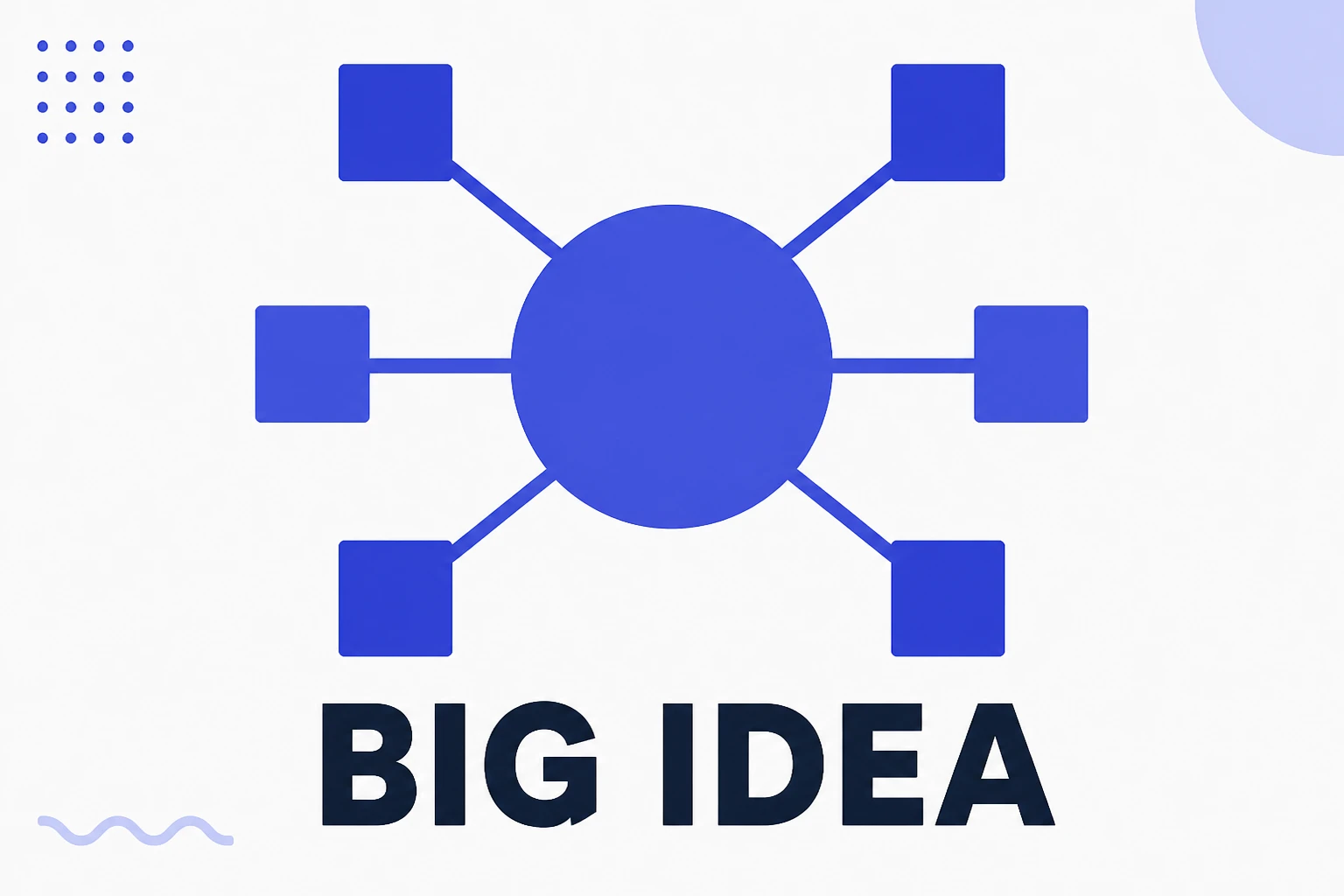
A big idea is the central concept holding a whole campaign.
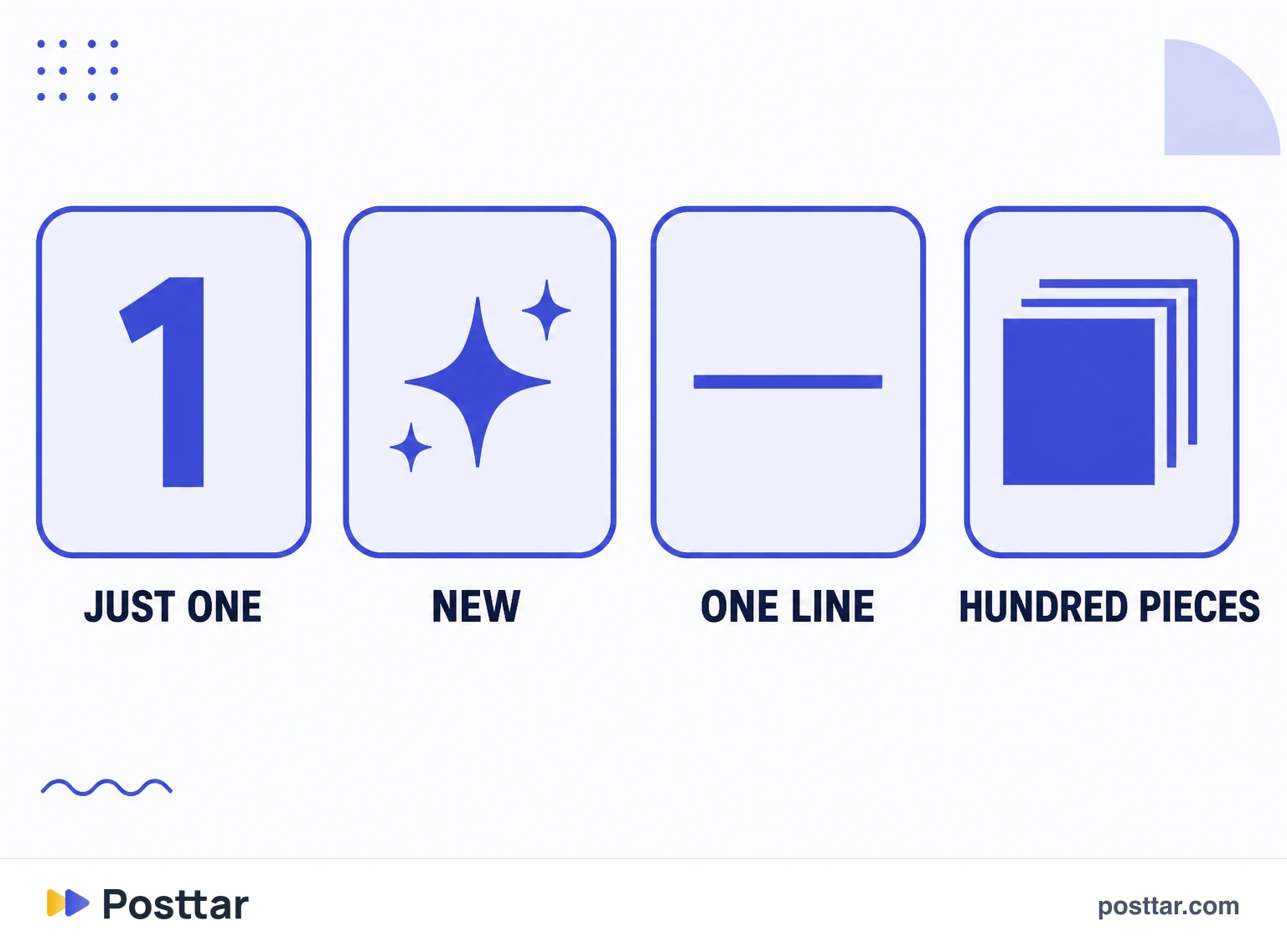
- Just one. If there are three, it is a list, not a big idea.
- New enough to interest people who have heard everything.
- Simple enough to be repeated without distortion.
- Not the headline, but it appears in the headline.
What it is, and what it is not
A big idea is the concept giving everything unity. Every piece in a campaign, from the ad to the email to the caption, is a different expression of the same idea.
It is commonly confused with three close neighbours:
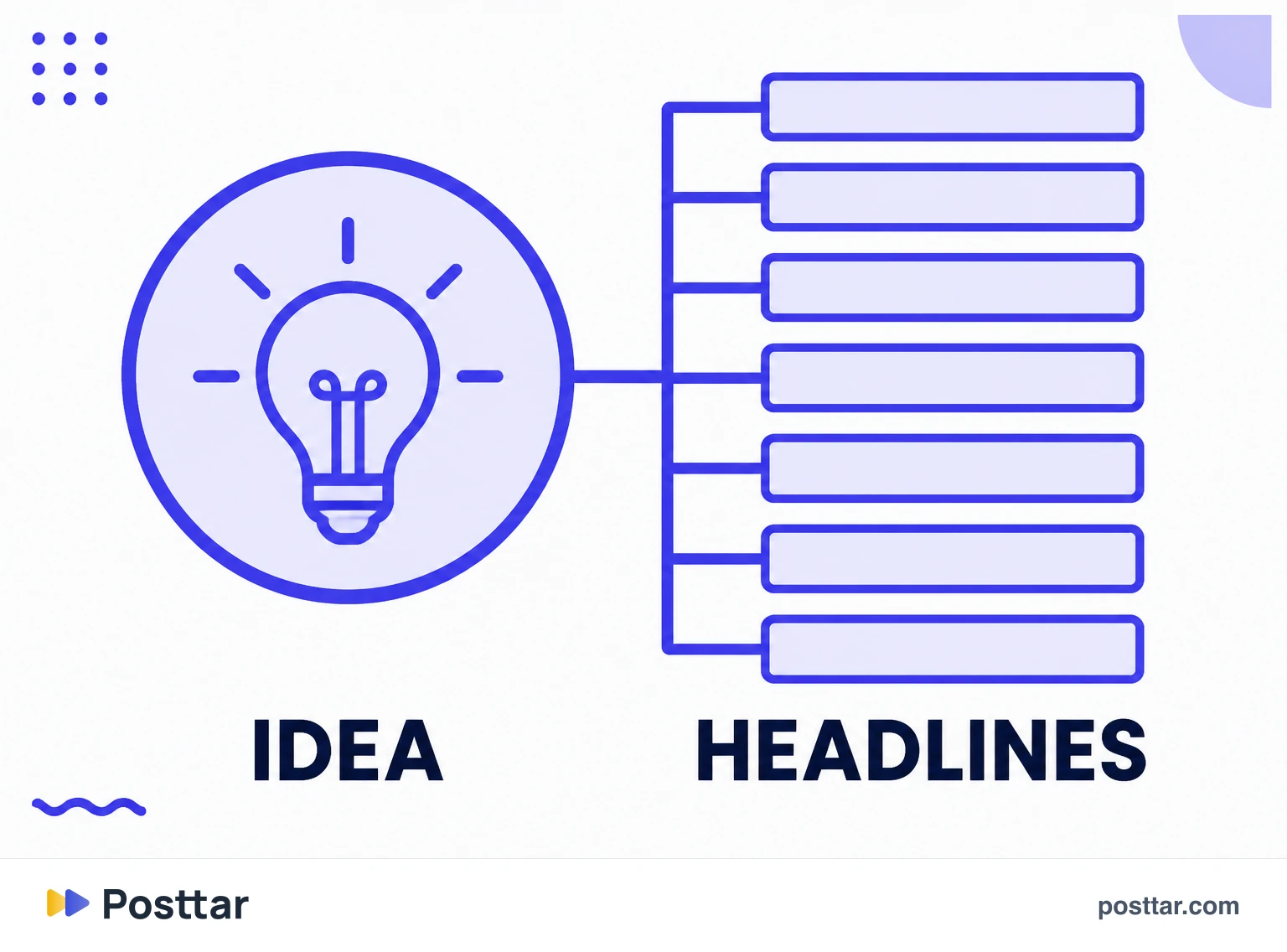
- It is not the headline. The headline expresses the big idea in one specific sentence, and you can have ten different headlines for a single big idea.
- It is not the slogan. A slogan is a permanent brand signature; a big idea is one campaign's argument, and it changes.
- It is not the product benefit. "Saves time" is a benefit. The big idea is the angle turning that benefit into something the person never thought of that way.
The tests it has to pass
An idea is only big if it survives four questions:
- Is it one? If you need an "and" to explain it, you have two medium ideas.
- Is it new to people who have seen everything? It does not have to be new to the world, it has to be new to that audience in that context.
- Does it fit in a sentence? If not, it will not be repeated, and an idea that is not repeated does not spread.
- Does it survive a hundred pieces? This is the test that fails almost everything. If the idea runs out in three posts, it was a good hook, not a big idea.
How to find yours
A big idea does not come from a brainstorm meeting, it comes from tension. Some places it usually hides:
- A common belief that is wrong. Contradicting what everyone accepts is the most reliable source of a big idea, because it creates instant tension.
- A named enemy. Not a competitor, but the practice, habit or system causing your audience's problem.
- A reclassification. Saying the thing is not what everyone thinks it is. "This is not X, it is Y" is the structure of half the great campaigns.
- A question nobody is asking that, once asked, cannot be ignored.
In every case, the raw material comes from research: the customer's literal language, what they already complain about, what they already believe.
Why almost nobody has one
Two reasons, and both are organisational more than creative.
The first is fear of choosing. A big idea excludes: by saying one thing, you stop saying all the others. Anyone afraid of leaving an argument on the table ends up with a list of five messages, which is not a campaign, it is a catalogue.
The second is haste. A big idea requires research and several discarded attempts. Weekly content production creates pressure to publish something today, and the result is a succession of pieces with no common concept.
Worth an honest counterpoint: not every job needs a big idea. Routine content, tutorials and answers to questions work fine without one. It matters when there is something large to communicate and a real contest for attention.
Checklist
- I can state the idea in one sentence, with no "and".
- It contradicts something my audience believes today.
- It sustains many pieces, not three.
- Every piece in the campaign expresses the same idea.
- It came from research, not from a meeting.
Frequently asked questions
What is a big idea in copywriting?
It is the central concept holding an entire campaign together: one single idea, new enough to interest and simple enough to be repeated. Every piece in the campaign is a different expression of that same idea.
What is the difference between a big idea and a headline?
A headline is one specific sentence expressing the idea; the big idea is the concept behind it. One big idea generates dozens of different headlines, all saying the same thing in different ways.
How do you find a big idea?
Look for tension: a common belief that is wrong, an enemy that can be named, a reclassification of the "this is not X, it is Y" kind, or a question nobody is asking. The raw material comes from the customer's literal language.
What is the difference between a big idea and a slogan?
A slogan is a permanent brand signature tied to identity. A big idea is the central argument of one specific campaign, and it changes with each new campaign.
Does every campaign need a big idea?
No. Routine content, tutorials and answers to common questions work well without one. It matters when there is something large to communicate and a real contest for attention, which is when saying one thing beats saying everything.
Related concepts
Copywriting
Copywriting is writing built to provoke a specific action: buy, sign up, reply, click. What separates it from other kinds of writing is not style, it is the success criterion. A literary text is judged by the experience it creates; copy is judged by how many people did what it asked. That changes everything, including the order in which it gets written.
Read the entry
Headline
A headline is the opening line that decides whether the rest of the content gets consumed. It is the highest leverage element of any piece: if it fails, everything after it stops existing, however good it is. On Instagram it appears in three different places, and each carries a constraint of its own that changes how it should be written.
Read the entry
Storytelling
Storytelling is the practice of organising a message as a story, with a character, a conflict and a resolution, instead of presenting it as a direct argument. It works because story is the format human memory keeps best: the same information embedded in a narrative is remembered far more than the same information listed. What separates a story from an account is conflict.
Read the entry
Editorial line
An editorial line is the point of view running through everything an account publishes: what it defends, what it fights and how it speaks. While pillars define what you post about, the editorial line defines which side you are on inside those subjects. It is what makes two accounts in the same niche, covering the same topics, sound completely different.
Read the entry