IGTV: the long video format Instagram retired, and what replaced it

By Tiago Costa·Updated on August 5, 2026
Definition
IGTV was Instagram's long vertical video format.
- Discontinued as a separate product, with its own app shut down.
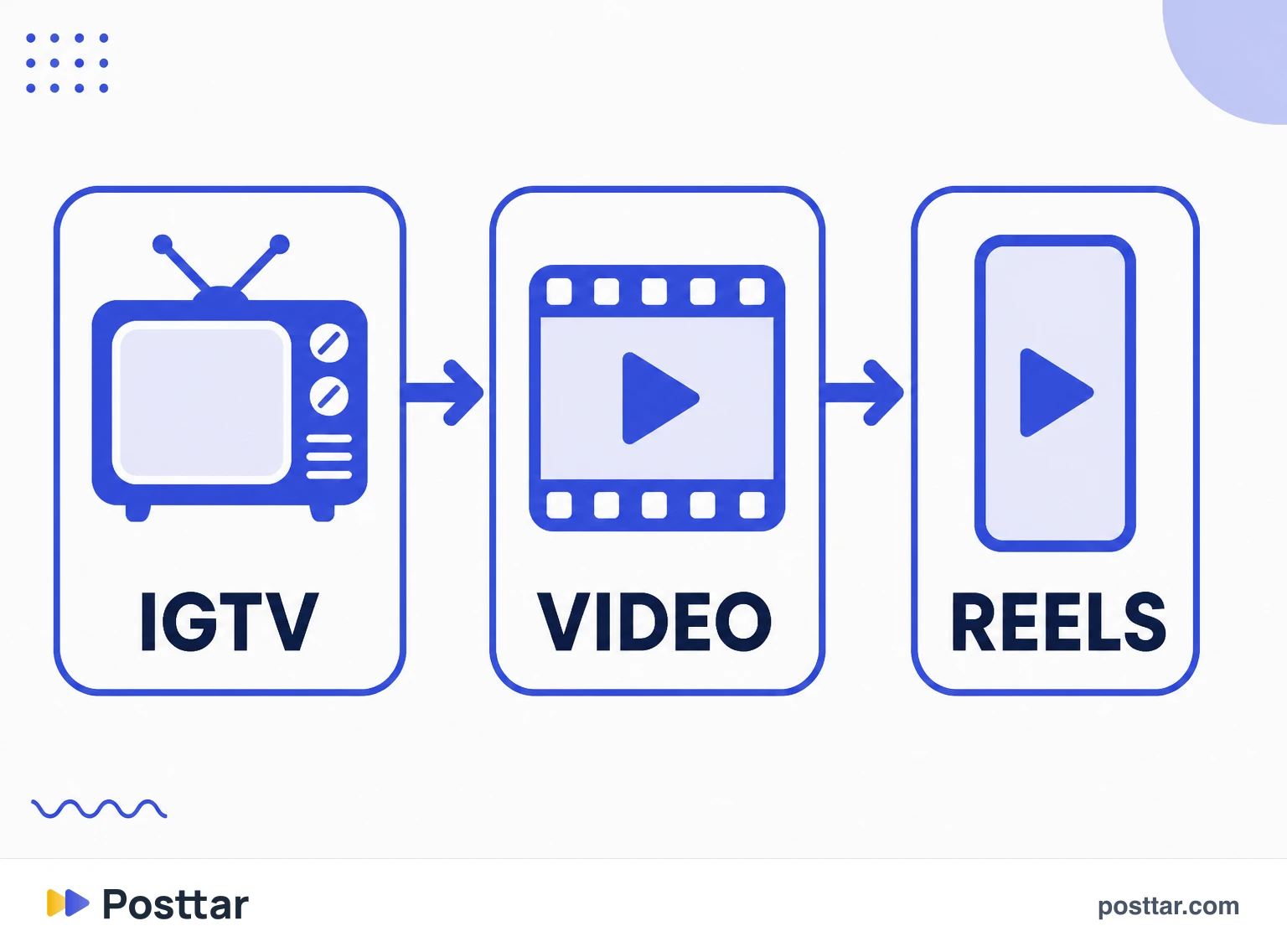
- The videos did not vanish, they became ordinary video and then Reels.
- It lost to short video, which took all the distribution.
- Video on Instagram is Reels today, at any supported length.
What it was
IGTV was born as Instagram's bet on long vertical video, at a time when the platform was essentially a photo product. It had its own app, a dedicated profile tab, a custom cover and allowed videos far longer than the feed of that moment.
The idea was clear: occupy the television slot inside the phone, with vertical content running several minutes. The acronym came from Instagram TV.
In practice, almost nobody opened the separate app, and the profile tab competed with the feed without winning.
Why it ended
Two things killed the format at once.
The first was consumption. Long vertical video demanded a conscious decision to watch, and the platform is used in short, distracted sessions. The format fought the habit of the people who were there.
The second was short video. When Reels arrived and absorbed all the distribution attention, IGTV became a product with no audience and no priority. The platform unified: video became video, with no sub brand.
The ending came in stages. The separate app was shut down, the profile tab disappeared, the videos became ordinary feed video, and later the video feed was consolidated entirely into Reels.
Where the videos went
They were not deleted. Anyone who published on IGTV finds that content as normal video inside the profile, subject to the same rules as current videos.
What was lost were the product elements: the dedicated cover, the separate tab and series, the feature that grouped episodes. Anyone who organised content in series had to move to highlights, carousels or topic organisation on the profile itself.
What to learn from it
This is worth more than nostalgia. IGTV is the cleanest example of a rule that repeats: the platform retires formats, and whoever built on top of a specific format pays the bill.
It happened to IGTV and to other features that got their own tab and later vanished. The defence is not guessing the next one, it is depending on none: the asset that survives is the audience and the subject you own, not the container they were delivered in.
In practice: produce with reuse in mind. Content that exists only in one shape dies with the shape.
Checklist
- I do not organise my content around a format that can be retired.
- I know my old IGTV videos remain on the profile as ordinary video.
- I moved series organisation to highlights or topics.
- I produce with reuse in another format in mind.
- My asset is the audience and the subject, not the container.
Frequently asked questions
Does IGTV still exist?
Not as a separate product. The IGTV brand was discontinued, the standalone app was shut down and the dedicated profile tab was removed. Video on Instagram was unified, first as ordinary feed video and later into Reels.
What was IGTV used for?
It was Instagram's long vertical video format, with its own app, a dedicated profile tab and a custom cover. The acronym came from Instagram TV, and the goal was to occupy the television slot inside the phone.
Are IGTV videos gone?
No. They remain on the profile as ordinary video, subject to the same rules as current videos. What was lost were the product elements: the dedicated cover, the separate tab and the grouping into series.
Is IGTV the same as reels?
No. IGTV was long video, built for a conscious decision to watch for several minutes. Reels is short video with autoplay and distribution to people who do not follow the account. The second model won and absorbed the first.
What does the end of IGTV teach?
That the platform retires formats, and whoever built on top of a specific format pays the bill. The defence is depending on none: the asset that survives is the audience and the subject, not the container they were delivered in.
Related concepts
Reels
Reels is Instagram's short vertical video format, and the main distribution route to people who do not follow an account. Unlike a feed post, whose delivery depends heavily on the history between two accounts, a Reel is offered to whoever the system predicts is interested in the subject, which makes it the platform's most direct growth tool and also the most demanding on retention.
Read the entry
Feed
Feed is the word Instagram uses for two different things: the timeline you scroll through, and the permanent grid of your own profile. Posting to feed means creating a piece that stays on the profile forever, unlike Stories, which vanish in 24 hours. It is the platform's permanence format, and it remains where an account builds the impression someone forms on arrival.
Read the entry
Instagram highlights
Highlights are collections of Stories saved permanently at the top of the profile, right below the bio. They solve the format's central problem, which is vanishing in 24 hours, and in practice they work as the account's menu: where a newcomer finds pricing, proof, frequent questions and whatever else drives the purchase without having to send a message.
Read the entry
Carousel
A carousel is the Instagram post that holds up to 20 images or videos in a single publication, navigated by swiping sideways. It occupies the same feed space as a regular post but asks the viewer for one extra action, and that action is what makes it valuable: every frame advance adds dwell time, and the format gets a second delivery chance, because Instagram can re-show the post starting from a different frame to people who did not interact the first time.
Read the entry