The Instagram algorithm: how it works and which signals actually matter

By Tiago Costa·Updated on August 5, 2026
Definition
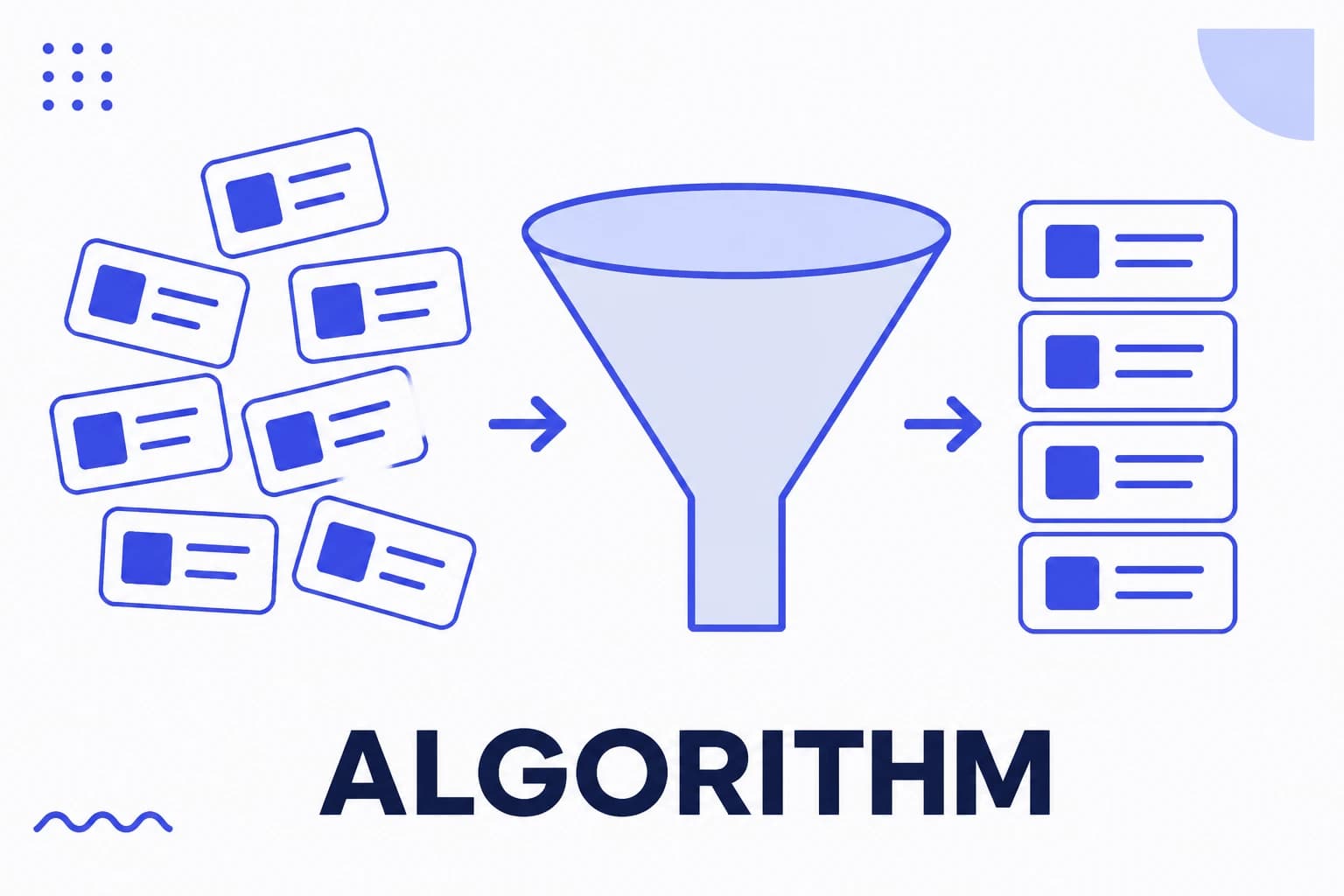
The Instagram algorithm is the set of systems that decides what each person sees and in what order. There is not just one.
- Feed, Stories, Reels and Explore run separate systems with their own signals.
- All of them predict interaction probability and order what exists by that prediction.
- The strongest signal is the viewer's behaviour, not the objective quality of what you posted.
- It changes from person to person. Two people following the same accounts see different orders.
There is no single algorithm
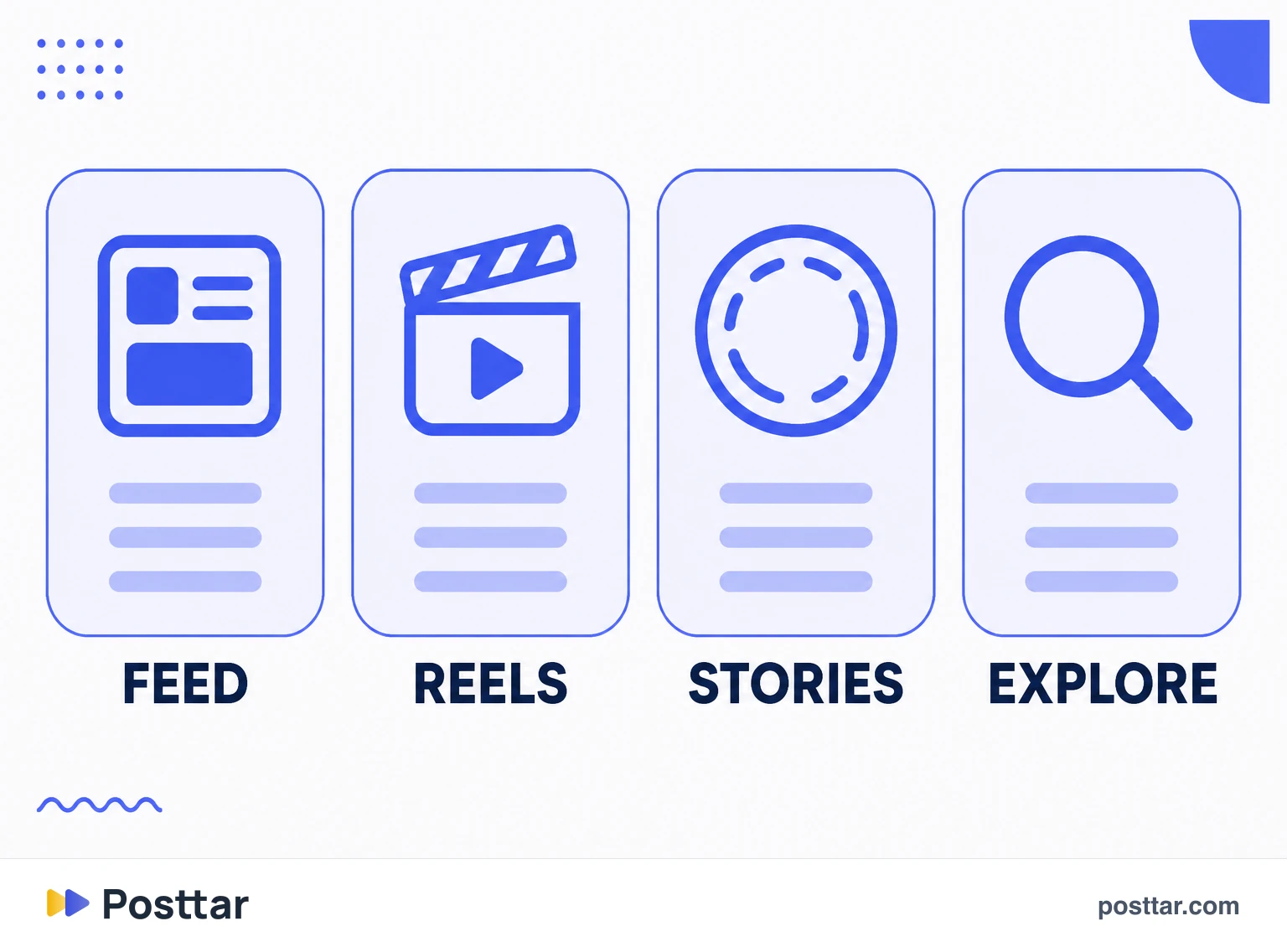
Talking about "the Instagram algorithm" is a simplification that gets in the way. Every surface in the app runs its own system, because each one is used with a different expectation: in Feed people expect to see who they follow, in Reels they expect to discover something new, in Stories they expect to keep up with people they are close to.
What they share is the method. The system takes the available pool of content, runs a prediction of how likely you are to interact with each piece, and orders from that. There is no absolute quality score: there is a prediction made for you specifically, which explains why two people following exactly the same accounts see different feeds.
That changes the right question. It is not "how do I please the algorithm", it is "who is this content so obviously for that they stop scrolling, and can the system predict that".
The signals the platform states
Instagram publishes which signals matter on each surface. According to the platform itself, in Instagram Ranking Explained, the rough order of importance is this:
| Surface | Signals, in rough order |
|---|---|
| Feed | Your activity (posts you liked, saved, commented on or shared), information about the post, information about the person who posted, and your history of interacting with that account |
| Reels | Your recent Reels activity, your history with the person who posted, information about the reel (audio, visuals, popularity), and information about the person who posted |
| Stories | Viewing history for that account, engagement history, and closeness |
| Explore | Information about the post (how quickly people engage, popularity), your activity in Explore, your history with the person who posted, and information about the person who posted |
Notice the pattern: on relationship surfaces (Feed and Stories), the history between the two accounts dominates. On discovery surfaces (Reels and Explore), the performance of the piece itself climbs the list. That is why a Reel can take off on a small account and a feed post almost never does.
Negative signals move faster
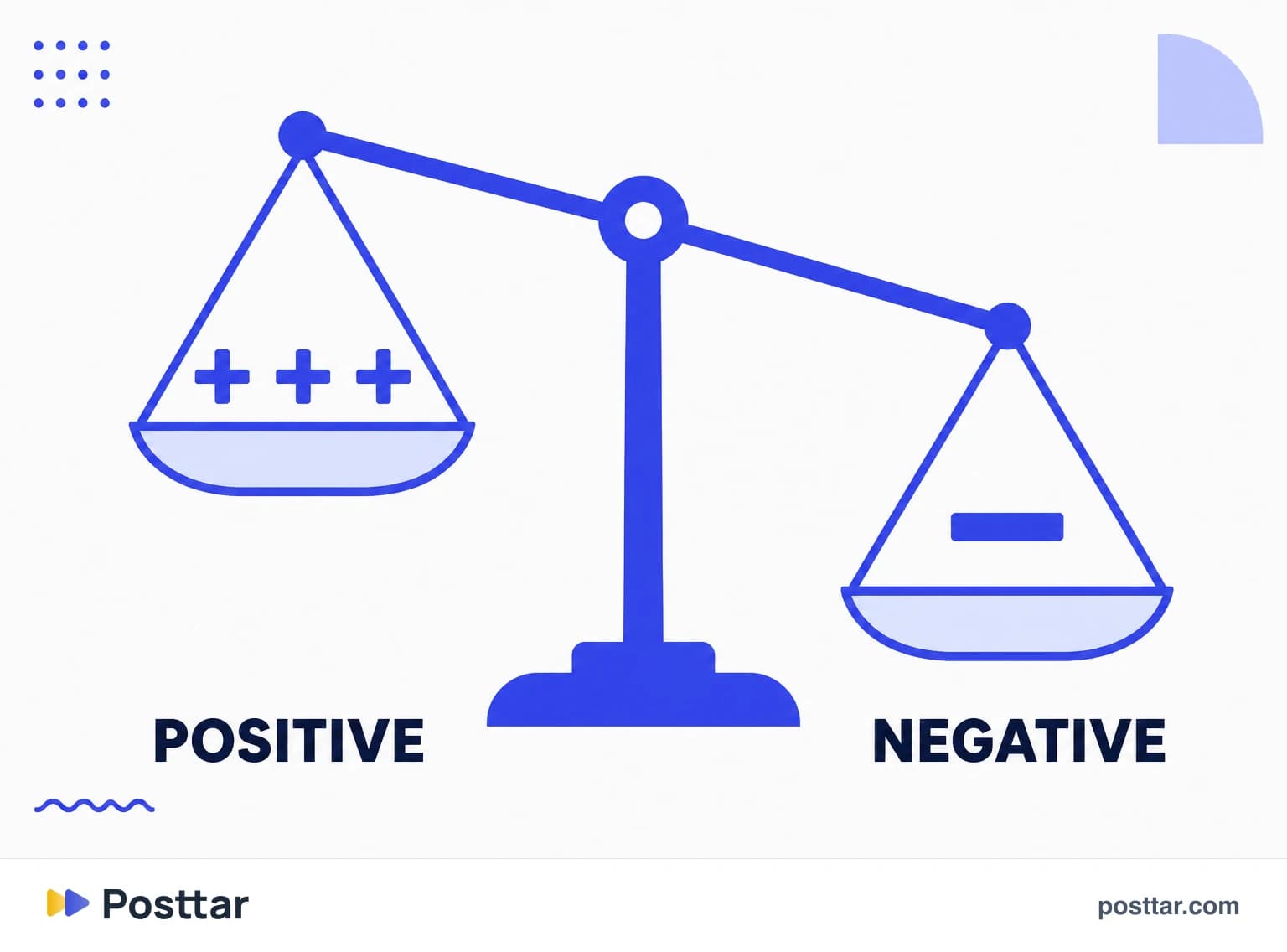
The public conversation is all about what raises reach, but the fastest route in the other direction is negative signals. Skipping a video in the first moments, tapping "not interested", hiding a post, muting or reporting are actions that cut delivery far more efficiently than a like raises it.
There is an asymmetry worth internalising: content delivered to the wrong audience is not neutral, it is expensive. It accumulates negative signal, and that signal informs the next delivery. This is the mechanism behind a reach drop after an off-topic post, and also after a viral that pulled in people with no real interest in the profile.
Dwell time is the other side of it. How long someone stays on your content before scrolling says more than a like, because it does not depend on them deciding to act. That is what makes carousels and video structurally advantageous: both ask for time.
Originality and recommended content
Delivery to people who do not follow you passes an extra filter: the recommendation guidelines. A piece can sit perfectly fine on your profile and still be barred from discovery surfaces, with no warning and no notification. That mechanism is what most people call a shadowban.
Two causes repeat more than all the others. The first is reposting without transformation: third party material published as your own gets reduced distribution by policy, and crediting the source in the caption does not fix it. The second is video carrying another app's watermark, which the system detects automatically.
The practical reading is boring and true: the recommendation path rewards people who produce, not people who aggregate. If your operation depends on reposting, it depends on a lane the platform chose to narrow.
What you can actually do
- Pick an interest cluster and stay in it. The system needs to know who to offer your content to. Switching subject resets part of that learning.
- Optimise for shares and saves. They are the interactions that push outside the bubble, and the ones that cost the viewer the most.
- Treat the first seconds as the product. In video, the hook decides whether distribution happens at all.
- Post on a predictable cadence. Regularity matters more than volume.
- Do not chase the "5-3-1 rule" or similar formulas. They are not platform rules, they are market heuristics. They can work as routine discipline, but there is no mechanism behind them.
- Check account status before theorising. There is a screen that reports any active restriction.
Checklist
- I know which subject my account is classified under and I am posting inside it.
- My content is mine, with no reposting and no other app's watermark.
- I am measuring saves and shares, not just likes.
- I tested the hook separately from the rest of the video.
- I checked the account status screen before concluding there was a penalty.
- I compared performance against the median of the last thirty posts, not the previous one.
Frequently asked questions
What is the current algorithm for Instagram?
It is a set of systems, one per surface: Feed, Stories, Reels and Explore each rank with their own signals and weights. All of them predict how likely a specific person is to interact with a specific piece, then order the available content by that prediction.
What is the 5-3-1 rule on Instagram?
It is a market heuristic, not a platform rule. It circulates as a fixed proportion between formats, or between posting and engaging with others. It can be useful as routine discipline, but no official Instagram communication mentions it and there is no ranking mechanism behind it.
How do I work with the Instagram algorithm instead of against it?
Stay on one subject so the system knows who to offer your content to. Design pieces for saves and shares, which are the interactions that carry content outside your bubble. Hold attention in the first seconds and post on a predictable cadence. None of that is a trick, it is what the platform's stated signals reward.
How do I know if the algorithm is limiting my account?
Instagram has an account status screen that reports whether any restriction is active and why. Check it first. If there is no restriction, a delivery drop most likely comes from cadence, a change of subject, or content that fails the recommendation guidelines.
Why does reach swing so much between posts?
Because ranking is individual: the system predicts each person's chance of interacting with each piece, so the same post gets different destinations. Add the natural variation of timing, format and subject and swinging is the normal behaviour. It only makes sense to judge against the median of a set, never against the previous post.
Related concepts
Reach
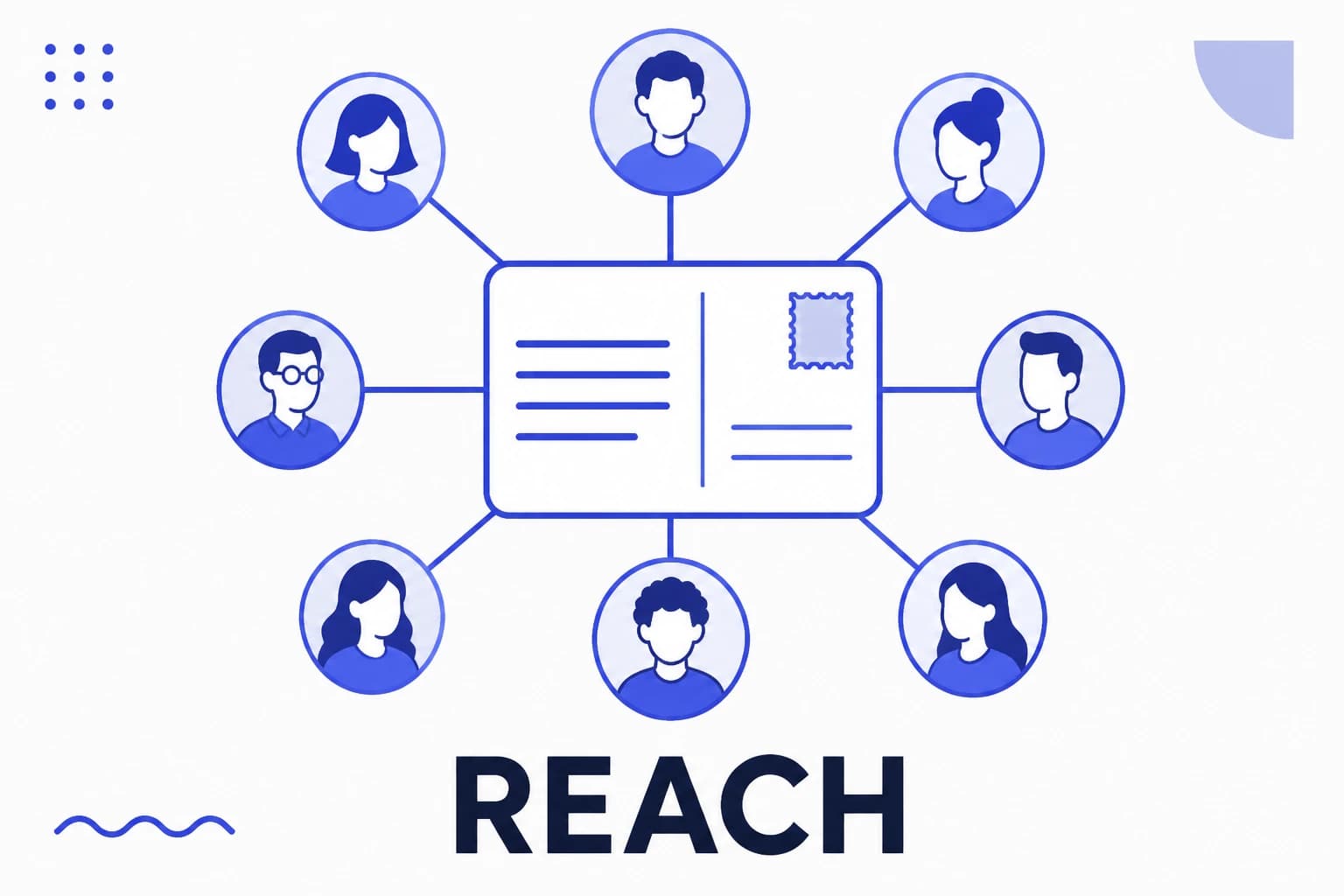
Reach is the number of unique accounts that saw a piece of content at least once. Unlike impressions, it does not count the same person twice, so it measures the size of the audience touched rather than the volume of exposure. On Instagram, reach is reported per post and per period, and it can be split between followers and non followers, which is the reading that shows whether a profile is discovering new people or simply circulating among those who already follow it.
Read the entry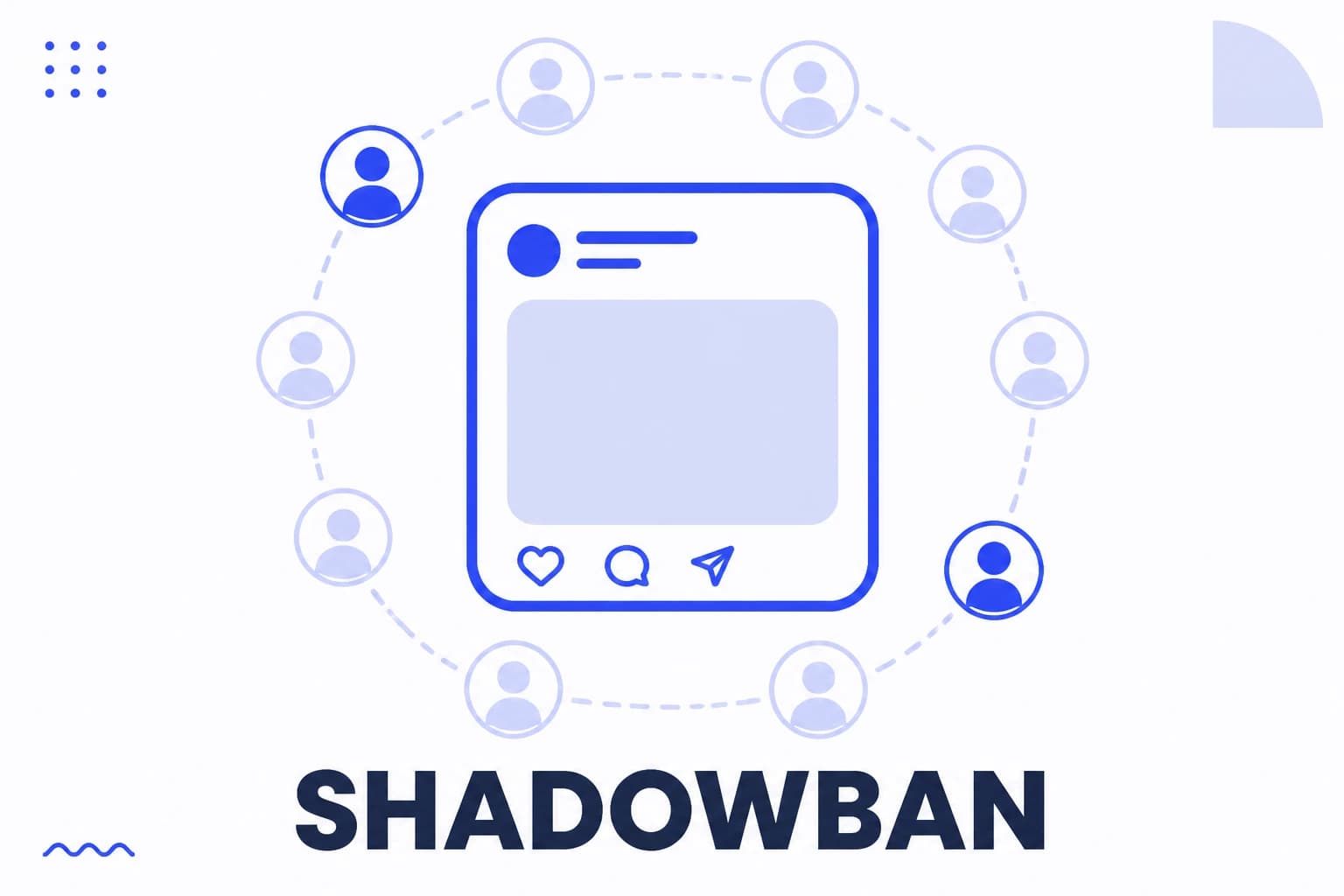
Shadowban
Shadowban is the popular name for the idea that an account has been silently restricted, still publishing normally while its content stops appearing for others. The platform does not use the term, but it does recognise a close mechanism: content that does not follow the recommendation guidelines stops being recommended to people who do not follow the account, with no notification. Most reach drops, however, are not this.
Read the entry
Explore page
The Explore page is Instagram's discovery grid, made almost entirely of content from accounts the person does not follow. It is assembled individually: there is no single version of Explore, each person sees a different grid built from their own interaction history. For publishers, landing on it is the fastest way to reach a new audience at scale.
Read the entry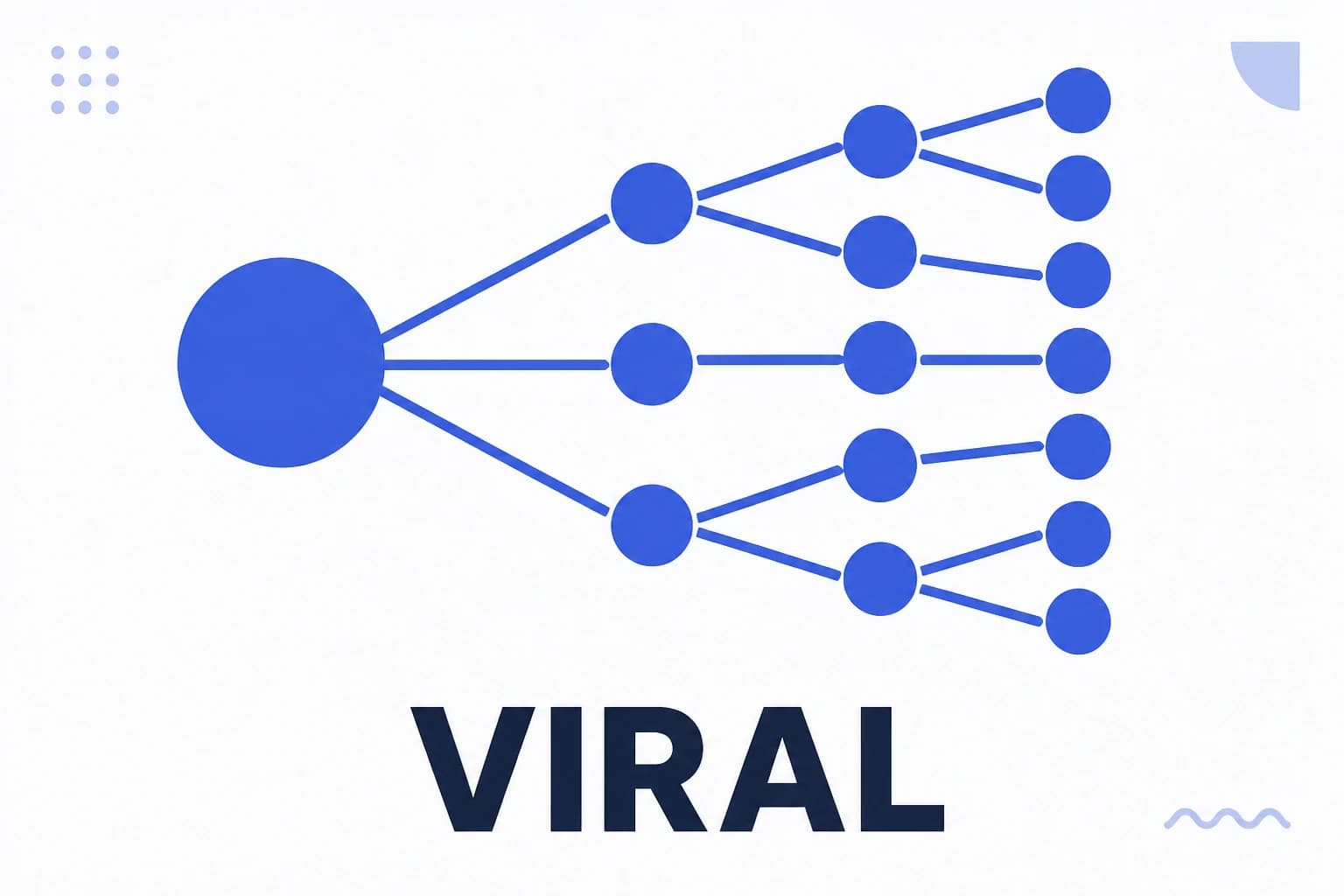
Going viral
Going viral is when a piece of content starts being distributed mainly by the people consuming it rather than by the platform's initial delivery. The mechanism is multiplication: each person reached brings in more than one new person. It is not luck or an algorithm trick, it is the result of a piece that gives viewers a strong reason to show it to someone else.
Read the entry