Algorithm and distribution
How Instagram decides who sees what: ranking signals, discovery surfaces, what kills reach and what makes a piece escape its own bubble.
9 terms
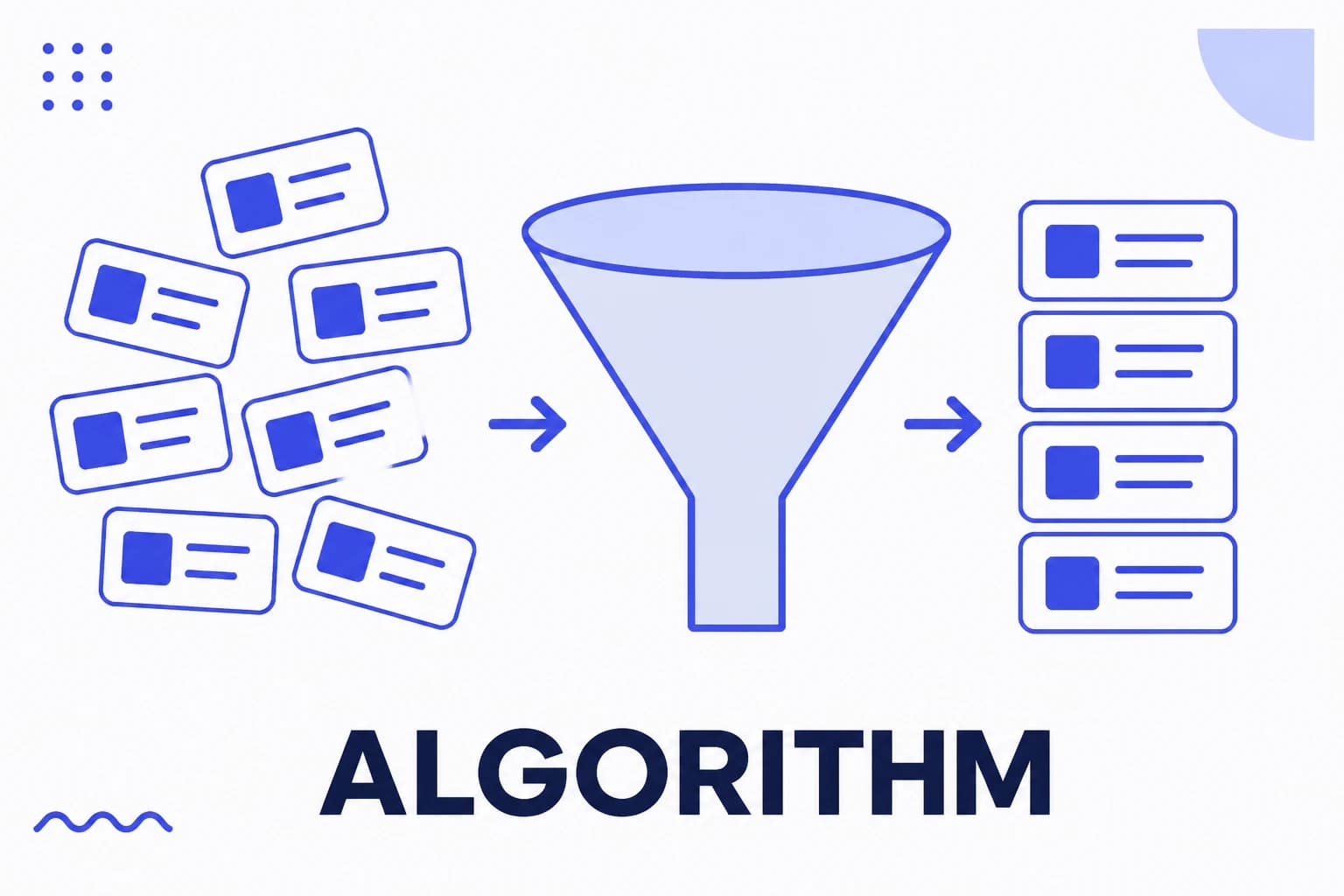
Instagram algorithm
The Instagram algorithm is the set of ranking systems that decides what each person sees and in what order. It is not one algorithm: Feed, Stories, Reels and Explore run distinct systems with their own signals and weights, because people arrive at each surface with a different expectation. All of them work by predicting how likely you are to interact with a specific piece and ordering what is available according to that prediction.
Read the entry
Shadowban
Shadowban is the popular name for the idea that an account has been silently restricted, still publishing normally while its content stops appearing for others. The platform does not use the term, but it does recognise a close mechanism: content that does not follow the recommendation guidelines stops being recommended to people who do not follow the account, with no notification. Most reach drops, however, are not this.
Read the entry
Explore page
The Explore page is Instagram's discovery grid, made almost entirely of content from accounts the person does not follow. It is assembled individually: there is no single version of Explore, each person sees a different grid built from their own interaction history. For publishers, landing on it is the fastest way to reach a new audience at scale.
Read the entry
Instagram SEO
Instagram SEO is optimising the profile and posts for the platform's internal search, which now works with words instead of depending only on hashtags. The system today reads the name field, the username, the caption, on screen text and transcribed audio. That turned search into a continuous discovery channel, and it is the least contested channel inside the platform.
Read the entry
Hashtag
A hashtag is a word or phrase without spaces preceded by the hash symbol, which the platform turns into a clickable label grouping all content marked with it. For years it was Instagram's main discovery mechanism. It is not any more: distribution came to depend on what the system understands from the content itself, and the hashtag became one context signal among several.
Read the entry
Trendjacking
Trendjacking is riding a trend already in circulation to carry your own message along with it. It works because the platform is already distributing that format, audio or subject, so entering it costs less attention than building something from scratch. The price is the window: trends have a short shelf life, and arriving late turns the ride into embarrassment.
Read the entry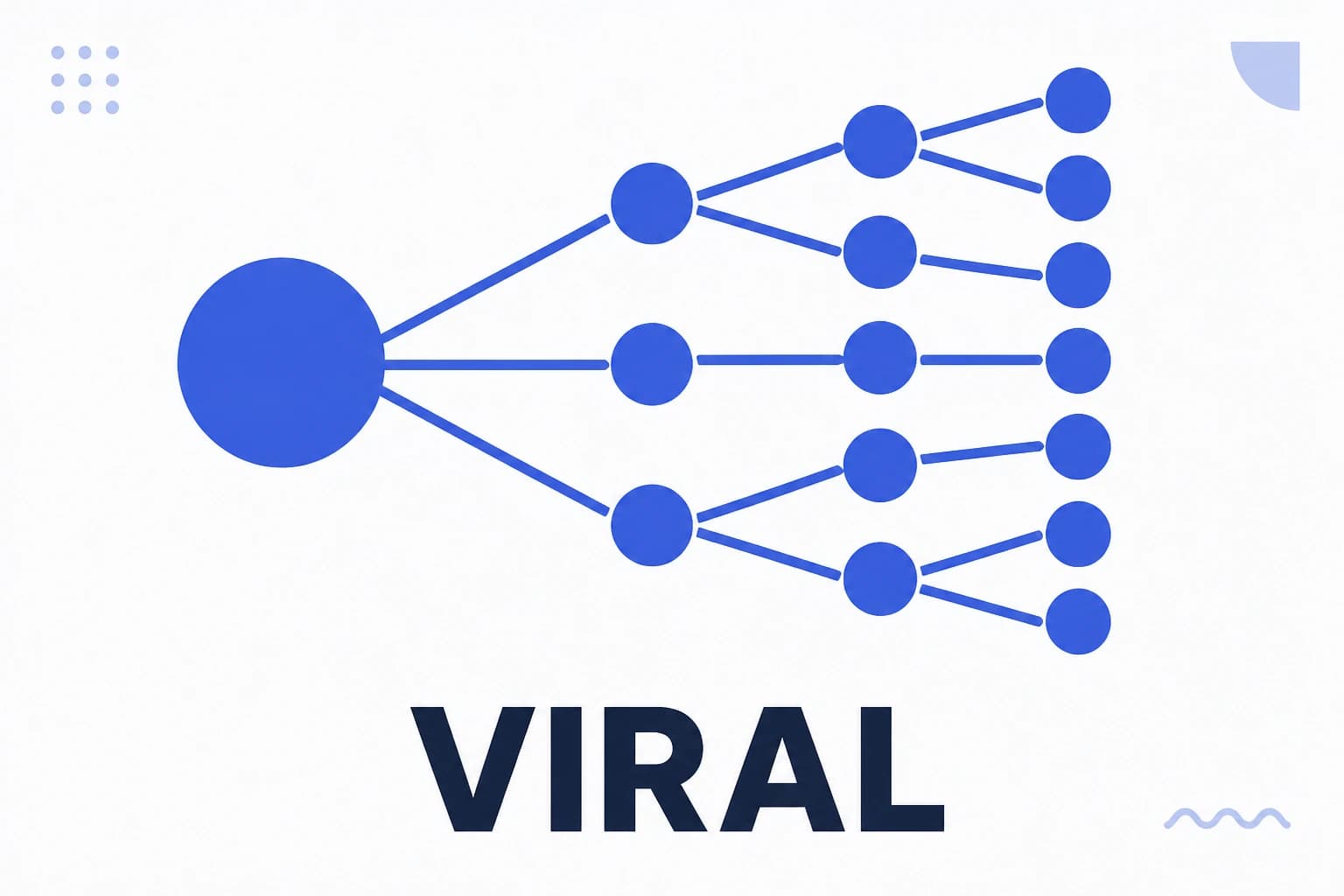
Going viral
Going viral is when a piece of content starts being distributed mainly by the people consuming it rather than by the platform's initial delivery. The mechanism is multiplication: each person reached brings in more than one new person. It is not luck or an algorithm trick, it is the result of a piece that gives viewers a strong reason to show it to someone else.
Read the entry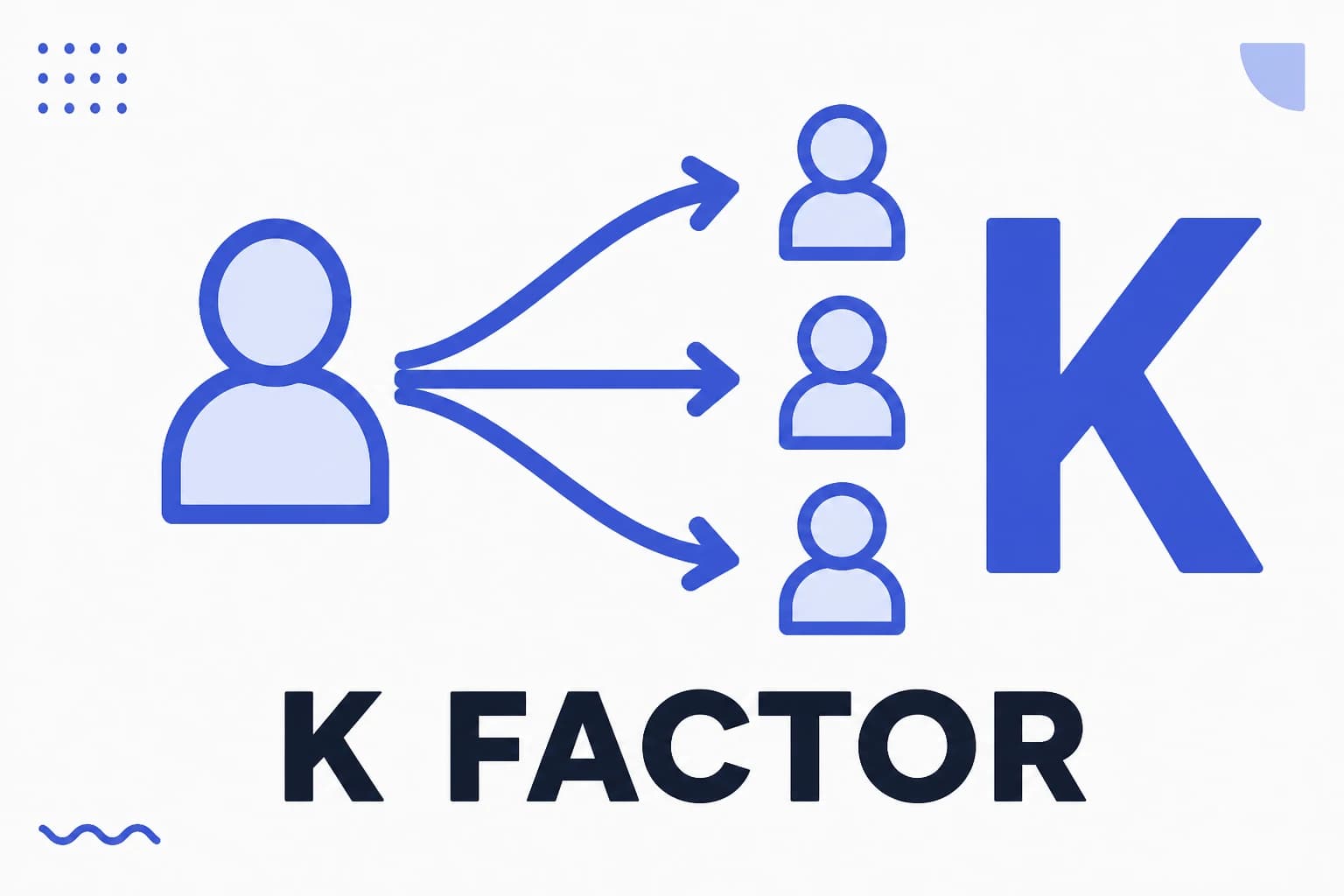
Viral coefficient
The viral coefficient is the number of new people each person reached brings to the content. It is the metric separating growth that sustains itself from growth that needs constant pushing: above 1, each round is bigger than the last and reach multiplies; below 1, each round is smaller and the curve fades on its own, however strong the start was.
Read the entry
Evergreen content
Evergreen content is what stays true and useful long after publishing, without depending on a date, on novelty or on the context of the moment. The name comes from trees that never lose their leaves. It returns less at the peak and far more cumulatively: while trend content delivers everything in 48 hours and dies, evergreen keeps being found, recommended and shared for months.
Read the entry