Hook: what it is, how to write one and how to measure whether it worked

By Tiago Costa·Updated on August 5, 2026
Definition
A hook is the opening of a piece of content, responsible for buying the first seconds of attention and making someone decide to keep going.
- In video: the first 3 seconds, spoken, visual and sonic at once.
- In a carousel: the cover.
- In text: the first line, before the "more" cut.
- Not decoration. Retention is a distribution signal, so the hook decides whether reach happens.
What a hook is
A hook is the part of the content with a single job: keep the person from leaving. In under three seconds, it answers the only question a scroller asks constantly without noticing: "is this for me?".
The most common confusion is treating a hook as a catchy phrase. It is not. A hook is a specific promise made to a specific audience. "Did you know there is a better way?" is a catchy phrase and holds nobody. "If your reach dropped after you changed subject, this explains it" is a hook, because it names the situation of the person on the other side.
That changes the order of work. A hook is not the last thing you write to add polish. It is the first, because it forces you to decide who the piece is for.
A hook has three layers at once
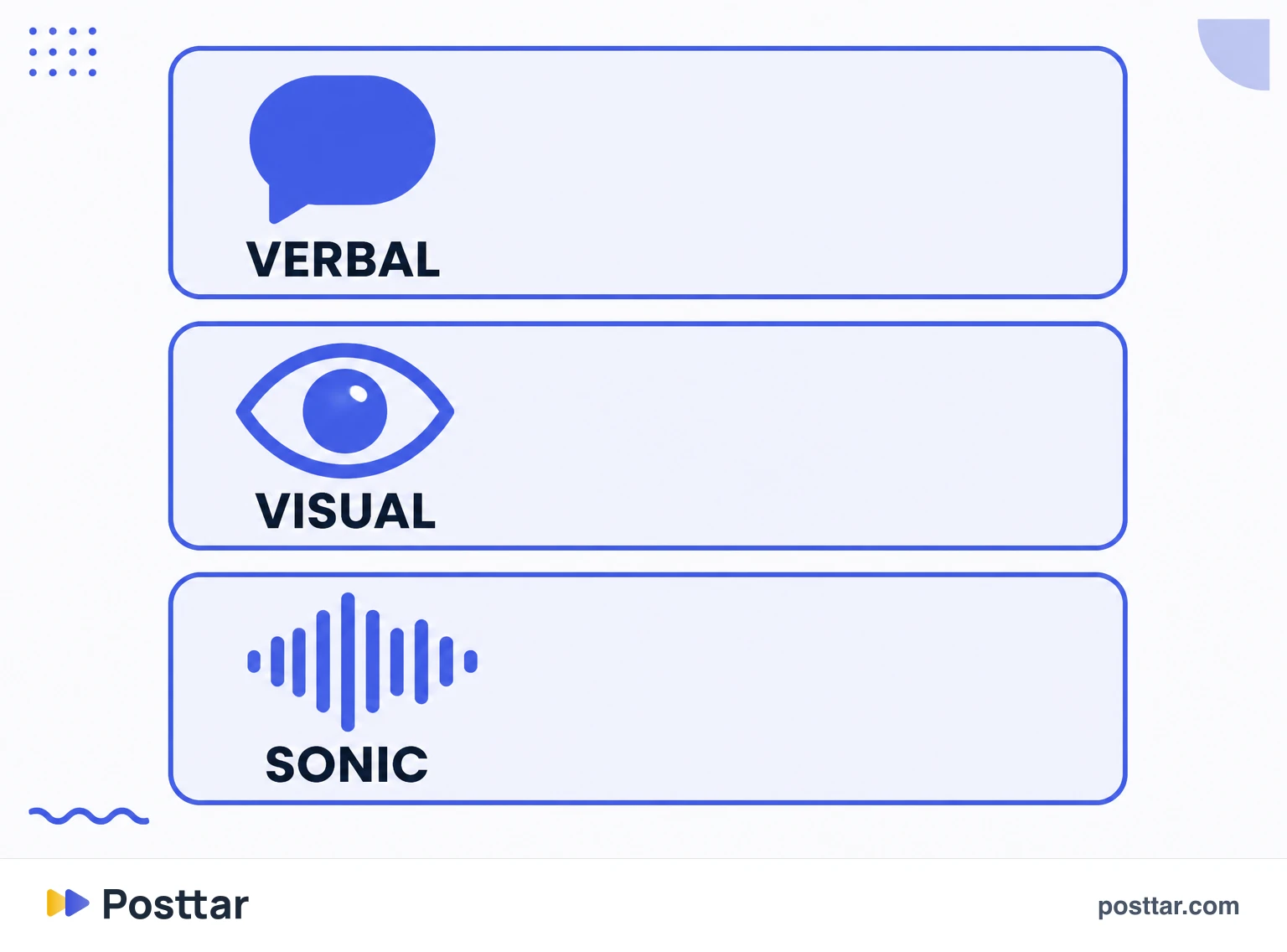
In video, many people write only the spoken line and then wonder why retention did not move. A hook happens across three simultaneous channels, and they have to agree.
- Verbal. What gets said in the first seconds. It has to start on the subject, with no greeting and no introduction.
- Visual. What appears on screen. Movement, expression, an unexpected object or on-screen text. A video that opens with a person standing still facing the camera loses to one that opens with something happening.
- Sonic. Clean audio at a levelled volume. A video quieter than the rest of the feed gets skipped before a single word is processed.
On-screen text deserves its own paragraph: a large share of consumption happens with the sound off. If the promise only exists in the spoken line, it does not exist for the person on the train.
Hook types that work
This is not a list of formulas to copy, it is a set of mechanisms.
- Named situation. Describing the audience's situation precisely. "You post every day and reach will not move."
- Counterintuitive. Contradicting a common belief in the niche. It works because it breaks the scroller's prediction.
- Specific mistake. Naming an error the person probably makes. It sells because it touches risk, not benefit.
- Open loop. Announcing that an answer exists and delivering it later. Careful: drag it out and it becomes stalling, and stalling kills retention.
- Concrete result. A real, verifiable number. Without a real number, do not use this type.
- Immediate demonstration. Showing the end result in the first seconds and then explaining how to get there.
What almost never works: greetings, personal introductions, historical context, "before we start, subscribe". All of it spends the decision window on information that means nothing to someone who has not decided to stay.
How to measure whether the hook worked
A hook is one of the few things in content you can measure almost cleanly, because its effect happens before everything else.
- Hook rate: how many people got past the first seconds. The direct measure of the hook.
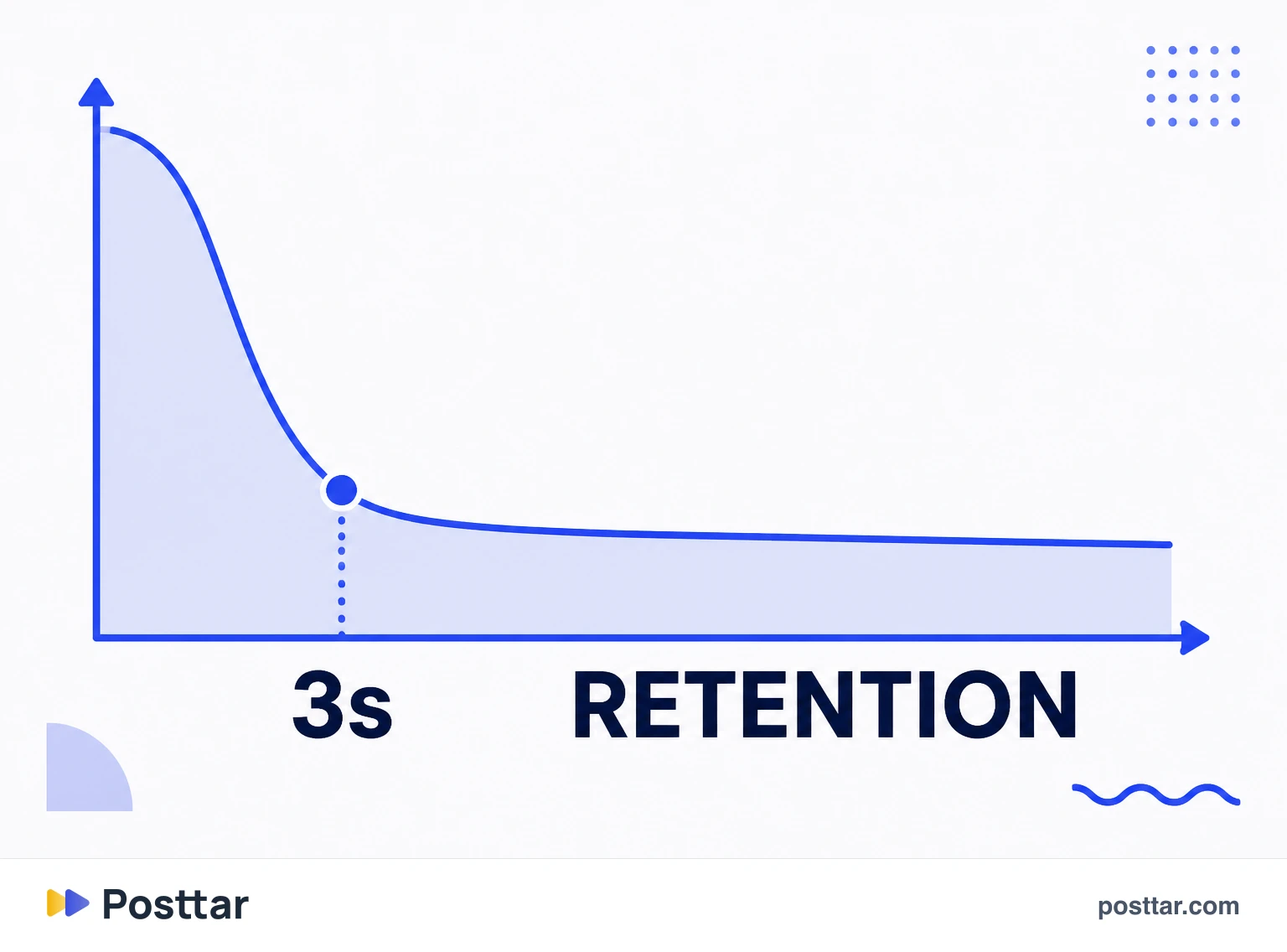
- Retention curve: where the drop happens. Falls at second 2 and the problem is the hook. Falls at second 15 and the problem is the development.
- Non follower reach: a weak hook cuts delivery to non followers before it cuts anything else.
The test worth running: take a piece that underperformed, change only the hook and republish a few days later. With everything else held constant, the difference is attributable. Changing hook and format at once turns the test into an opinion.
Mistakes that kill a good hook
- Promising what the content does not deliver. It raises retention in the first seconds and destroys everything after, plus it generates negative signal.
- A hook that is too generic. It works for everyone, therefore it speaks to nobody.
- Taking too long to start. A second of intro is a second of audience gone.
- Illegible on-screen text. Thin type, low contrast, or placed under the app interface.
- Copying a viral hook without its context. That hook worked because it matched that audience and that content. On its own, it is just a strange sentence.
- One hook for the whole funnel. Someone who has never heard of you needs a different hook from someone who has followed you for months.
Hook checklist
- You can tell who the content is for from the first sentence.
- The promise is specific, not generic.
- The content delivers what the hook promised.
- It works with the sound off, because on-screen text carries the promise.
- It starts on the subject, with no greeting and no intro.
- On-screen text is legible and outside the area covered by the interface.
- I measured hook rate, not just total views.
Frequently asked questions
What is a hook in copywriting?
It is the opening of any written piece, with the job of buying attention for what comes next. In a carousel it is the cover, in a caption it is the first line before the cut, in an email it is the subject. The mechanics are the same: a specific promise for a specific audience.
What is a good hook for a video?
One that names the viewer's situation precisely, contradicts a common belief in the niche, or points at a specific mistake. What they share is not a formula, it is answering the question "is this for me" in under three seconds.
How long should a hook be?
In short video, the first three seconds. In practice the decision to stay happens sooner than that, so the earlier the promise lands, the better. Intros, greetings and self-introductions consume exactly the window in which the decision is made.
How do I know my hook is weak?
Look at the retention curve. If the drop happens in the first two or three seconds, the hook is the problem. If the curve holds at the start and falls in the middle, the hook worked and the development is the problem. Hook rate isolates exactly that part.
Can I reuse a viral hook?
The structure, yes. The exact sentence, rarely. A viral hook worked because it matched that audience and that content; lifted out of context it is just a strange line. Copy the mechanism, which is the specific promise, not the words.
Related concepts
Hook rate
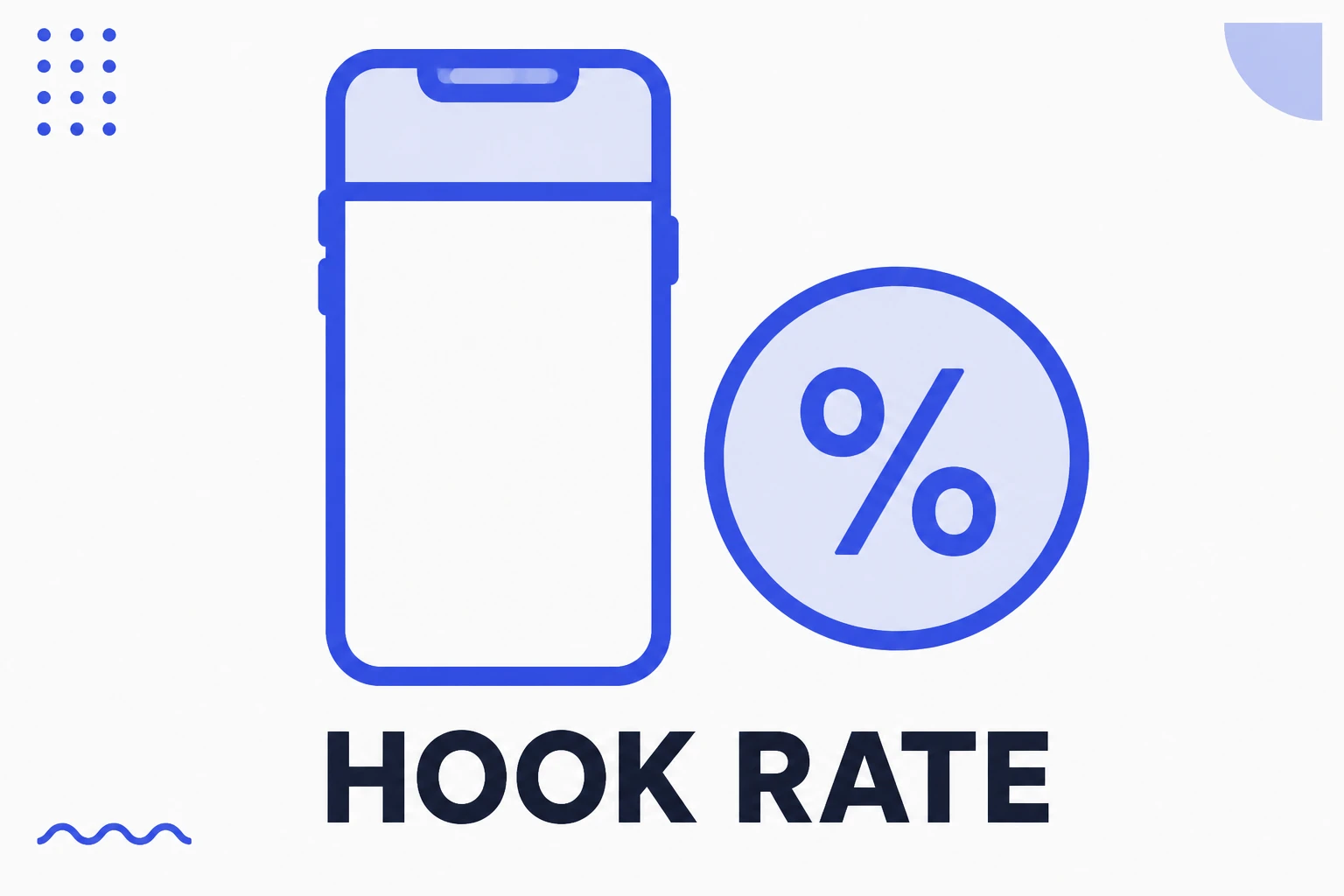
Hook rate is the percentage of people who got past the first seconds of a video instead of scrolling on. It is the metric that isolates hook performance, because it measures the one decision that happens before anything else in the content has a chance to matter. A video can have excellent content and a low hook rate, and in that case the problem is not the content.
Read the entry
Retention curve
The retention curve is the chart showing what percentage of the audience was still watching at each second of a video. Unlike average retention, which compresses everything into one number, the curve shows the exact location of the loss, and it is the only video metric that points at what to fix rather than merely reporting that something is wrong.
Read the entry
Headline
A headline is the opening line that decides whether the rest of the content gets consumed. It is the highest leverage element of any piece: if it fails, everything after it stops existing, however good it is. On Instagram it appears in three different places, and each carries a constraint of its own that changes how it should be written.
Read the entry
CTA
CTA stands for call to action: the instruction telling a person what to do next. It is the element that turns attention into results, and the most wasted of all, because most pieces either ask for nothing or ask for several things at once. One ask per piece, specific and with a reason, returns more than the full list of verbs.
Read the entry