Going viral: what actually happens when content takes off, and why it is not luck

By Tiago Costa·Updated on August 5, 2026
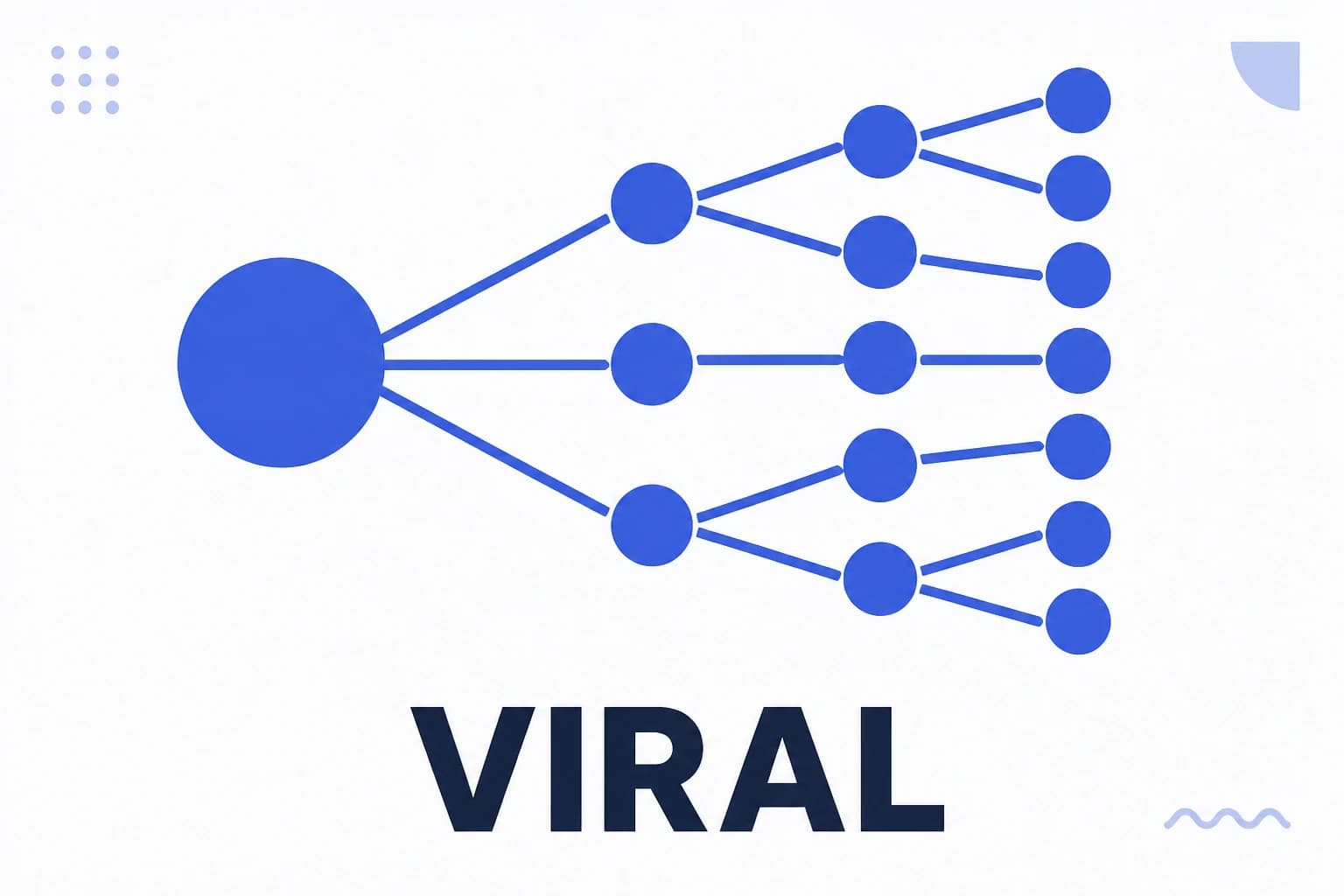
Definition
Going viral is when the audience distributes content more than the platform does.
- It is multiplication. Each person reached brings more than one new one.
- Sharing is the engine, not likes.
- It starts with strong initial delivery, which is where it is won or lost.
- The peak does not sustain the account, and the drop after is normal.
The mechanism, no mystery
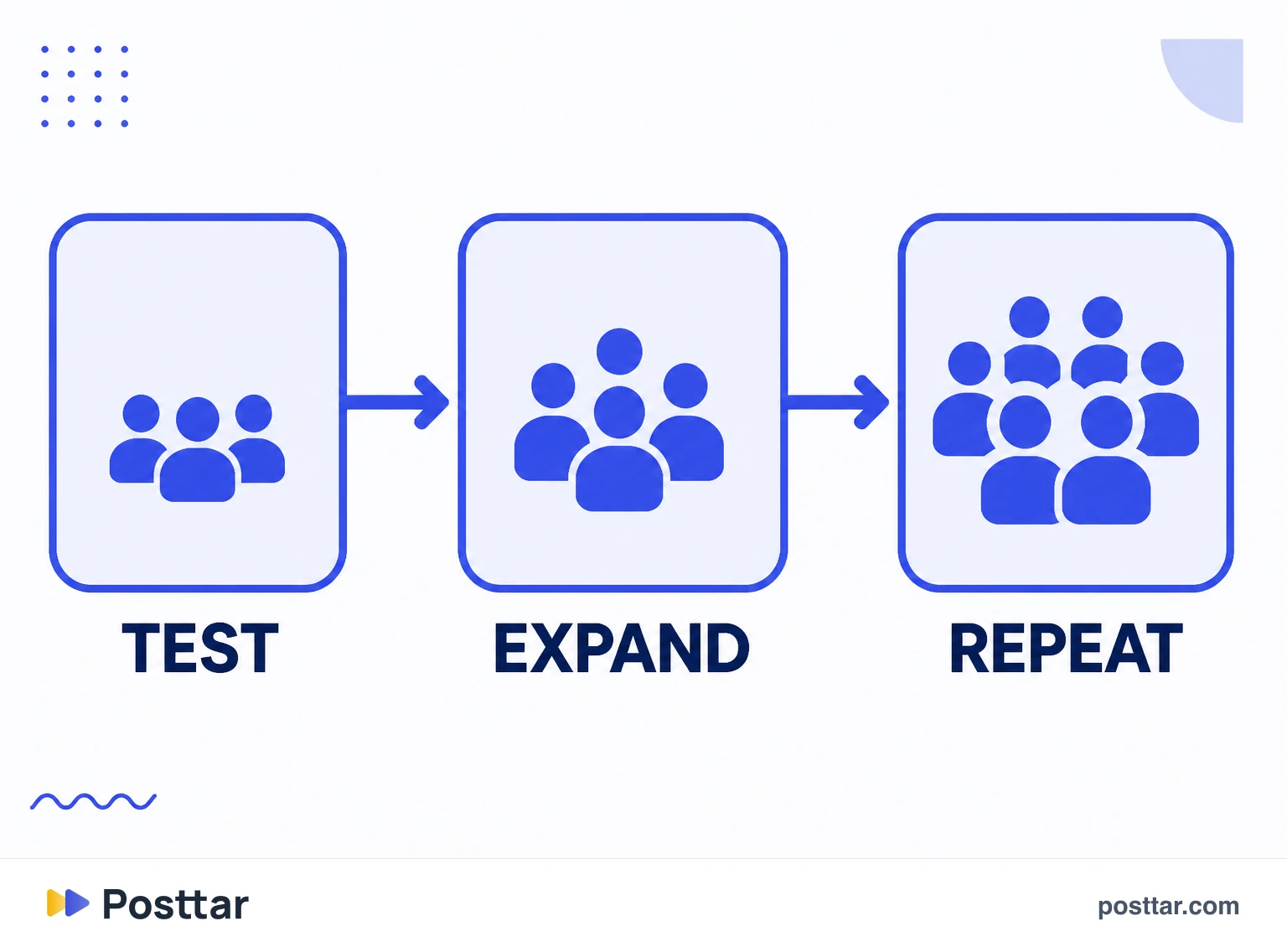
Every piece gets an initial delivery to a small group. What happens in that group decides the rest: if people watch to the end, save and above all share, the system expands delivery and repeats the test with a larger group.
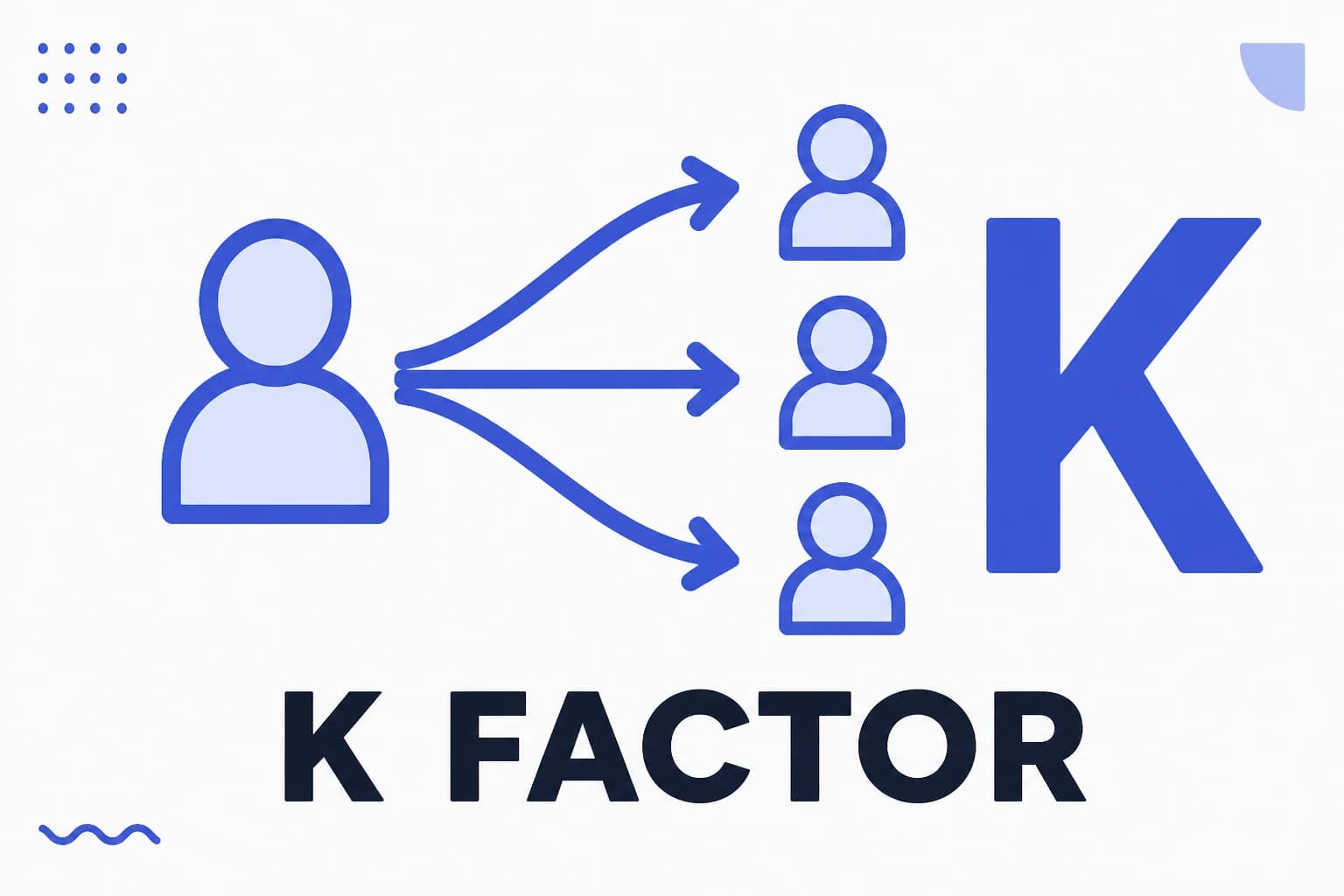
Going viral is that cycle repeating several times without losing force. What sustains the cycle is the viral coefficient: how many new people each person reached brings in. Above one, it grows on its own; below one, it fades.
Notice what that implies: the algorithm does not choose to make you go viral. It only amplifies what is already working. The decision belongs to the audience, and the platform merely obeys.
What virals have in common
Looking at a lot of content that took off, the repeating patterns are few:
- A hook that stops the thumb. The first seconds deliver a promise, a tension or an image impossible to ignore.
- A strong, nameable emotion. Surprise, outrage, recognition, relief. Lukewarm content does not get shared.
- A social reason to share. Nobody shares just because they liked it; they share because it says something about them, or because it serves a specific person.
- Simple to grasp without context. If it needs you to know the creator, it does not travel.
- It ends quickly. High retention is what sustains the amplification cycle.
What does not make things go viral
- Hashtags. They are no longer a distribution mechanism.
- Posting time. It helps initial delivery and nothing more; good content takes off at any hour.
- Asking for shares. Asking does not replace the reason. Without a reason, the ask is ignored.
- Bought engagement. Fake accounts do not share with real people, and it spoils the signal.
- Volume without quality. Posting a lot increases the number of attempts, which helps, but does not substitute for a piece worth passing on.
The day after, which almost nobody plans
A viral brings in many people who do not know you. Two things usually go wrong in the following 48 hours:
- The profile does not convert. The person arrives, finds a vague bio and leaves. Huge reach with tiny follower gain is the most common outcome of a viral, and the cause is the profile, not the content.
- The account changes course. Trying to repeat the format that went viral distorts the editorial line, and the new audience, which came for something else, does not stay.
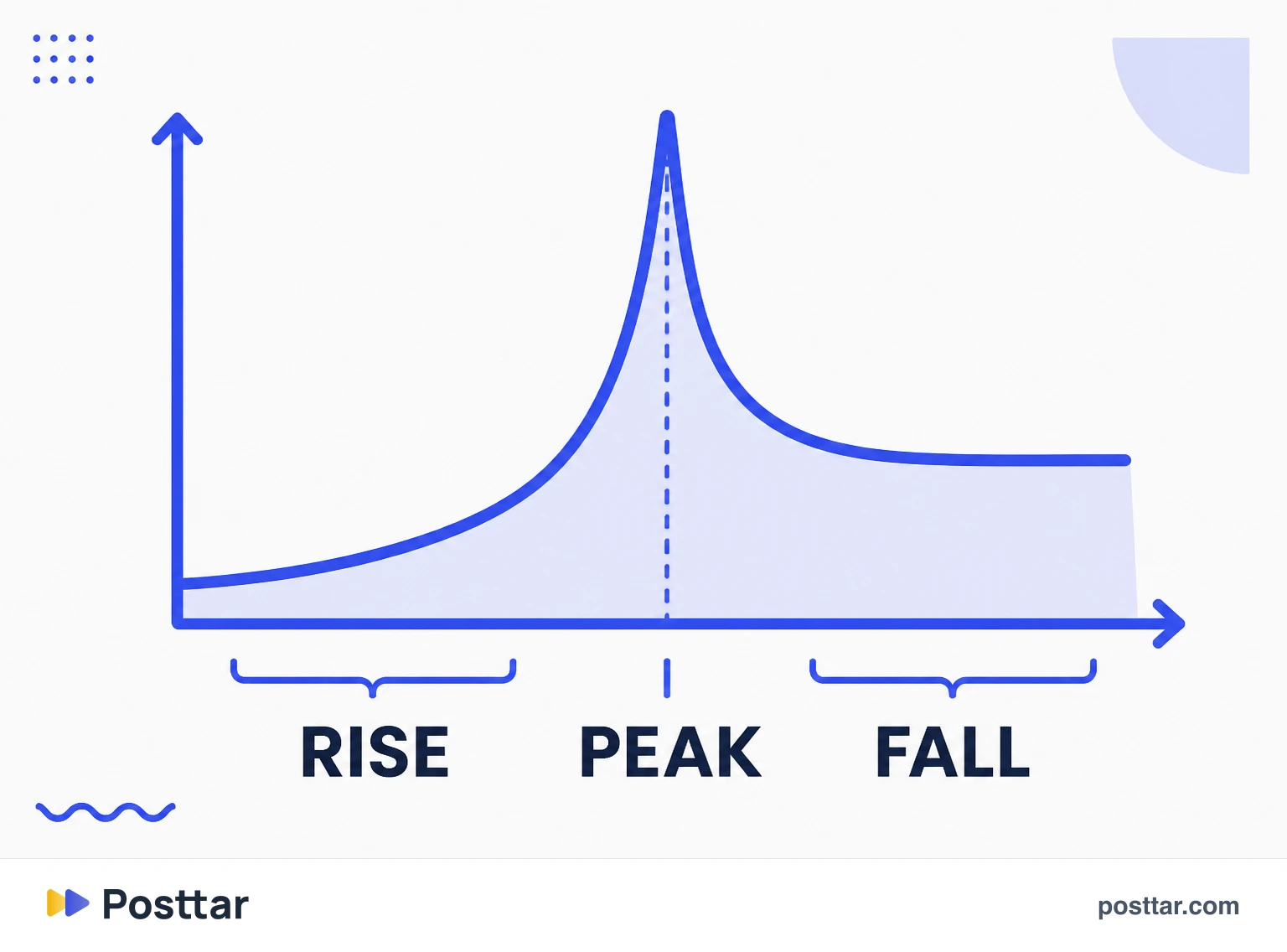
And calibrate expectations: performance after a viral drops, always. That is not punishment or a shadowban, it is the average returning to normal after a spike.
Checklist
- My hook stops the thumb in the first seconds.
- The piece works for someone who has never seen me.
- There is a clear social reason to share it.
- My profile is ready to convert people who arrive suddenly.
- I know the drop after the peak is normal.
Frequently asked questions
How do you go viral on Instagram?
By making content that gives viewers a strong reason to show it to someone else, then publishing often enough to have several attempts. The system delivers to a small group first; strong performance there expands delivery, and repeating that cycle is what produces a viral.
What makes a Reel go viral?
A hook that holds in the first seconds, high retention to the end, and a clear reason to share. Shares matter more than likes, because sharing is what brings in people the platform had not delivered to.
How to get 1000 followers on Instagram quickly?
There is no reliable fast route, and the ones sold as such rely on fake accounts that damage distribution. What works is consistent content on one subject plus a profile that converts visits, because reach without a clear profile produces visits and no follows.
Why did my reach drop after going viral?
Because a spike is an exception and the average returns to normal after it. Comparing against the viral day creates a sense of collapse, but performance is usually just back at the account's baseline. It is not punishment or a shadowban.
Does going viral bring followers?
It brings profile visits; follows depend on what people find when they arrive. Huge reach with a tiny follower gain is the most common outcome, and the cause is almost always the bio and highlights rather than the content that took off.
Related concepts
Viral coefficient
The viral coefficient is the number of new people each person reached brings to the content. It is the metric separating growth that sustains itself from growth that needs constant pushing: above 1, each round is bigger than the last and reach multiplies; below 1, each round is smaller and the curve fades on its own, however strong the start was.
Read the entry
Shares
A share is when someone sends your post to another person in Direct or reposts it to their own Stories. It is the most expensive interaction for the person acting, because it requires choosing a recipient and owning the recommendation, and that is why it pushes distribution outside your audience harder than anything else. No other interaction delivers content to a non follower through a human recommendation.
Read the entry
Hook
A hook is the opening of a piece of content, responsible for buying the first seconds of attention and making someone decide to keep going. In short video it occupies the first three seconds and is simultaneously verbal, visual and sonic; in a carousel it is the cover; in text it is the first line. A hook is not decoration: because the distribution system watches retention and dwell time, it determines whether the content ever gets delivered beyond the people who already follow you.
Read the entry
Explore page
The Explore page is Instagram's discovery grid, made almost entirely of content from accounts the person does not follow. It is assembled individually: there is no single version of Explore, each person sees a different grid built from their own interaction history. For publishers, landing on it is the fastest way to reach a new audience at scale.
Read the entry