Instagram shares: the interaction that takes content out of your bubble

By Tiago Costa·Updated on August 5, 2026

Definition
A share is when someone sends your post to another person in Direct or reposts it to their Stories.
- The most expensive interaction for the viewer, and the heaviest signal.
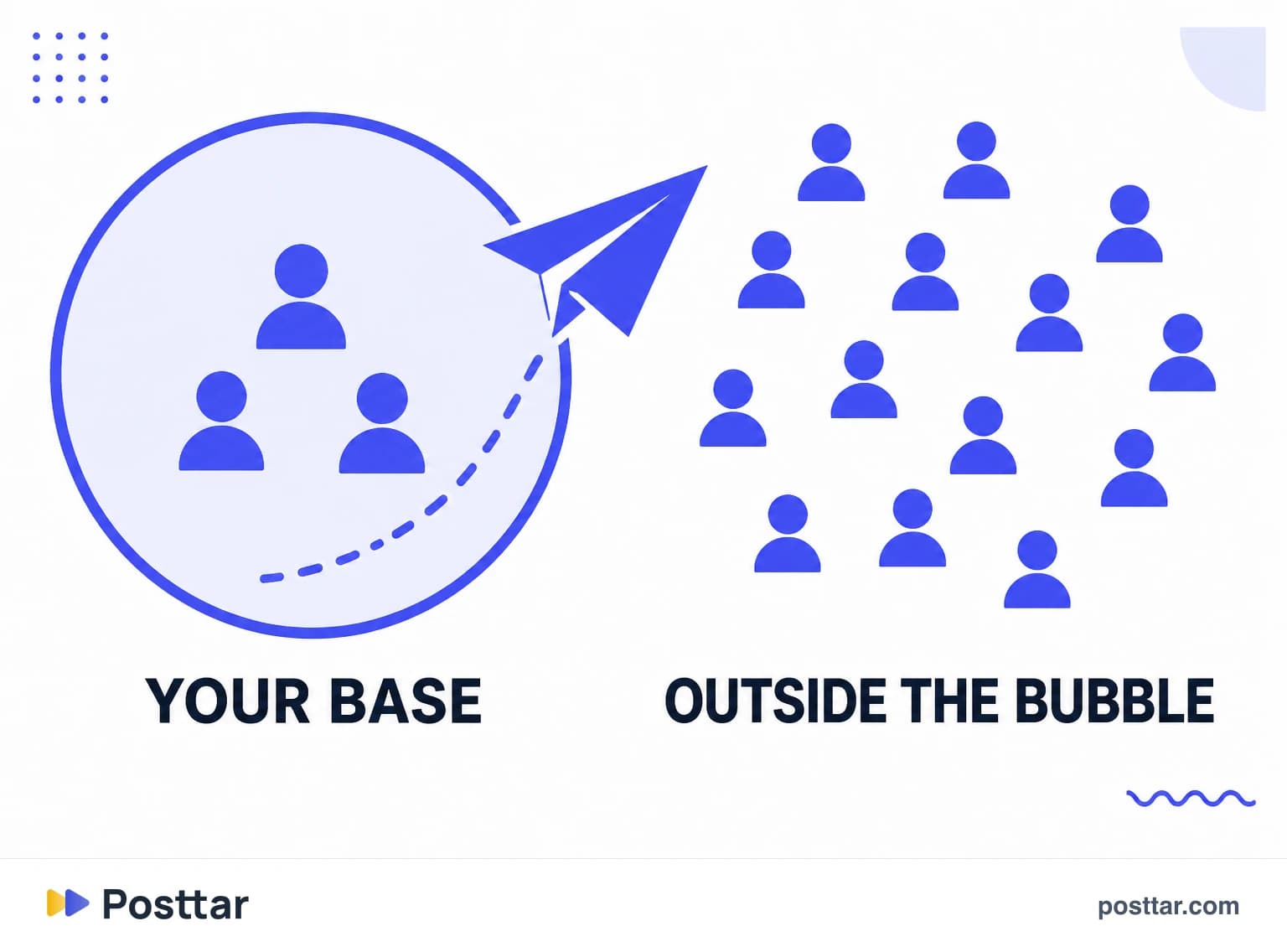
- It travels outside your bubble, which a like does not.
- The number is aggregate. You do not see who sent it to whom.
- It is the best indicator of social value in a piece of content.
What counts as a share
Instagram groups at least two different gestures under shares: sending the post to someone via Direct, and reposting it to one's own Stories. In both cases the piece travels to an audience that is not yours, carried by a person rather than by the algorithm.
That difference is what matters. Reach arriving through recommendation carries a layer of trust that no automatic delivery has, which is why it tends to convert better.
One thing the number does not do is identify. Insights show how many shares happened, never who sent it or to whom. No legitimate tool solves that, because the data is not exposed.
Why it weighs more than everything else
Order the interactions by cost to the person acting and the hierarchy appears on its own: liking is one tap, commenting means writing in public, saving means recognising usefulness, sharing means putting your own standing behind a recommendation to a specific person.
The ranking system follows that order. Shares are the signal that pushes content hardest onto discovery surfaces, and they are the reason two posts with the same engagement total can land very different reach.
Practical consequence for anyone producing: optimising for shares is the most direct route to organic growth, even if the visible like count ends up smaller.
How to write something people send
Sharing is a social gesture, not an informational one. People do not send something because the content is good, they send it because sending says something about them or does something for the recipient.
- It serves someone specific. "Send this to the person who always says that" only works when the content really describes a recognisable person.
- It names a situation. The more precise the portrait, the higher the chance someone thinks of a person.
- It solves something now. Practical content gets sent as a favour.
- It gives words to an opinion. People share what they wish they had said.
- It fits on one screen. Content that is too long gets saved, not sent.
Where to see it and what to do with it
The number sits in the post insights, alongside likes, comments and saves, on a professional account. The useful reading is not the absolute figure, it is the share rate, which divides by reach.
Two things that rate reveals and the rest hides:
- Whether the content gains traction outside the base. A high rate alongside high non follower reach is the signature of a post that grows on its own.
- Which topics deserve repeating. Themes with a consistent share rate are the ones worth turning into a series.

Checklist
- I track shares separately, not diluted into the engagement total.
- I use the rate over reach, not the absolute number.
- I write thinking about who the reader would send it to.
- I do not promise to identify who shared, because the data does not exist.
- I compare format with format.
Frequently asked questions
What are shares on Instagram?
They are the times someone sent your post to another person in Direct or reposted it to their own Stories. In both cases the content travels to an audience that is not yours, and insights record the total.
How do I see my shares on Instagram?
In the post insights of a professional account, alongside likes, comments and saves. The number is aggregate: it tells you how many shares happened, never who did it.
Can I see who shared my post?
No. Insights only show the total. The exception is when someone reposts to Stories and tags your profile, because then you get a mention notification. Any tool claiming to list who shared does not have access to that data.
Do shares help reach on Instagram?
They are the interaction that helps most. Sharing is the most expensive gesture for the person acting, and the only one that delivers content to someone through a human recommendation instead of automatic delivery.
Are shares worth more than saves?
As a distribution signal, yes, because they carry the piece outside your audience. Saves indicate usefulness and intent to return, which is excellent for reference content but does not expand reach the same way.
Related concepts

Engagement
Engagement is the set of interactions people have with a piece of content: likes, comments, saves and shares, plus Story replies and mentions. It is an absolute count, not a percentage, which is why it only makes sense against a base, either reach or follower count. The four interactions are not equal: the ones that cost the viewer more effort are the ones that push distribution hardest.
Read the entry
Share rate
Share rate is the percentage of people who saw a piece of content and sent it to someone else, calculated by dividing shares by reach. Among all engagement metrics, it is the one that best anticipates growth, because every share carries the piece to an audience that is not yours, with a layer of human recommendation that no automatic delivery has.
Read the entry
Saves
A save is when someone files your post away to return to it later. It is a private interaction: it does not appear on the post, nobody but the saver knows, and you only see the aggregate total in insights. Precisely because it has no social component, it is one of the most honest signals available, since people save for their own usefulness rather than to be seen saving.
Read the entry
Reach
Reach is the number of unique accounts that saw a piece of content at least once. Unlike impressions, it does not count the same person twice, so it measures the size of the audience touched rather than the volume of exposure. On Instagram, reach is reported per post and per period, and it can be split between followers and non followers, which is the reading that shows whether a profile is discovering new people or simply circulating among those who already follow it.
Read the entry