Instagram saves: the silent signal worth more than a like

By Tiago Costa·Updated on August 5, 2026

Definition
A save is when someone files your post away to return to it later.
- It is private. It does not show on the post and nobody sees who saved.
- It signals usefulness, not social approval.
- It weighs on delivery, far more than a like.
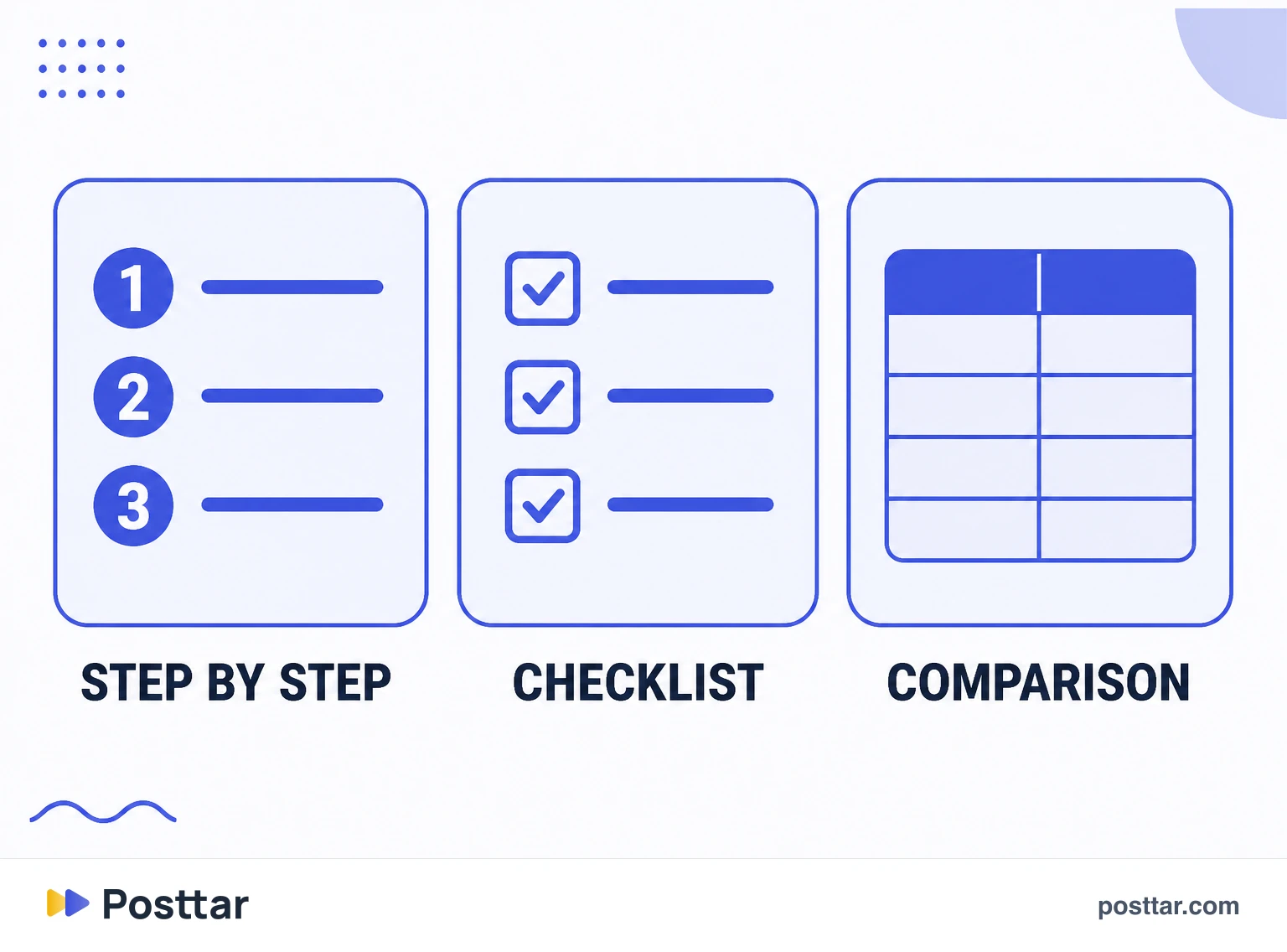
- It is the signal of reference content: step by step, checklist, comparison.
What a save signals
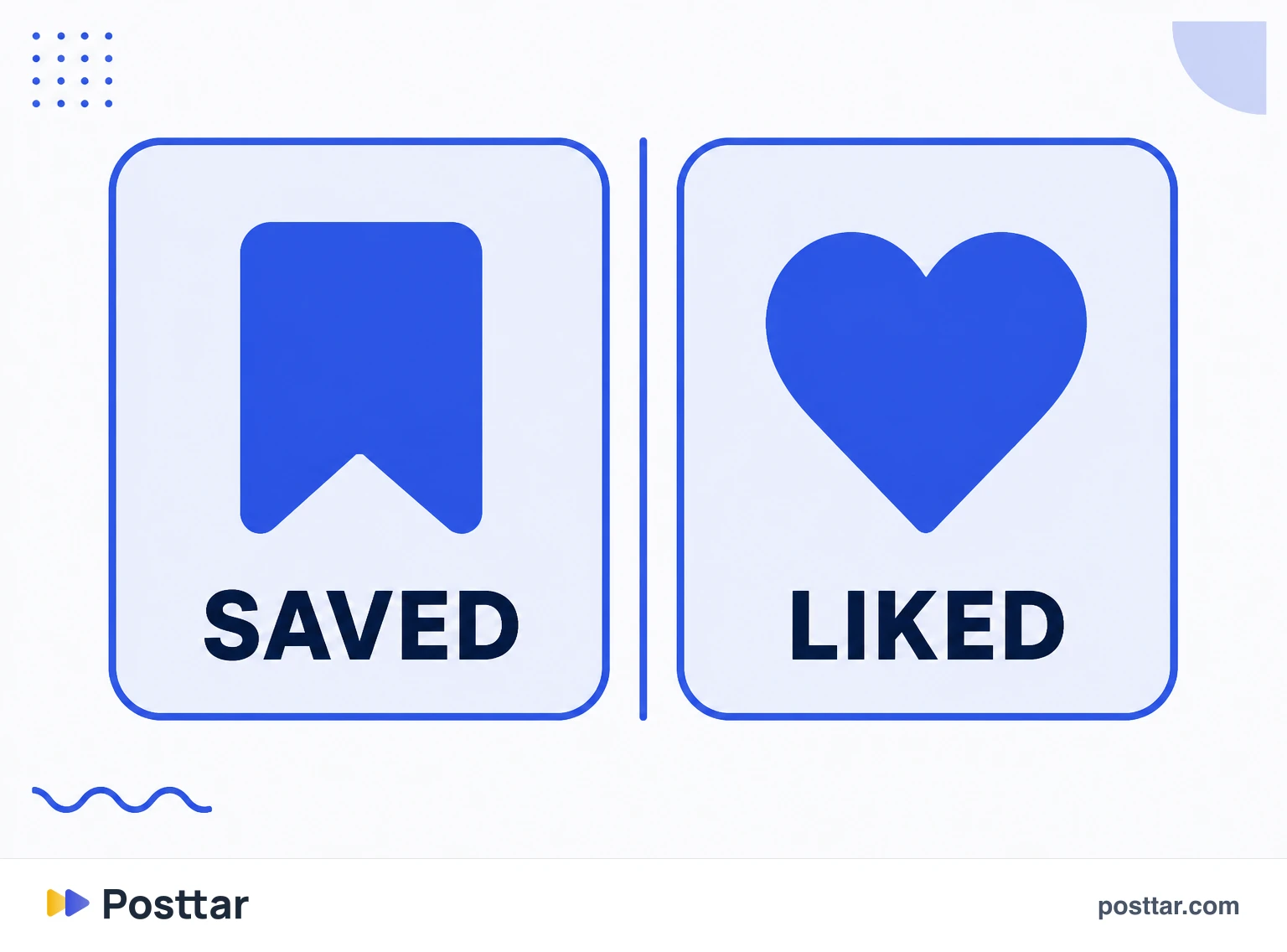
Saving is a gesture of future intent: the person recognises this will be useful again. It is not praise, it is filing. And because it is invisible to everyone, there is none of the social performance that contaminates the like.
That makes the metric unusually honest. Nobody saves to be seen, they save because they want to come back. If your content gets saved, it is being treated as a reference rather than as passing entertainment.
On the distribution side, saves are among the strongest signals, alongside shares. They cost more than a like tap and indicate perceived value, which is exactly what the recommendation system tries to predict.
What content actually gets saved
There is a clear pattern, and it holds across niches. People save what they intend to use.
- Step by step. Instructions the person will execute later, not now.
- Checklists. A list to consult at the moment of doing.
- Comparisons. A table or chart that helps decide.
- Data references. Numbers, limits, specifications.
- Visual inspiration. In aesthetic niches, people save to imitate.
What almost never gets saved: opinion pieces, news of the day and jokes. They earn likes and comments, and that is not a flaw, it is a different job.
Which is why the carousel leads saves among formats: it is the natural home of dense, consultable content.
How to read the number
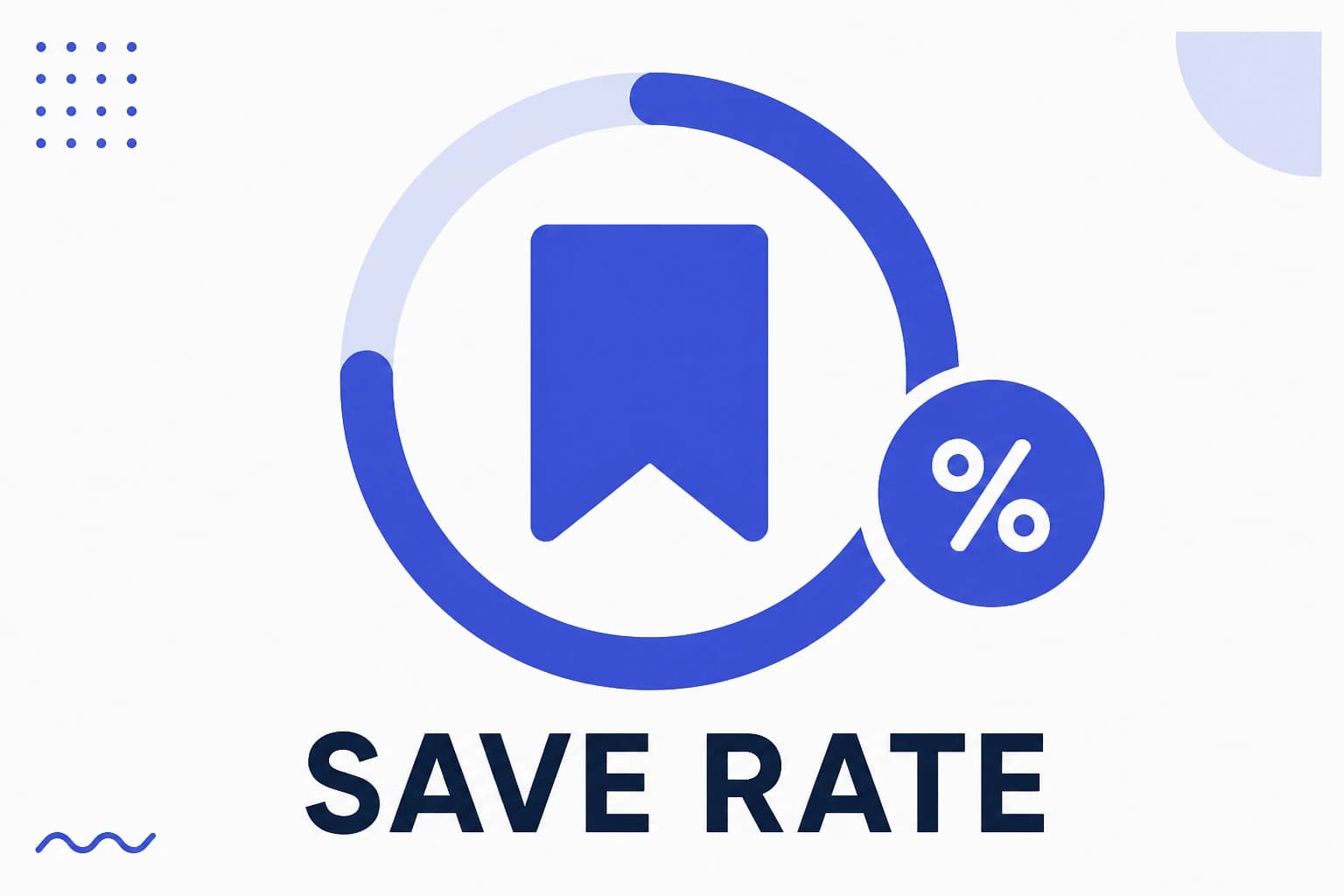
The absolute total has the same problem as any count: it grows with the account and says nothing about the piece. The useful reading is the save rate, which divides by reach.
Two comparisons worth making:
- Across topics. Themes with a consistently high save rate are the ones worth turning into a series.
- Across formats. Comparing a carousel to a Reel on the same line distorts, because their accumulation curves differ.
A note on the panel: the number sits in the post insights on a professional account, and like any metric it keeps moving in the first days. Judging at 24 hours understates, especially for reference content, which gets saved when the person needs it.
How to write something worth saving
- Promise future usefulness on the cover. "Save this for when you do it" only works if the content really is consultable.
- Organise into numbered items. Content people will reopen has to be navigable, not a wall of prose.
- Be specific enough to apply. Generic advice does not get saved, because it is useless at execution time.
- Fit in a frame. If the information needs external context to make sense later, it is not worth saving.
- Do not ask for saves on content that does not deserve them. The explicit ask on an opinion post just creates friction.
Checklist
- I track saves separately from the engagement total.
- I use the rate over reach, not the absolute number.
- I compare format with format and topic with topic.
- I wait a few days before judging reference content.
- I only ask for saves when the piece is genuinely consultable.
Frequently asked questions
Can anyone see what I saved on Instagram?
No. Saved items live in a private area of your profile visible only to you, and the author of the post only sees the total number of saves, with no idea who they were.
Do saves help reach on Instagram?
Yes, considerably. Saving costs more than liking and signals perceived value, which is what the recommendation system tries to predict. It is among the strongest signals, alongside shares.
Where do I see saves on my posts?
In the post insights on a professional account, alongside likes, comments and shares. The number is aggregate and does not identify who saved.
What kind of content gets saved most?
Consultable content: step by step guides, checklists, comparisons, data references and visual inspiration. Opinion, news and humour earn likes and comments and almost no saves, which is not a flaw, it is a different job.
Is a save worth more than a like?
As a signal, yes. A like is the cheapest interaction for the person acting; saving requires recognising future usefulness. That is why two posts with the same like count can land very different reach if one was saved far more.
Related concepts
Save rate
Save rate is the percentage of people who saw a piece of content and filed it away for later, calculated by dividing saves by reach. It isolates the usefulness dimension of engagement: while likes measure approval and comments measure willingness to talk, saves measure whether the piece was considered worth consulting again. It is the most direct metric for deciding which topic deserves to become a series.
Read the entry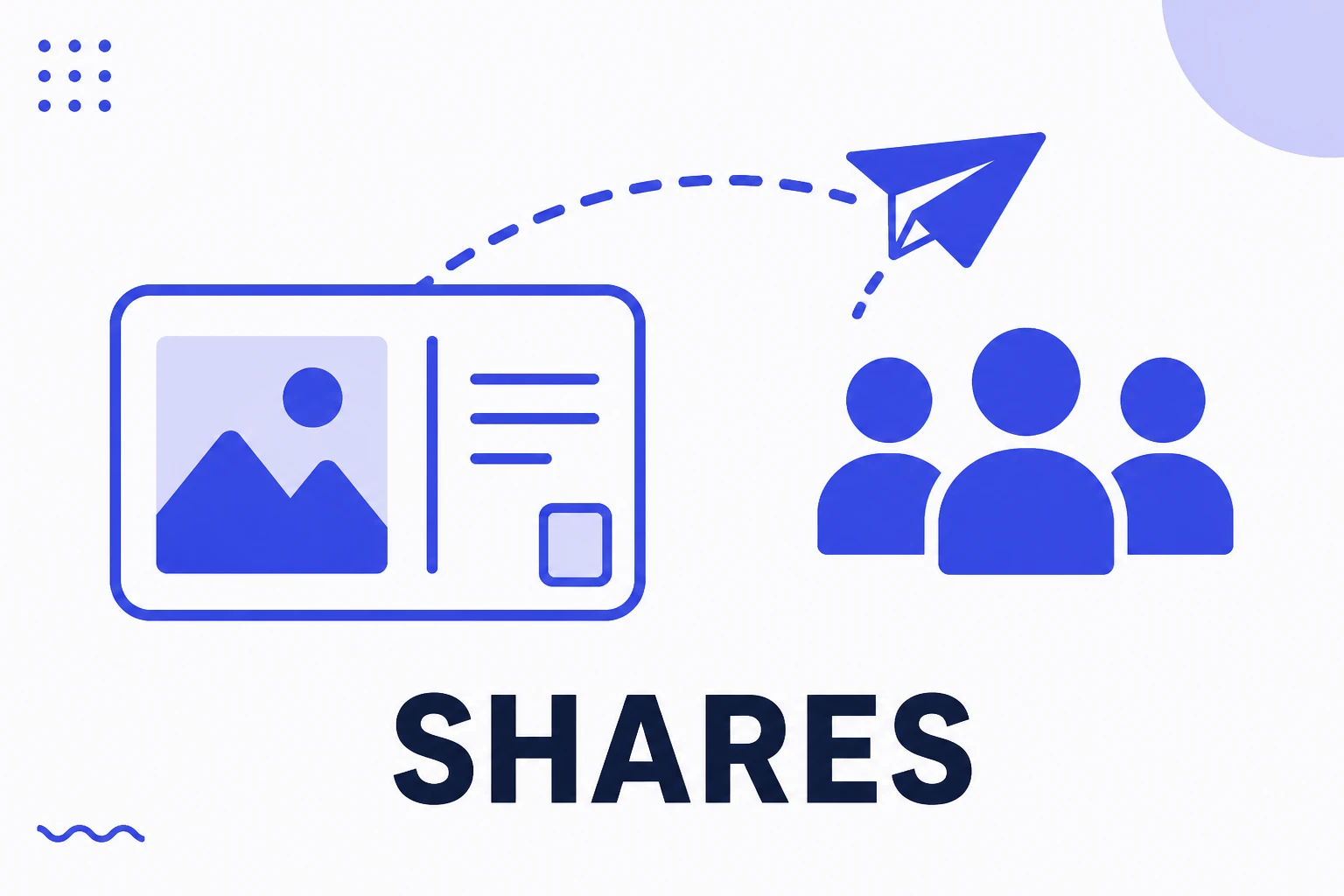
Shares
A share is when someone sends your post to another person in Direct or reposts it to their own Stories. It is the most expensive interaction for the person acting, because it requires choosing a recipient and owning the recommendation, and that is why it pushes distribution outside your audience harder than anything else. No other interaction delivers content to a non follower through a human recommendation.
Read the entry
Engagement
Engagement is the set of interactions people have with a piece of content: likes, comments, saves and shares, plus Story replies and mentions. It is an absolute count, not a percentage, which is why it only makes sense against a base, either reach or follower count. The four interactions are not equal: the ones that cost the viewer more effort are the ones that push distribution hardest.
Read the entry
Carousel
A carousel is the Instagram post that holds up to 20 images or videos in a single publication, navigated by swiping sideways. It occupies the same feed space as a regular post but asks the viewer for one extra action, and that action is what makes it valuable: every frame advance adds dwell time, and the format gets a second delivery chance, because Instagram can re-show the post starting from a different frame to people who did not interact the first time.
Read the entry