Trial reels: publishing only to non followers and measuring without risk

By Tiago Costa·Updated on August 5, 2026
Definition
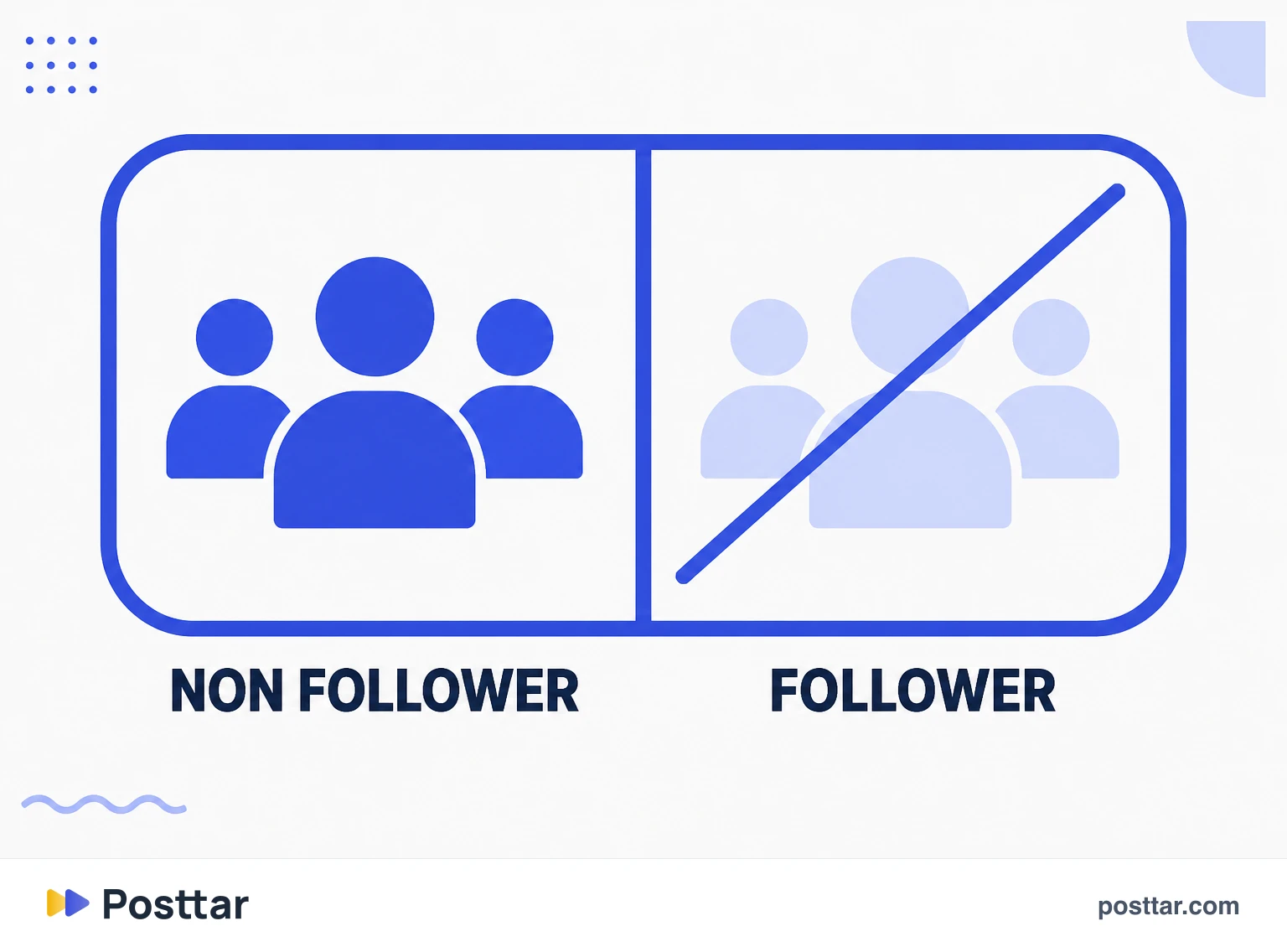
Trial reels publish a Reel only to people who do not follow the account.
- It does not appear on your profile or to current followers.
- It measures with a cold audience, exactly who decides reach.
- It can be released later to everyone, without losing its history.
- It lowers the cost of being wrong, since the test does not clutter the grid.
What it is and the problem it solves
Testing formats on a serious profile always had a cost: to find out whether an idea works you had to actually publish it, and a bad idea stayed in the grid, annoyed followers and dragged the account's performance average down.
Trial reels cut that cost. The video is delivered only to accounts that do not follow you, exactly the audience that decides whether a Reel earns reach. Meanwhile it does not show up in your grid or in the feed of people who already follow.
It is the difference between testing in a lab and testing in production. You learn from the audience that matters without paying the reputational price of a public mistake.
How to publish one
In the Reel publishing flow, before confirming, there is an option to mark it as a trial reel. Once you do, the video goes straight to cold distribution.
Three practical consequences:
- It does not go to your grid. It sits in a separate tab with your other trials.
- Your followers do not see it. Neither in the feed nor in the Reels tab of your profile.
- You can release it later. If the result is good you can publish to everyone, and the metrics already accumulated come along.
On the follower requirement, which is the most common search: the feature is not gated by a minimum count. What tends to limit it is account type and the gradual rollout of the feature.
How to read the result
This is where most people get it wrong. A trial reel cannot be judged by the same metrics as a normal Reel, because the audience is different: one hundred per cent cold, with no followers to give it the initial push.
What to look at, in order:
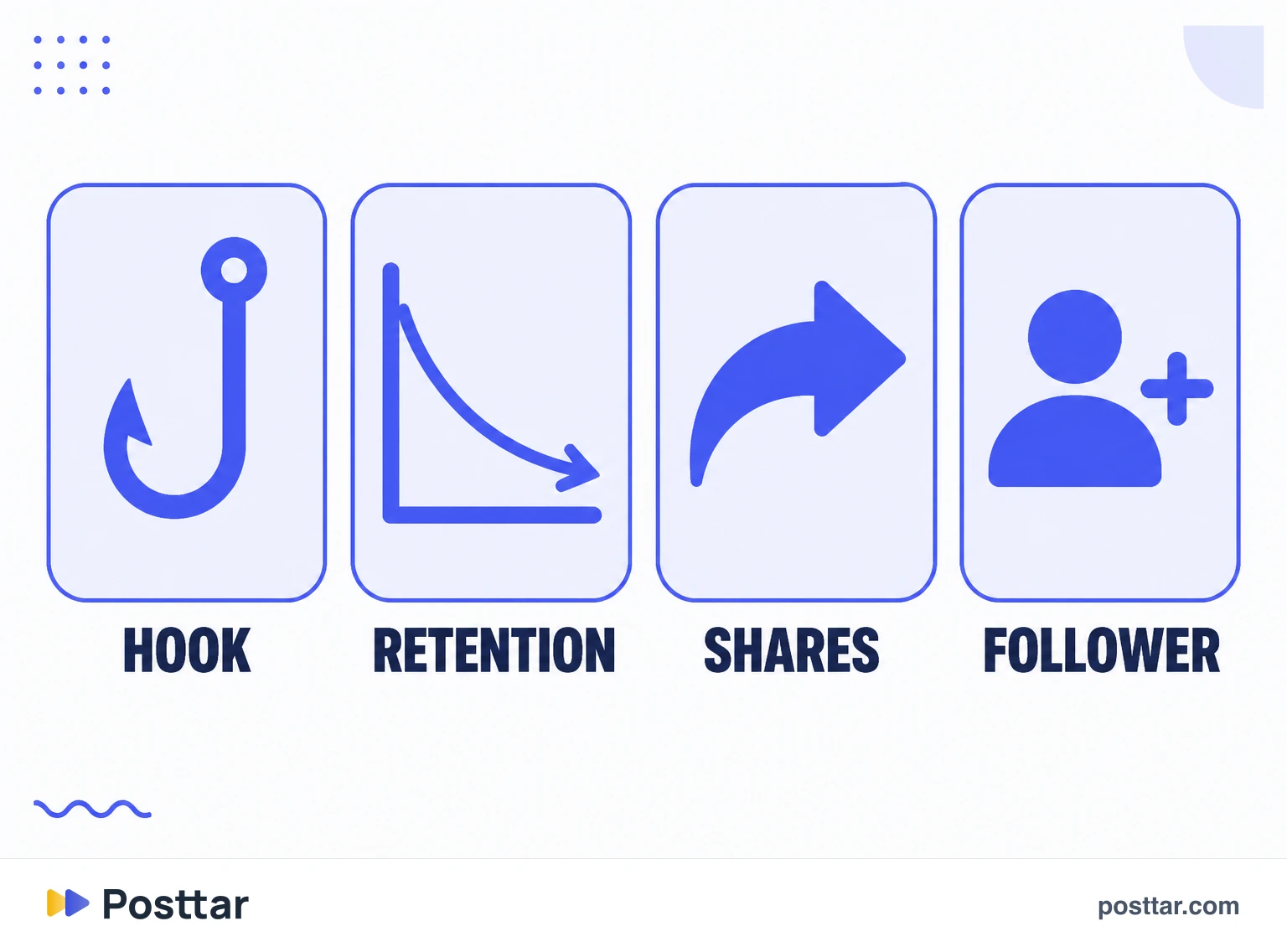
- Hook rate. How many got past the first seconds. That is the hook test.
- Retention and full plays. Whether the video holds without the trust credit a follower grants.
- Shares. The strongest signal that the idea travels on its own.
- Followers gained. A cold viewer who follows after one video proves the content introduces the account well.
What not to look at: absolute view count compared to a normal Reel. They are different samples, and the comparison says nothing.
How to actually use it
- Test one variable at a time. New hook or new format, not both.
- Run them in batches. One isolated test is noise; five tests of the same format start becoming signal.
- Wait for maturation. Reels collect reach over days, and judging in two hours produces the wrong decision.
- Only release what passed comfortably. If it landed at average, it is not worth grid space.
- Reuse what you learned. The gain is not the released Reel, it is knowing which hook holds a cold audience.
Checklist
- I test one variable at a time, not several together.
- I judge by hook rate, retention and shares, not absolute views.
- I do not compare a trial to a normal Reel, because the audience differs.
- I give it days, not hours, before deciding.
- I only release to everyone what beat the average comfortably.
Frequently asked questions
What are trial reels on Instagram?
They are Reels published only to people who do not follow the account, without appearing on the profile, in the grid or to current followers. They measure whether a format works with a cold audience before committing the profile to it.
How do you make a trial reel?
In the Reel publishing flow, before confirming, select the trial reel option. The video goes straight to distribution among people who do not follow you and sits in a separate tab, outside your grid.
Do you need 1000 followers for trial reels on Instagram?
No. The feature is not gated by a minimum follower count. What tends to limit access is account type and the fact that the rollout is gradual, reaching different accounts and regions at different times.
Do my followers see trial reels?
No. They do not appear in their feed or in the Reels tab of your profile. Distribution goes exclusively to accounts that do not follow you, which is the whole point of the feature.
Can you publish a trial reel to everyone later?
Yes. If performance with the cold audience is good, you can release the Reel to everyone, and the metrics accumulated during the trial carry over with the post.
Related concepts
Reels
Reels is Instagram's short vertical video format, and the main distribution route to people who do not follow an account. Unlike a feed post, whose delivery depends heavily on the history between two accounts, a Reel is offered to whoever the system predicts is interested in the subject, which makes it the platform's most direct growth tool and also the most demanding on retention.
Read the entry
Hook rate
Hook rate is the percentage of people who got past the first seconds of a video instead of scrolling on. It is the metric that isolates hook performance, because it measures the one decision that happens before anything else in the content has a chance to matter. A video can have excellent content and a low hook rate, and in that case the problem is not the content.
Read the entry
Average retention
Average retention is the percentage of a video people watched, on average, before leaving. It is the percentage version of watch time, and it exists to make videos of different lengths comparable. It falls naturally as a video gets longer, which means comparing a ten-second Reel with a one-minute one using the same number is a misreading.
Read the entry
Reach
Reach is the number of unique accounts that saw a piece of content at least once. Unlike impressions, it does not count the same person twice, so it measures the size of the audience touched rather than the volume of exposure. On Instagram, reach is reported per post and per period, and it can be split between followers and non followers, which is the reading that shows whether a profile is discovering new people or simply circulating among those who already follow it.
Read the entry