Hook rate: the metric that isolates the first seconds

By Tiago Costa·Updated on August 5, 2026
Definition
Hook rate is the percentage of people who got past the first seconds of a video.
- It isolates the hook, because the decision happens before everything else.
- Calculation: viewers at 3 seconds divided by viewers who started.
- It is the cheapest variable to test, because only the opening changes.
- A low hook invalidates the rest. Nobody saw the content.
What hook rate measures
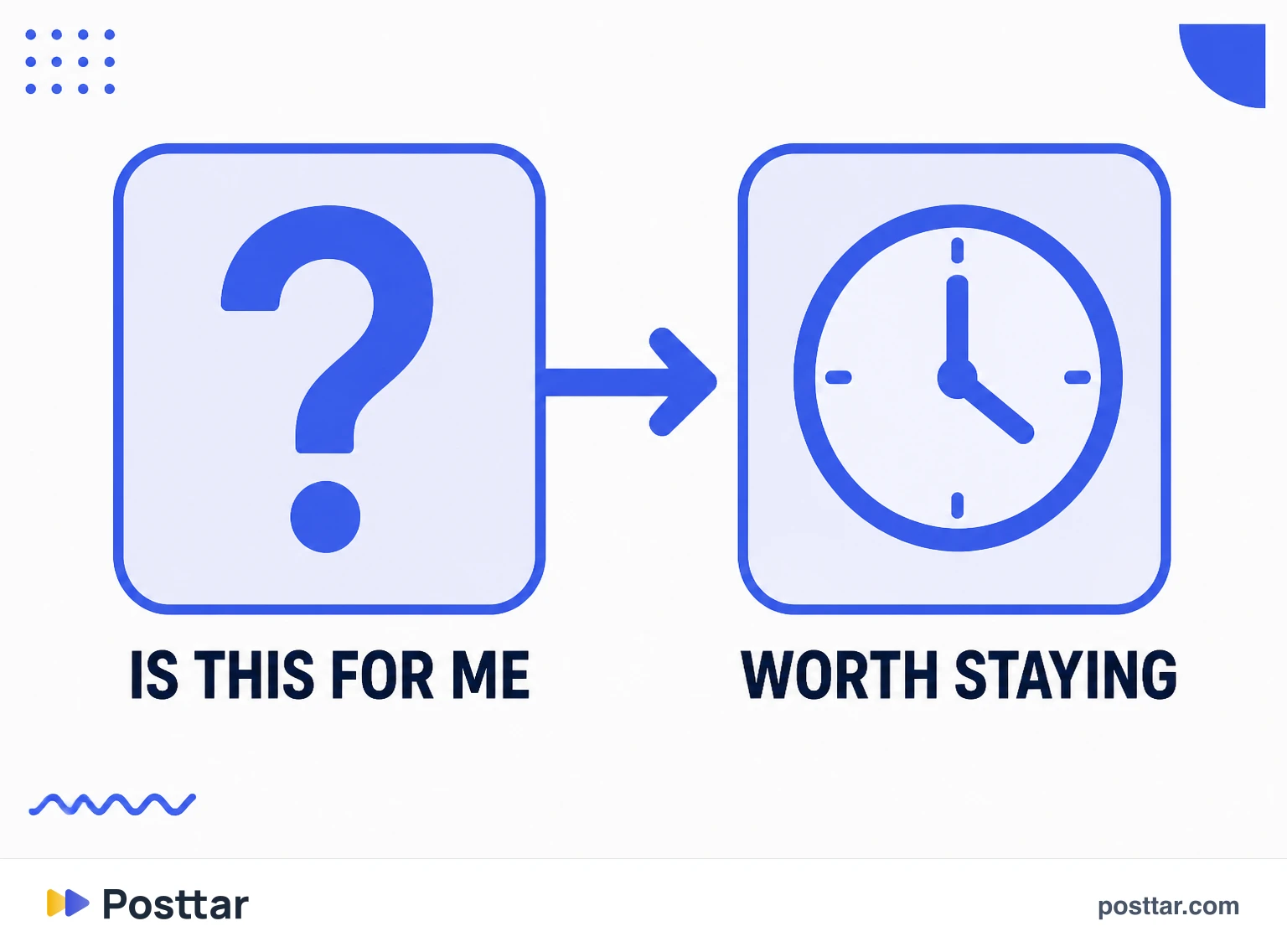
Every video asks two questions in sequence. The first is "is this for me", answered in under three seconds. The second is "is it worth continuing", answered across the rest. Hook rate measures the first one, alone.
That separation is what makes the metric valuable. Average retention and watch time blend both questions into one number, and therefore do not tell you whether to rewrite the opening or re-edit the middle.
In practice the calculation is: how many people were still watching at the third second, divided by how many started. Some panels give it directly; where they do not, the retention curve provides it, because it is the curve's height at that point.
Why it is the cheapest variable to test
Re-editing a whole video costs hours. Changing the first three seconds costs minutes, and it is the change with the largest measured effect per unit of effort.
The test that works is boring in its simplicity: take a video with a hook rate below your median, change only the opening and republish a few days later. With everything else held constant, the difference is attributable.
The mistake that voids the test is changing two things. Altering hook and cover, or hook and caption, produces a result that teaches nothing, because you cannot know which change caused the effect.
What drags hook rate down
- Intros or animated logos. A second of branding is a second of audience.
- Greetings and self-introductions. Someone who has not decided to stay does not care who you are.
- A static opening. A person standing still facing camera loses to anything happening.
- A generic promise. It works for everyone, therefore it speaks to nobody.
- Illegible on-screen text. A large share of consumption is sound off; if the promise only exists in speech, it does not exist.
- Quiet audio. A video quieter than the rest of the feed is skipped before the first word.
A high hook rate is not enough
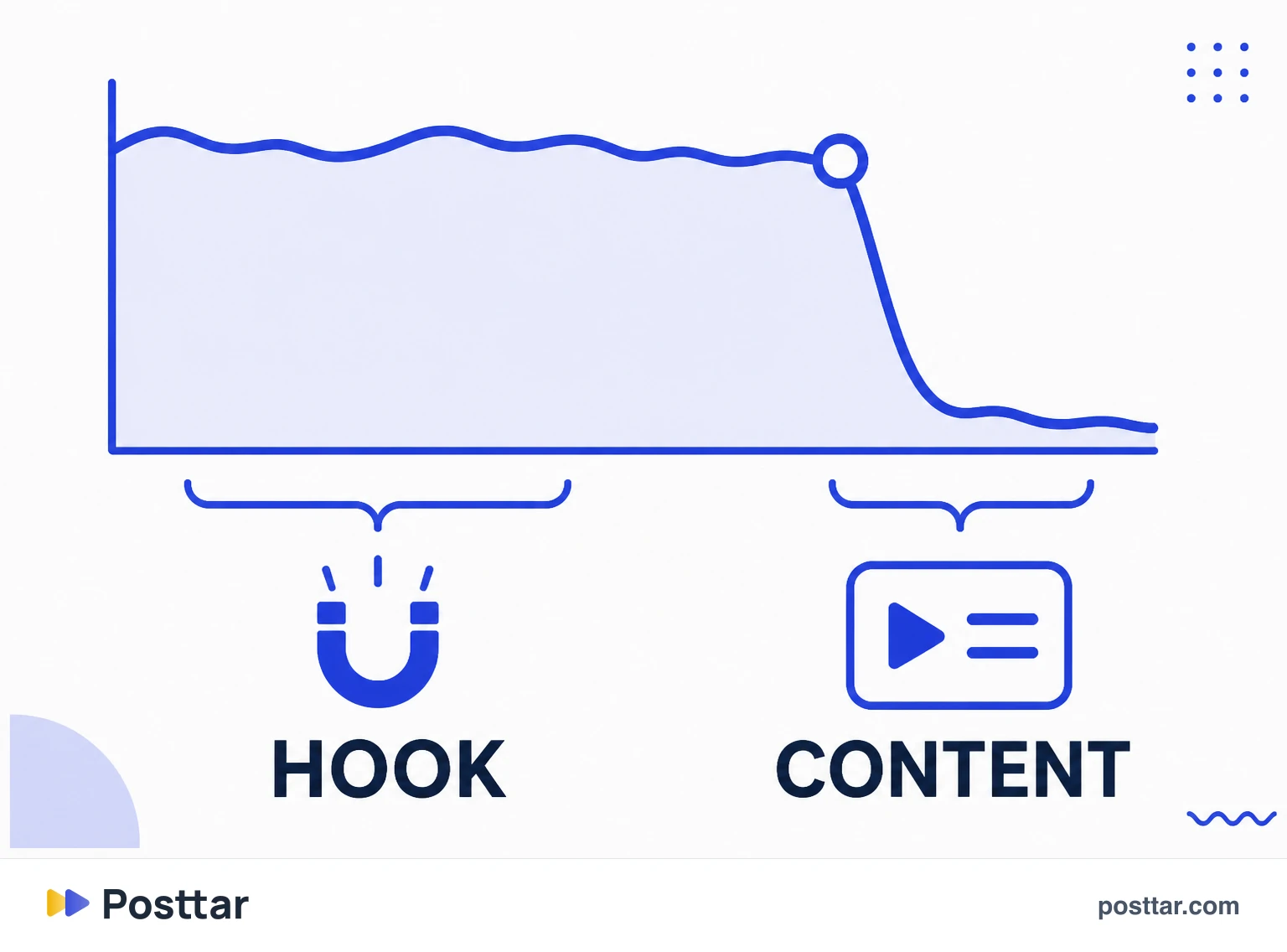
There is a trap that shows up often: an excellent hook with a poor hold rate. The curve makes the pattern obvious: almost nobody leaves in the first seconds and everybody leaves right after.
That means the opening promised something the content did not deliver. On top of wasting the audience you earned, it generates negative signal, because the platform observes that people left early after having stayed.
The correct pair to track is always hook rate and hold rate together. One measures whether it grabbed, the other whether it held.
Checklist
- I track hook rate separately from average retention.
- I test by changing only the opening, never two variables.
- I check that the promise works with the sound off.
- I cut intros, greetings and self-introductions.
- I always read it alongside hold rate, so I do not confuse hook with content.
Frequently asked questions
What is hook rate?
It is the percentage of people who got past the first seconds of a video instead of scrolling on. It measures hook performance exclusively, because that decision happens before any other part of the content can matter.
How do you calculate hook rate?
Divide how many people were still watching at the third second by how many started watching. Where the panel does not provide it directly, the retention curve gives the value, because it is the curve height at that point.
What is a good hook rate?
There is no universal number, because it depends on format and niche. The useful benchmark is the median of your own videos: above it the hook worked, below it is worth rewriting the opening and testing.
What is the difference between hook rate and average retention?
Hook rate measures only the first-seconds decision. Average retention compresses the whole video into one number, blending the initial decision with the performance of the middle. That is why retention does not tell you what to fix and hook rate does.
Does a high hook rate guarantee the video did well?
No. A high hook with a low hold rate is the signature of an opening that promised something the content did not deliver. Beyond wasting audience, it generates negative signal, because people left early after having stayed.
Related concepts

Hook
A hook is the opening of a piece of content, responsible for buying the first seconds of attention and making someone decide to keep going. In short video it occupies the first three seconds and is simultaneously verbal, visual and sonic; in a carousel it is the cover; in text it is the first line. A hook is not decoration: because the distribution system watches retention and dwell time, it determines whether the content ever gets delivered beyond the people who already follow you.
Read the entry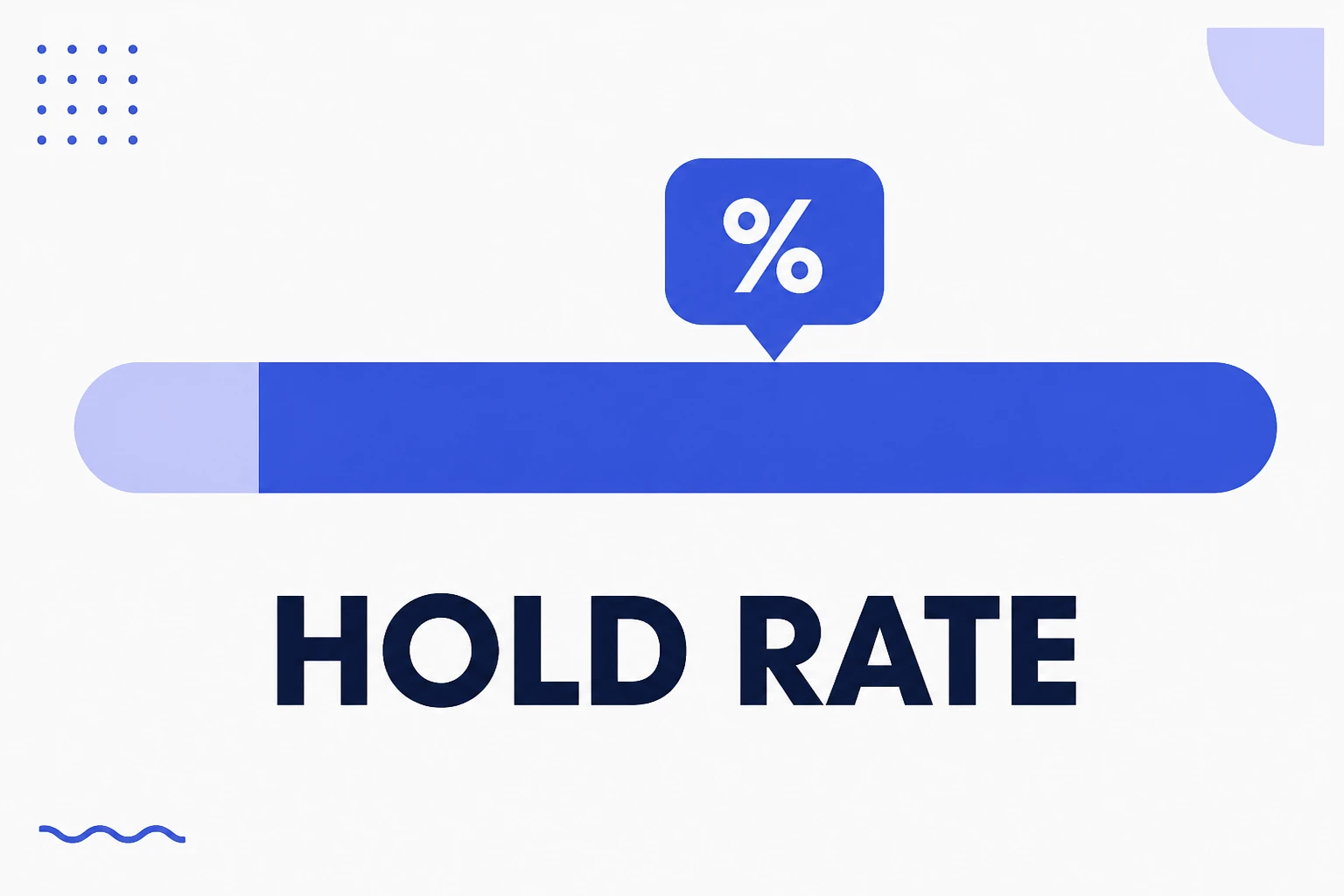
Hold rate
Hold rate is the percentage of people who kept watching after getting past the first seconds, meaning how many of those the hook caught made it to the end. It is the natural pair of hook rate: while the hook measures whether the opening grabbed, the hold measures whether the content sustained. Separating the two is what tells you whether to rewrite the opening or re-edit the middle.
Read the entry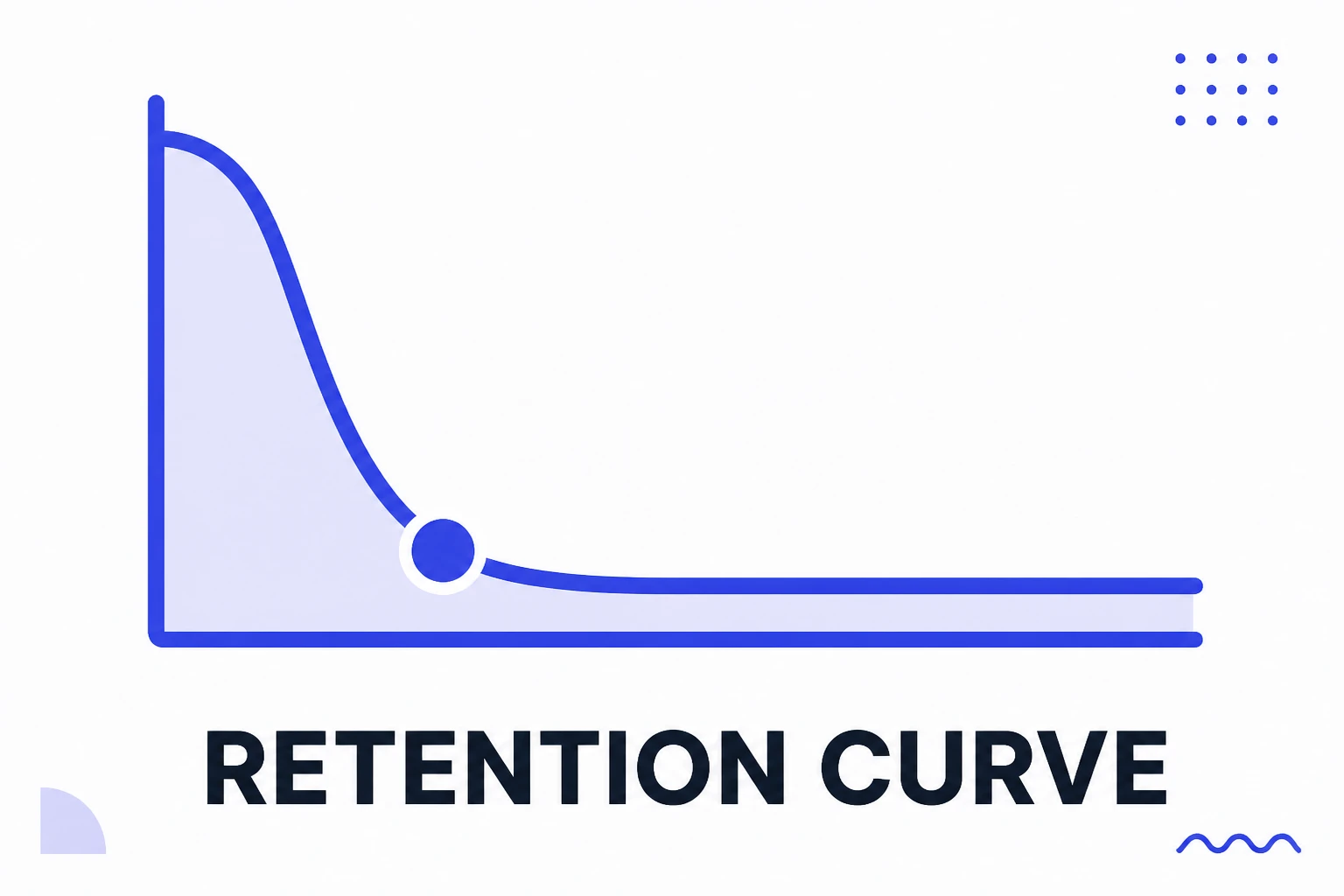
Retention curve
The retention curve is the chart showing what percentage of the audience was still watching at each second of a video. Unlike average retention, which compresses everything into one number, the curve shows the exact location of the loss, and it is the only video metric that points at what to fix rather than merely reporting that something is wrong.
Read the entry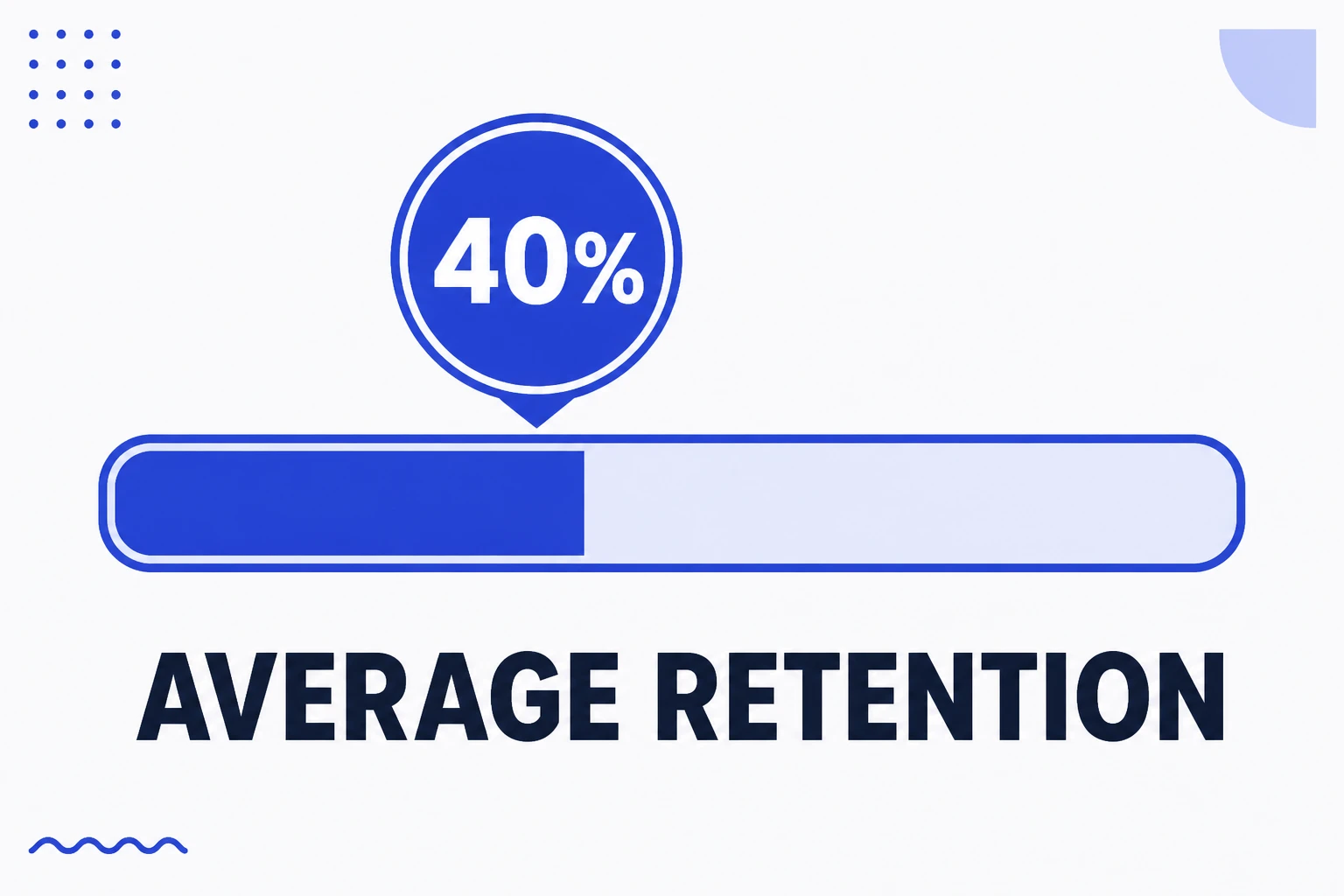
Average retention
Average retention is the percentage of a video people watched, on average, before leaving. It is the percentage version of watch time, and it exists to make videos of different lengths comparable. It falls naturally as a video gets longer, which means comparing a ten-second Reel with a one-minute one using the same number is a misreading.
Read the entry