Conteúdo evergreen: o que continua valendo daqui a um ano, e por que ele rende mais

Por Tiago Costa·Atualizado em 5 de agosto de 2026
Definição
Conteúdo evergreen continua valendo muito depois de publicado.
- Não depende de data, novidade nem contexto do momento.
- Rende no acumulado, não no pico das primeiras horas.
- Alimenta a busca, que hoje é canal de descoberta contínuo.
- Reaproveitável. Pode voltar ao ar sem soar velho.
O que é
Evergreen é o conteúdo cuja validade não expira. O teste é simples e literal: se alguém encontrar isso daqui a um ano, ainda ajuda? Se a resposta é sim, é evergreen.
Exemplos que passam no teste: como algo funciona, o erro clássico de um nicho, a explicação de um conceito, o passo a passo de um processo, a resposta à pergunta que todo cliente faz.
Exemplos que não passam: reação a uma notícia, participação numa tendência, promoção com prazo, comentário sobre um lançamento. Nada disso é ruim, só tem outro papel.
Por que ele rende mais no acumulado
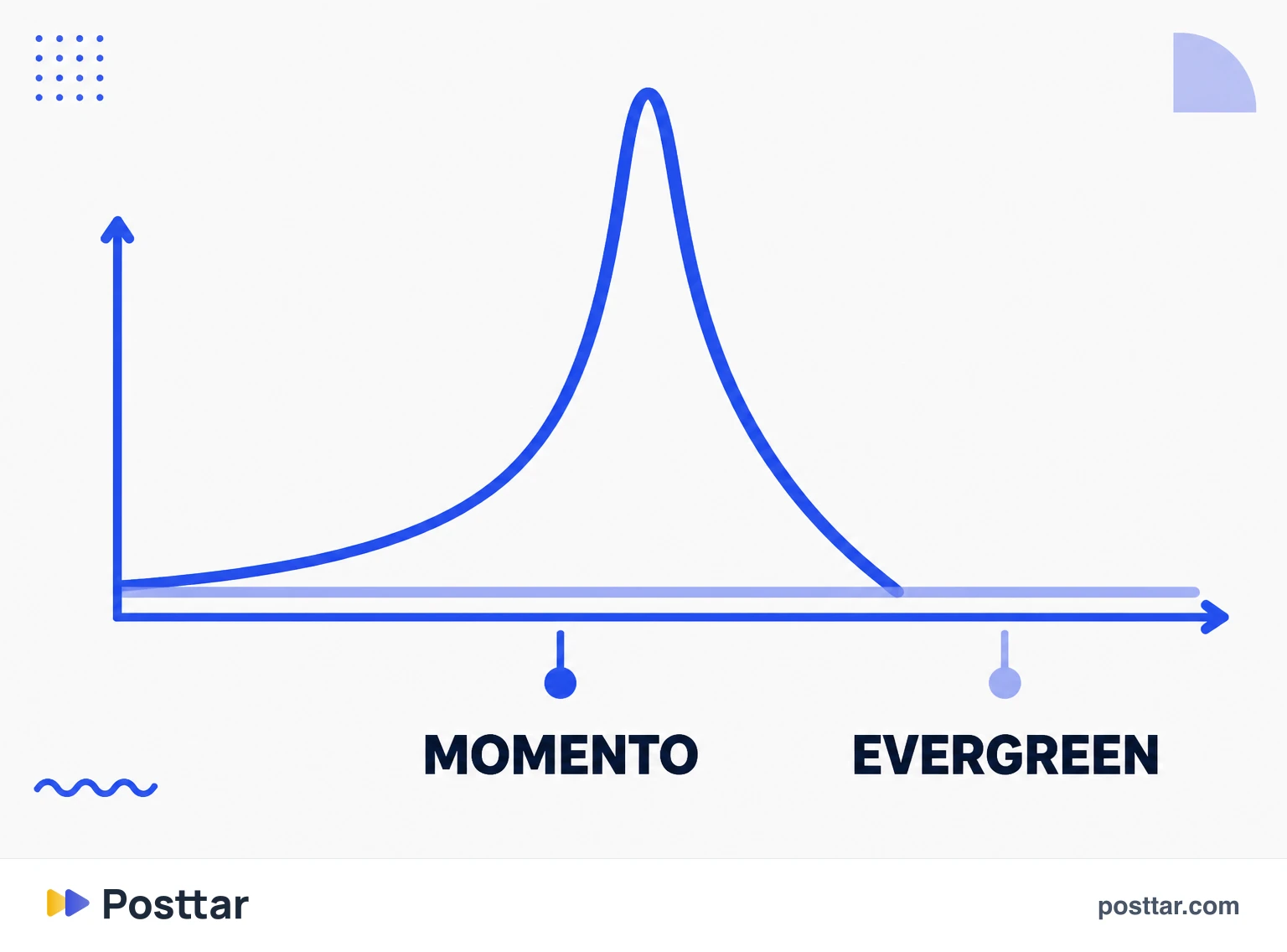
As duas curvas são completamente diferentes.
O conteúdo de momento tem pico alto e queda rápida: entrega quase tudo nas primeiras 48 horas e depois vira arquivo morto. O evergreen tem pico mais baixo e cauda longa: continua recebendo alcance semanas e meses depois.
Três coisas mantêm essa cauda viva:
- Busca. Com a busca interna indexando texto, cada peça virou porta de entrada permanente para quem procura o assunto.
- Explorar. Uma peça que continua sendo salva e compartilhada continua sendo recomendada.
- Reuso. Ela pode voltar como destaque, ser recortada em outro formato ou ser republicada meses depois sem soar velha.
Como identificar os seus temas evergreen
Não precisa inventar, é só olhar onde a repetição já acontece:
- O que perguntam no Direct. Pergunta que se repete é definição de evergreen: ela vai continuar sendo feita.
- Suas peças antigas que ainda recebem salvamento. Salvamento em conteúdo velho é o sinal mais limpo de que ele continua útil.
- O que você explica em toda reunião de venda. Se você repete de viva voz, cabe em conteúdo.
- O erro que você vê todo mundo cometendo. Erro de nicho costuma durar anos.
A proporção com o conteúdo do momento
Não é escolha entre um e outro, é mistura. Os dois fazem trabalhos diferentes: o de momento traz pico de atenção e mostra que a conta está viva; o evergreen sustenta o alcance nos dias em que você não publicou nada bombástico.
Uma conta só de tendência vive de sobressalto e recomeça toda semana. Uma conta só de evergreen fica previsível e perde a oportunidade de pegar onda.
Não existe proporção universal, mas existe um sintoma: se você olha os últimos trinta dias e quase nada continuaria fazendo sentido daqui a um ano, o acumulado da conta não está sendo construído.

Checklist
- Aplico o teste do "isso ainda ajuda daqui a um ano".
- Tenho tema evergreen vindo das perguntas do Direct.
- Olho quais peças antigas ainda recebem salvamento.
- Reaproveito o evergreen em destaque e em outros formatos.
- Não julgo evergreen pelo desempenho das primeiras 48 horas.
Perguntas frequentes
O que é conteúdo evergreen?
É o conteúdo que continua verdadeiro e útil muito depois de publicado, sem depender de data, novidade ou contexto do momento. O teste é direto: se alguém encontrar aquilo daqui a um ano, ainda ajuda.
O que significa o termo evergreen?
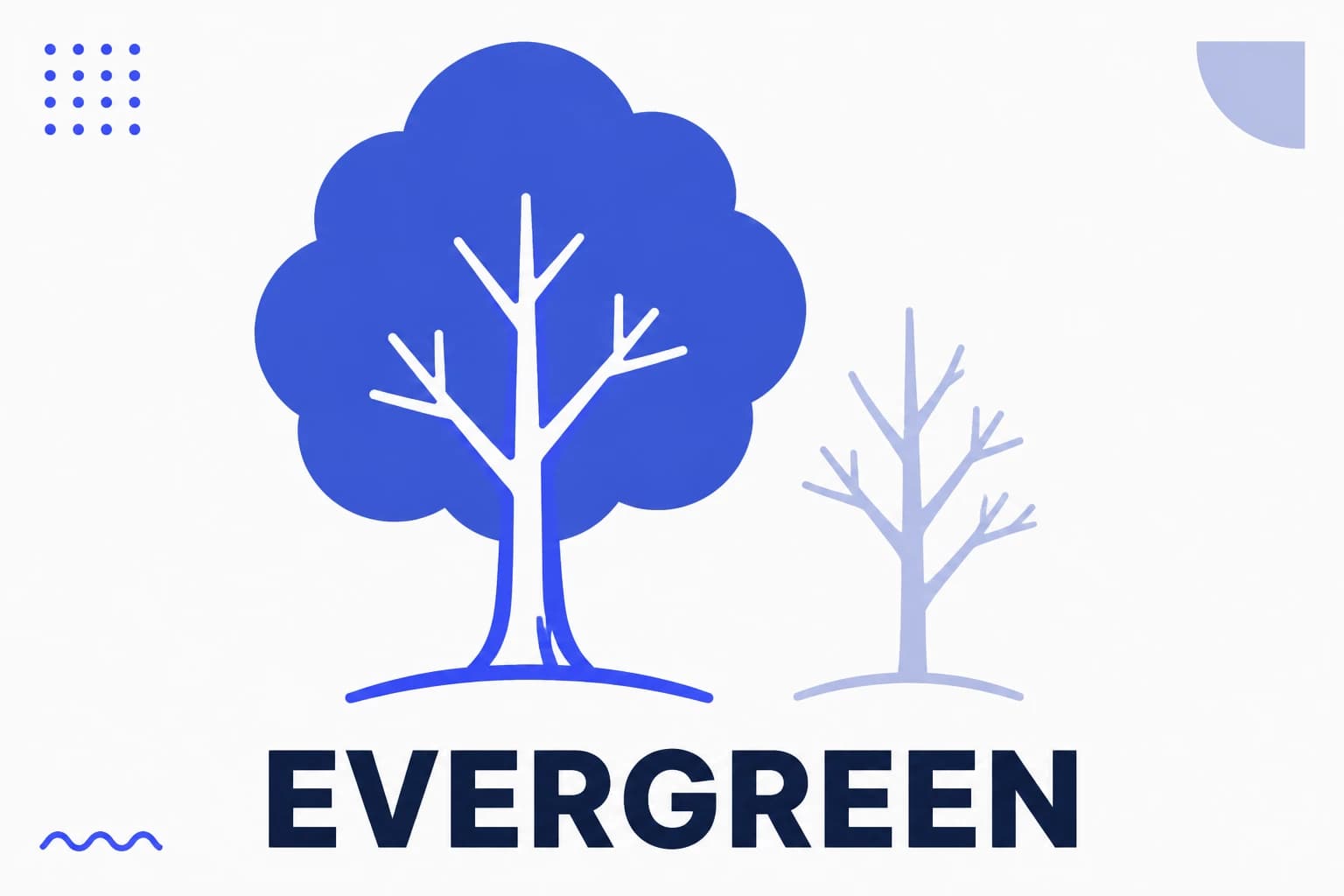
Vem das árvores que não perdem as folhas e permanecem verdes o ano inteiro. Aplicado a conteúdo, descreve a peça que não murcha com o tempo e continua rendendo depois da janela inicial de publicação.
Quais são exemplos de conteúdo evergreen?
Como algo funciona, o erro clássico de um nicho, a explicação de um conceito, o passo a passo de um processo e a resposta à pergunta que todo cliente faz. O oposto seria reação a notícia, participação em tendência ou promoção com prazo.
Como fazer conteúdo evergreen?
Comece pelas perguntas que se repetem no Direct e pelo que você explica em toda conversa de venda, porque repetição é a definição prática de evergreen. Evite datas, referências a novidades e qualquer coisa que precise de contexto do momento.
Conteúdo evergreen entrega menos?
Menos no pico e mais no acumulado. O conteúdo de momento entrega quase tudo em 48 horas e vira arquivo morto; o evergreen tem pico menor e cauda longa, seguindo encontrado pela busca e recomendado por semanas ou meses.
Conceitos relacionados

SEO no Instagram
SEO no Instagram é otimizar o perfil e as publicações para a busca interna da plataforma, que passou a funcionar com palavras em vez de depender só de hashtag. Hoje o sistema lê o campo de nome, o nome de usuário, a legenda, o texto na tela e o áudio transcrito. Isso transformou a busca num canal de descoberta contínuo, e é o canal menos disputado que existe dentro da plataforma.
Ler o verbete
Trendjacking
Trendjacking é pegar carona numa tendência já em circulação para levar a sua mensagem junto. Funciona porque a plataforma já está distribuindo aquele formato, áudio ou assunto, e entrar nele custa menos atenção do que criar algo do zero. O preço é a janela: tendência tem prazo de validade curto, e chegar atrasado transforma a carona em constrangimento.
Ler o verbete
Salvamentos
Salvamento é quando alguém arquiva a sua publicação para voltar a ela depois. É uma interação privada: não aparece na publicação, ninguém além de quem salvou fica sabendo, e você só vê o total agregado nos insights. Justamente por não ter componente social, ela é um dos sinais mais honestos que existem, porque a pessoa salva por utilidade própria, não para ser vista salvando.
Ler o verbete
Aba Explorar
A aba Explorar é a grade de descoberta do Instagram, formada quase inteiramente por conteúdo de contas que a pessoa não segue. Ela é montada individualmente: não existe uma versão única do Explorar, cada pessoa vê uma grade diferente construída a partir do próprio histórico de interação. Para quem publica, cair nela é a forma mais rápida de alcançar público novo em escala.
Ler o verbete