Instagram SEO: internal search became discovery, and almost nobody optimises for it

By Tiago Costa·Updated on August 5, 2026

Definition
Instagram SEO is optimising for the platform's internal search.
- Search reads text, it no longer depends only on hashtags.
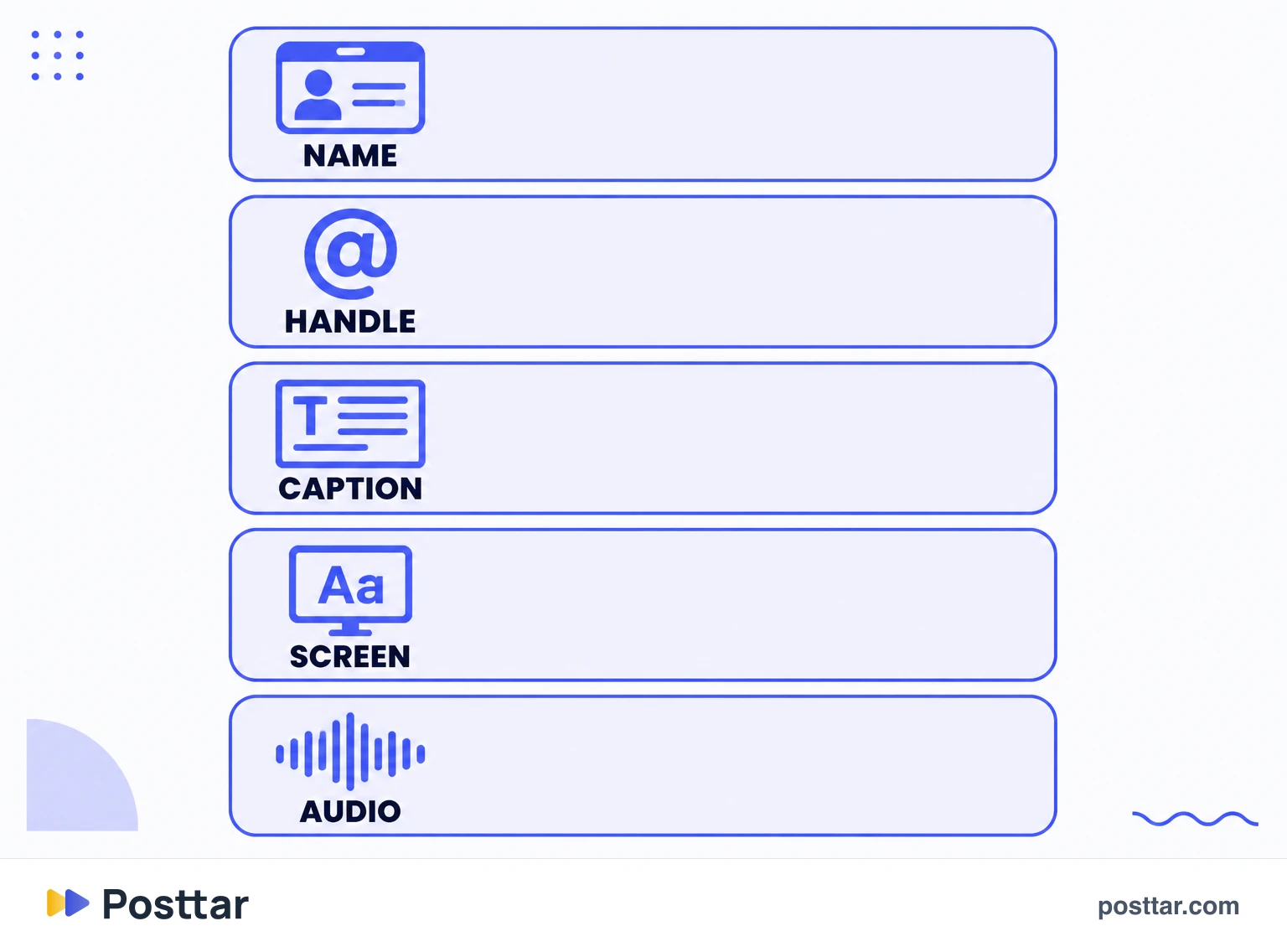
- Name field and handle weigh most on the profile.
- Caption, on screen text and audio feed the post's classification.
- It is the least contested discovery channel inside the app.
What changed in search
For years, searching inside Instagram only worked well for account names and hashtags. Searching an arbitrary phrase returned almost nothing useful.
That changed. Search began indexing words from the content, and results today mix accounts, posts and Reels relevant to the term. Alongside that, the system became able to understand what is inside a piece: transcribing audio, reading on screen text and interpreting the image.
The practical consequence is large. Every post became a permanent entry point for whoever searches the subject, rather than a piece that lives three days in the feed and dies.
The profile: name weighs, bio does not
This is where nearly everyone gets it wrong, and it is worth being blunt.
What internal search considers most strongly is the display name and the username. The body of the bio, in general, does not count the same way.
The market standard is the opposite: a bio stuffed with terms and a name field holding a personal name. Inverting that is the highest return and lowest effort change available on a profile.
The format that solves both sides is personal name, separator, category. Whoever searches for you finds you, and so does whoever searches for what you do.
The post: write to be understood
- State the subject in the caption's first line. It serves the person and the system at once.
- Write the term on screen. Text in video and in carousels is read, and it improves accessibility too.
- Say the term out loud. Audio is transcribed, so naming the subject in the video counts.
- Use alt text. Image description lives in advanced settings and almost nobody fills it in.
- Few and specific hashtags. They remain a context signal, they simply stopped being the main mechanism.
What Instagram SEO is not
Two common confusions deserve correcting:
- It is not the same as website SEO. There are no links, no domain, no external search engine indexing in the same way. What exists is in app search, with its own rules.
- It is not keyword stuffing. Repeating the term ten times in the caption worsens human reading and buys no position. The system already understands context without repetition.
And it is worth saying the "5-3-1 rule" circulates here too, usually attached to hashtags. It is a practitioner heuristic, not a confirmed platform criterion.

Checklist
- The term I want to be found by is in the name field.
- My caption states the subject in the first line.
- I write the term on screen and say it out loud in video.
- I fill in alt text for images.
- I do not repeat keywords expecting to gain position.
Frequently asked questions
How do you do SEO on Instagram?
Put the term you want to be found by in the name field, state the subject in the caption's first line, write the term on screen, say it out loud in video, and fill in the alt text for images.
Is Instagram SEO a thing?
Yes, since search began indexing words from the content rather than depending only on hashtags. The system reads the name field, the username, the caption, on screen text and transcribed audio, which turns each post into a permanent entry point.
Do keywords in the bio help?
Not much. What internal search weighs most is the display name and the username; the body of the bio, in general, does not count the same way. Most accounts do the opposite, and inverting it is the highest return change on a profile.
Is Instagram SEO the same as website SEO?
No. There are no links, no domain and no external search engine indexing in the same way. What exists is in app search with its own rules, where the name field, caption, on screen text and transcribed audio carry the weight.
What is the 5-3-1 rule on Instagram?
It is a practitioner heuristic about hashtag mix, usually five niche, three community and one brand. It is not an official platform rule nor a confirmed ranking criterion, and following the format does not change reach by itself.
Related concepts

Hashtag
A hashtag is a word or phrase without spaces preceded by the hash symbol, which the platform turns into a clickable label grouping all content marked with it. For years it was Instagram's main discovery mechanism. It is not any more: distribution came to depend on what the system understands from the content itself, and the hashtag became one context signal among several.
Read the entry
Display name
The display name is the bold text at the top of the profile, right above the bio. Unlike the username, it can repeat across accounts, accepts spaces, accents and emoji, and changing it breaks no links. What almost nobody uses to their advantage: it is indexed in Instagram's internal search, which makes it the best place on the profile for the word you want to be found by.
Read the entry
Explore page
The Explore page is Instagram's discovery grid, made almost entirely of content from accounts the person does not follow. It is assembled individually: there is no single version of Explore, each person sees a different grid built from their own interaction history. For publishers, landing on it is the fastest way to reach a new audience at scale.
Read the entry
Instagram caption
A caption is the text accompanying an Instagram post. It holds 2,200 characters, but only the first lines appear before the "more" button, which makes it a two layer format: the opening has to earn the tap, and the rest has to deliver what the opening promised. It is also the main place where the platform reads the subject of the piece as text.
Read the entry