Best time to post: yours, and why the internet chart does not apply

By Tiago Costa·Updated on August 5, 2026
Definition
The best time to post is when your audience is active.
- It is in your insights, not in an internet chart.
- It affects initial delivery, not final performance.
- It shifts by timezone, niche and day of week.
- It weighs less than the hook and the content.
Why ready made charts fail
Every year a chart of golden hours circulates, and it is useless for three concrete reasons.
- It is a global average. The average of millions of accounts across different niches describes none of them.
- It ignores your timezone and your audience's. An account in one country with an audience in another has completely different peaks.
- It is self defeating. If everyone posts at the recommended hour, that hour becomes the moment of highest competition for attention.
There is also a detail invalidating the question as usually asked: distribution today is not chronological. A post does not only appear to people online that minute; it keeps being delivered for hours and days.
Where to find yours
The data exists and is free: inside Instagram Insights, in the audience section, there is information on the hours and days your followers are most active.
How to use it without fooling yourself:
- It needs a base. With few followers the data is noisy and not worth trusting.
- Look by day of week. Tuesday's peak usually differs from Sunday's, and the average hides that.
- Check the timezone. If much of the audience sits in another country, the displayed hour may not mean what you assume.
- Post slightly before the peak. The idea is for the piece to already be in distribution when the volume of people arrives.
How much timing actually weighs
Worth calibrating expectations, because the subject receives disproportionate attention.
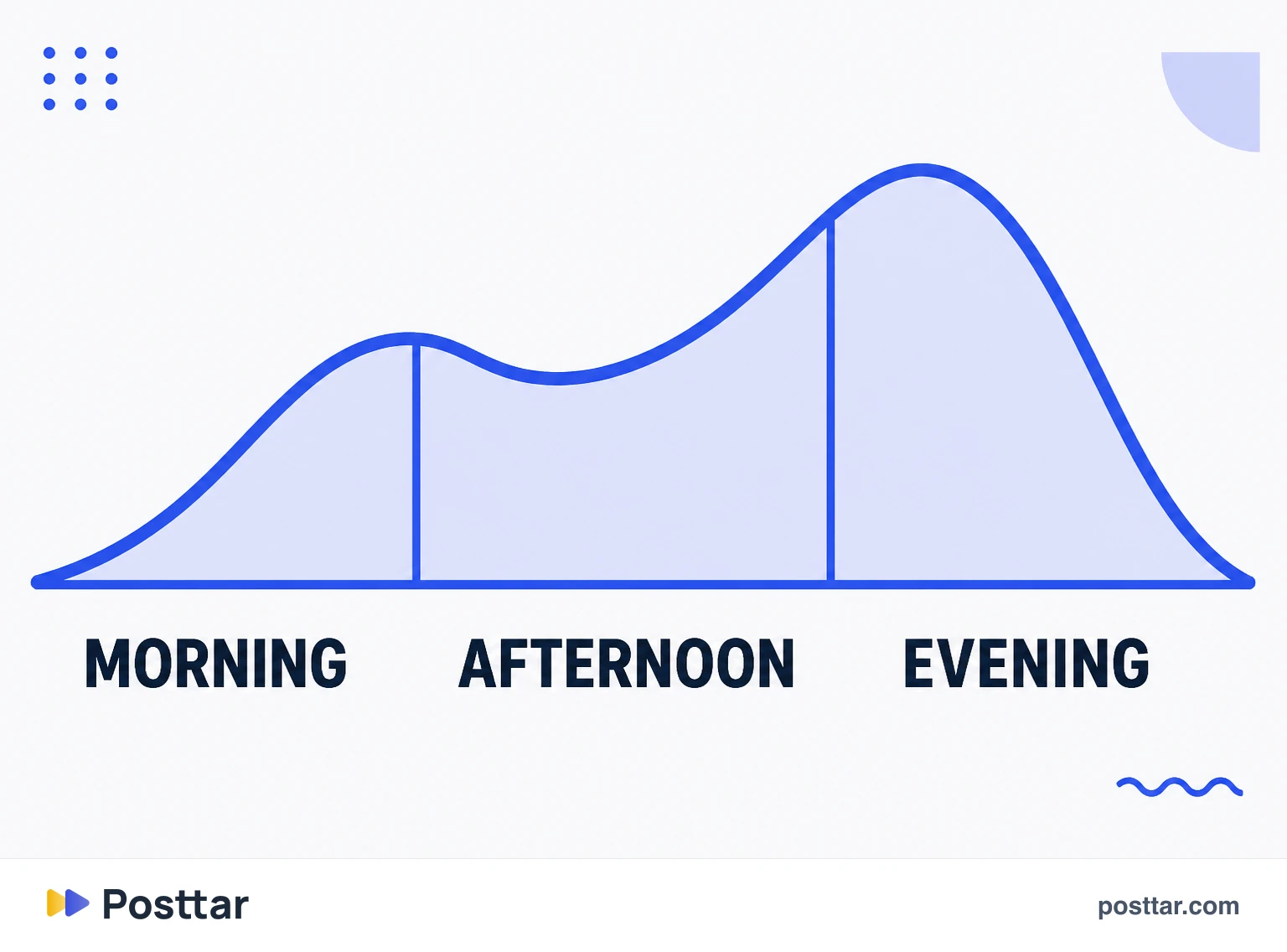
Timing influences initial delivery: posting when more people are active raises the chance of quick engagement, and quick engagement is what signals to the system that expanding delivery is worthwhile.
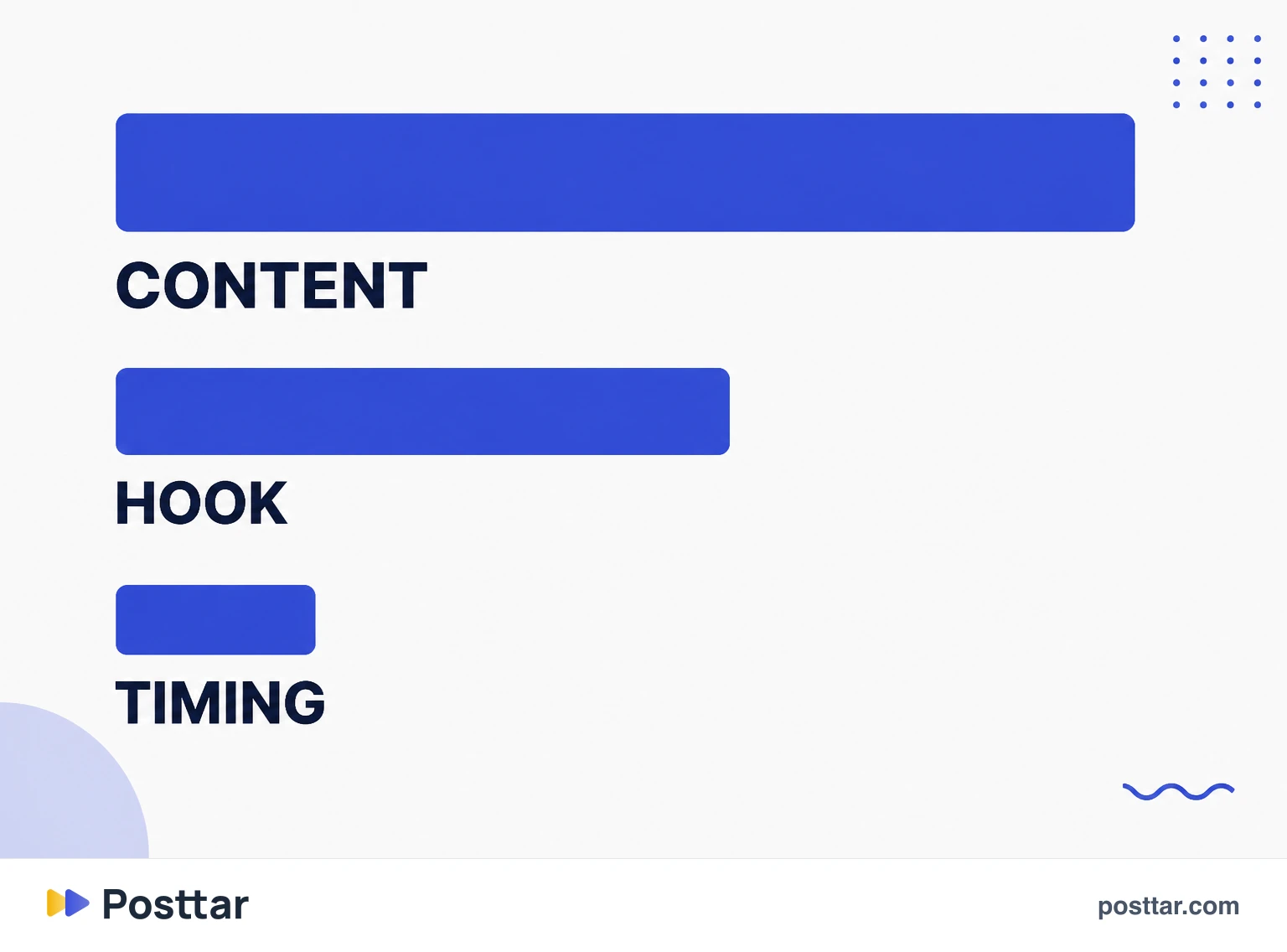
But it is a small multiplier on a much larger variable. A weak hook posted at the perfect hour is still a weak hook. In order of importance, timing sits well below content, hook and format.
The practical conclusion is economic: spending an hour improving the hook returns more than spending an hour choosing the time.
How to actually test it
If you want to take it seriously, the method is simple and takes a few weeks:
- Pick two clearly distinct hours, not two neighbouring ones.
- Alternate across several weeks, keeping content type similar.
- Compare averages, not isolated pieces. One piece that took off distorts everything.
- Look at reach in the first hours, which is what timing affects, rather than the total accumulated over days.
And accept the likeliest result: for most accounts the difference is small. That is useful information, because it frees attention for what changes more.
Checklist
- I use my own profile data, not an internet chart.
- I look by day of week, not only at the average.
- I checked my audience's timezone.
- I know timing affects initial delivery, not the final result.
- I prioritise hook and content before optimising timing.
Frequently asked questions
What is the best time of day to post on Instagram?
The hour when your specific audience is most active, which appears in your profile insights under the audience section. The global charts that circulate are averages of millions of accounts and do not describe yours.
What is the most active time on Instagram?
It varies by niche, country and day of week, which is why a single answer does not exist. Your own insights show the hours and days your followers are most active, and that is the only figure worth acting on.
Does posting time affect reach?
It affects initial delivery, which is the post's first test. But it is a small multiplier: good content at a bad hour still works, and bad content at the perfect hour is still bad.
What is the best day to post on Instagram?
It depends on the niche and the audience, and the data sits in your own insights. Professional account activity patterns usually differ considerably from entertainment ones, so your profile's answer is the only reliable one.
Is there a time that makes Reels go viral?
No. Timing affects only the start of distribution; what decides virality is retention and sharing. Improving the hook returns more than optimising the posting hour.
Related concepts
Posting frequency
Posting frequency is how many pieces an account publishes per period. There is no universal number, and anyone promising one is selling simplification: the right answer depends on the format, the niche and, above all, what you can sustain. Consistency weighs more than volume, because an account posting three times a week for a year returns more than one posting daily for a month then vanishing.
Read the entry
Instagram Insights
Instagram Insights is the native metrics panel for professional accounts. It gathers reach, views, interactions, audience data and profile activity, at no cost, inside the app itself. Two limitations define how to work with it: the data window is short, so history erases itself, and nothing there identifies people, which settles upfront every question about who saw or who visited.
Read the entry
Reach
Reach is the number of unique accounts that saw a piece of content at least once. Unlike impressions, it does not count the same person twice, so it measures the size of the audience touched rather than the volume of exposure. On Instagram, reach is reported per post and per period, and it can be split between followers and non followers, which is the reading that shows whether a profile is discovering new people or simply circulating among those who already follow it.
Read the entry
Content calendar
A content calendar is the document organising what will be published, when and in which format. It solves content production's most expensive problem, which is deciding the topic on publishing day, when there is time neither to think nor to produce properly. Most calendars are abandoned within three weeks, and the reason is almost always the same: it was built as a calendar rather than as a production queue.
Read the entry