Bottom of funnel: the content that closes, and why low reach there is normal

By Tiago Costa·Updated on August 5, 2026
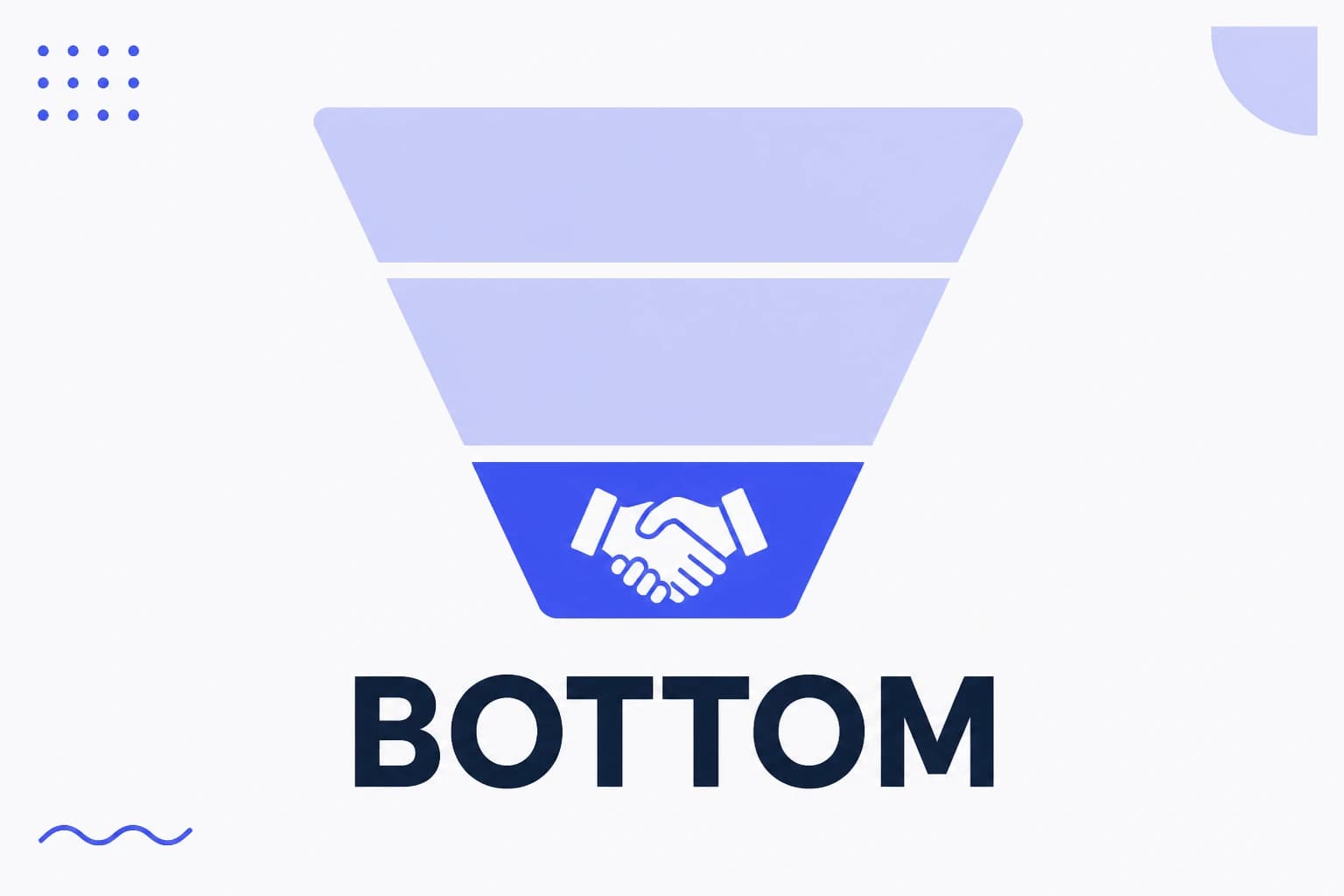
Definition
Bottom of funnel is content for people choosing whom to buy from.
- It reaches few by nature, and that is expected.
- It converts more than any other stage.
- Concrete proof is worth more than adjectives.
- It has to exist always, not only during launches.
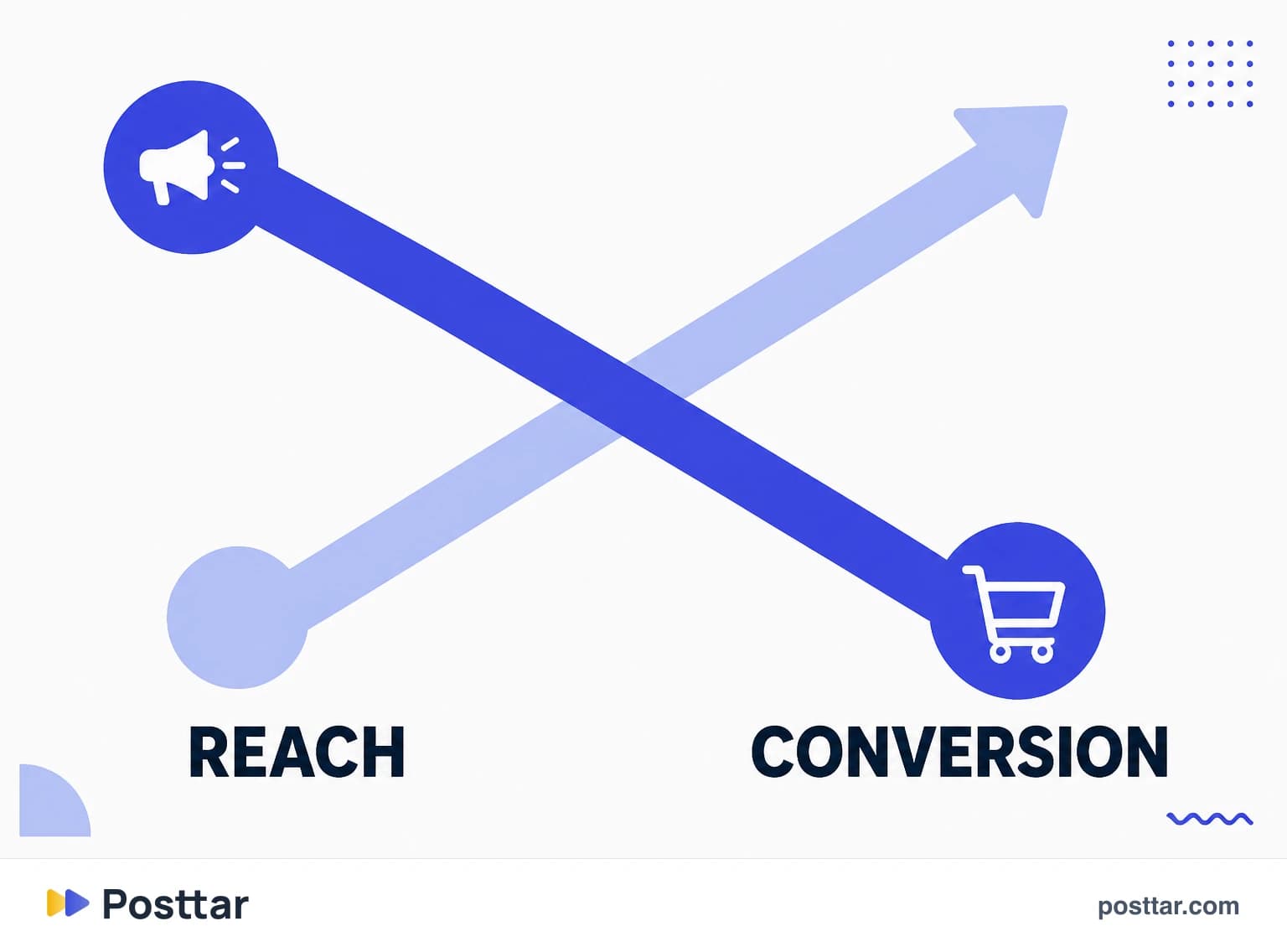
Why it reaches few
This is not a failure, it is the consequence of two things.
The audience is smaller. People at the point of deciding a specific purchase are a small slice of any audience at any given moment.
Commercial content engages less. An offer generates fewer shares and fewer comments than an educational piece, and since early engagement feeds distribution, reach comes out lower.
The conclusion many people draw from this is wrong: "bottom does not work". It works, just not by the same metrics. Judging bottom content by reach is like judging a closing meeting by the number of people in the room.
What to produce
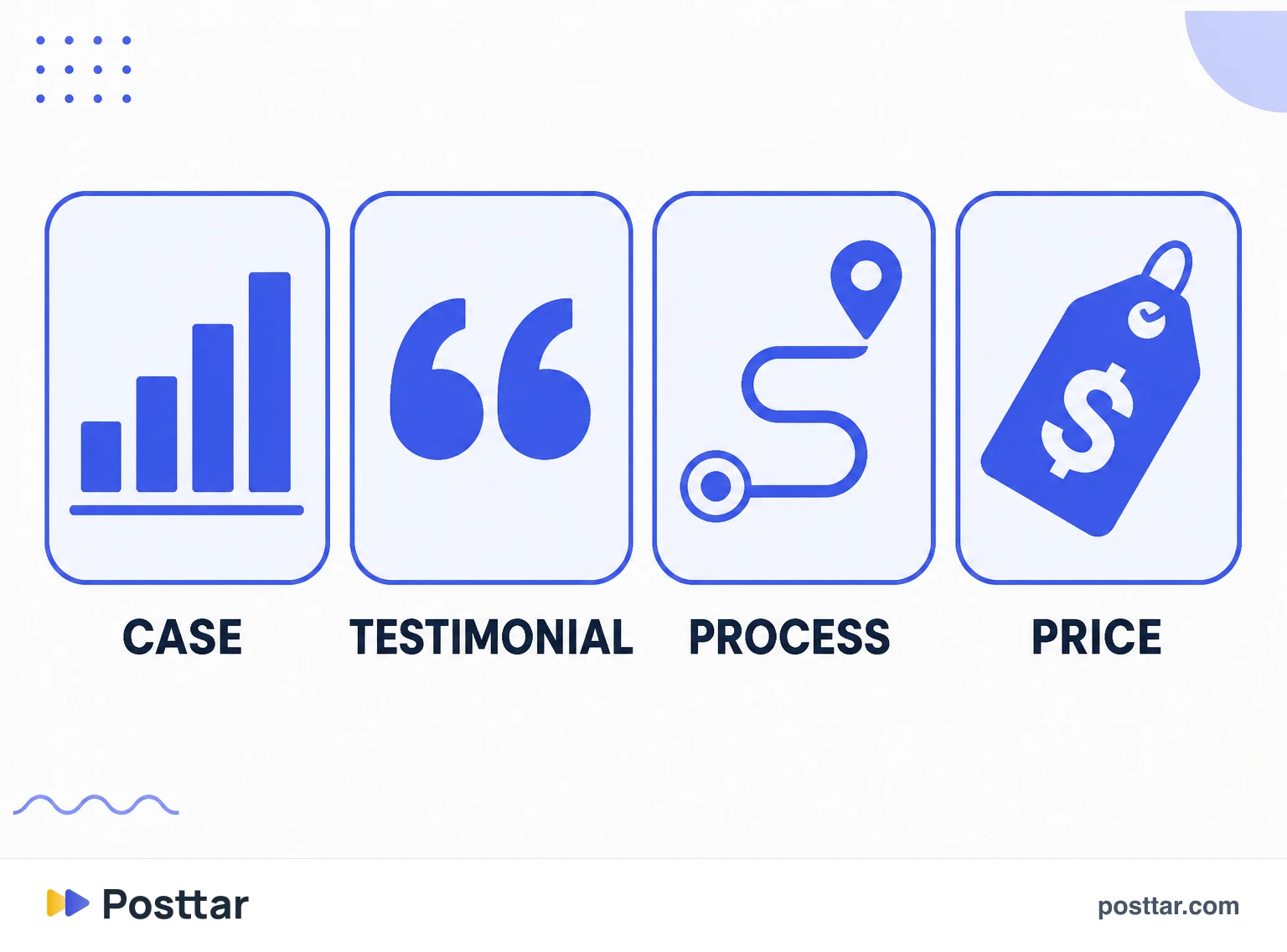
- A client case with numbers. The strongest bottom piece there is. Starting situation, what was done, result with concrete data.
- Testimonials. Better on video and better when specific. "I recommend it" proves nothing; "I solved X in Y weeks" does.
- How working with you works. The stages, the timeline, what the person has to provide. It removes fear of the unknown.
- Pricing and what is included. Hiding the price filters less than people think and tires more than they imagine.
- Answers to final objections. Guarantees, timelines, what happens if it does not work.
How to measure it
Bottom metrics are business metrics, not social media ones:
- Conversations started. How many inbox messages arrived referencing that content.
- Link clicks. When there is a conversion destination.
- Proposals sent and closed. What actually matters.
A comparison that orients well: a bottom piece with a thousand views and three conversations is worth more than a top piece with fifty thousand views and none. If you measure only reach, you conclude the opposite.
How often to publish it
The mistake runs in both directions.
Publishing only during launches concentrates everything in one window and disappears the rest of the time. The problem is that purchase decisions do not follow your calendar: someone may be ready on an ordinary Tuesday, and with no bottom content live, they do not know what to do.
Publishing only bottom tires the audience and blocks growth, because a newcomer has no reason to follow an account that only makes offers.
The balance that works is constant bottom content in low proportion, intensified during commercial windows. And remember that the bio, the highlights and the link are permanent bottom: they work every day without occupying feed space.
Checklist
- I know low reach here is expected.
- I measure by conversations started, not by views.
- My client cases carry numbers, not just praise.
- Bottom content exists even outside launches.
- My highlights work as permanent bottom content.
Frequently asked questions
What is bottom of funnel content?
It is content for people who already decided to solve the problem and are choosing whom to solve it with. It deals with proof, pricing, guarantees and offer detail. It reaches least and converts most.
What content belongs at the bottom of the funnel?
A client case with numbers, a specific testimonial, an explanation of how working with you works, pricing and what is included, and answers to final objections such as guarantees and timelines.
Why does my bottom of funnel content reach so few people?
Because the audience at the decision point is a small slice at any moment, and because commercial content generates fewer shares and comments, which reduces distribution. Low reach here is expected rather than a failure.
How do you measure bottom of funnel content?
By conversations started, link clicks and proposals closed. A piece with a thousand views and three conversations is worth more than a top piece with fifty thousand and none, and measuring only reach leads to the opposite conclusion.
How often should you publish bottom of funnel content?
In a low but constant proportion, intensified during commercial windows. Publishing only during launches leaves whoever decided on an ordinary Tuesday with nowhere to go; publishing only bottom tires the audience and blocks growth.
Related concepts
Content funnel
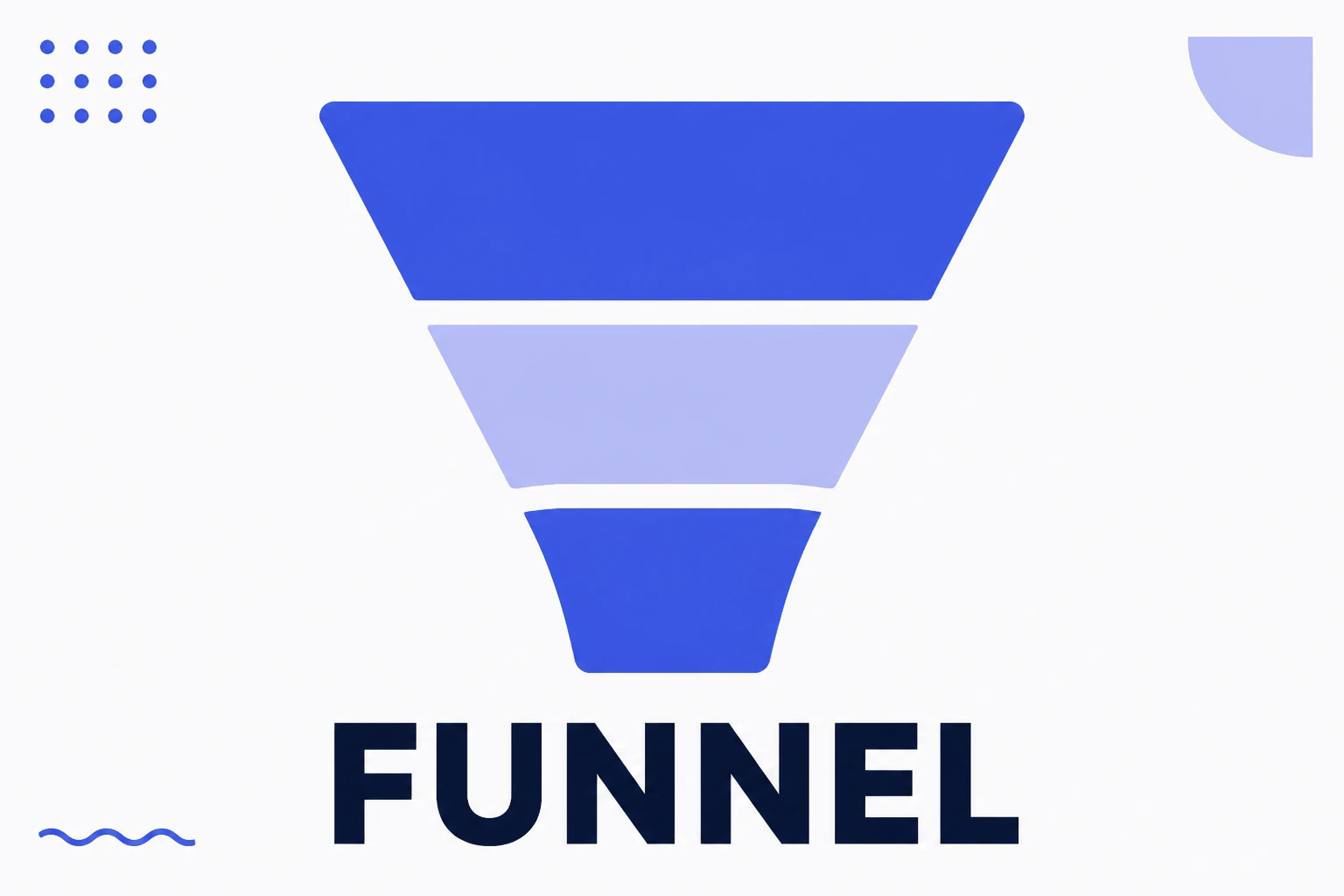
A content funnel organises pieces according to the consumer's decision stage: top for people who do not yet know the problem, middle for people already looking for a solution, bottom for people deciding. It solves the most common imbalance in professional accounts, which is producing only one type, and therefore growing without selling or selling without growing.
Read the entry
Middle of funnel
Middle of funnel is content for people who already recognise the problem and are evaluating how to solve it. It is the most forgotten of the three stages, because it has neither the reach of the top nor the direct selling of the bottom, and so appears to return nothing. In practice it is the deciding one: it is where people form their opinion about which path to take, and therefore about whom to take it with.
Read the entry
Top of funnel
Top of funnel is content made for people who do not know you yet, and frequently do not know they have the problem you solve. It is the broadest stage and the only one bringing new people in, which makes it the growth source of an account. In exchange, it is the one that sells least directly, and trying to sell there is the mistake that most destroys this stage reach.
Read the entry
Link clicks
Link clicks is the number of taps on the clickable links of a profile and Stories: the bio link, action buttons and the link sticker. It is the metric that closes the funnel inside Instagram, because it marks the moment someone leaves the app. The insights number almost never matches your website analytics, and the reasons for that are well known and do not indicate an error.
Read the entry