Creative brief: the document that prevents rework, and why it must say what not to do

By Tiago Costa·Updated on August 5, 2026
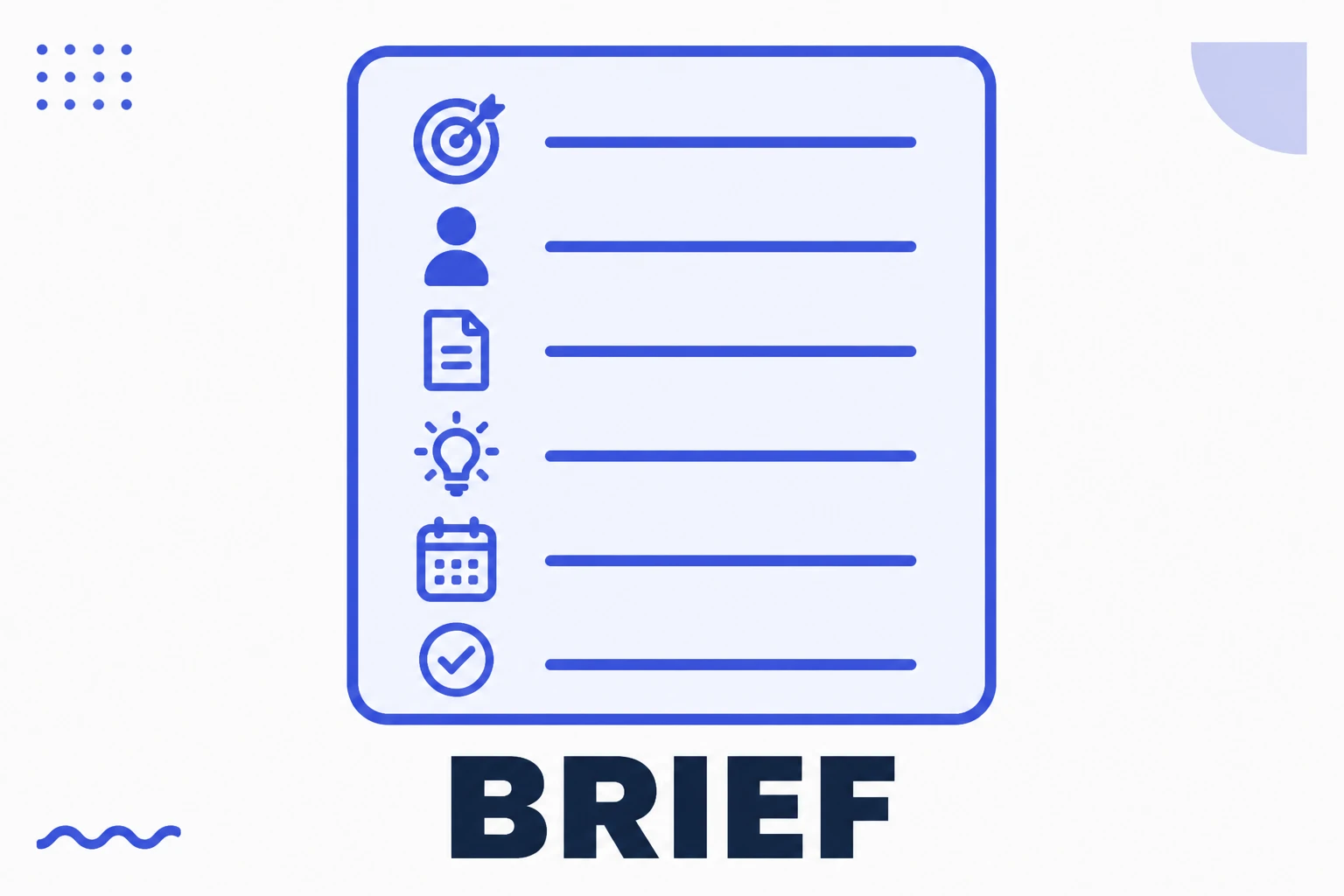
Definition
A brief defines what to produce, for whom and with what objective.
- It prevents rework, the operation's most invisible cost.
- It describes the problem, not the visual solution.
- It must say what not to do, and it almost never does.
- Short and specific beats long and generic.
What it solves
The cost a brief attacks is rework, and it is expensive precisely because it is invisible: nobody counts the three discarded versions of a video, but they cost real time.
Rework almost always has the same origin: whoever produced and whoever asked had different images in their heads, and the divergence only surfaced once the piece was finished.
The brief exists to make that divergence visible beforehand, when correcting it costs one sentence instead of one day of work.
And that holds even for people working alone. A brief written to yourself prevents the version of the problem where you change your mind mid edit.
What it needs to contain
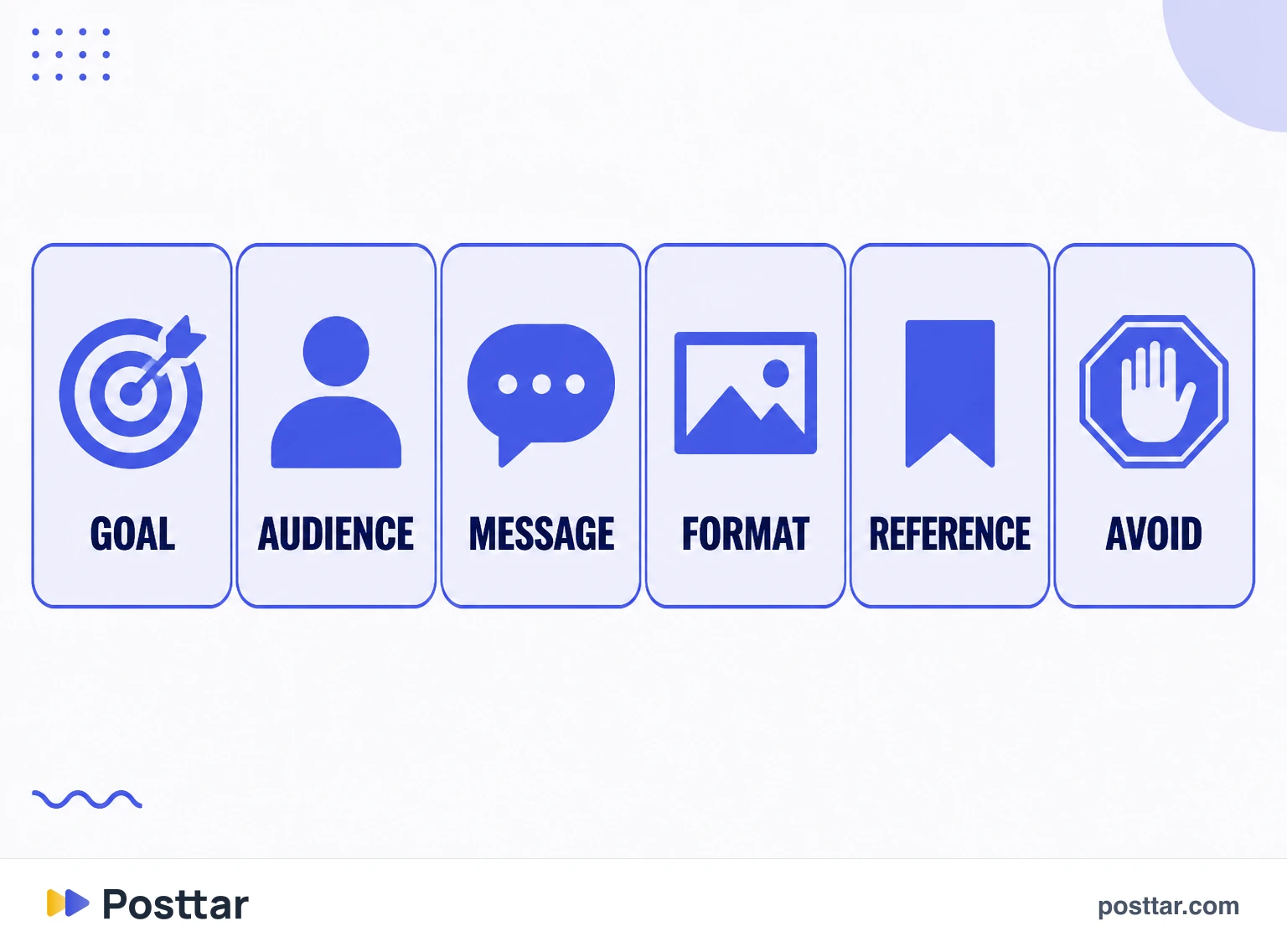
Six items cover almost everything, and more than that tends to become bureaucracy:
- Objective. What this piece has to produce: attract, educate, convert. Without it there is no way to judge the result.
- Audience. For whom specifically, and at what awareness stage.
- Main message. The single thing the person has to take away. If there are three, the brief is wrong.
- Format and duration. The technical constraint, defined up front rather than afterwards.
- References. One or two, with an explanation of what exactly in them applies.
- What not to do. The most important item and the most forgotten.
Why "what not to do" is the deciding item
This is the point separating a useful brief from a decorative one.
Saying what to do leaves an enormous interpretive space. Saying what not to do closes that space exactly where divergence tends to happen.
Examples of what goes there: do not use institutional tone, do not name competitors, do not exceed thirty seconds, do not use music with lyrics, do not promise results, do not publish without captions.
The source of those items is history. Every correction you have already made twice should be written as a constraint, because a third time is avoidable.
Mistakes that hollow out a brief
- Describing the solution, not the problem. "Make a blue ten slide carousel" removes the chance of the producer suggesting something better.
- References with no explanation. Sending a link without saying what in it applies produces a copy of what you did not want.
- Too long. A three page brief goes unread, and an unread brief does not exist.
- A vague objective. "Engagement" is not an objective, it is a category. An objective is what the piece has to make happen.
- Written afterwards. A brief produced to justify an already finished piece serves nothing.
Checklist
- There is a concrete objective, not a category.
- The main message is a single one.
- What not to do is written down.
- References come with an explanation of what applies.
- It fits on one page and was written before production.
Frequently asked questions
What is a creative brief?
It is the document defining what needs producing, for whom and with what objective, before production starts. It exists to prevent rework, the most expensive and most invisible cost in a content operation.
What should a brief include?
Objective, audience, main message, format and duration, one or two explained references, and what not to do. That last item is the most important and most forgotten, because it is where divergence tends to happen.
How do you write a brief?
Describe the problem the piece solves rather than the piece itself, define a single main message, list explicit constraints and keep it to one page. A long brief goes unread, and an unread brief does not exist.
Do I need a brief if I work alone?
Yes, and it solves a different problem. Written to yourself, a brief prevents the version where you change your mind mid edit, which is the most common form of rework in a solo operation.
Why include what not to do?
Because stating what to do leaves an enormous interpretive space, and divergence happens exactly there. Every correction you have already made twice should become a written constraint, so there is no third time.
Related concepts
Video script
A video script is the document defining what will be said and shown in a video before recording begins. In short content it is almost never read word for word, but writing beforehand changes the result anyway: it forces the hook to be decided, cuts rambling and reduces the number of takes. The arithmetic is simple, a script costs ten minutes and saves an hour of editing.
Read the entry
Editorial line
An editorial line is the point of view running through everything an account publishes: what it defends, what it fights and how it speaks. While pillars define what you post about, the editorial line defines which side you are on inside those subjects. It is what makes two accounts in the same niche, covering the same topics, sound completely different.
Read the entry
Content calendar
A content calendar is the document organising what will be published, when and in which format. It solves content production's most expensive problem, which is deciding the topic on publishing day, when there is time neither to think nor to produce properly. Most calendars are abandoned within three weeks, and the reason is almost always the same: it was built as a calendar rather than as a production queue.
Read the entry
Swipe file
A swipe file is a personal archive of references that worked: ads, hooks, structures, covers and pieces that caught your attention and are worth studying. The name comes from advertising jargon and does not mean copying, it means keeping a repertoire of tested solutions within reach. One thing separates a useful swipe file from a folder of screenshots: the note explaining why.
Read the entry