Swipe file: the reference archive that solves the blank page, and the copying line

By Tiago Costa·Updated on August 5, 2026
Definition
A swipe file is a personal archive of references that worked.
- It solves the blank page with repertoire instead of inspiration.
- Noting the reason is mandatory, or it becomes a screenshot folder.
- Store structure, not the whole piece.
- Reference is not copying, and the line is structure versus execution.
What it is and where it comes from
Swipe file is an old advertising term, from when copywriters kept clippings of print ads that worked. The idea is the same today: keeping a repertoire of tested solutions to consult when you need to solve a similar problem.
It attacks a specific and common problem: the blank page. When you do not know how to open a video, the problem is rarely a lack of creativity; it is a lack of repertoire available at the moment you need it.
On the name, which causes confusion: "swipe" here has nothing to do with swiping a screen. It comes from the informal sense of borrowing, which is why the term carries an ambiguity worth confronting directly, as the last section does.
What to store
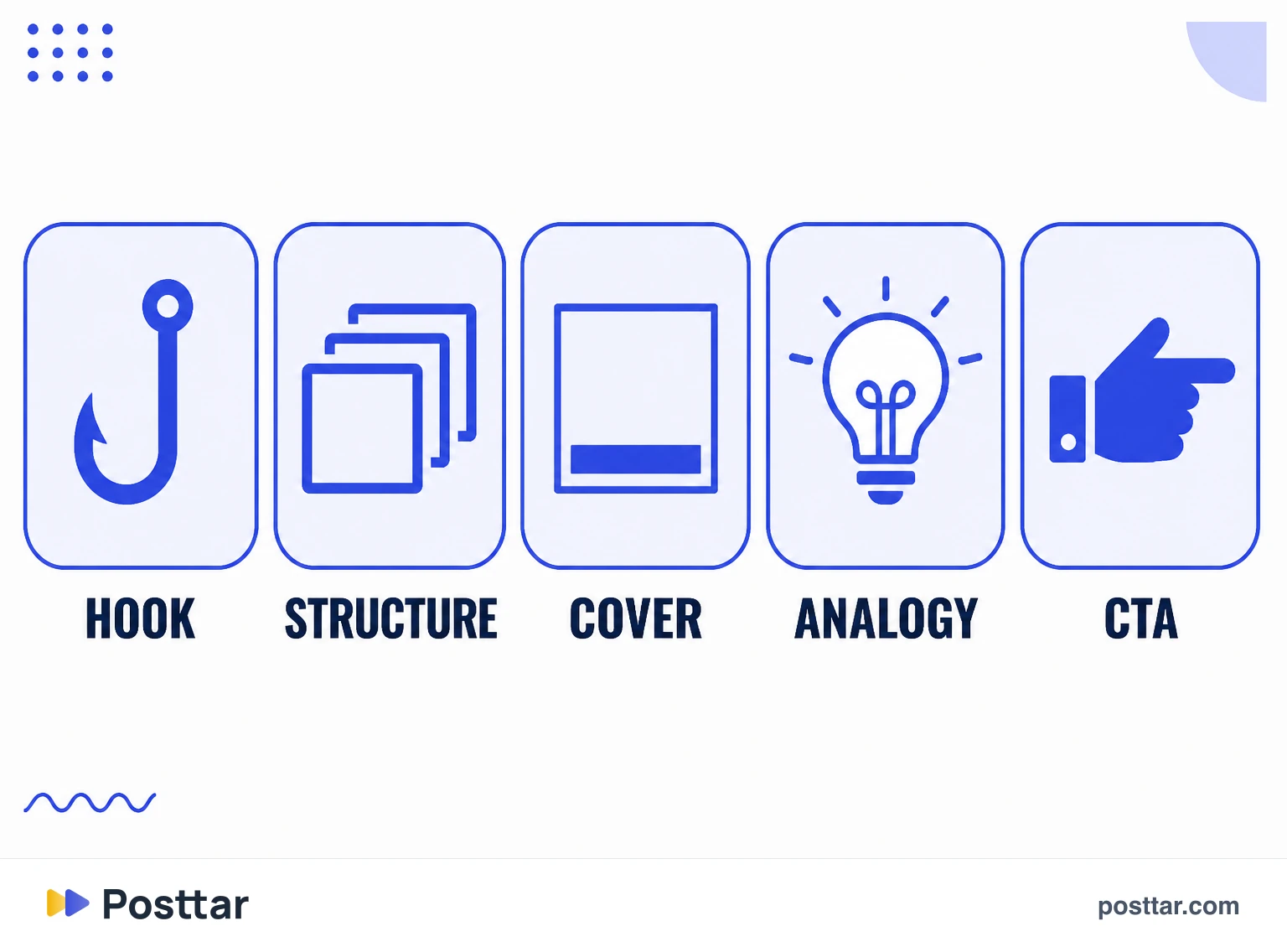
The temptation is to store beautiful pieces. What returns is storing solutions to problems. Five categories that work:
- Hooks. Openings that made you stop, with the exact sentence copied.
- Structures. The sequence of a carousel that held to the end, described in bullets.
- Covers. Opening slides that worked, and what in them worked.
- Ways of explaining. Analogies and metaphors that made something difficult comprehensible.
- Offers and CTAs. Requests that genuinely made you act.
One detail: store your own too. The pieces that performed best on your account are the best reference available, because they were already validated with your audience.
The note that makes the difference
Here is why most swipe files are useless.
Saving a piece without writing anything produces a folder with hundreds of items nobody consults, because searching them costs more than thinking from scratch.
One line solves it: why did this work? Not "I liked it", but the mechanism. "The hook denies a common belief in the first sentence." "The cover uses a number and a timeframe together." "The explanation uses an everyday analogy."
That note does three things: it makes the archive searchable by problem, it forces you to understand the mechanism rather than admire the result, and it turns the collection into learning.
The line between reference and copying
Worth being direct, because the term carries that ambiguity from its origin.
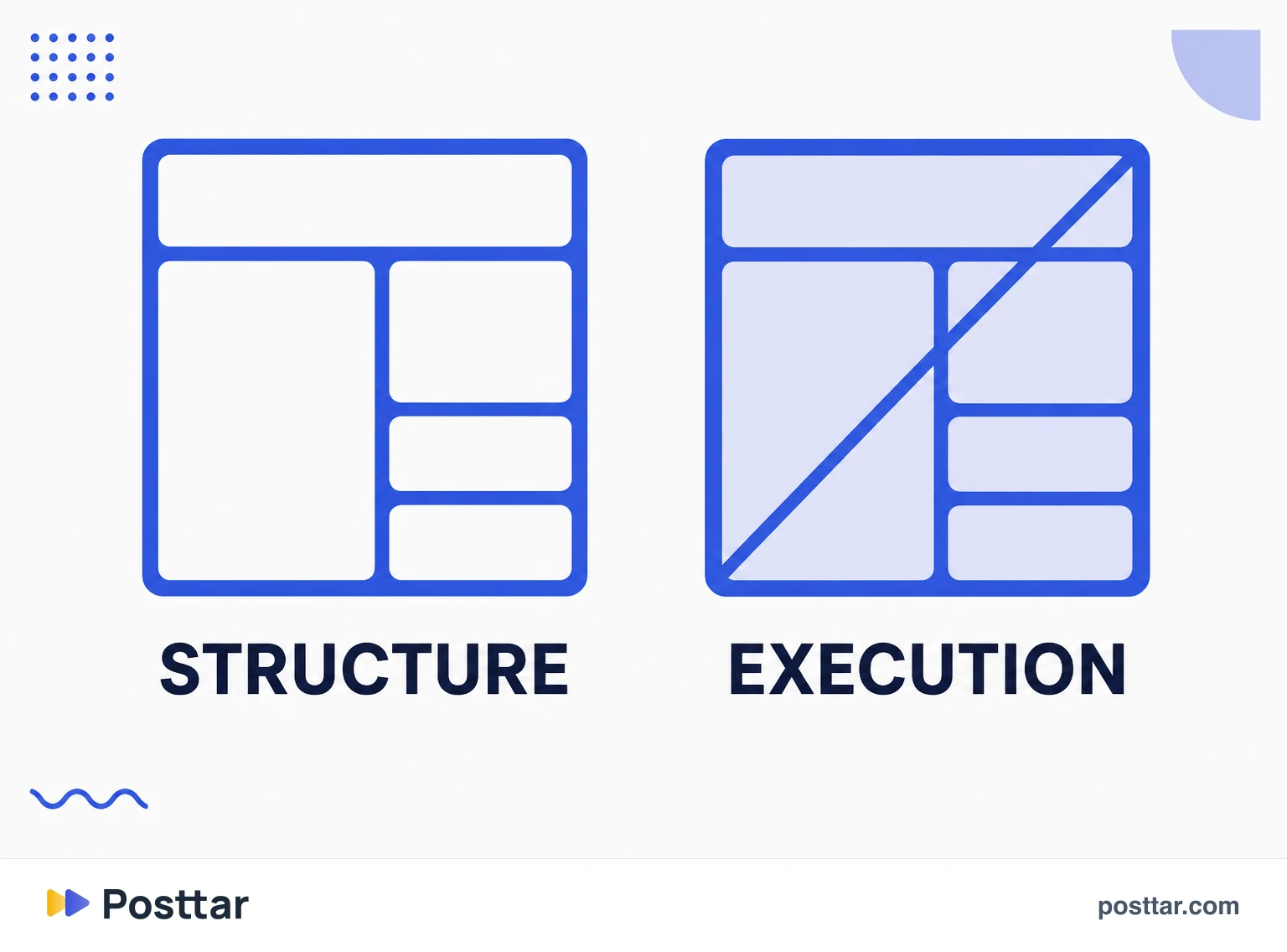
It is reference to use the structure, the mechanism, the type of approach. Structure belongs to nobody: the hook formula that denies a common belief is used by thousands of people.
It is copying to reproduce the execution: the specific text, the design, the whole piece with another logo. Beyond the ethical question, it does not work, because the original piece won in its context with its audience.
The practical test: if someone who saw the original recognises yours as the same content, you copied. If they recognise it as the same kind of content, you referenced.
Checklist
- Every saved reference has a line explaining why it worked.
- I store structure and mechanism, not the whole piece.
- The archive is organised by problem, not by author.
- I also store my own best performing pieces.
- I use the structure, never the execution.
Frequently asked questions
What is a swipe file?
It is a personal archive of references that worked: hooks, structures, covers and pieces worth studying. The term comes from print advertising, from when copywriters kept clippings of ads that delivered results.
How do I create a swipe file?
Save pieces that made you stop, and write one line explaining why each worked. Organise by problem, such as hooks, covers or structures, rather than by author. Without the note it becomes a screenshot folder nobody consults.
What does a swipe file look like?
A collection organised by problem rather than by source: a hooks section with exact sentences, a structures section with sequences in bullets, a covers section, and a notes column explaining the mechanism behind each item.
Is using a swipe file copying?
Not if you use the structure and not the execution. Structure and mechanism belong to nobody; the specific wording, the design and the whole piece do. The test is whether someone would recognise yours as the same content or merely the same kind of content.
How do you use swipe files?
By consulting them when you face a specific problem, not by browsing them for inspiration. Stuck on an opening, go to the hooks section and read the mechanisms, then apply the mechanism to your own subject.
Related concepts
Creative brief
A creative brief is the document defining what needs producing, for whom and with what objective, before production starts. It exists to prevent rework, the most expensive and most invisible cost in any content operation. A good brief does not describe the piece, it describes the problem the piece solves, and it explicitly includes what is out of scope.
Read the entry
Copywriting
Copywriting is writing built to provoke a specific action: buy, sign up, reply, click. What separates it from other kinds of writing is not style, it is the success criterion. A literary text is judged by the experience it creates; copy is judged by how many people did what it asked. That changes everything, including the order in which it gets written.
Read the entry
Hook
A hook is the opening of a piece of content, responsible for buying the first seconds of attention and making someone decide to keep going. In short video it occupies the first three seconds and is simultaneously verbal, visual and sonic; in a carousel it is the cover; in text it is the first line. A hook is not decoration: because the distribution system watches retention and dwell time, it determines whether the content ever gets delivered beyond the people who already follow you.
Read the entry
Content bank
A content bank is the reserve of finished or nearly finished pieces, kept to publish when production fails. It exists because production always fails at some point: the week turns, someone gets ill, a client runs late. Without a reserve the account simply stops, and stopping costs more than publishing something average, because returns depend on consistency.
Read the entry