Faceless content: producing without appearing, and what has to replace the bond

By Tiago Costa·Updated on August 5, 2026

Definition
Faceless content means producing without appearing on camera.
- Hands, screens, objects and narration over footage.
- It solves the discomfort of appearing and eases scaling.
- The bond must come from voice, value or a visual character.
- It converts slower for high value services.
The formats that work
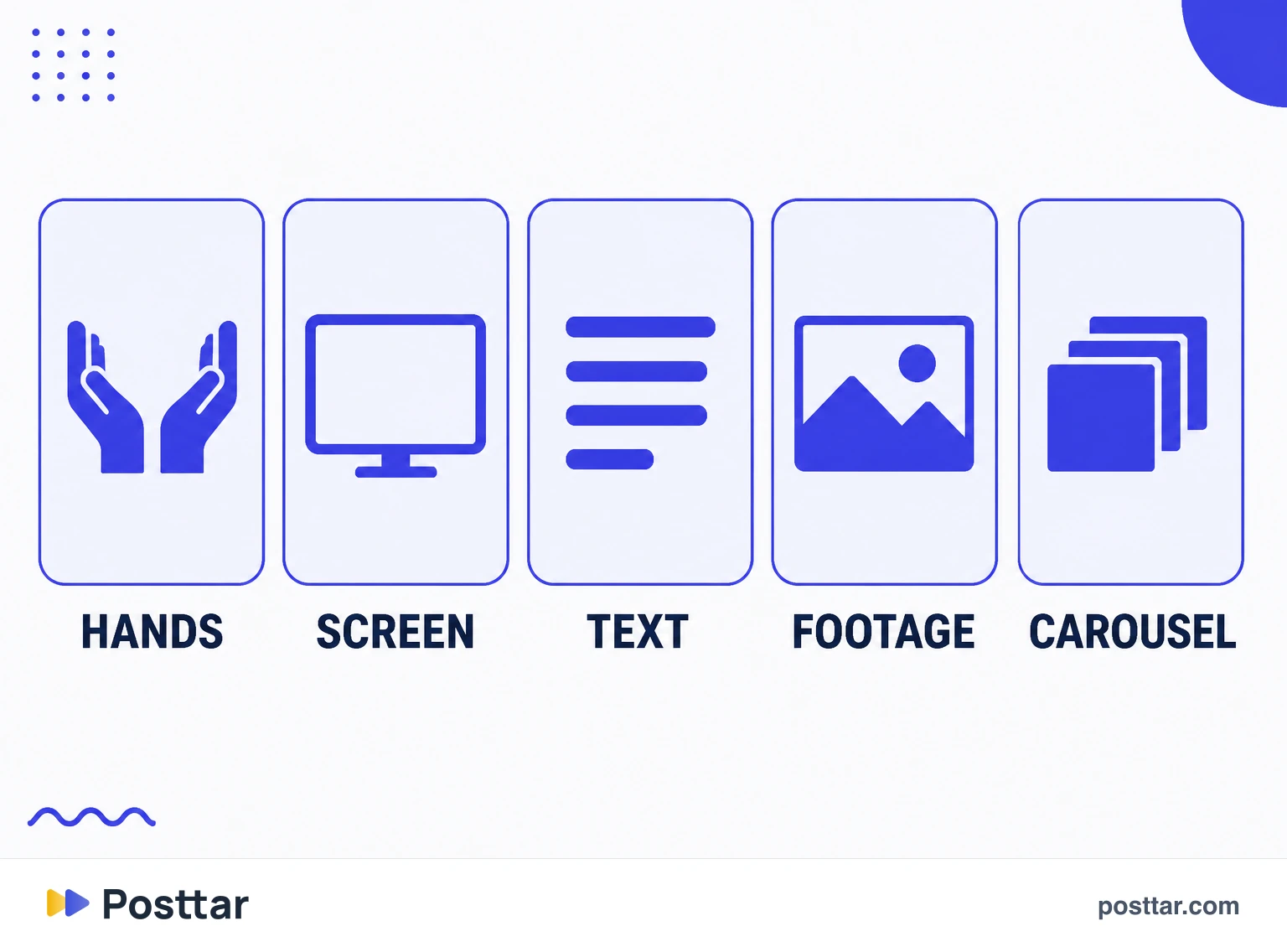
The practical question is what exactly to film. Five formats cover almost any niche:
- Hands in action. The most direct: hands writing, cooking, assembling, handling a product. It has movement and proof at once.
- Screen recording. In any digital niche, showing the screen is complete content, and it returns most in technical subjects.
- Text in motion. Animated slides with narration or with music alone.
- Stock footage with narration. It works when the voice carries, and it depends heavily on script quality.
- Carousel. The faceless format by nature, and the most underrated by anyone avoiding the camera.
What has to replace the bond
Here is the part almost no content on the subject treats honestly.
A face delivers recognition and trust for free. Without it, those two things have to be built another way, and the options are few:
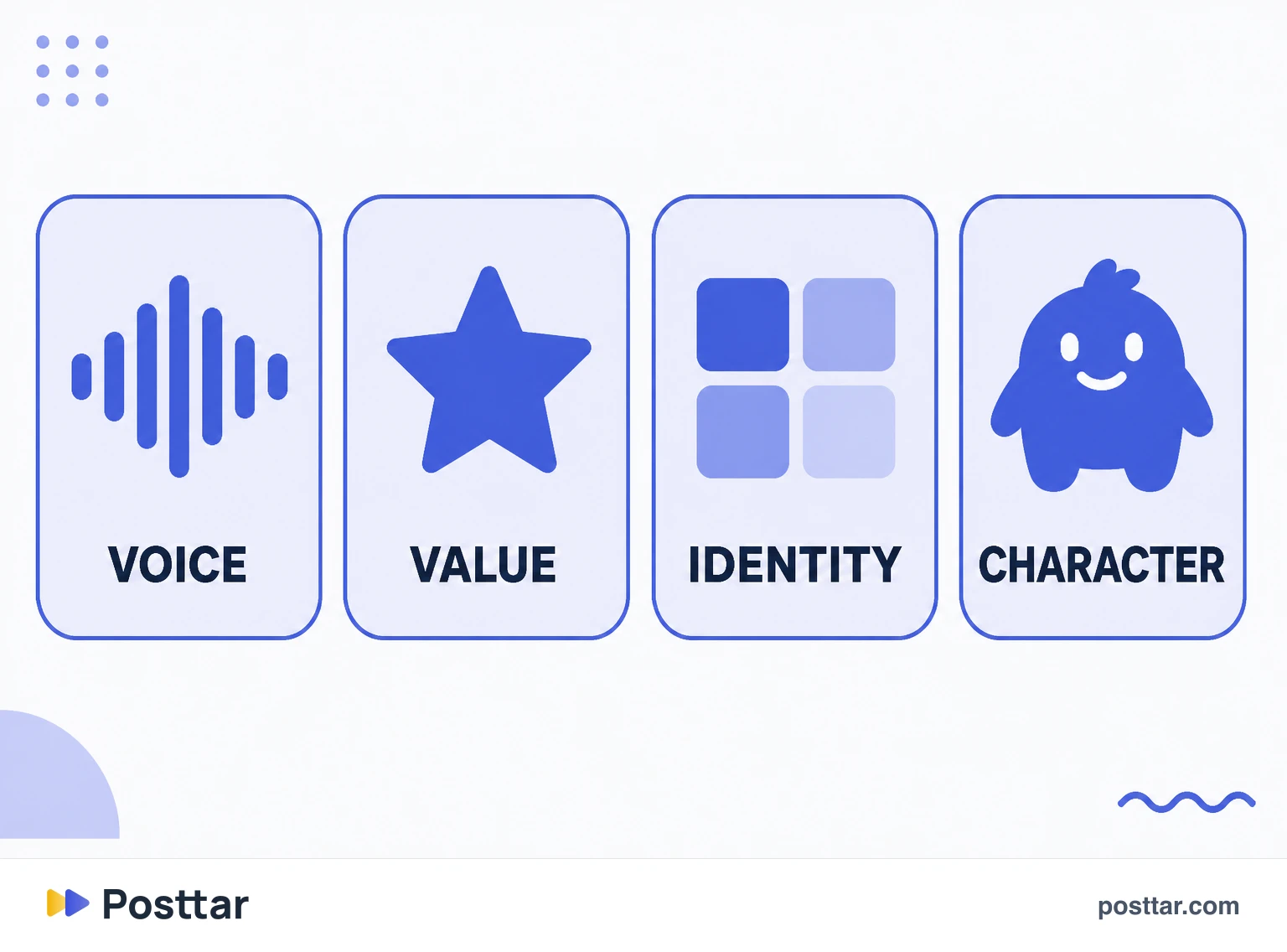
- The voice. If you narrate, the voice becomes the recognition element. Tone consistency matters more than a beautiful timbre.
- Information quality. Without a face, the content has to be better. There is no charisma to compensate for a mediocre piece.
- Strong visual identity. Repeated colour, typography and structure do the face's job in feed recognition.
- A character. A mascot, a recurring illustration or a fixed visual signature.
Without at least one of those, the usual result is reasonable reach and no brand recall.
Where it works best and worst
It works well in informational niches, in process and demonstration content, with physical products, and in any operation needing volume without depending on one person's calendar.
It works worse for high value services sold on personal trust, in consulting, in therapy, in anything where the purchase decision runs through "I trust this person". There the talking head remains the shortest path.
The middle ground that solves it for many: appear rarely. One video with a face per week and the rest without, or appearing only in Stories, which are more informal and less permanent. That delivers much of the bond without requiring you on camera daily.
What does not change
A useful warning, because the format is often sold as a shortcut: faceless does not mean effortless.
Checklist
- I chose a format with movement, not a static slide.
- Something replaces the bond: voice, identity or character.
- My niche does not depend on personal trust to sell.
- The script is sharper, because I have no face to hold attention.
- I considered appearing rarely rather than never.
Frequently asked questions
What is faceless content?
It is any production that does not show the publisher's face: hands in action, screen recordings, objects, animation or narration over footage. It grew because it solves the discomfort of appearing and eases scaling production.
How do I start faceless content?
Pick a format with movement: hands in action or screen recording are the easiest and most convincing. Then decide what will replace the face in recognition, whether that is your voice, a strong visual identity or a recurring character.
Which faceless content is best?
Hands in action and screen recording, because they carry movement and prove what is being said at once. A static slide with narration is the easiest to produce and the one that loses the most retention.
Is faceless content still profitable?
It depends on the niche. It works well for informational content, demonstrations and physical products. For high value services sold on personal trust, such as consulting or therapy, it converts slower because the decision runs through trusting a person.
Can you grow an audience without showing your face?
Yes, and large accounts do. The trade is that recognition has to be built elsewhere: consistent voice, better information, strong visual identity or a recurring character. Without at least one of those, reach arrives but recall does not.
Related concepts
Talking head
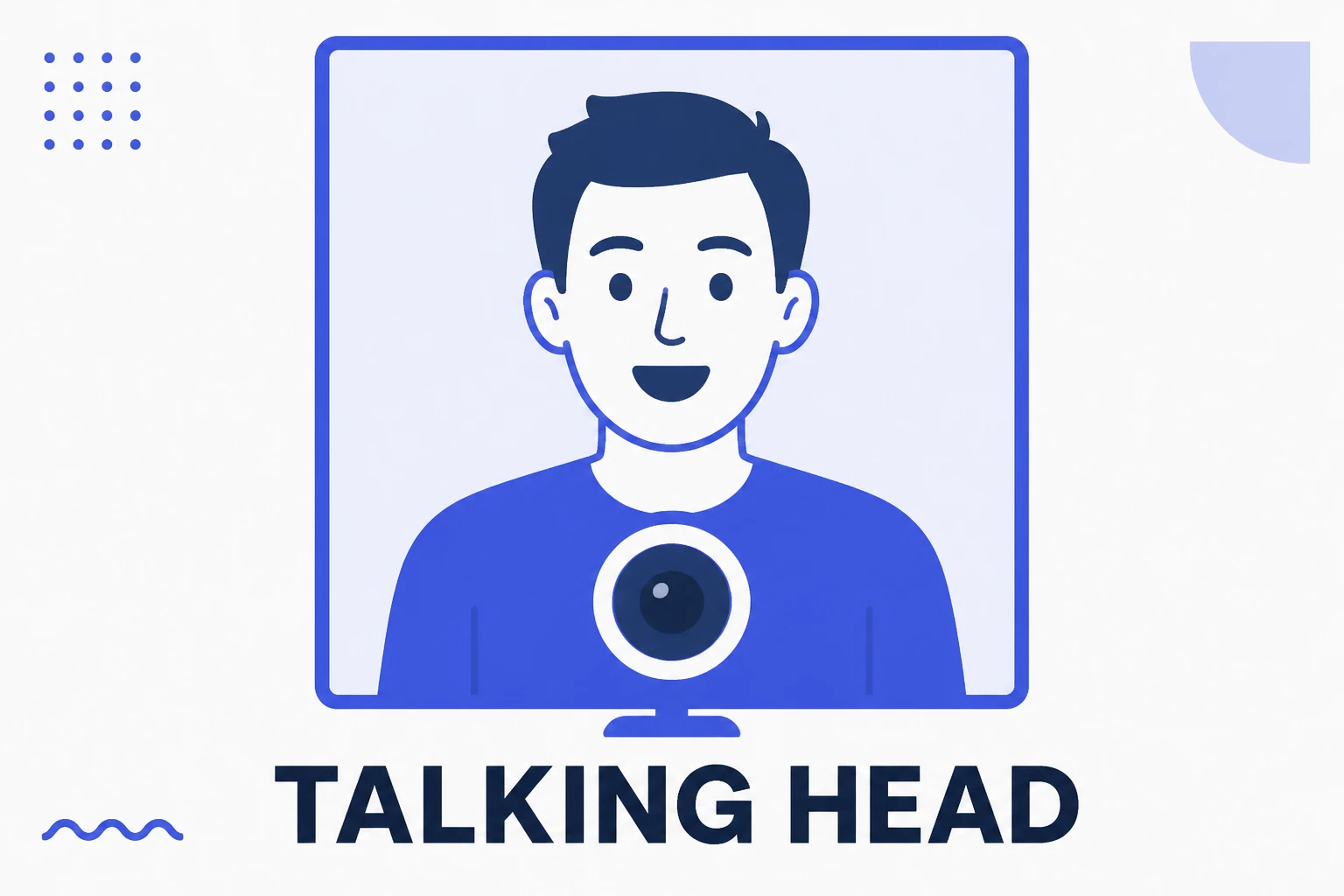
A talking head is the video format where someone speaks directly to camera, framed from the chest up. It is the oldest and simplest format there is, and it still converts best for professional accounts, because it is the only one where the audience sees a face, hears a voice and bonds with a person rather than with a profile.
Read the entry
Carousel
A carousel is the Instagram post that holds up to 20 images or videos in a single publication, navigated by swiping sideways. It occupies the same feed space as a regular post but asks the viewer for one extra action, and that action is what makes it valuable: every frame advance adds dwell time, and the format gets a second delivery chance, because Instagram can re-show the post starting from a different frame to people who did not interact the first time.
Read the entry
Motion graphics
Motion graphics is graphic design in motion: animated text, shapes, icons and charts, with no characters and no narrative of its own. It exists to add movement where there is no filmed footage, to highlight information and to turn abstract data into something visible. In short content it solves the static screen problem, but it becomes expensive decoration when used without a function.
Read the entry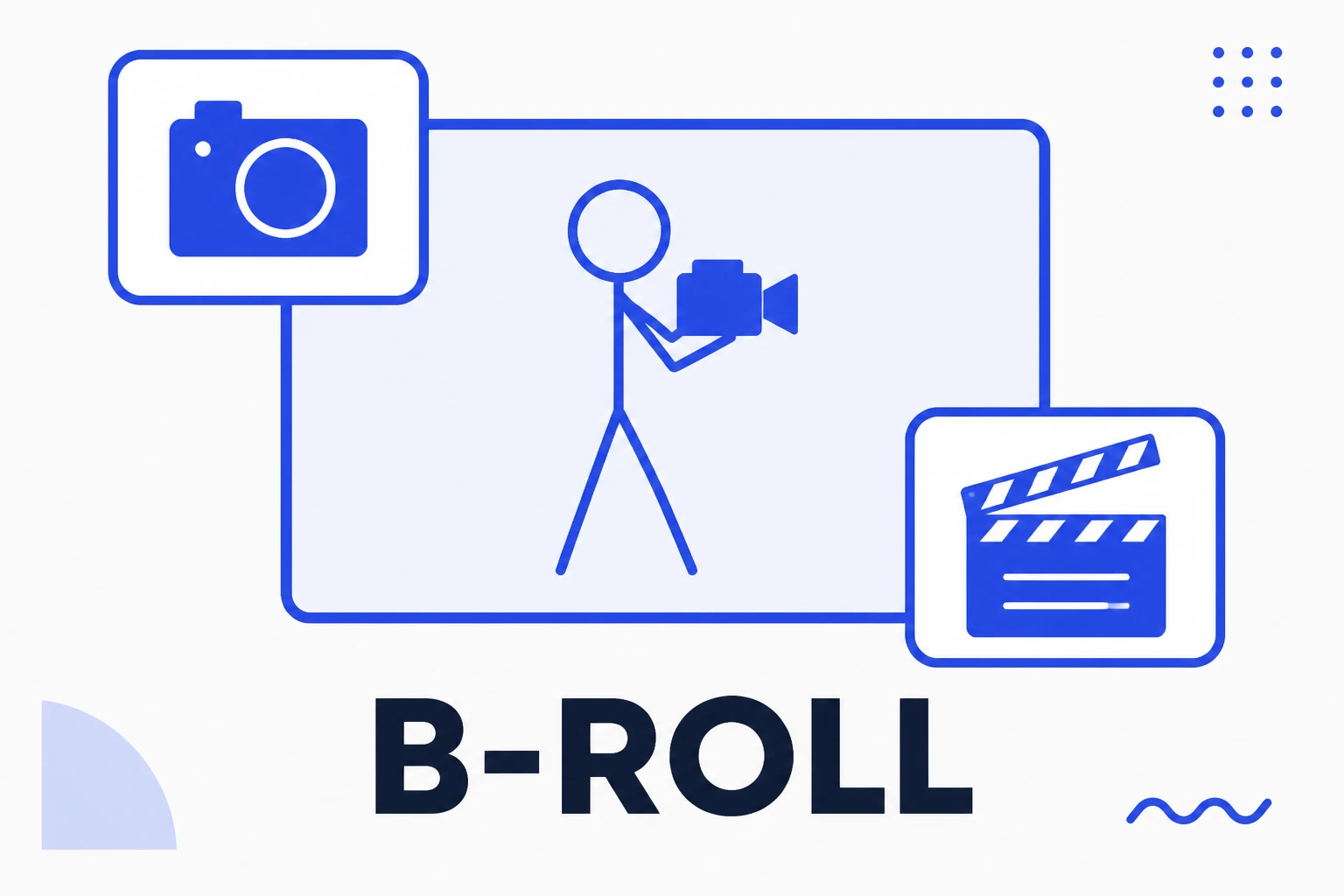
B-roll
B-roll is any footage that is not the main speech: the supporting shots layered over narration to illustrate, give context or simply break visual monotony. The name comes from the film era, when the A roll carried the main scene and the B roll carried complementary material. It is the cheapest retention tool that exists.
Read the entry