Media kit: the document brands ask for, and what it needs beyond numbers

By Tiago Costa·Updated on August 5, 2026
Definition
A media kit presents a creator to brands.
- It answers in one go what a brand would ask by message.
- Audience matters more than follower count.
- It needs cases and pricing, not only metrics.
- Short and current, or it does not work.
What it needs to contain
One page does it, two at most. Six blocks cover everything:
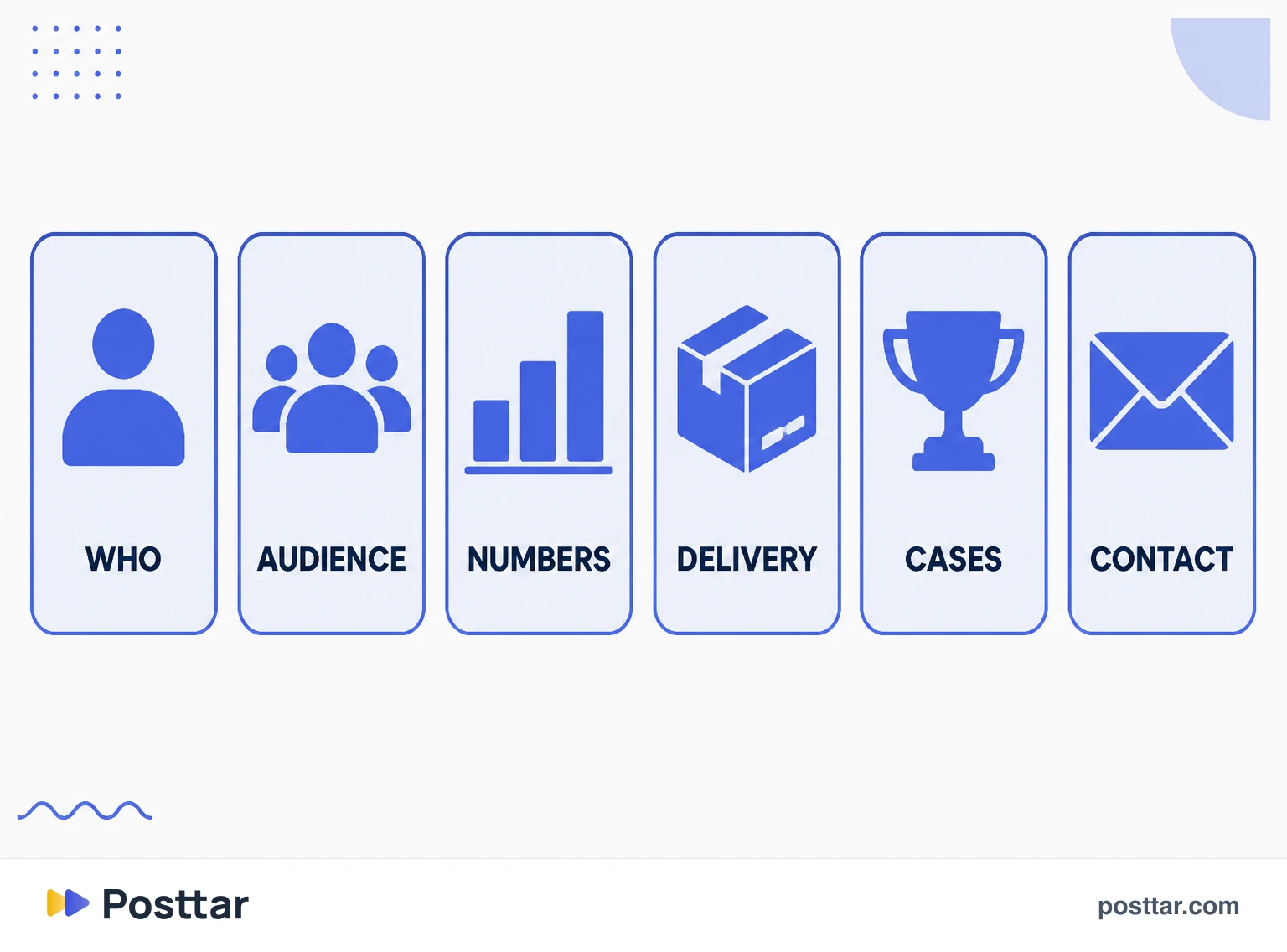
- Who you are, in one sentence. Niche and angle, not a biography.
- Who the audience is. Demographics, location and above all the interest uniting these people. It is the block brands read most.
- Numbers. Followers, average reach, engagement rate and non follower reach. A ninety day average, not your best month.
- What you deliver. Formats, timelines, number of revisions.
- Cases. Brands you have worked with and, where possible, results.
- How to reach you. One direct contact.
Why follower count is not the main thing
Plenty of media kits open with the total follower count in giant type, and that communicates the wrong thing.
Whoever is hiring is not buying size, they are buying access to a specific audience. An account of eight thousand people in a defined niche is more interesting, to the right brand, than a diffuse fifty thousand.
Which is why the audience block should come before the numbers block. If the brand does not recognise its public there, the rest of the document does not matter.
And it is worth including the engagement rate even with a small audience, because in smaller tiers it tends to be the strongest argument available.
Whether to include pricing
It is the most common question, and the answer has two parts.
Including a price range filters conversations and saves time on both sides. A brand with no budget does not open a negotiation, and you do not spend a week on a conversation going nowhere.
Not including it preserves room to price case by case, which makes sense when projects vary widely.
The middle route that usually works is presenting packages with a starting from figure, making clear what changes the value: number of deliverables, tight deadlines, exclusivity and above all advertising usage rights. That last item changes price most and is the most forgotten.
Mistakes that get the kit ignored
- Outdated data. A kit with six month old numbers is worse than no kit, because brands check.
- Only the best month. Showing the peak rather than the average breaks on the first campaign, when the result does not repeat.
- Too long. Ten pages of design go unread. One objective page gets read entirely.
- No deliverables. Many kits show metrics and never say what the brand actually receives.
- Heavy file or broken link. A silly detail that kills the conversation before it starts.
Checklist
- It fits on one page, two at most.
- The audience block comes before the numbers block.
- I use a ninety day average, not my best month.
- What I deliver is clear, with timelines and revisions.
- Advertising usage rights are explicit in the pricing.
Frequently asked questions
What is a media kit?
It is the document presenting a creator to brands: who they are, who the audience is, what they deliver and what it costs. It exists to answer in one go the questions a brand would otherwise ask by message.
What to include in a media kit?
Who you are in one sentence, who the audience is with demographics and interests, numbers using a ninety day average, what you deliver with timelines and revisions, previous brand cases and one direct contact.
Do influencers have media kits?
Professional ones do, and it is expected in any negotiation beyond the smallest. In the nano and micro tiers almost nobody has one, which makes those who do look considerably more professional.
Should a media kit include pricing?
A range filters conversations and saves time on both sides; omitting it preserves room to price case by case. The middle route is presenting packages with a starting from figure and stating what changes the value.
How often should you update a media kit?
Every quarter, or whenever there is a meaningful change in audience or portfolio. A kit with six month old numbers is worse than no kit, because brands verify the data before closing.
Related concepts
Influencer
An influencer is someone able to move other people's decisions within a subject, whether about purchases, opinions or behaviour. The market organises the category into follower tiers, and that division is useful for budgeting, but it describes audience size rather than influence. There are million follower accounts that sell nothing and five thousand follower accounts that clear stock.
Read the entry
Micro-influencer
A micro-influencer is the audience tier between roughly ten thousand and one hundred thousand followers. It became the market default for an economic rather than aesthetic reason: at that size an account already has meaningful reach while still holding high engagement and credibility, which produces the best cost per result on the scale. The boundaries vary between agencies, and the tier is a convention rather than a rule.
Read the entry
Sponsored post
A sponsored post is a publication a creator is paid to make for a brand, talking about a product on their own profile. It is different from a boosted post, which is a brand paying to distribute its own publication, and that confusion shows up constantly. Sponsored posts require disclosure, and the native label is the way to do it.
Read the entry
Engagement rate
Engagement rate is the percentage of people who interacted with a piece of content relative to a comparison base. Two formulas are in common use: interactions divided by followers, which measures how the base responds, and interactions divided by reach, which measures the quality of delivery. They answer different questions and produce different numbers for the same post, so the thing that matters is stating which one you used before comparing anything.
Read the entry