Micro-influencer: the tier that became the market default, and the economic reason

By Tiago Costa·Updated on August 5, 2026

Definition
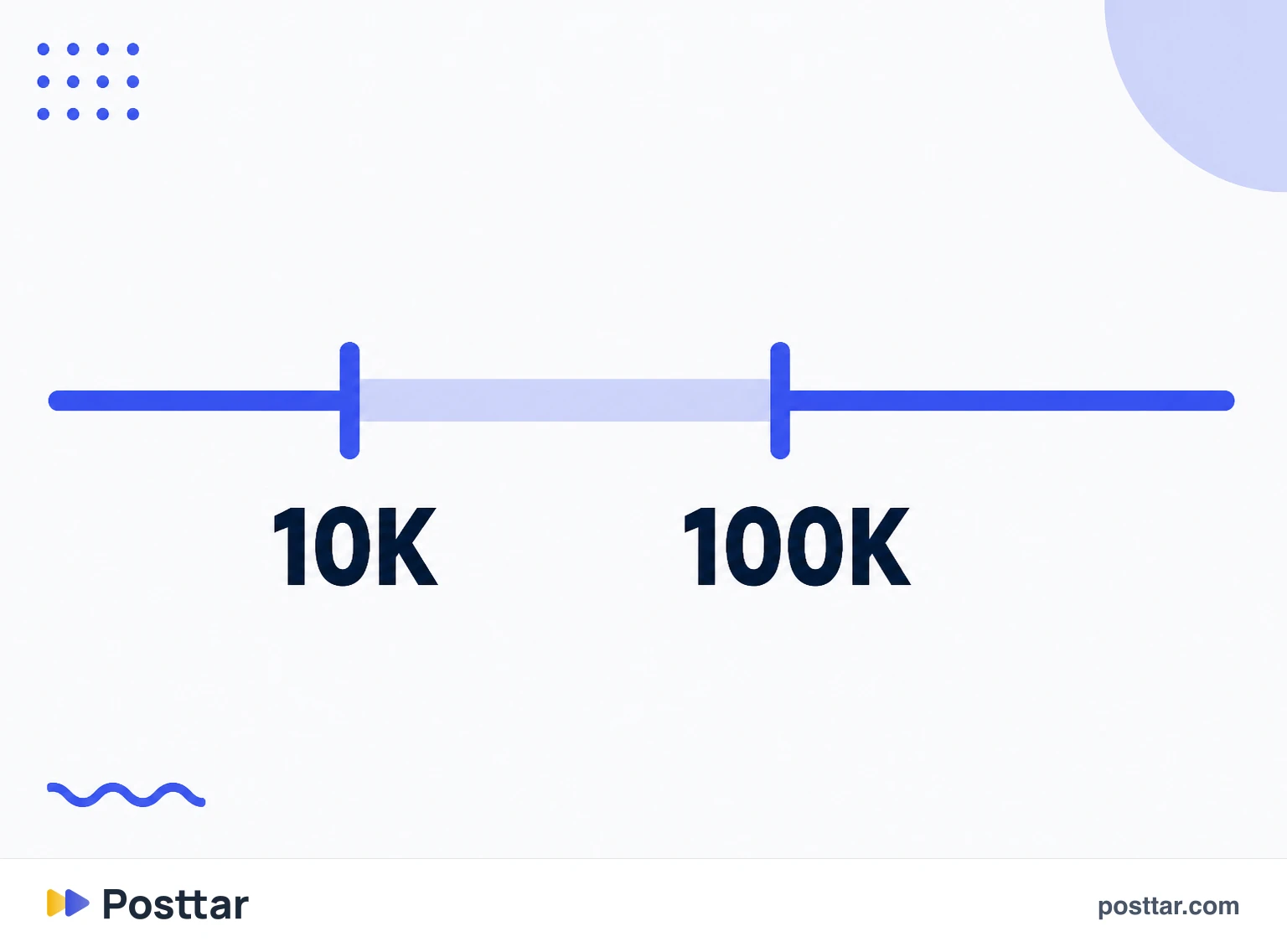
A micro-influencer sits between around ten thousand and a hundred thousand followers.
- It became the campaign default on cost per result.
- Meaningful reach with engagement still high.
- Already professional, with defined process and deliverables.
- The boundaries vary between agencies and markets.
The tier and its shifting boundaries
The most used definition runs from ten thousand to a hundred thousand followers, but it is not official. Some agencies start at five thousand, others cap it at fifty thousand, and there are markets where the numbers differ considerably.
That matters practically for one reason: when a brand says it is looking for micro, it is worth confirming the tier in numbers rather than by the label. A negotiation assuming different definitions ends in mismatch.
A useful reference: above a hundred thousand the market usually says macro, and below ten thousand nano.
Why it became the default
The explanation is about efficiency, and it rests on three points.
Cost per result. Fees grow with audience size, but engagement rate falls. At micro the two still meet at a favourable point.
Preserved credibility. The account is not yet doing advertising in high enough volume for the audience to discount its recommendations.
Defined niche. Accounts in this tier usually got there through a specific subject, which makes the audience predictable for a brand.
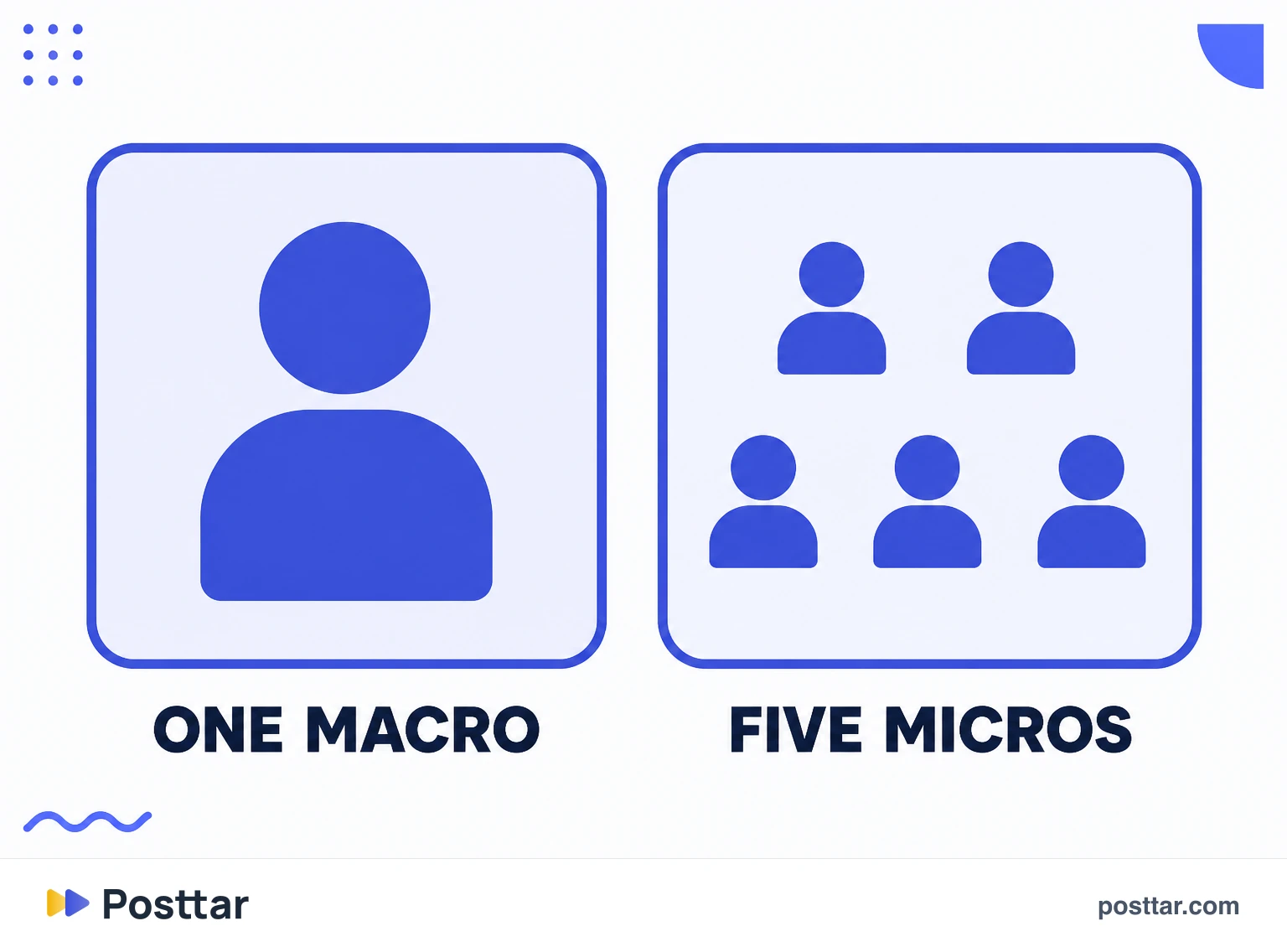
Add an operational factor: for the budget of one macro, a brand hires several micros, which spreads risk and allows testing different messages simultaneously.
What this tier delivers well
- Niche conversion. When the product is specific, this tier often outperforms much larger audiences.
- Usable content. A production standard already exists, letting the brand reuse the pieces as UGC in ads.
- Process. Unlike nano, micro generally already has a media kit, timelines and an approval flow, which reduces campaign management cost.
- Testing scale. Five micros allow testing five angles on the budget of one macro.
Where this tier fails
Worth being honest, because the category is sold as a universal solution.
- Limited reach per piece. For mass brand awareness campaigns, this tier does not deliver volume without multiplying the number of creators.
- Management cost. Hiring ten micros is ten times the coordination work of hiring one macro. That cost is real and rarely enters the calculation.
- Quality variation. The tier is broad and heterogeneous; the distance between a micro of twelve thousand and one of ninety thousand is large.
- Audience overlap. Hiring several creators in the same niche can mean speaking to the same people repeatedly.
Checklist
- I confirm the tier in numbers, not by the label.
- I look at engagement rate before total followers.
- I verify the audience belongs to the brand's public.
- I account for management cost when hiring several.
- I check audience overlap between the chosen creators.
Frequently asked questions
Who is considered a micro-influencer?
Someone with roughly ten thousand to a hundred thousand followers. The tier became the market default because it combines meaningful reach with still high engagement and credibility, producing good cost per result.
Is 100K followers a micro-influencer?
It sits exactly on the boundary, and the answer depends on who is defining it. Many agencies treat a hundred thousand as the ceiling of micro and the start of macro, making it the most contested number on the whole scale.
What is the difference between nano and micro-influencer?
Audience size: nano runs up to around ten thousand followers and micro from there to a hundred thousand. In practice, micro generally already has a media kit, timelines and process, which lowers campaign management cost.
How much do micro influencers get paid?
No reliable rate table exists, because it varies by niche, format, exclusivity and content usage rights. What most influences the fee is not follower count but how well that specific audience converts for that product.
Why do brands prefer micro-influencers?
Because fees grow with audience size while engagement rate falls, and at micro the two still meet at a favourable point. It also allows hiring several creators on one macro budget, spreading risk and testing multiple messages.
Related concepts
Influencer
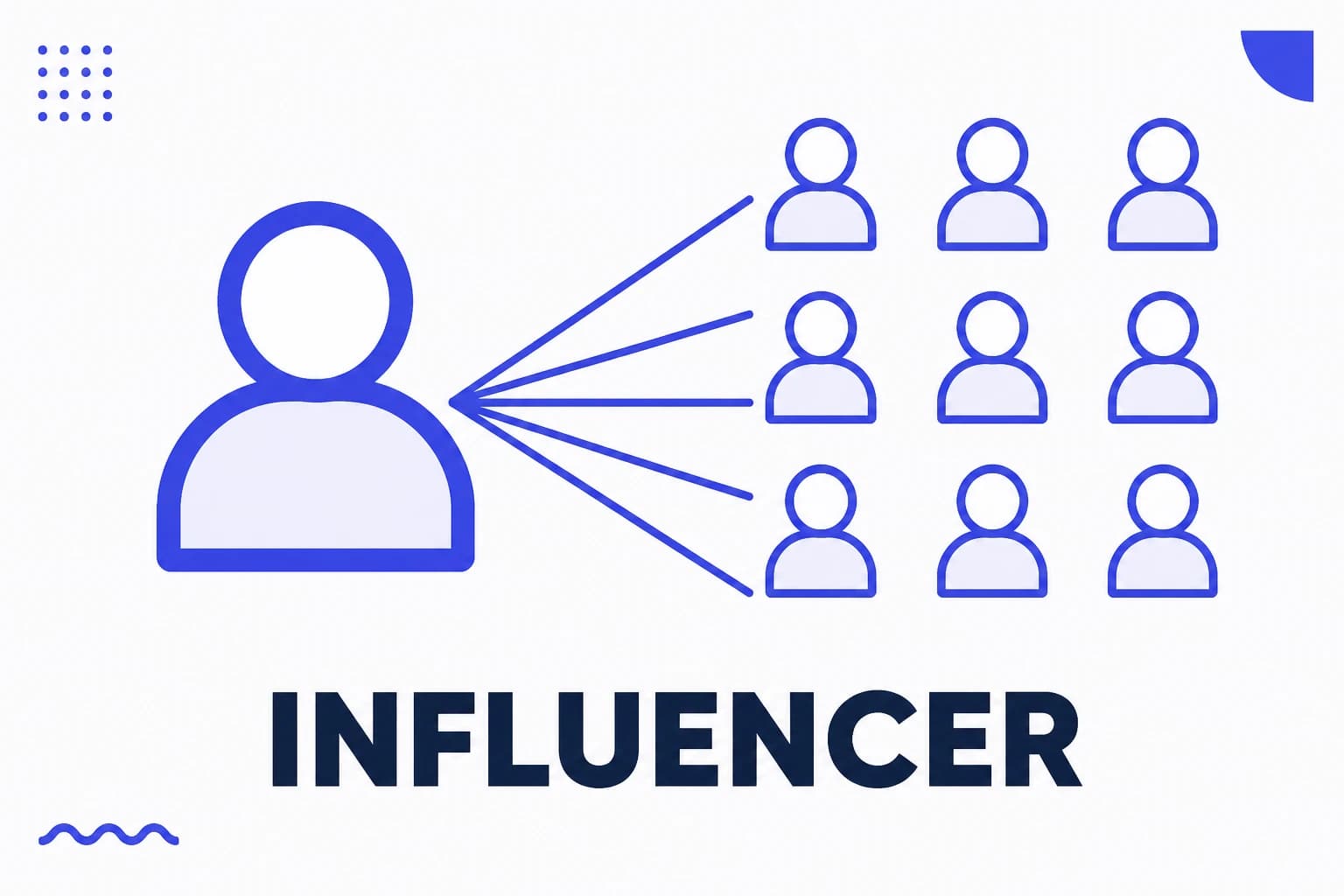
An influencer is someone able to move other people's decisions within a subject, whether about purchases, opinions or behaviour. The market organises the category into follower tiers, and that division is useful for budgeting, but it describes audience size rather than influence. There are million follower accounts that sell nothing and five thousand follower accounts that clear stock.
Read the entry
Nano-influencer
A nano-influencer has up to around ten thousand followers. It is the smallest tier on the scale and usually the one with the highest engagement rate, because the audience is genuinely close: in many cases, the followers know the person. That makes a recommendation feel more like advice from a friend than advertising, and that is precisely the asset this tier sells.
Read the entry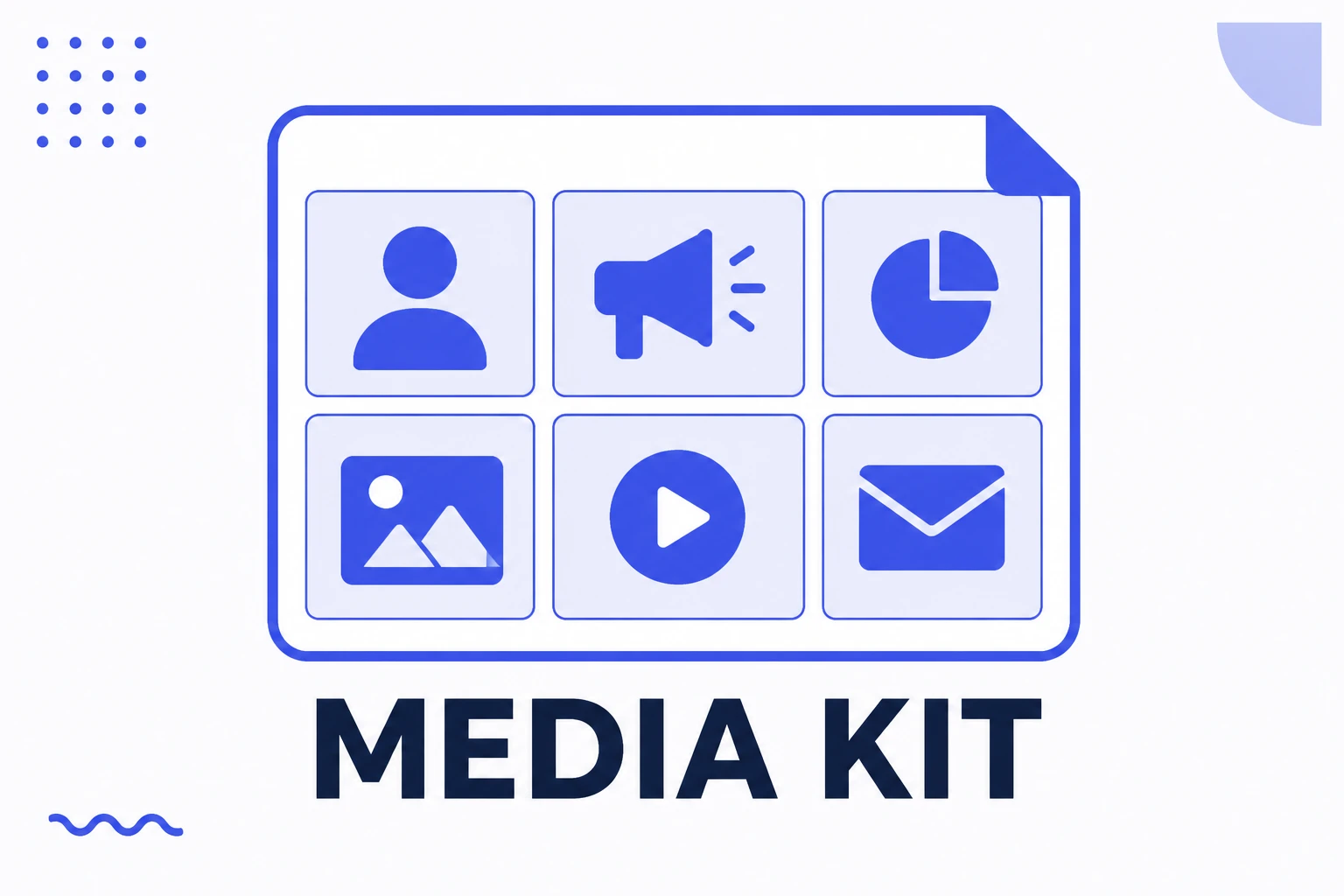
Media kit
A media kit is the document presenting a creator to brands: who they are, who their audience is, what they deliver and what it costs. It exists to answer in one go the questions a brand would ask by message, and the version that works is not a collection of screenshots with follower counts, it is a short commercial document that makes the hiring decision easier.
Read the entry
Sponsored post
A sponsored post is a publication a creator is paid to make for a brand, talking about a product on their own profile. It is different from a boosted post, which is a brand paying to distribute its own publication, and that confusion shows up constantly. Sponsored posts require disclosure, and the native label is the way to do it.
Read the entry