Psychological triggers: decision shortcuts, and why the list of 50 does not exist

By Tiago Costa·Updated on August 5, 2026
Definition
Psychological triggers are shortcuts the brain uses to decide.
- There are few. Lists of dozens repeat the same principles.
- They describe tendencies, not buttons that always work.
- They must be true, or they become manipulation and burn trust.
- They work better inside a story than in a declaration.
Where they come from and what they really are
The basis is persuasion psychology, which studies why people say yes. The central idea is that nobody analyses everything fully: the brain uses shortcuts to decide quickly, and those shortcuts are predictable.
An important detail: they describe tendencies, not laws. A trigger is not a button producing compliance. It raises the probability of a response in a specific context, and may have no effect at all in another.
Worth naming the industry folklore: lists of "the 23 triggers" and "50 power words" are inflated. They break the same principles into variations and sell repetition as depth.
The ones that carry almost everything
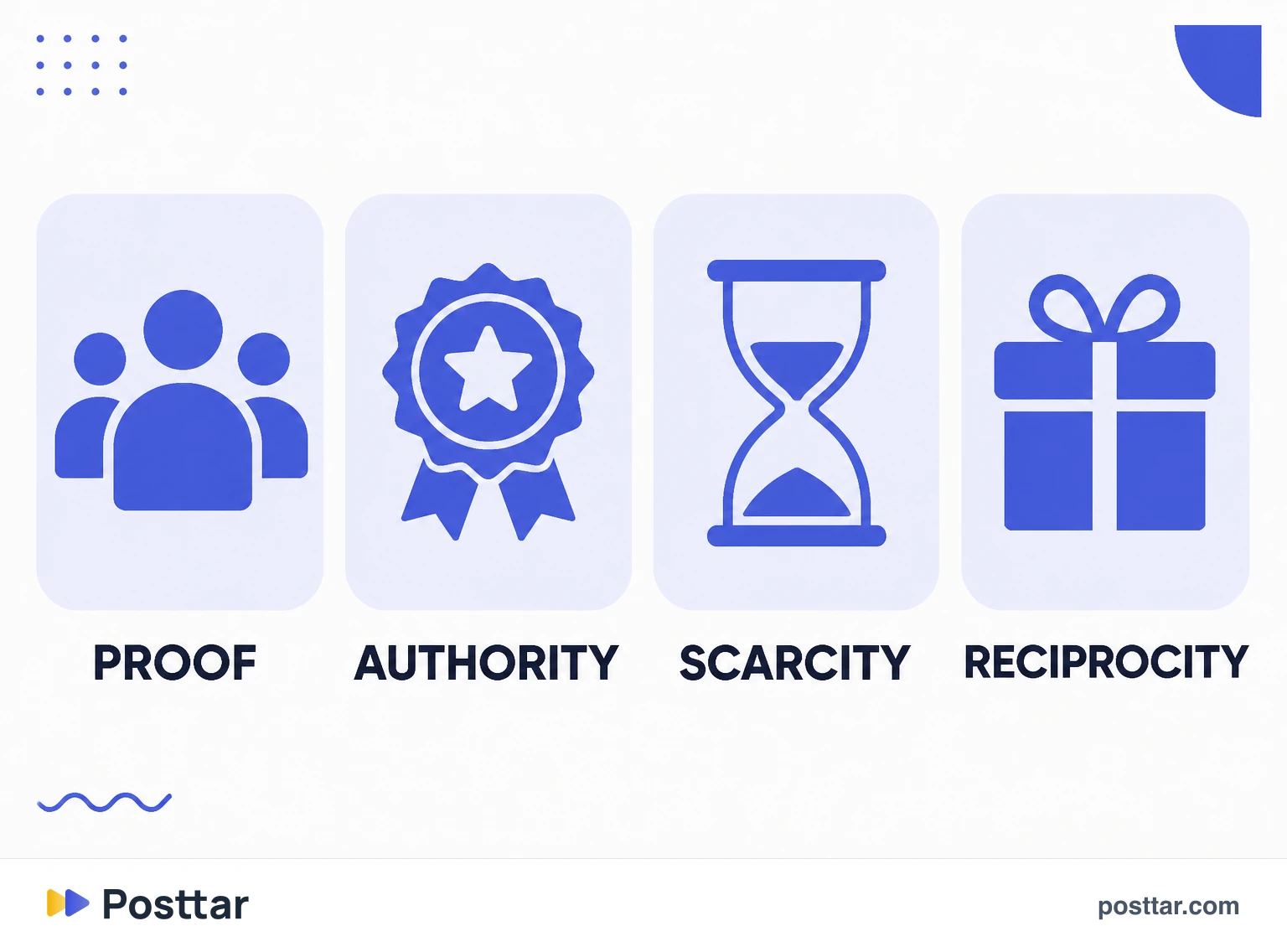
- Social proof. If many people like me did it, it is probably safe. Testimonials, client counts, ratings.
- Authority. We trust those who demonstrate competence. Showing beats claiming.
- Scarcity. What is limited seems more valuable. Slots, deadlines, stock.
- Reciprocity. Whoever receives something tends to want to give back. It is the mechanism behind free content.
- Commitment and consistency. Whoever took a small step tends to continue in the same direction.
- Liking. We say yes more to people we like and resemble.
- Loss aversion. Losing something hurts more than gaining the equivalent pleases.
Practically every long list is a recombination of these.
The line between using and manipulating
This is the part most content on the subject skips, and it is the most important.
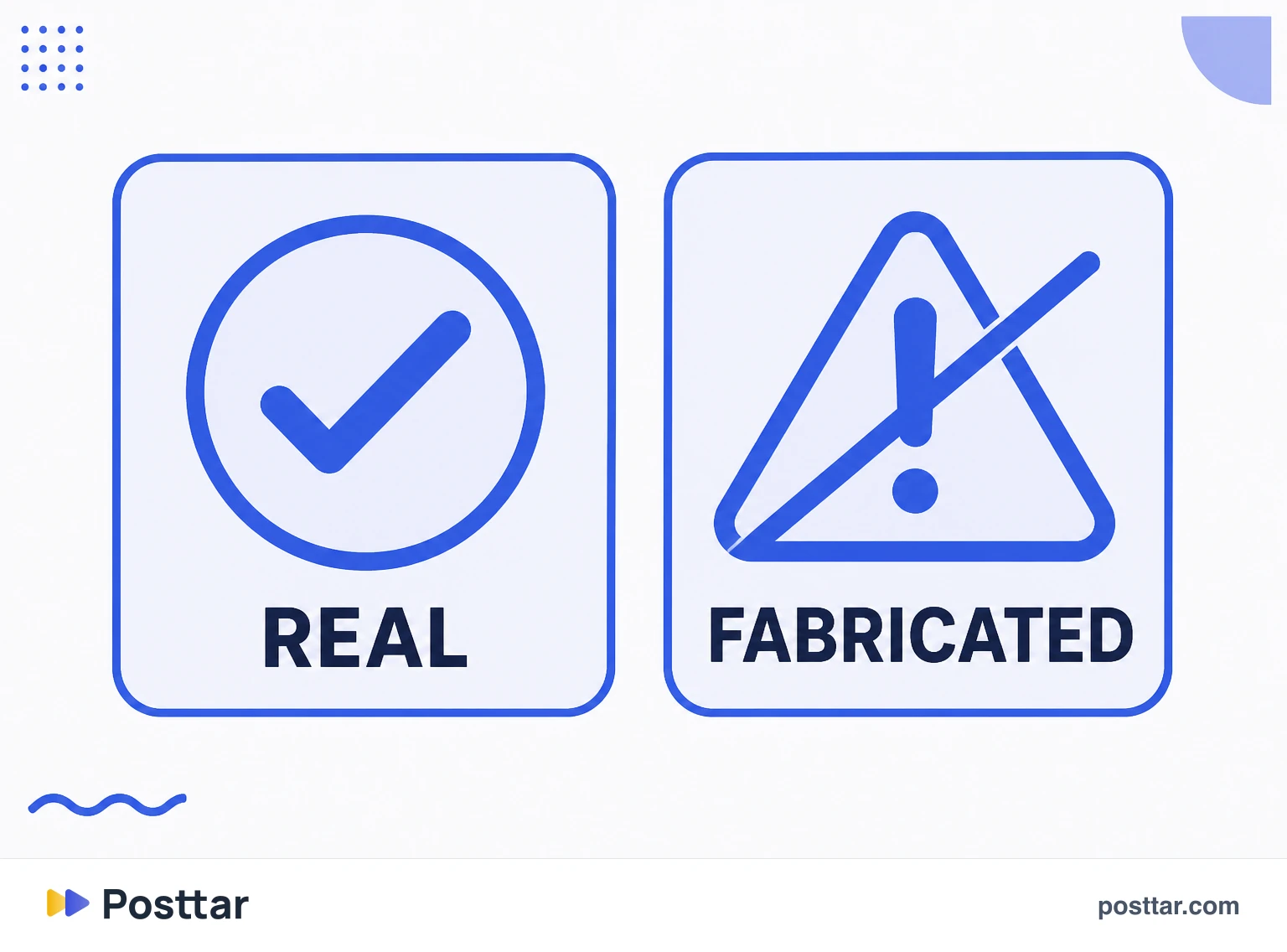
The line is simple: is the trigger true or fabricated?
- Real scarcity, with slots that genuinely run out, is information. A counter that resets when you reload the page is a lie.
- Social proof with a real client testimonial is evidence. An invented testimonial is fraud.
- Demonstrated authority is useful. An implied credential that does not exist is deception.
Beyond the ethical question there is a practical one: a fabricated trigger works once. Someone who notices the fake counter does not come back, and on social media they tell others. The short term gain is repaid with interest.
How to use them without sounding salesy
- Prefer demonstrating to declaring. Showing a case is social proof and authority at once, without announcing either.
- Put them inside a story. The same trigger embedded in a narrative does not read as technique; loose in a sentence, it does.
- One per piece. Stacking scarcity, authority and social proof in the same text produces suspicion, not persuasion.
- Use what is yours. The strongest trigger available is usually the one you genuinely have and do not use: a result, a number, a real limit on your calendar.
Checklist
- Every trigger I use is true and verifiable.
- I use one per piece rather than stacking.
- I demonstrate instead of declaring.
- I place them inside a story rather than announcing the technique.
- I do not use fabricated scarcity or invented social proof.
Frequently asked questions
What are psychological triggers in marketing?
They are the shortcuts the brain uses to decide without analysing everything, described by persuasion psychology. They point at real behavioural tendencies, such as trusting demonstrated authority or valuing what is scarce.
What are the 7 psychological triggers?
The set most cited is social proof, authority, scarcity, reciprocity, commitment and consistency, liking, and loss aversion. Practically every longer list in circulation is a recombination of these same principles under different names.
What is an example of a marketing trigger?
A genuine client testimonial is social proof; a real deadline on an offer is scarcity; free useful content is reciprocity. What makes each of them work is being true, because a fabricated version is spotted and costs more than it returns.
Which psychological trigger is strongest?
It depends on context, and that is the honest answer. In risky decisions social proof tends to weigh most; in impulse purchases scarcity; in long relationships demonstrated authority. None of them works in every situation.
Is using psychological triggers manipulation?
It depends on whether they are true or fabricated. Real scarcity is information; a fake counter is a lie. A client testimonial is evidence; an invented one is fraud. Beyond ethics, a fabricated trigger works once and burns the trust behind everything else.
Related concepts
Copywriting
Copywriting is writing built to provoke a specific action: buy, sign up, reply, click. What separates it from other kinds of writing is not style, it is the success criterion. A literary text is judged by the experience it creates; copy is judged by how many people did what it asked. That changes everything, including the order in which it gets written.
Read the entry
Storytelling
Storytelling is the practice of organising a message as a story, with a character, a conflict and a resolution, instead of presenting it as a direct argument. It works because story is the format human memory keeps best: the same information embedded in a narrative is remembered far more than the same information listed. What separates a story from an account is conflict.
Read the entry
CTA
CTA stands for call to action: the instruction telling a person what to do next. It is the element that turns attention into results, and the most wasted of all, because most pieces either ask for nothing or ask for several things at once. One ask per piece, specific and with a reason, returns more than the full list of verbs.
Read the entry
Headline
A headline is the opening line that decides whether the rest of the content gets consumed. It is the highest leverage element of any piece: if it fails, everything after it stops existing, however good it is. On Instagram it appears in three different places, and each carries a constraint of its own that changes how it should be written.
Read the entry