Headline: the sentence deciding whether the rest gets read, and it carries almost all the weight

By Tiago Costa·Updated on August 5, 2026
Definition
A headline is the opening line deciding whether the rest gets read.
- The highest leverage element of any content piece.
- Three places on Instagram: cover, first line and first seconds.
- Specific beats generic in practically every test.
- Write several and choose, rather than accepting the first.
What it is and why it weighs so much
A headline is the title, the front page line, the entry sentence. In journalism it sells the article; in copywriting it sells reading the rest.
Its weight comes from a simple asymmetry: everyone sees the headline, and only a fraction sees the rest. Improving the body by twenty per cent improves the experience of people already reading. Improving the headline by twenty per cent increases how many people get to read anything at all.
Which is why the classic advice about spending a large share of your time on the opening is not textbook exaggeration: it is where return per minute worked is highest.
Its three places on Instagram
Here the concept needs translating, because there is no field called headline.
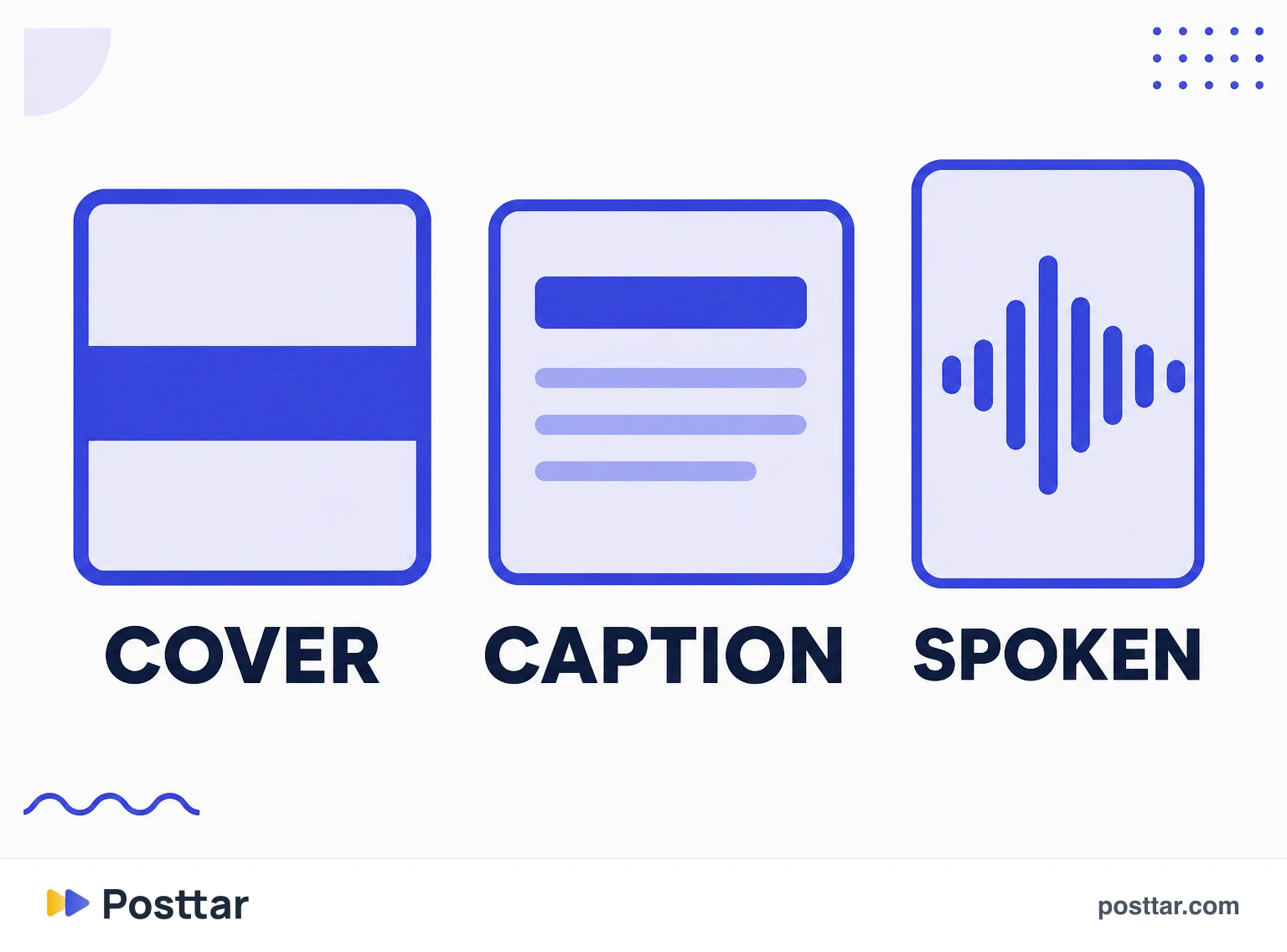
- The cover text. On the first image of a carousel or the cover of a Reel. It is the most visible headline, and it has to work as a thumbnail in the profile grid.
- The first line of the caption. The only stretch appearing before the "more" button.
- The first spoken seconds. In video the headline is said out loud, and it decides whether someone gets past three seconds.
Each carries a different constraint: the cover one has to fit in few words and stay legible when small; the caption one can run longer; the spoken one has to sound natural out loud.
What works
A few patterns cover almost everything:
- Specific. A number, a timeframe or a concrete detail beats the vague version of the same sentence, every time.
- Against common sense. Contradicting what the audience assumes creates the tension that makes them continue.
- The mistake. Naming a common mistake works because the person has to check whether they make it.
- The question they already ask themselves. Handing back their exact doubt is instant recognition.
- Curiosity with backing. Promising something the content actually delivers.
The counterexample to all of this is clickbait: a promise the content does not keep. It works once and destroys the trust that makes the next headline believed.
Write several, choose one
The practice that most improves headlines is not a writing technique, it is volume. Writing ten versions and picking the best produces consistently better results than writing one and accepting it.
The reason is that the first versions always come out in the most obvious register. The good ones tend to appear between the sixth and the tenth, once the obvious has run out.
Two quick tests for choosing:
- Would someone in your audience understand it with no context at all? If they need to know you, it does not serve discovery.
- Can it be more specific? Almost always yes, and it almost always improves.
Checklist
- I wrote several versions before choosing.
- It is specific, with a number or a concrete detail.
- It works for someone who does not know me.
- On a cover, it stays legible as a thumbnail.
- The promise is kept by the content.
Frequently asked questions
What is a headline?
It is the opening line deciding whether the rest of the content gets consumed: the title, the front page line, the first sentence. In copywriting it does not sell the product, it sells reading what comes next.
What is a headline in writing?
The sentence at the top whose job is to earn attention for everything below it. It differs from a summary: a headline does not have to say everything, it has to create enough reason to continue.
How do I write my headline?
Write several versions before choosing, because the first ones always come out in the most obvious register. Prefer specific to generic, use a number or concrete detail, and make sure it works for someone who has never seen you.
What is a headline and example?
It is the opening line that earns attention. An example of the difference: "How to improve your profile" is weak; "The bio mistake that makes visitors leave without following" is strong, because it names a specific problem the reader must check.
What is the difference between a headline and a title?
In practice they are the same thing with different contexts. Title is the term used for books and papers; headline comes from journalism and advertising, and carries the idea that the line has a commercial job, which is winning attention.
Related concepts
Copywriting
Copywriting is writing built to provoke a specific action: buy, sign up, reply, click. What separates it from other kinds of writing is not style, it is the success criterion. A literary text is judged by the experience it creates; copy is judged by how many people did what it asked. That changes everything, including the order in which it gets written.
Read the entry
Hook
A hook is the opening of a piece of content, responsible for buying the first seconds of attention and making someone decide to keep going. In short video it occupies the first three seconds and is simultaneously verbal, visual and sonic; in a carousel it is the cover; in text it is the first line. A hook is not decoration: because the distribution system watches retention and dwell time, it determines whether the content ever gets delivered beyond the people who already follow you.
Read the entry
Instagram caption
A caption is the text accompanying an Instagram post. It holds 2,200 characters, but only the first lines appear before the "more" button, which makes it a two layer format: the opening has to earn the tap, and the rest has to deliver what the opening promised. It is also the main place where the platform reads the subject of the piece as text.
Read the entry
CTA
CTA stands for call to action: the instruction telling a person what to do next. It is the element that turns attention into results, and the most wasted of all, because most pieces either ask for nothing or ask for several things at once. One ask per piece, specific and with a reason, returns more than the full list of verbs.
Read the entry