Copywriting and storytelling
The writing that holds attention: hooks, persuasion structures, narrative, tone of voice and the editorial formats that keep repeating because they work.
12 terms
Copywriting
Copywriting is writing built to provoke a specific action: buy, sign up, reply, click. What separates it from other kinds of writing is not style, it is the success criterion. A literary text is judged by the experience it creates; copy is judged by how many people did what it asked. That changes everything, including the order in which it gets written.
Read the entry
Hook
A hook is the opening of a piece of content, responsible for buying the first seconds of attention and making someone decide to keep going. In short video it occupies the first three seconds and is simultaneously verbal, visual and sonic; in a carousel it is the cover; in text it is the first line. A hook is not decoration: because the distribution system watches retention and dwell time, it determines whether the content ever gets delivered beyond the people who already follow you.
Read the entry
Headline
A headline is the opening line that decides whether the rest of the content gets consumed. It is the highest leverage element of any piece: if it fails, everything after it stops existing, however good it is. On Instagram it appears in three different places, and each carries a constraint of its own that changes how it should be written.
Read the entry
Instagram caption
A caption is the text accompanying an Instagram post. It holds 2,200 characters, but only the first lines appear before the "more" button, which makes it a two layer format: the opening has to earn the tap, and the rest has to deliver what the opening promised. It is also the main place where the platform reads the subject of the piece as text.
Read the entry
CTA
CTA stands for call to action: the instruction telling a person what to do next. It is the element that turns attention into results, and the most wasted of all, because most pieces either ask for nothing or ask for several things at once. One ask per piece, specific and with a reason, returns more than the full list of verbs.
Read the entry
Storytelling
Storytelling is the practice of organising a message as a story, with a character, a conflict and a resolution, instead of presenting it as a direct argument. It works because story is the format human memory keeps best: the same information embedded in a narrative is remembered far more than the same information listed. What separates a story from an account is conflict.
Read the entry
Narrative arc
A narrative arc is a story's tension curve: the structure by which a conflict is introduced, grows to a point of maximum tension and resolves. It is what turns a sequence of events into a story rather than a list. In short content it does not disappear, it compresses, and compression usually makes it more visible rather than less.
Read the entry
Hero's journey
The hero's journey is the narrative model describing the structure repeated across myths and stories: an ordinary person receives a call, resists, crosses an ordeal with a mentor's help and returns transformed. Applied to marketing it is useful, but with an inversion almost everyone gets wrong: the one telling the story is not the hero, they are the mentor.
Read the entry
Big idea
A big idea is the central concept holding an entire campaign together: one single idea, new enough to interest and simple enough to be repeated. It is not the headline or the slogan, though it shows up in both. It answers the question "what is the one thing we are saying?", and most campaigns do not have one, they have a list of arguments.
Read the entry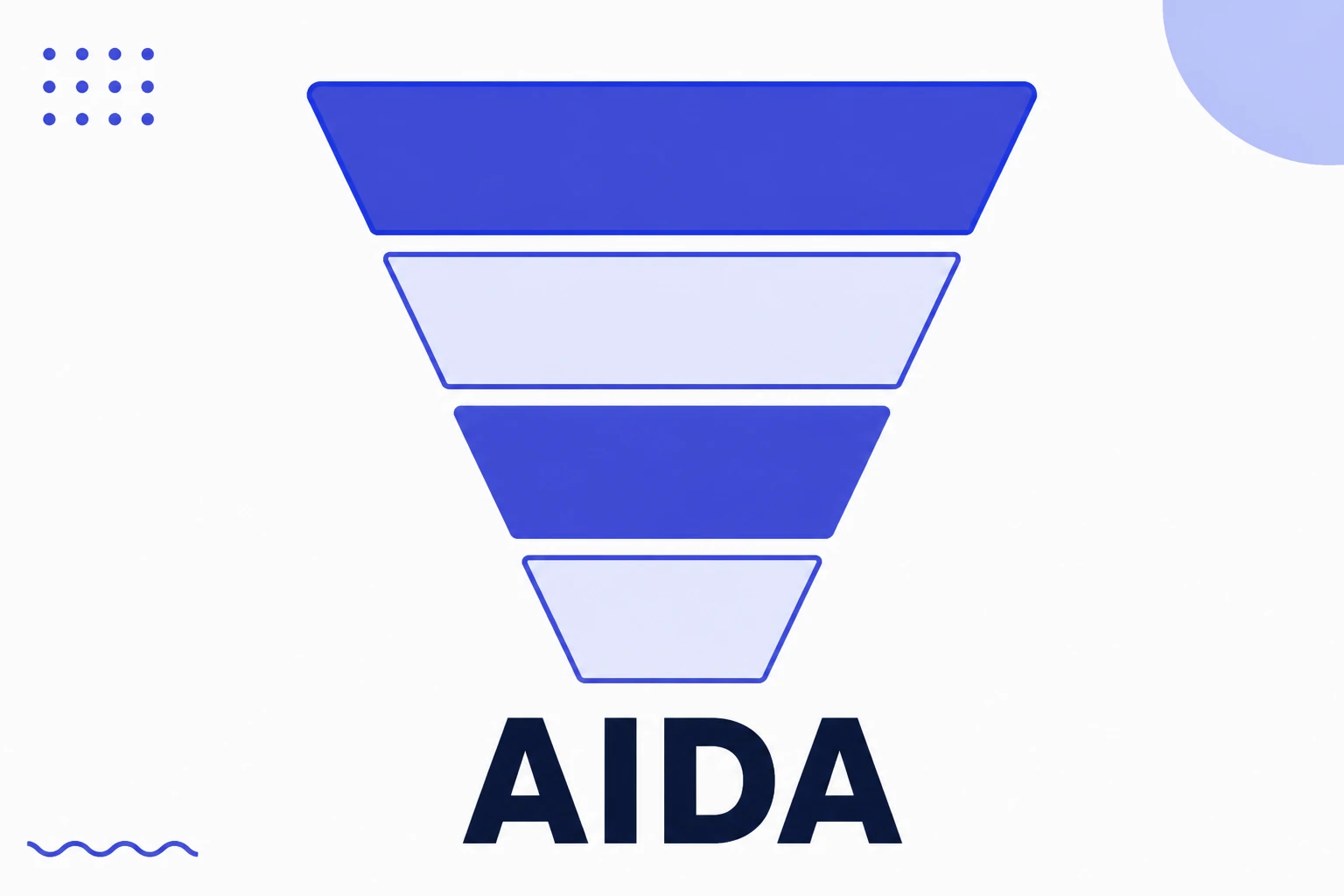
AIDA
AIDA is the classic four stage persuasion model: attention, interest, desire and action. It was born in late nineteenth century advertising and survived because it describes a sequence that makes sense in any medium: first someone has to stop, then want to understand, then want to have, and only then act. It is structural scaffolding, not a guarantee of results.
Read the entry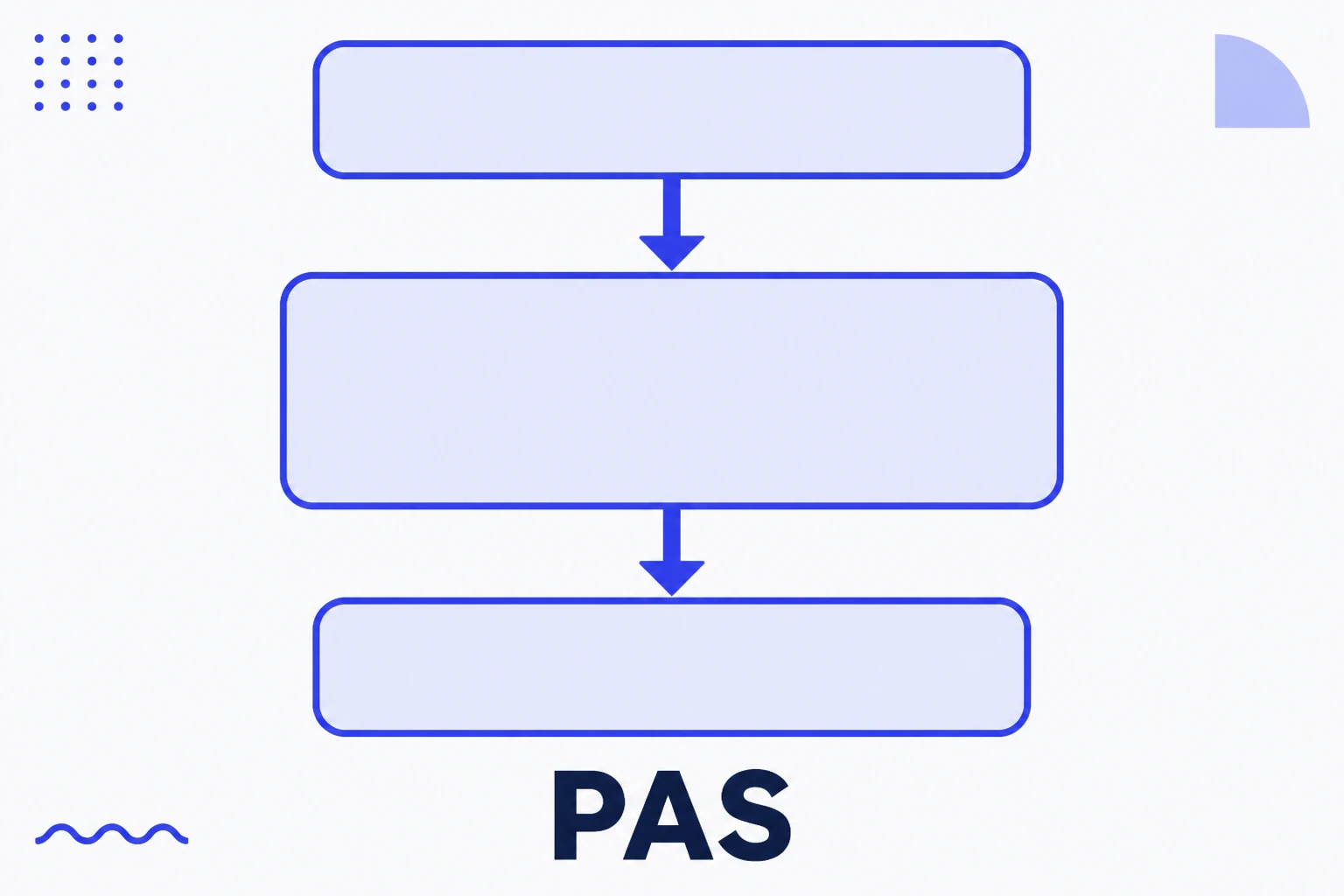
PAS
PAS is the three stage copywriting formula: problem, agitation and solution. You name the problem the person has, show the consequence of leaving it unsolved, and then present the way out. It is shorter and more direct than AIDA, and works better in short formats precisely because it starts from what the person already feels instead of building interest from scratch.
Read the entry
Psychological trigger
Psychological trigger is the popular name for the shortcuts the brain uses to decide without analysing everything. They come from persuasion psychology research and describe real behavioural tendencies, such as trusting demonstrated authority or valuing what is scarce. What circulates as a list of dozens of triggers is almost always the same half dozen principles renamed.
Read the entry