Caption: the text deciding whether an image becomes a conversation, and the first line decides everything

By Tiago Costa·Updated on August 5, 2026
Definition
A caption is the text accompanying a post.
- 2,200 characters, but only the first lines appear.
- The first line earns the tap on "more", or the text dies there.
- The system reads it, which helps classify the subject.
- It ends in an action, when there is one to ask for.
The structure that works
There is no mandatory formula, but there is a sequence that solves most cases:
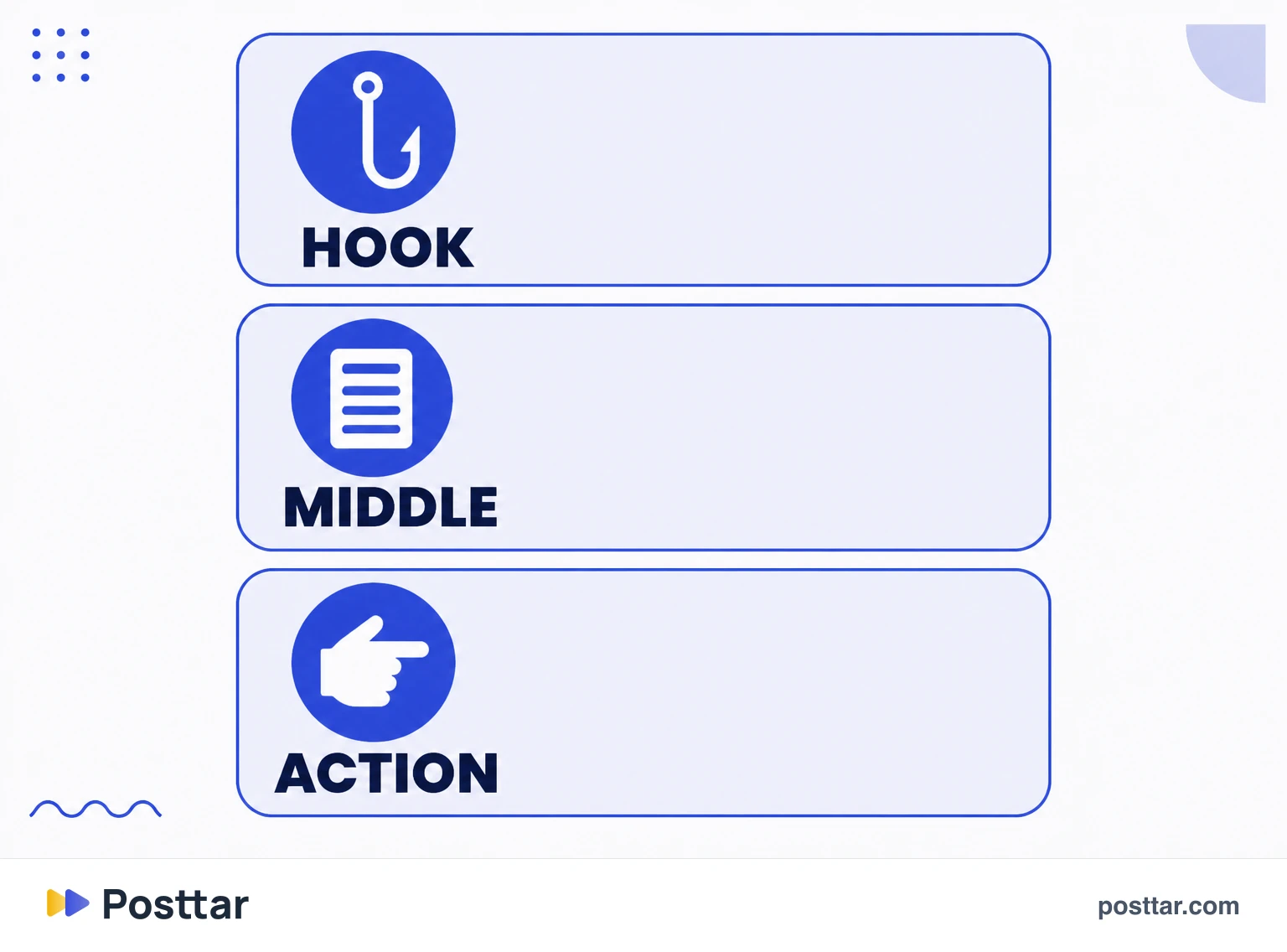
- First line: the hook. One sentence making the person want the rest. It is the only guaranteed visible stretch.
- Second block: the development. The story, the argument or the steps. The value lives here.
- Final block: the CTA. What to do now, when there is something to do.
Two formatting choices change readability a lot: frequent line breaks, because a compact paragraph on a phone is a wall; and short sentences, because reading happens in motion and with little patience.
The disproportionate weight of the first line
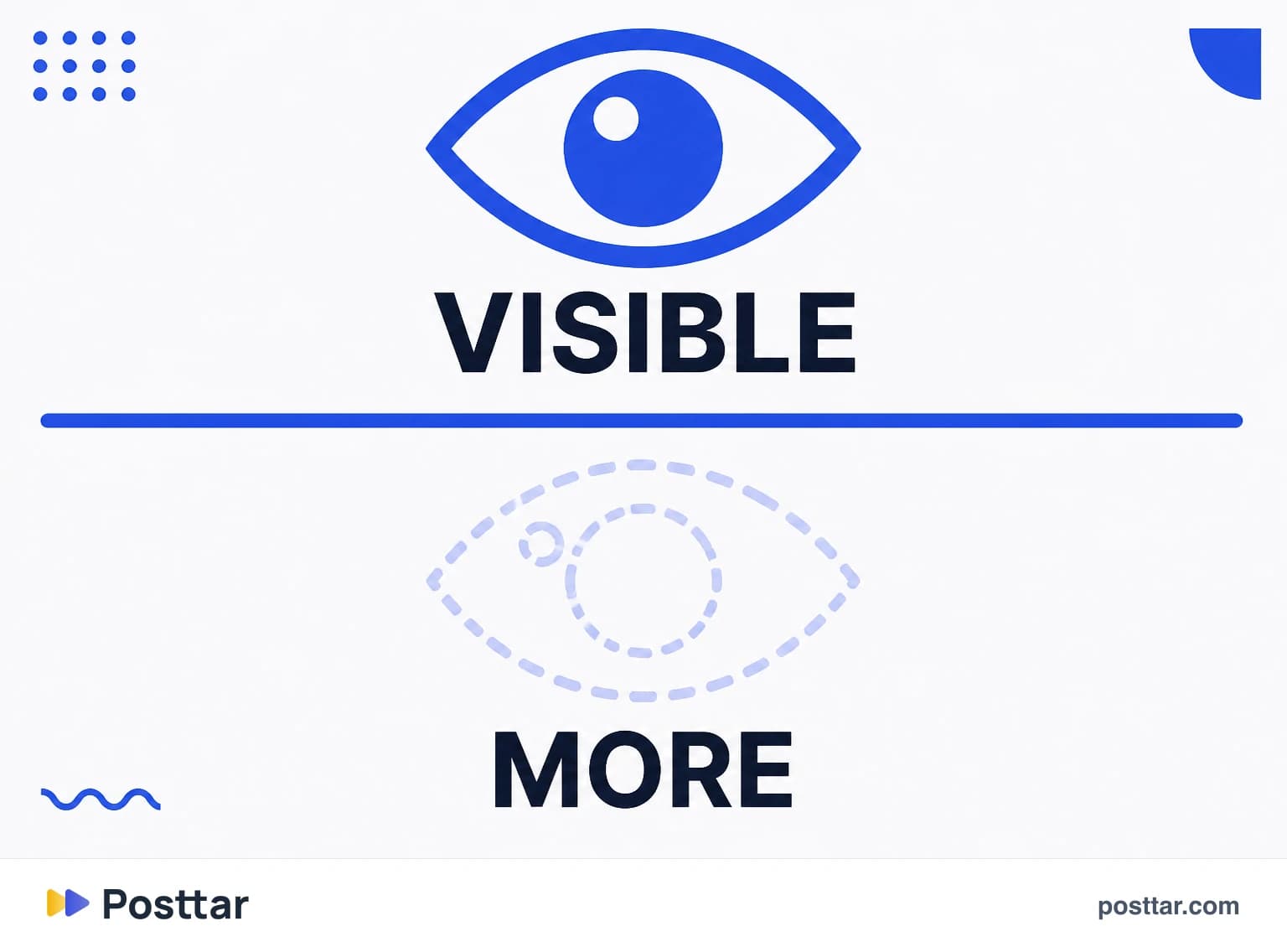
Before "more", only the first lines appear. Everything else requires a tap, and most people do not tap.
That means the opening is not an introduction, it is the whole piece in miniature. The costliest mistakes are precisely the polite openings:
- "Hey everyone, how are you?"
- "Today I want to talk about a really important subject"
- "Swipe across to check it out"
None of them gives a reason to continue. The quick test: cover everything but the first line and ask whether it alone would make you tap "more".
Long caption or short
The question is badly framed. What decides is which element carries the content.
- Short works when the image or video already delivers everything and the text only situates it. Forcing long text there only gets in the way.
- Long works when the text is the content: a story, a case, an explanation that stands on its own.
What does not work is the middle ground: a paragraph too big to read at a glance and too small to be worth tapping "more".
On limits, remember the 2,200 character ceiling, which includes hashtags.
Why stock phrases return little
A large share of caption searches look for lists of ready made phrases. Worth being honest about the return on that.
A stock phrase fills space, and filling space is not the caption's job. It exists to give a reason to stop, to contextualise what is seen, or to ask for an action. A generic phrase does none of those three, and it also erases the account's voice, which is precisely what differentiates.
If you are short of something to say, a genuinely specific question is the better exit. Not "what do you think?", which nobody answers, but a question someone can answer in three words from their own experience.
Checklist
- My first line alone justifies tapping "more".
- I do not open with a greeting or a topic announcement.
- I use line breaks rather than one solid block.
- The length follows whichever element carries the content.
- If I ask for interaction, the question is specific and easy to answer.
Frequently asked questions
What is an Instagram caption?
It is the text accompanying a post, holding up to 2,200 characters. Only the first lines appear before the "more" button, so it works in two layers: the opening has to earn the tap and the rest has to deliver what it promised.
What is the best Instagram caption?
The one that opens with a hook, develops in the middle and closes with an action when there is one to ask for. There is no universally best caption: it exists to give a reason to stop, contextualise what is seen or ask for something.
What makes a catchy caption?
A first line that creates tension or curiosity without announcing the topic. Openings like "today I want to talk about" spend the only guaranteed visible space on nothing, while a concrete claim or an unexpected statement earns the tap on "more".
How long should a caption be?
It depends on which element carries the content. Short when the image delivers everything and the text only situates it; long when the text is the content. The worst case is the middle ground, too big to read at a glance and too small to be worth the tap.
Does the caption affect reach?
Indirectly. The system reads it and it helps classify the subject of the piece, which feeds search and recommendation. And because it keeps people longer on the post, it also moves the interaction signals.
Related concepts

Hook
A hook is the opening of a piece of content, responsible for buying the first seconds of attention and making someone decide to keep going. In short video it occupies the first three seconds and is simultaneously verbal, visual and sonic; in a carousel it is the cover; in text it is the first line. A hook is not decoration: because the distribution system watches retention and dwell time, it determines whether the content ever gets delivered beyond the people who already follow you.
Read the entry
CTA
CTA stands for call to action: the instruction telling a person what to do next. It is the element that turns attention into results, and the most wasted of all, because most pieces either ask for nothing or ask for several things at once. One ask per piece, specific and with a reason, returns more than the full list of verbs.
Read the entry
Copywriting
Copywriting is writing built to provoke a specific action: buy, sign up, reply, click. What separates it from other kinds of writing is not style, it is the success criterion. A literary text is judged by the experience it creates; copy is judged by how many people did what it asked. That changes everything, including the order in which it gets written.
Read the entry
Caption character limit
An Instagram post caption allows up to 2,200 characters. That is the technical ceiling, but it is not the limit that decides the outcome: only the first lines appear before the "more" button, and it is in that short stretch that someone decides whether to keep reading. In practice there are two limits, the system's and attention's, and the second is far smaller.
Read the entry