Creator economy: the economy of living from an audience, and the income sources behind it

By Tiago Costa·Updated on August 5, 2026
Definition
The creator economy is the economy of monetising your own audience.
- The change is access, not existence.
- Five income sources sustain the activity.
- The distribution is uneven, with few concentrating most of it.
- Platform risk is the activity's structural problem.
What it actually is
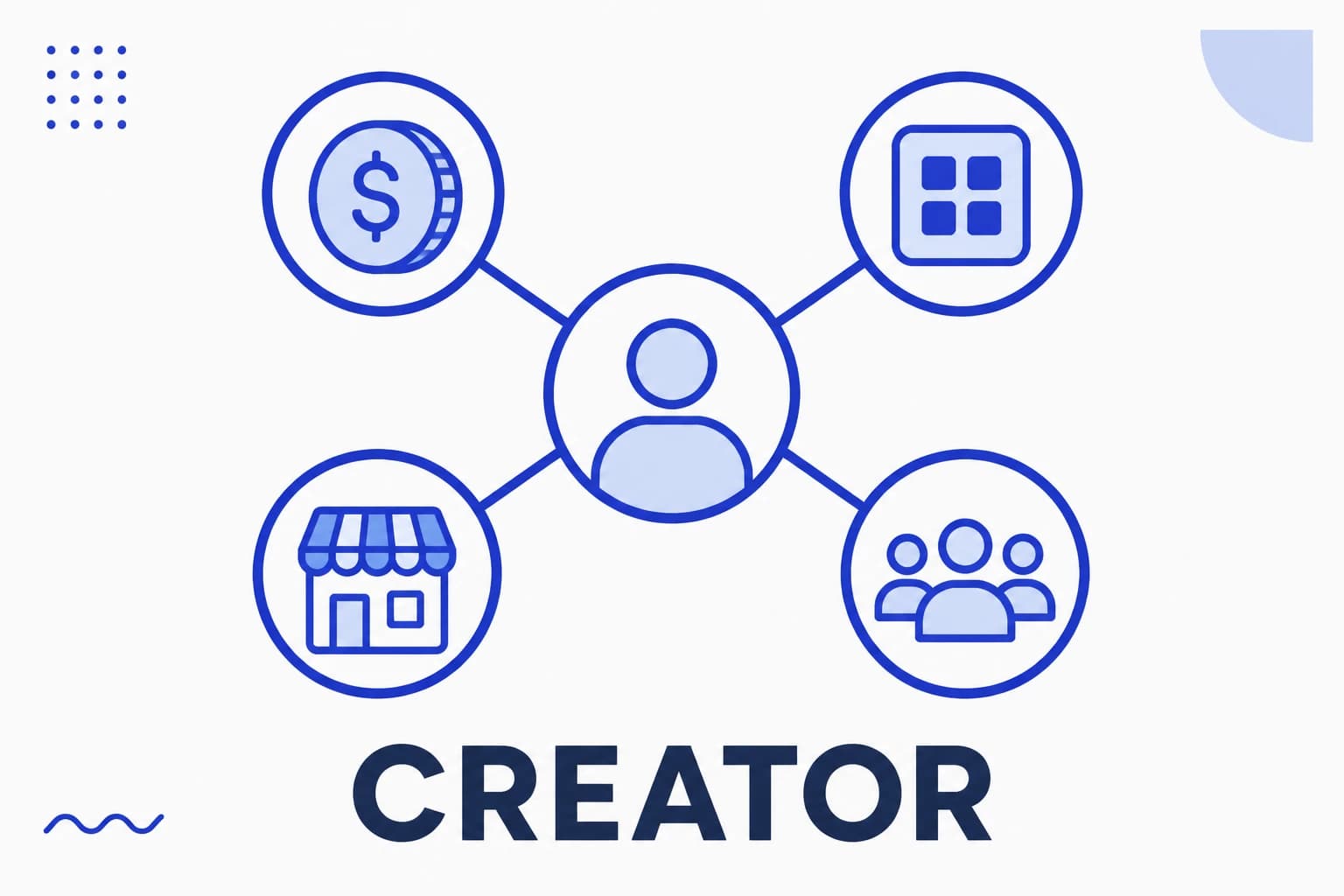
The term is used loosely, so it is worth bounding. The creator economy includes three layers:
- Those who create. People building their own audience and monetising it.
- The infrastructure. Distribution platforms, production tools, payment systems, intermediaries and agencies.
- Those who pay. Brands, platforms with monetisation programmes and the public itself.
The historical novelty is not someone living from an audience, that always existed in radio, television and press. The novelty is that distribution stopped being controlled by a few companies, and the cost of starting fell to almost zero.
The income sources
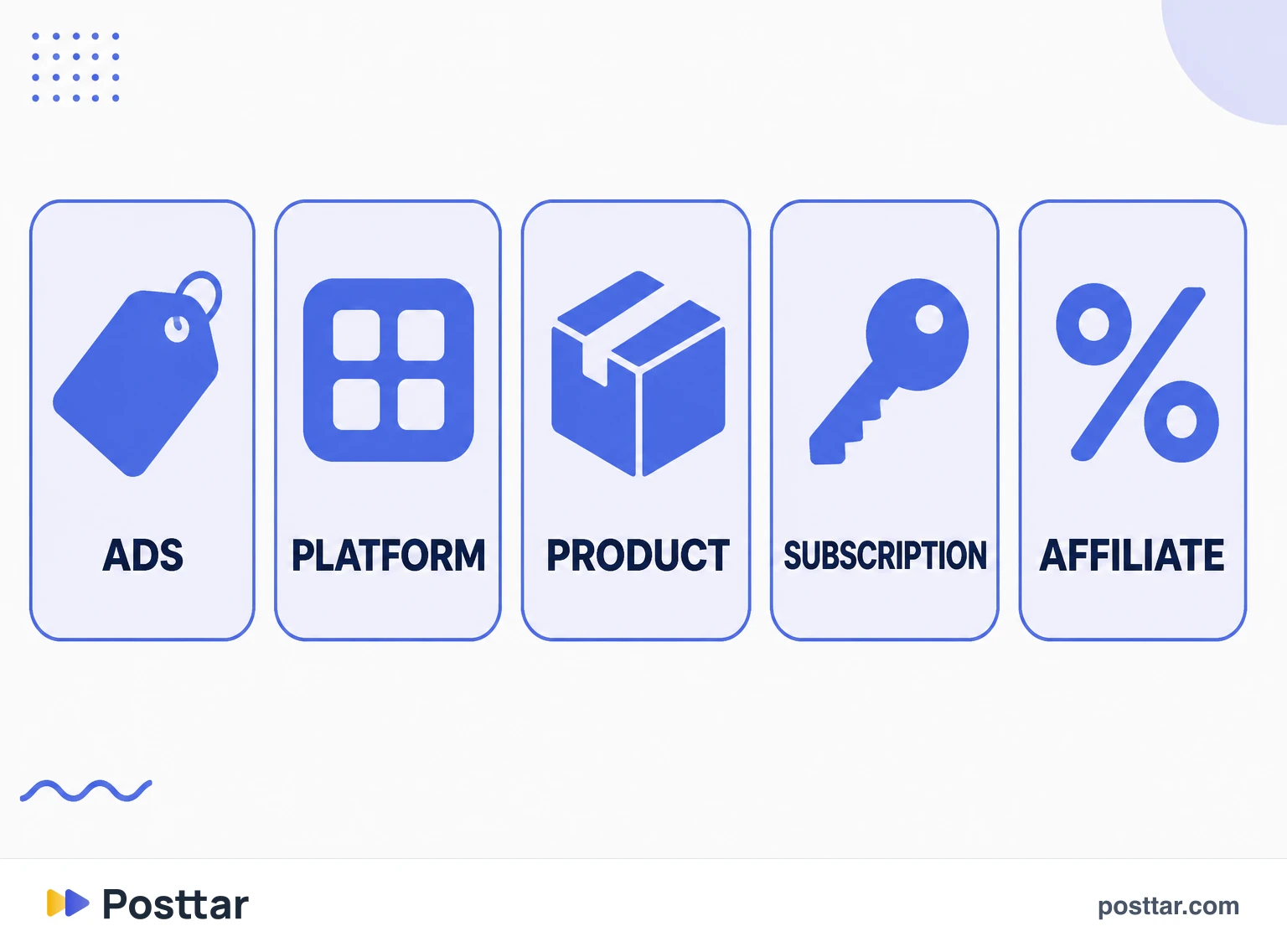
Five cover almost everything, and they are worth knowing because almost nobody lives on one alone:
- Brand advertising. Sponsored posts, gifting and UGC. The most common and the most dependent on third parties.
- Platform monetisation. Ad revenue sharing programmes. Varies by country and changes frequently.
- Own product. Courses, digital products, services, consulting. Where the margin is highest and where an audience is worth most per person.
- Paid audience. Subscriptions, closed communities, exclusive content.
- Affiliate and commission. A percentage of generated sales.
The practical rule most people discover late: the more income depends on brands, the more it swings; the more it depends on your own product, the more it holds.
The uneven distribution
An honest counterpoint to the enthusiasm around the subject is worth stating.
Income in the creator economy is distributed extremely unevenly, as happens in any attention market. A small fraction concentrates most of the money, and the majority of people producing do not live from it.
That does not invalidate the activity, but it changes the reading. Two practical consequences:
- A small niche served well tends to be a more viable path than competing for broad audiences.
- Income from your own product makes the numbers work with far less audience than advertising income does.
An account of five thousand of the right people with its own product can support someone; the same account depending only on sponsorship, hardly.
Platform risk
It is the structural problem of the activity, and it has no complete solution.
Whoever builds an audience on a platform builds on rented ground. The account can be restricted, reach can fall through a rule change, a format can be retired, and none of that is under the producer's control.
The known mitigations are three, in order of effectiveness:
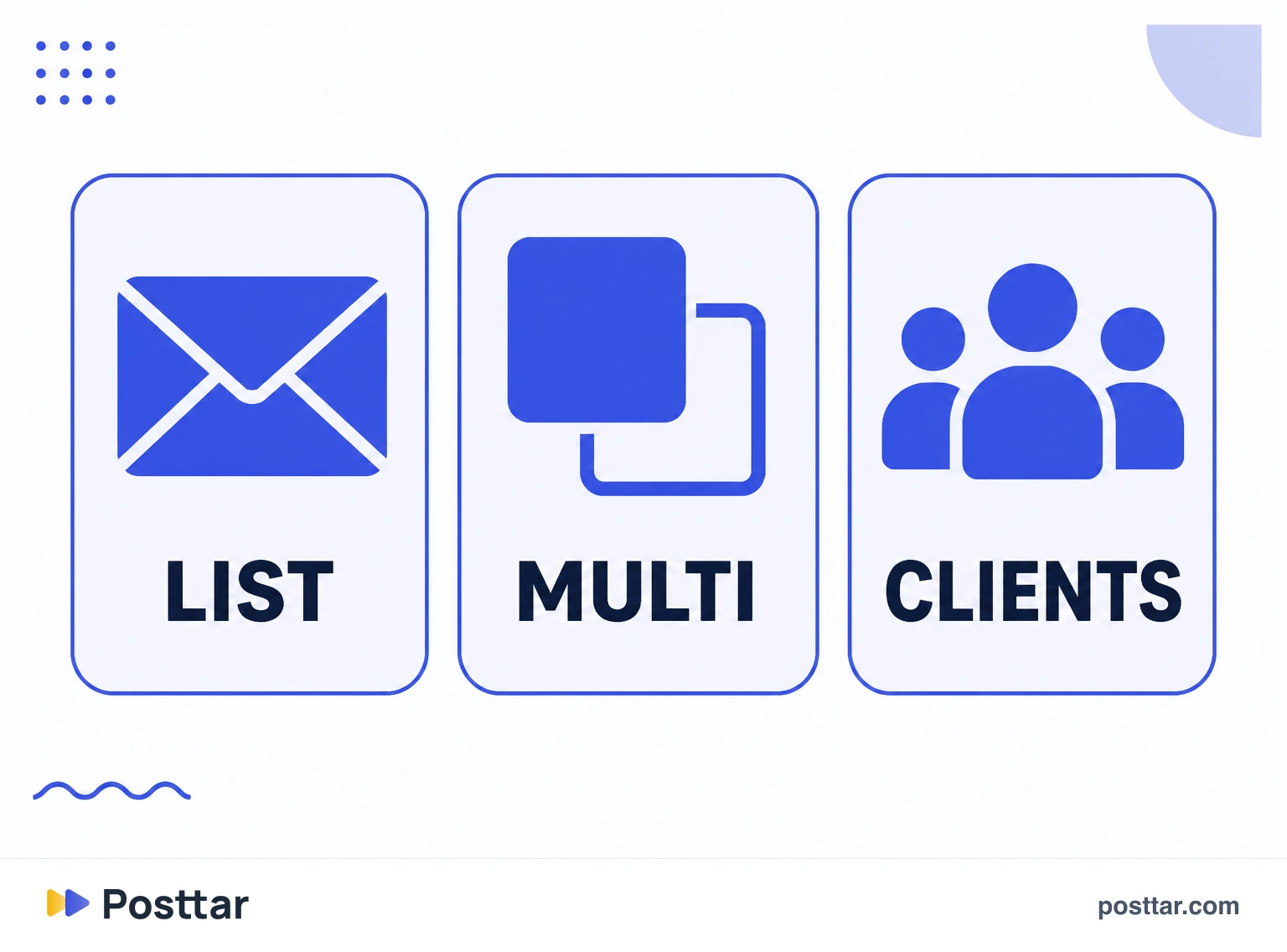
- An owned channel. An email list or equivalent, the only audience nobody can take from you.
- Presence on more than one platform. It reduces the damage of an isolated event.
- Income that does not depend on reach. An existing customer base is worth more than new reach.
Checklist
- I know where each part of my income comes from.
- I do not depend on a single source.
- I have or am building an owned channel.
- I know income from my own product needs less audience.
- I accounted for platform risk in my planning.
Frequently asked questions
What is the creator economy?
It is the set of people monetising their own audience plus the infrastructure making it possible: platforms, tools, intermediaries and brands. The novelty is not living from an audience but distribution no longer requiring a media company.
How do creators make money?
Through brand advertising, platform monetisation, their own products, paid audiences via subscription, and affiliate commissions. Almost nobody lives on one alone, and the more income depends on brands, the more it swings.
How much do creators earn?
The distribution is extremely uneven: a small fraction concentrates most of the money and the majority do not live from it. What most changes the outcome is not audience size but which income source is chosen.
What does a creator actually do?
They build and maintain their own audience around a subject, and turn that audience into revenue through one of the available sources. In practice the work combines content production, relationship building and commercial management.
What is the biggest risk in the creator economy?
Platform risk. Building an audience on a network means building on rented ground: accounts can be restricted, reach can fall through rule changes and formats can be retired. The most effective mitigation is owning a channel of your own.
Related concepts
Influencer
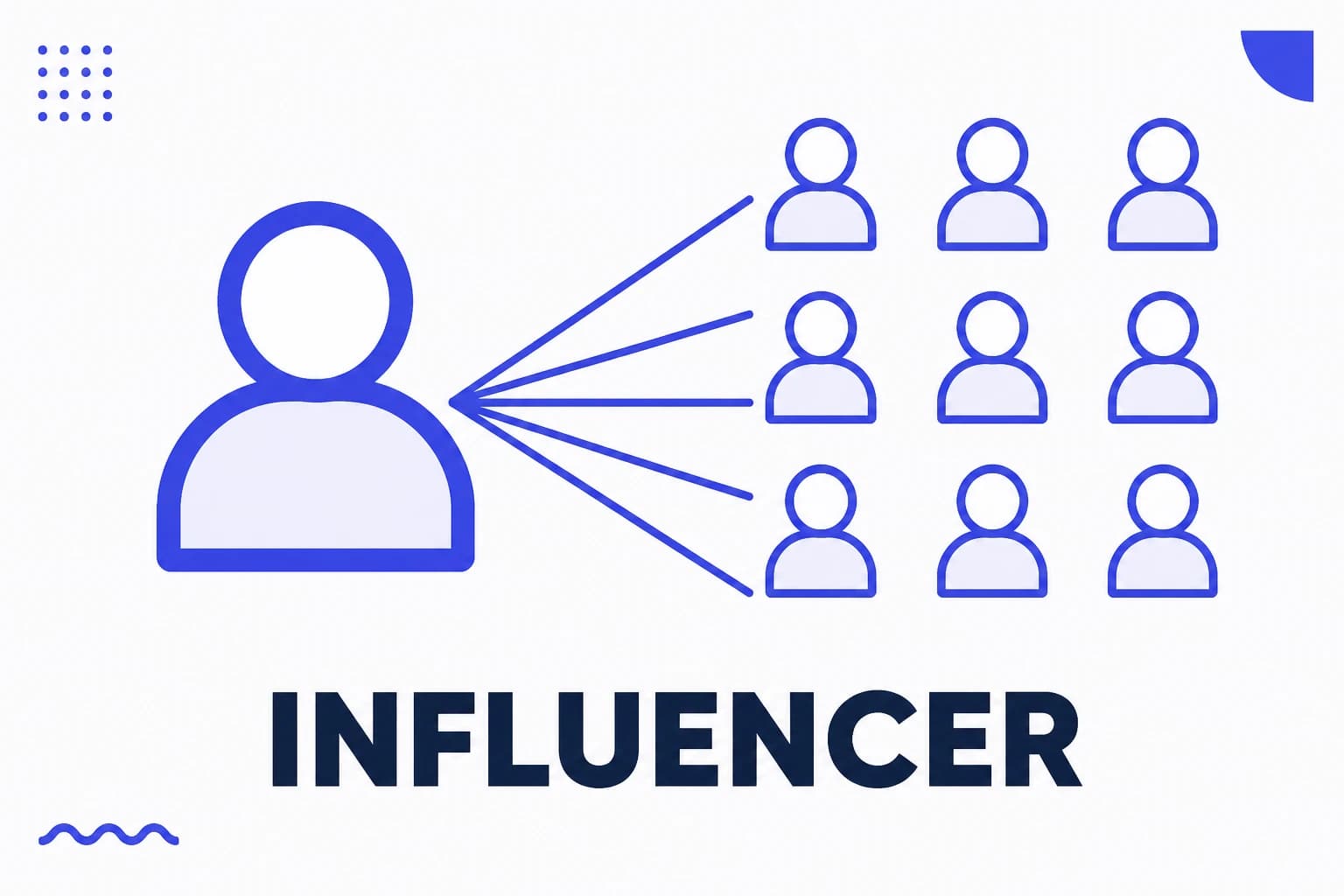
An influencer is someone able to move other people's decisions within a subject, whether about purchases, opinions or behaviour. The market organises the category into follower tiers, and that division is useful for budgeting, but it describes audience size rather than influence. There are million follower accounts that sell nothing and five thousand follower accounts that clear stock.
Read the entry
UGC
UGC stands for user generated content. In today's market the term designates a specific activity: producing content that looks like a real person for a brand to use on its own channels and in ads. The crucial difference from influencer advertising is what is being sold: in UGC the brand buys the content rather than the distribution, which is why the activity requires no audience.
Read the entry
Sponsored post
A sponsored post is a publication a creator is paid to make for a brand, talking about a product on their own profile. It is different from a boosted post, which is a brand paying to distribute its own publication, and that confusion shows up constantly. Sponsored posts require disclosure, and the native label is the way to do it.
Read the entry
Micro-influencer
A micro-influencer is the audience tier between roughly ten thousand and one hundred thousand followers. It became the market default for an economic rather than aesthetic reason: at that size an account already has meaningful reach while still holding high engagement and credibility, which produces the best cost per result on the scale. The boundaries vary between agencies, and the tier is a convention rather than a rule.
Read the entry