Hold rate: how many stayed after the hook already worked

By Tiago Costa·Updated on August 5, 2026
Definition
Hold rate is the percentage of people who, after getting past the hook, continued to the end.
- It measures the content, not the opening.
- It is the pair of hook rate. One without the other diagnoses nothing.
- Calculation base: people past the first seconds, not people who started.
- Low hold with a high hook means an unkept promise.
What hold rate measures
Hook rate measures the viewer's first decision. Hold rate measures everything after it: of the people who decided to stay, how many continued to the end.
The difference in calculation base is the whole point. Average retention divides by everyone who started, so a bad opening contaminates the number and hides the quality of the content. Hold rate divides by whoever survived the hook, which isolates the middle.
In practice: how many people reached the end, divided by how many were still watching at the third second. The retention curve gives both values.
The four scenarios
| Hook | Hold | Diagnosis |
|---|---|---|
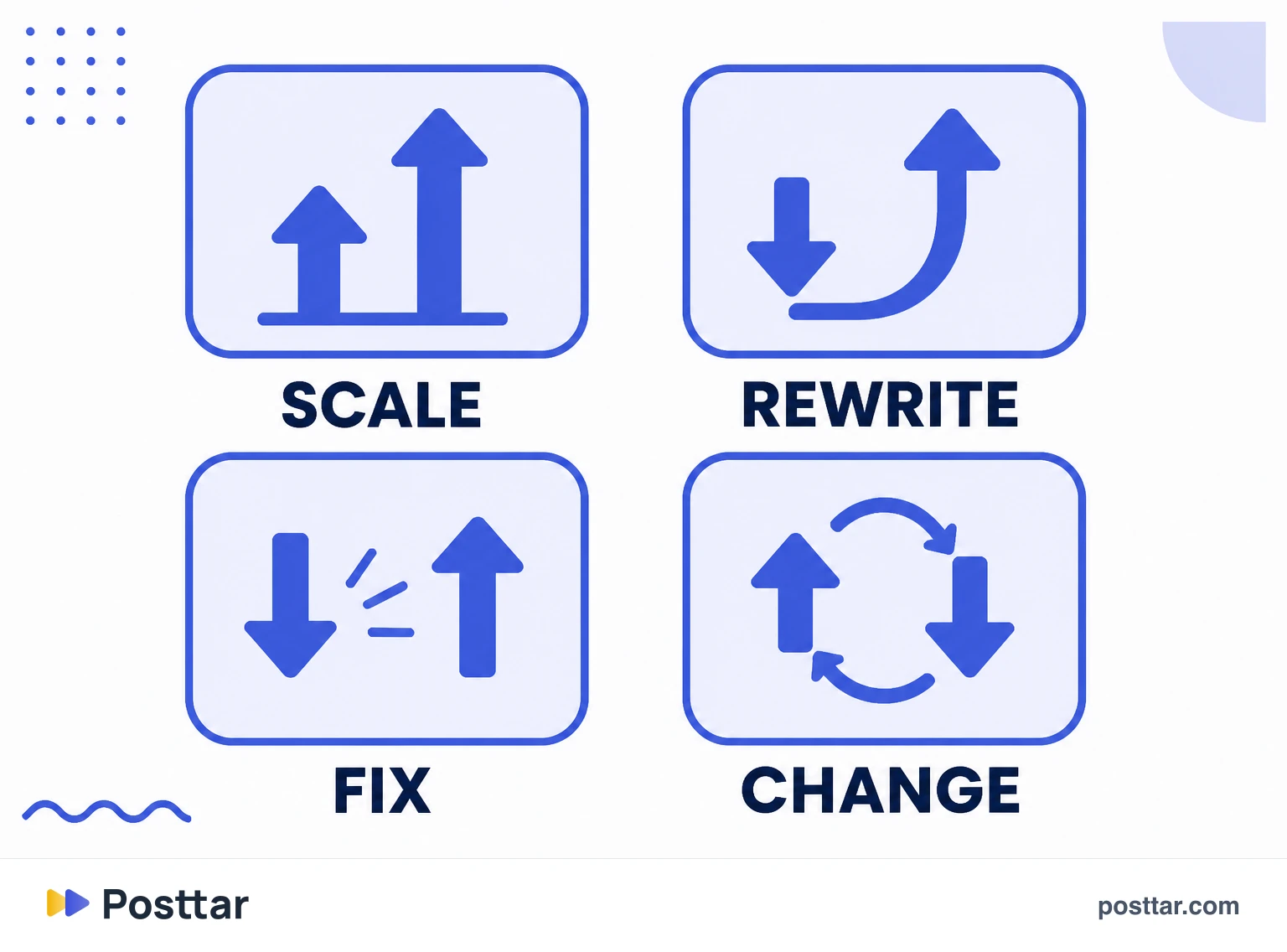
| high | high | opening and content working; scale the topic |
| low | high | good content without audience; rewrite the hook |
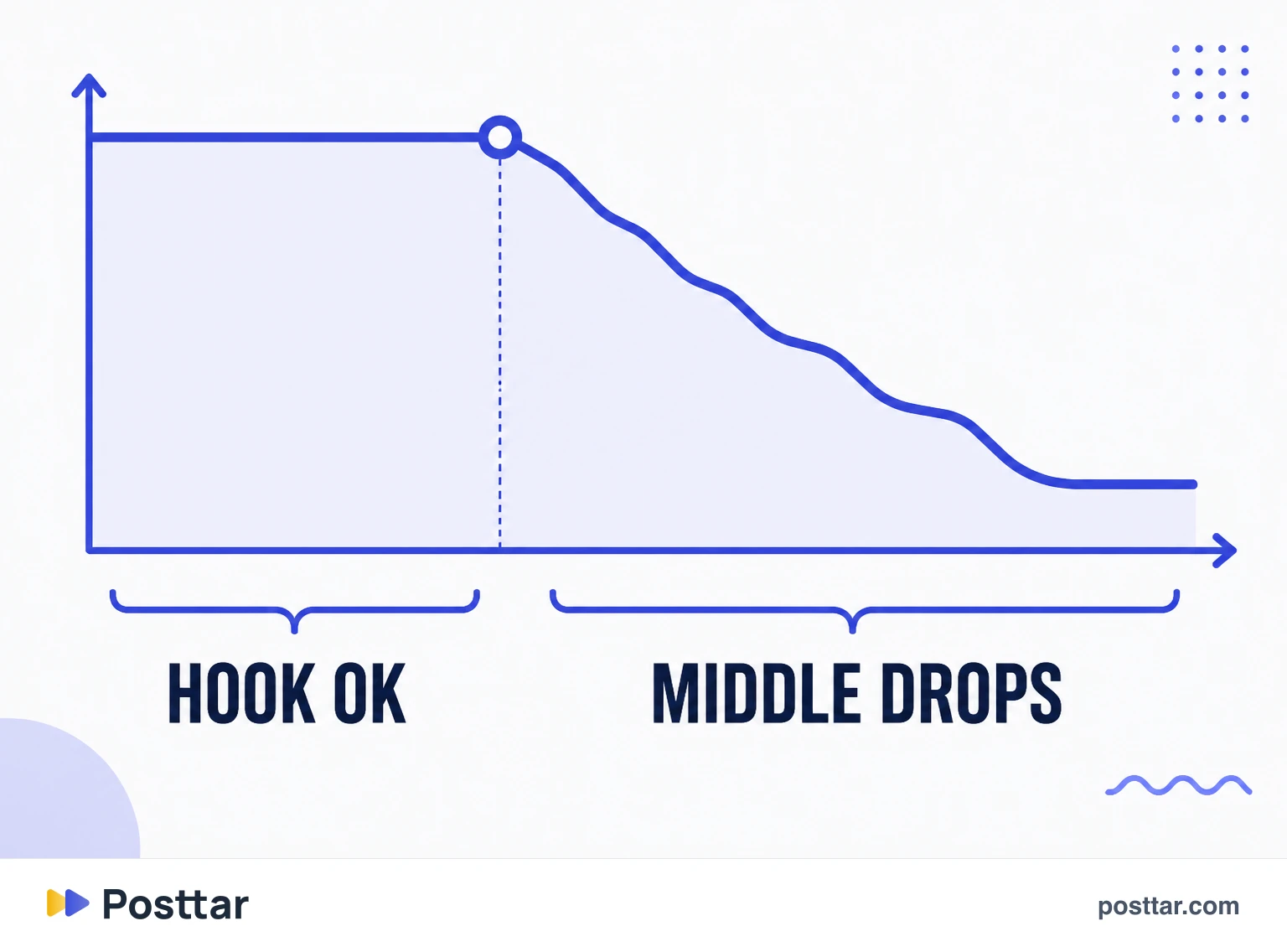
| high | low | unkept promise; fix the middle or the promise |
| low | low | wrong topic or format for this audience |
The second scenario is the most frequent and the cheapest to solve: the content already exists, only the entrance was missing. Rewriting three seconds and republishing usually pays more than producing a new video.
The third is the most expensive to ignore, because beyond wasting audience it generates negative signal: the platform sees people leaving early after having stayed.
What drags hold down
- The promise delivered too early. If the answer arrives at second 5, there is no reason to stay until 30.
- Digression. An off-topic stretch is where the curve forms a step.
- Pacing dropping in the middle. Long pauses, dragging speech, slow cuts.
- An ending with no turn. A video that only repeats what it already said does not hold the final seconds.
- Length beyond what the idea needs. Stretching to fill time is the most common cause of all.
How to test without spoiling the experiment
Hook and hold call for different fixes, and testing them together voids both tests.
To fix hold, keep the hook exactly as it is and touch only the middle: cut the digression, speed up the centre, reorder so the turn lands later. Republish a few days on and compare.
To fix hook, keep the middle and change only the opening. Because the calculation bases differ, you can see the effect of each change separately, and that is what turns attempts into learning.
Checklist
- I calculate hold over people who got past the hook, not over people who started.
- I always read hook and hold together.
- I use the scenario table before deciding what to fix.
- I fix one variable at a time when republishing.
- I get suspicious of a high hook with a low hold: that is a promise the content did not keep.
Frequently asked questions
What is hold rate?
It is the percentage of people who kept watching to the end after already getting past the first seconds. It measures content performance, separated from opening performance.
What is the difference between hook rate and hold rate?
Hook rate measures whether the opening grabbed, calculated over everyone who started. Hold rate measures whether the content sustained, calculated over whoever survived the hook. One says whether the door worked, the other whether it was worth walking in.
How do you calculate hold rate?
Divide how many people reached the end of the video by how many were still watching at the third second. The retention curve gives both values, since they are the curve heights at two points.
What does a high hook with a low hold mean?
That the opening promised something the content did not deliver. Beyond wasting the audience you earned, it generates negative signal, because the platform sees people leaving early after deciding to stay.
Is it worth republishing a video with high hold and low hook?
Yes, and it is the cheapest case to solve. The content already proved it holds; only the entrance was missing. Rewrite the first seconds alone, keep everything else and republish a few days later.
Related concepts
Hook rate
Hook rate is the percentage of people who got past the first seconds of a video instead of scrolling on. It is the metric that isolates hook performance, because it measures the one decision that happens before anything else in the content has a chance to matter. A video can have excellent content and a low hook rate, and in that case the problem is not the content.
Read the entry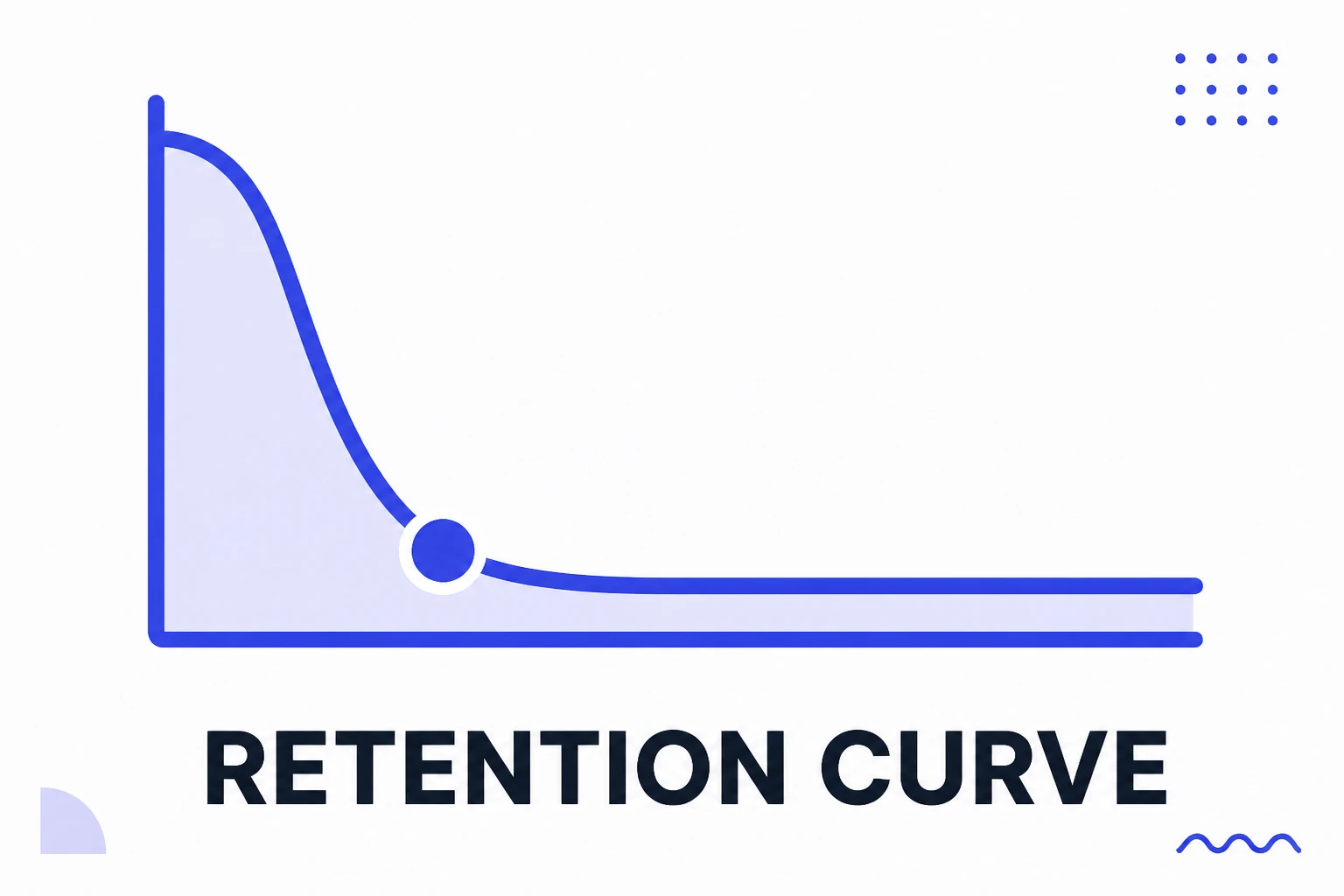
Retention curve
The retention curve is the chart showing what percentage of the audience was still watching at each second of a video. Unlike average retention, which compresses everything into one number, the curve shows the exact location of the loss, and it is the only video metric that points at what to fix rather than merely reporting that something is wrong.
Read the entry
Average retention
Average retention is the percentage of a video people watched, on average, before leaving. It is the percentage version of watch time, and it exists to make videos of different lengths comparable. It falls naturally as a video gets longer, which means comparing a ten-second Reel with a one-minute one using the same number is a misreading.
Read the entry
Hook
A hook is the opening of a piece of content, responsible for buying the first seconds of attention and making someone decide to keep going. In short video it occupies the first three seconds and is simultaneously verbal, visual and sonic; in a carousel it is the cover; in text it is the first line. A hook is not decoration: because the distribution system watches retention and dwell time, it determines whether the content ever gets delivered beyond the people who already follow you.
Read the entry